How to Decide Whether a Repair Is Worth Doing on an Older Car
Repairing an older car can make sense when safety, reliability, total needs, and future costs line up. I’ll show you how to weigh those factors against your transportation needs and the vehicle’s actual condition.
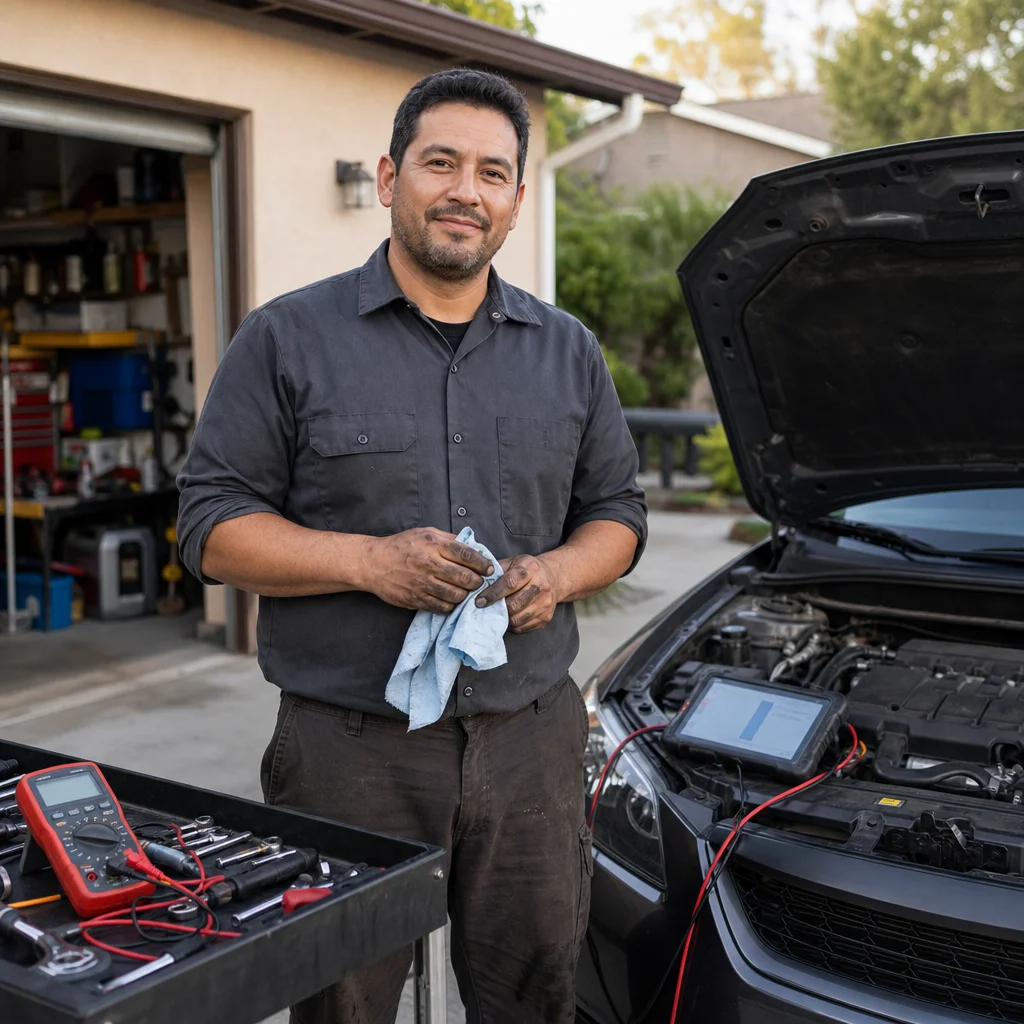
An older car can be worth repairing even when the estimate looks uncomfortable. A newer replacement brings its own purchase price, financing, taxes, insurance changes, and unknown maintenance needs. The better question isn't whether one repair costs more than the car’s age suggests it should. It’s whether spending that money gives you a reasonably safe, dependable way to travel for longer than the alternatives.
A sound decision comes from looking at the whole vehicle rather than reacting to a single estimate. Safety problems, the pattern of recent repairs, body and structural condition, expected future work, and your need for transportation all matter. A repair that is sensible for a second car may be a poor choice if you depend on the vehicle for daily work or medical appointments.
Start with safety and structural condition
Safety should be the first filter, not the final item on a cost comparison. Worn brake components, failing tires, steering or suspension problems, poor visibility, damaged seat belts, and malfunctioning lights may make the vehicle unsafe even if the engine still runs well. Some faults can also cause secondary damage: a coolant leak can lead to overheating, while a damaged brake hose can turn a manageable repair into an immediate hazard.
The vehicle’s structure deserves particular attention. Rust around suspension mounting points, frame rails, subframes, rocker panels, or seat-belt anchors can be more serious than surface corrosion on a fender. Collision damage that was repaired poorly can also affect alignment and crash protection. These conditions aren’t always obvious from above the ground, so a qualified inspection is valuable before you approve a large repair.
If the car has a safety-critical problem, don’t use a low resale value as a reason to postpone it. Have the vehicle assessed, and ask whether it can be driven safely to the repair facility. If it can't, arrange appropriate towing rather than taking a chance on the road.
Check the road-use requirements: Before deciding that a repair can wait, confirm your state, province, or territory’s current inspection, emissions, lighting, and equipment requirements. Rules vary widely across North America, and a vehicle that runs may still be illegal or unsafe to operate.
Separate one repair from the vehicle’s total needs
A single estimate can be misleading because it shows only the problem that brought the car into the shop. Ask the technician to distinguish between work that is needed now, work that is recommended soon, and work that can reasonably be monitored. Those categories help you avoid both unnecessary spending and the false comfort of repairing one component while ignoring another urgent fault.
Request a written estimate that identifies the failed parts, labor, diagnostic charges, taxes or shop fees, and any related work. It’s also useful to ask what caused the failure. Replacing a failed alternator may restore charging, but a damaged wiring connection or weak battery could cause another problem if it isn’t addressed. A repair that treats the cause is easier to justify than one that only resets the symptoms.
Then list known upcoming needs for the next year or two. Include tires, brakes, scheduled maintenance, fluid leaks, battery replacement, timing-belt service where applicable, suspension wear, air-conditioning work, and rust-related repairs. You won’t know every future failure, but a vehicle with several overdue systems deserves a more cautious decision than one needing a single isolated part.
Evaluate the car’s condition beyond the odometer
Mileage is useful context, but it doesn’t determine a vehicle’s remaining value by itself. A well-maintained car with higher mileage may be a better repair candidate than a lower-mileage vehicle with neglected fluids, severe corrosion, or a history of repeated overheating. Maintenance records, ownership history, storage conditions, and the type of driving the vehicle has done can tell you more than the number on the dashboard.
Look for evidence of an underlying pattern. Repeated overheating, low oil pressure, transmission slipping, persistent electrical faults, or unexplained coolant and oil consumption can point to expensive problems beyond the current estimate. Warning lights that return after repair, recurring misfires, and noises that change with engine temperature also deserve a clear diagnosis before you commit to major work.
The condition of the interior and body matters for practical reasons as well as appearance. A badly leaking cabin can damage wiring and create mold, while broken windows, doors, or climate controls may affect your ability to use the car reliably. Cosmetic defects alone usually shouldn’t decide the question, but structural rust, water intrusion, or damage that prevents normal operation should carry significant weight.
Compare the repair with realistic alternatives
A common mistake is comparing the repair bill only with the car’s private-sale value. That comparison ignores what it would cost to replace the vehicle with something equally dependable. A replacement may require a down payment, loan interest, registration, taxes, insurance, immediate maintenance, and repairs that weren’t apparent during a short test drive. If you already own the older car outright, those costs can change the calculation substantially.
Create three rough options:
- Repair the current vehicle and keep it for a defined period.
- Make only essential repairs while arranging another transportation plan.
- Sell, trade, or retire the vehicle and replace it with another car.
For each option, consider the money required now, expected transportation costs, likely downtime, and the risk of an unexpected failure. Don’t assign false precision to uncertain repairs. A range is more honest than a single optimistic number, especially when a diagnosis is incomplete or parts availability may affect the job.
The cheapest option on paper may not be the most practical. If a repair leaves you with a safe vehicle that meets your needs for another year, it may compare favorably with taking on a large monthly payment. On the other hand, a low repair bill can be poor value if it follows several recent breakdowns and the car still has serious engine, transmission, or structural concerns.
Consider reliability in terms of your actual life
Your transportation needs should influence how much risk you can accept. Someone who can work from home, share a vehicle, or use public transit may tolerate occasional downtime. If you need the car for a long commute, childcare, irregular shifts, or essential appointments, repeated breakdowns have a real cost even when the repair invoices are modest.
Think about the consequences of failure, not just its probability. A car that occasionally needs a tow on a quiet weekend presents a different problem from one that could strand you far from home during winter travel. Roadside assistance, rental-car coverage, a second vehicle, and access to a trustworthy repair shop can reduce the practical risk, but they don’t eliminate it.
Also consider whether the vehicle fits your foreseeable needs. If you’ll soon need more cargo space, a different fuel system, better cold-weather capability, or improved accessibility, repairing the current car may only delay a replacement you already know is coming. Keeping an older car is most sensible when it remains suitable for the work you expect it to do.
Estimate likely future costs without pretending to predict them
No inspection can guarantee that an older vehicle won’t fail again. Instead of asking a shop to predict every breakdown, ask which systems show age or deferred maintenance and how urgent each one is. A technician may be able to identify parts that are worn but still serviceable, components approaching their normal maintenance interval, and signs of a deeper failure.
Pay attention to repair concentration. Several unrelated repairs over a long period may be normal aging. Several major repairs within a few months can indicate that the vehicle is entering a more expensive stage of ownership. If the same system keeps failing, seek a second opinion or a better diagnosis before approving another replacement part.
It can help to set a personal limit, but don’t use a rigid percentage of vehicle value as the only rule. Decide how much you can spend without creating financial stress, how much repair risk you can accept, and how long you need the car to last. A repair is easier to justify when it stays within your limit and addresses a known problem. It deserves more scrutiny when it consumes your emergency savings without resolving an underlying reliability concern.
Know when a second opinion is worthwhile
A second opinion is especially useful when the proposed repair is expensive, the diagnosis is uncertain, or the recommendation involves an engine, transmission, hybrid system, air-conditioning compressor, or structural component. Provide the first estimate and diagnostic information, but ask the second shop to reach its own conclusion rather than simply approving or rejecting the first opinion.
Ask direct questions: What failed? What evidence confirms that diagnosis? What happens if the repair is delayed? Are there related parts likely to need attention? What warranty applies to the parts and labor? The answers should be understandable without pressure or vague claims that the car is simply “old.”
For high-voltage hybrid or electric-vehicle systems, air bags, fuel leaks, and structural repairs, use a technician with the appropriate training and equipment. These jobs can involve serious hazards and specialized procedures. Saving money by attempting an unfamiliar repair can turn a difficult financial decision into a safety problem.
Make the decision using a simple conclusion
Repairing the older car is usually easier to justify when it is structurally sound, has a reasonable maintenance history, needs a clearly diagnosed repair, and still fits your transportation needs. The case is weaker when major systems are failing together, rust compromises the structure, the diagnosis is uncertain, or you’re likely to face another large expense soon.
Before deciding, write down the immediate repair, the other known needs, your realistic transportation alternatives, and the amount of uncertainty in each estimate. Get the safety issues addressed first, then compare the total picture rather than the age or resale value alone. If the car is safe and the repair buys dependable service at a cost you can manage, keeping it may be the sensible choice. If it requires repeated high-cost repairs without restoring confidence, directing that money toward a more suitable vehicle may reduce both financial and practical risk.