What to Do Before Working on a Hybrid or Electric Vehicle
I’ll explain how to identify high-voltage hazards, locate the correct service information, and decide whether a repair is safe to attempt. You’ll also learn how damaged batteries, service disconnects, insulated tools, and warning labels change the job.
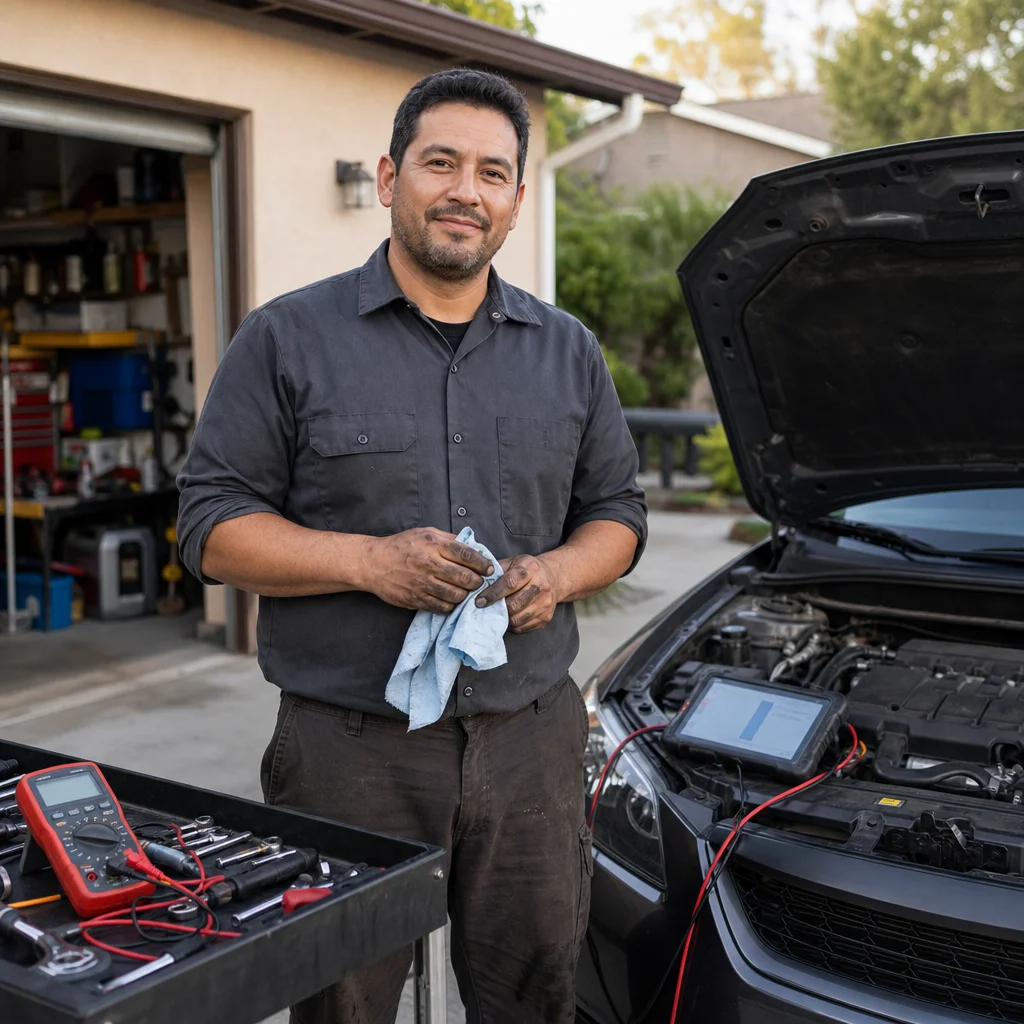
Hybrid and electric vehicles can look familiar under the hood, but some repairs involve electrical systems powerful enough to cause severe injury or death. Before removing a cover, lifting the vehicle, or investigating a fault, you need to know which parts are safe to handle and which require specialized training.
The safest approach isn't to start with a tool. Start by identifying the vehicle’s high-voltage equipment, checking its condition, and deciding whether the problem belongs with a qualified technician.
Learn where the high-voltage system is
Hybrid and electric vehicles use a high-voltage battery to propel the vehicle or assist the engine. Depending on the design, the battery may be under the floor, beneath a rear seat, behind the passenger compartment, or in another protected area. High-voltage cables commonly have bright orange insulation, although you should never rely on color alone to identify every hazardous component.
Warning labels may appear on the battery enclosure, inverter, motor-generator, air-conditioning compressor, onboard charger, and other components. A label that says “high voltage,” “danger,” or “don't touch” is a reason to stop and consult the factory repair information—not an invitation to work around the warning.
The vehicle can also be dangerous when it appears switched off. A hybrid may start its gasoline engine unexpectedly, and an electric vehicle can energize systems without making the sounds you associate with a running engine. Remote climate control, scheduled charging, and automatic system checks are additional reasons to keep the key or key fob away from the vehicle and follow the manufacturer’s shutdown procedure.
Confirm the shutdown procedure: Before touching anything beyond ordinary owner maintenance, check the exact service information for your year, model, and battery configuration. Power-down steps, waiting periods, service-disconnect locations, and required protective equipment vary by vehicle.
Separate routine maintenance from high-voltage repair
Many owner tasks remain ordinary mechanical or low-voltage jobs. Replacing wiper blades, checking tire pressure, changing suitable filters, inspecting fluid levels, and cleaning accessible areas generally don't require opening a high-voltage enclosure. Even so, keep tools and loose metal objects away from orange cables, electrical connectors, and battery covers.
Other work deserves more caution than it might on a conventional car. A 12-volt battery replacement, jump-start, underbody repair, coolant service, brake work, or collision-related inspection may affect systems connected to high-voltage equipment. The repair instructions may specify a particular shutdown process or prohibit lifting at certain points.
Don't assume that disconnecting the 12-volt battery makes the vehicle electrically safe. The high-voltage battery is separate, and energy can remain in capacitors and other components after the vehicle is turned off. Likewise, pressing the start button, removing the key, or waiting a few minutes isn't a substitute for the manufacturer’s isolation procedure.
A useful rule is to stop if the repair requires removing a high-voltage cover, disconnecting an orange cable, accessing the traction battery, opening an inverter or charger, testing high-voltage terminals, or working on a high-voltage air-conditioning compressor. Those jobs require training, model-specific procedures, and properly rated equipment.
Treat the service disconnect as part of a procedure
Many hybrids and EVs have a service plug, service disconnect, fuse, or other isolation device. Its position and design vary widely. It may be in the battery area, under a seat, in the luggage compartment, or somewhere else identified by the service manual.
Finding the disconnect doesn't mean you should remove it. Safe isolation normally involves more than one action: securing the vehicle, preventing startup, removing or operating the specified disconnect, waiting for the required time, verifying the absence of voltage with approved test equipment, and protecting the area from accidental reconnection. The exact sequence matters.
A disconnected system may still contain stored energy, and some vehicles require a trained technician to confirm that the system is de-energized. Reconnecting the device incorrectly can create another hazard or prevent the vehicle from operating correctly. If you don't have the service information, training, and equipment needed to verify isolation, don't attempt the procedure.
Use the right tools and protective equipment
Ordinary household tools aren't automatically safe around high voltage. A metal wrench can bridge terminals or contact an energized part, while damaged insulation can give a false sense of protection. Tools used for high-voltage work must be suitable for the task and rated according to the applicable equipment and service requirements.
Protective equipment may include voltage-rated gloves, leather outer gloves, eye protection, protective clothing, and insulating barriers. Gloves need to be the correct class and size, inspected before use, and maintained according to their instructions. They aren't a replacement for shutting down and verifying the system, and they don't make an untrained repair appropriate.
A multimeter intended for household or low-voltage automotive work may not be suitable for measuring a traction battery or inverter. The meter, leads, probes, and test method all need to be appropriate for the voltage and fault conditions involved. Never improvise a test by piercing orange-cable insulation or probing exposed terminals.
For most owners, the sensible equipment decision isn't to build a high-voltage repair kit. It is to use ordinary tools only for tasks clearly identified as owner maintenance and have a qualified hybrid or EV technician handle high-voltage diagnosis and repair.
Be especially careful after damage, water, or a crash
A damaged battery is a different problem from a warning light or reduced driving range. A collision can damage cells, busbars, insulation, cooling components, or the battery enclosure even when the exterior damage looks modest. Floodwater, saltwater, fire, and prolonged exposure to water can also create electrical and chemical hazards.
Don't touch, open, move, charge, or attempt to repair a battery pack that is crushed, punctured, leaking, smoking, unusually hot, hissing, sparking, or producing a strong unfamiliar odor. Keep people away from the vehicle and contact emergency services or a qualified recovery provider. If there is an active fire or immediate danger, move to a safe location and follow local emergency guidance rather than investigating the vehicle.
A vehicle that has been in a flood shouldn't be treated as safe merely because it starts or appears dry. Corrosion and delayed electrical faults can develop later. Tell the tow operator and repair facility that the vehicle is a hybrid or EV and describe any collision, water exposure, smoke, heat, or battery warning you observed.
Verify the recovery plan: Before arranging a tow for a damaged, flooded, or non-running hybrid or EV, ask the manufacturer, roadside provider, or qualified repair facility about the approved transport method. Some vehicles must be moved with specific wheel, axle, or equipment restrictions.
Know which symptoms should stop the job
Some symptoms point away from ordinary troubleshooting and toward professional diagnosis. Stop working and arrange qualified help if you see a high-voltage warning, isolation fault, battery-system fault, repeated drivetrain shutdown, coolant near a battery or inverter, visible orange-cable damage, or signs of heat or arcing.
Don't clear a warning code simply to see whether it returns. Clearing codes can erase useful diagnostic information, and the underlying issue may involve insulation, battery temperature control, charging equipment, or a safety interlock. A basic scan tool may read some vehicle modules but still lack the data and procedures needed to diagnose a high-voltage fault.
Charging problems also deserve care. If a home charger, cable, plug, or vehicle inlet is hot, discolored, melted, wet, cracked, or making unusual sounds, stop charging and disconnect it only if doing so is safe. Don't use an extension cord or damaged charging equipment as a workaround. Have the equipment and vehicle inspected by an appropriately qualified professional.
Prepare before doing any work
Park on a stable surface, select the manufacturer’s required parking mode, secure the vehicle against movement, and keep the key or key fob away from it. Remove jewelry and loose metal items when performing even low-voltage work. Don't work alone if the task has any possibility of high-voltage exposure, and keep children and pets away from the vehicle.
Read the owner’s manual first, then use the manufacturer’s service information for anything beyond routine maintenance. Note the exact model year, trim, drivetrain, and battery type; similar vehicles can have different isolation points and repair requirements. Photographing ordinary connectors and routing can help with a permitted low-voltage repair, but photographs don't replace a wiring diagram or high-voltage procedure.
If you’re unsure whether a component is part of the high-voltage system, leave it alone until you have confirmed its function. Ask a dealer, independent hybrid/EV specialist, or qualified automotive electrician what the job involves and what training is required. A professional inspection is usually a better use of money than buying specialized equipment for a single uncertain repair.
Make the safe decision before reaching for a tool
The key question isn't whether you can physically reach the part. It is whether you can identify the system, isolate it using the correct procedure, verify that it is safe, and complete the repair without creating a new hazard. For high-voltage components, that requires more than general vehicle familiarity.
Handle clearly identified routine maintenance as the manufacturer permits, but stop when the work involves high-voltage covers, cables, battery damage, isolation testing, or uncertain symptoms. Check current model-specific instructions, disclose any crash or water exposure, and use a qualified technician or recovery provider when the vehicle’s electrical safety is in doubt. That decision protects you, the vehicle, and anyone who may work on it next.