Which Car Repairs Should You Avoid Doing in a Driveway?
I’ll compare the driveway repairs that can expose you to crushing, fire, toxic chemicals, high voltage, or safety-system failures, then explain which jobs are reasonable for beginners and when professional equipment and training are worth the cost.
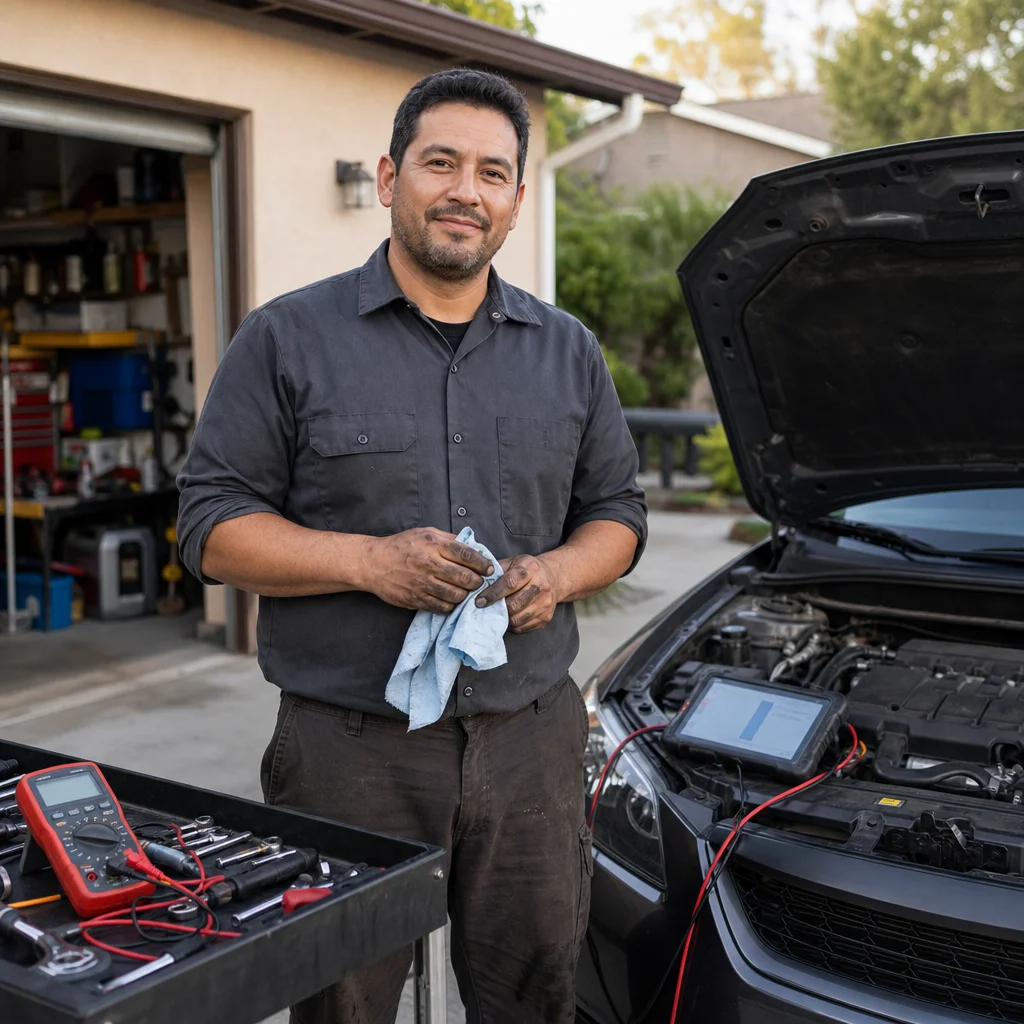
A driveway can be a useful place for basic maintenance, but it isn’t automatically a safe substitute for a repair shop. Uneven ground, limited lighting, poor weather, and a lack of lifting equipment can turn an ordinary job into a serious risk. The most important question isn’t only whether you can complete the repair; it’s whether you can control the hazards if something goes wrong.
For a beginner, repairs involving unstable vehicle lifting, fuel, high-voltage systems, pressurized refrigerant, airbags, or essential braking and steering components deserve particular caution. Some of these jobs require specialized equipment. Others may be technically possible at home but leave little room for error.
Repairs involving hazardous lifting
A vehicle supported only by a jack isn't safely supported for work underneath it. A jack is designed to raise a vehicle, not to hold it in place while you remove parts, apply force, or move around beneath it. A small shift, a soft patch of asphalt, or a poorly positioned lifting point can have severe consequences.
Jobs that commonly create this problem include replacing fuel tanks, exhaust components, suspension parts, transmissions, transfer cases, and underbody structural components. These repairs may require you to loosen stubborn fasteners or move a heavy assembly. The force involved can make the vehicle rock or slide even when it initially appears stable.
Jack stands on a firm, level surface are the minimum for work that requires getting underneath a vehicle, but they don’t eliminate every risk. You need lifting points approved for that vehicle, stands with an appropriate capacity, wheel chocks, and enough room to work without placing your body in a dangerous position. A driveway that slopes toward the street or has cracked, soft, or gravel-covered pavement is a poor location for under-car repairs.
If the repair requires a lift, transmission jack, engine support bar, spring compressor, or substantial force under the vehicle, a shop is usually the sensible choice. Renting a proper bay can also be safer than improvising with household equipment. Never use cinder blocks, stacked wood, ramps that aren’t rated for the vehicle, or a jack alone as a substitute for stable support.
Check your lifting setup: Before choosing a driveway repair, consult the vehicle’s service information for approved lifting points and confirm that your surface, stands, and equipment are rated for the vehicle. Local requirements for working on or storing a vehicle may also vary.
Fuel-system and fuel-tank work
Gasoline and diesel fuel can ignite easily, and their vapors may collect in low areas, enclosed garages, drains, or pits. A small spark from a tool, electrical connection, light, or static discharge can create a fire. Fuel can also irritate skin and eyes, and spills can contaminate soil and water.
Replacing a fuel filter may be manageable on some vehicles, but the location and design matter. A filter mounted near the tank, under pressure, or in a system that requires special depressurizing procedures isn't a good beginner project unless you understand the manufacturer’s instructions and have the right equipment. Fuel-pump replacement is more demanding because the tank may need to be lowered while it still contains fuel.
Avoid driveway repairs that involve draining, removing, cutting, welding near, or opening a fuel tank. Don’t work near smoking materials, heaters, extension-cord damage, or other ignition sources. A fuel smell that continues after a minor repair isn't something to mask or monitor casually; it can indicate a leak that needs prompt attention.
Fuel-injection systems can also retain pressure after the engine is switched off. The exact procedure for relieving that pressure differs by vehicle. Guessing can spray fuel onto hot engine parts or into your eyes. If you’re unsure whether a component is pressurized, stop and use the factory procedure or have the work performed by a qualified technician.
High-voltage hybrid and electric-vehicle systems
Hybrid and electric vehicles contain high-voltage circuits that can cause severe injury or death. The orange cables and related components aren't ordinary 12-volt wiring. Switching off the vehicle, removing the key, or disconnecting the small 12-volt battery doesn't necessarily make every high-voltage component safe.
Driveway work should generally be limited to tasks clearly identified by the owner’s manual as user maintenance, such as checking tire pressure, replacing wiper blades, or inspecting fluid levels where applicable. Avoid opening battery enclosures, disconnecting orange cables, removing high-voltage service plugs, or working near inverter, motor, charging, and battery components without vehicle-specific training.
Collision damage creates additional uncertainty. A damaged battery case, crushed cable, or warning message may not be visually obvious, and a vehicle that seems switched off can still contain dangerous energy. Don't attempt to tow, charge, disassemble, or store a damaged electrified vehicle based only on general gasoline-car experience.
Confirm the vehicle’s power system: Identify whether the vehicle is a hybrid, plug-in hybrid, or battery electric model before starting work. Use the manufacturer’s emergency and service guidance, and confirm that anyone handling high-voltage components has the required training and equipment for that vehicle.
Air-conditioning refrigerant work
Automotive air-conditioning systems contain refrigerant under pressure. Opening the system can cause liquid refrigerant to expand rapidly, producing frostbite or eye injuries. Deliberately releasing refrigerant is also environmentally harmful and may be restricted by current law or professional-handling requirements in your area.
A low-cost recharge can sometimes appear to solve a weak-air-conditioning complaint, but it may conceal a leak or lead to overcharging. The correct refrigerant type and fill quantity are vehicle-specific. Using the wrong product, including a sealant-containing recharge canister, may damage components or make later professional service more difficult.
Replacing an accessible cabin air filter is different from opening the sealed air-conditioning circuit. Work involving refrigerant recovery, evacuation, leak testing, compressor replacement, condenser replacement, or hose disconnection is better left to a shop with recovery equipment and the ability to measure system pressures correctly.
Verify refrigerant requirements: Check the under-hood label and current manufacturer or local environmental requirements before touching the air-conditioning system. Don’t vent refrigerant, mix refrigerant types, or rely on a pressure gauge alone to decide how much to add.
Critical braking and steering repairs
Brakes and steering deserve a more careful distinction than a simple “never do this at home.” An experienced home mechanic with the correct tools, service information, and a reliable way to check the finished work may safely perform some brake maintenance. A beginner who is still learning how to support a vehicle, identify components, or tighten fasteners correctly shouldn't treat these systems as practice projects.
Replacing brake pads and rotors can go wrong through incorrectly seated pads, damaged hoses, contaminated friction surfaces, seized hardware, or improper caliper installation. Hydraulic brake work adds the possibility of air or leaks in the system. Electronic parking brakes and integrated stability-control systems may require a scan tool or a specific service mode.
Steering and suspension repairs can be even less forgiving. A worn tie-rod end, ball joint, control arm, or wheel bearing may require specialized tools and a follow-up alignment. A spring under compression stores considerable energy and shouldn't be removed with an improvised compressor. If a spring, steering linkage, subframe, or suspension joint must be separated, professional help is often the safer option.
If the vehicle pulls, the brake pedal feels soft, the steering wheel has unusual play, a warning light remains on, or a wheel becomes hot after a repair, don’t continue driving to see whether the problem improves. Have the vehicle inspected or arrange appropriate towing.
Airbags, seat belts, and other restraint systems
Supplemental restraint systems contain pyrotechnic devices that deploy airbags and pretension seat belts. They can activate unexpectedly if handled incorrectly, and an airbag that has been removed or reinstalled improperly may fail to protect occupants in a crash.
Avoid driveway repairs involving airbag modules, crash sensors, seat-belt pretensioners, steering-wheel airbags, or wiring identified for restraint systems. Disconnecting a battery isn't a universal guarantee that the system is safe; backup power and vehicle-specific procedures may be involved. A persistent airbag warning light should be diagnosed with equipment suited to the vehicle rather than ignored or cleared repeatedly.
Interior trim removal around an airbag can also create risk if you don’t know where modules and wiring are located. Professional service is especially appropriate after a collision, flood, fire, or electrical modification.
Engine and transmission jobs that exceed driveway limits
Not every major mechanical job is dangerous because of a special chemical or electrical system. Some are simply too heavy, too difficult to support, or too dependent on precise measurements for a driveway setup. Engine removal, transmission replacement, clutch work, timing-chain repairs with limited access, and subframe removal can involve heavy assemblies and long periods with the vehicle raised.
A repair may be possible with an engine hoist, transmission jack, load-leveling equipment, and a suitable surface, but owning one tool doesn’t make the entire operation safe. You also need a stable place to store removed parts, protection from weather, accurate torque information, and a plan for unexpected seized fasteners or damaged components. If the work leaves the vehicle immobilized for days, consider whether weather, security, and local parking rules create additional problems.
How to decide before you start
A useful rule is to separate repairs by consequence, not by how common the part seems. Replacing a filter or battery usually leaves you with a manageable mistake to correct. Opening a fuel system, disabling a restraint system, or incorrectly assembling a steering component can create fire, injury, or loss of vehicle control.
Before beginning, ask whether the job requires you to work under an unsupported vehicle, handle stored energy or pressurized fluid, disturb a safety-critical system, or depend on a specialized tool you don’t have. Also ask whether you can verify the result. A torque wrench, leak check, brake-system test, wheel alignment, refrigerant measurement, or manufacturer scan procedure may be essential rather than optional.
When professional help is appropriate, you can still reduce the cost by describing the symptoms clearly, recording diagnostic trouble codes without clearing them, and asking the shop to explain which tests support its recommendation. Don’t remove parts or create a new fault merely to save a small amount of labor. In some cases, transporting the vehicle to a repair shop is safer than attempting a partial repair in the driveway.
For beginner vehicle owners, the best driveway projects are usually those with low stored energy and limited consequences: fluid and filter maintenance, wiper replacement, bulb replacement where access is straightforward, battery service when the vehicle allows it, tire-pressure checks, and careful visual inspections. Move up to more involved work only when you have stable lifting equipment, vehicle-specific instructions, appropriate protective gear, and a clear way to confirm the repair.
The driveway is a reasonable place to learn, but it shouldn't be the place where you take chances with gravity, fuel, high voltage, refrigerant, or systems designed to protect you in a crash. When the hazard is greater than your equipment, training, or ability to verify the result, paying a professional is a safety decision—not a failure to be handy.