How to Decide Whether Roadside Assistance Is Safer Than a DIY Fix
I’ll clarify when calling roadside assistance is the safer and more resource-efficient choice than attempting a repair yourself. You’ll learn how to weigh traffic, weather, vehicle condition, tools, and the actual risk of staying beside the road.
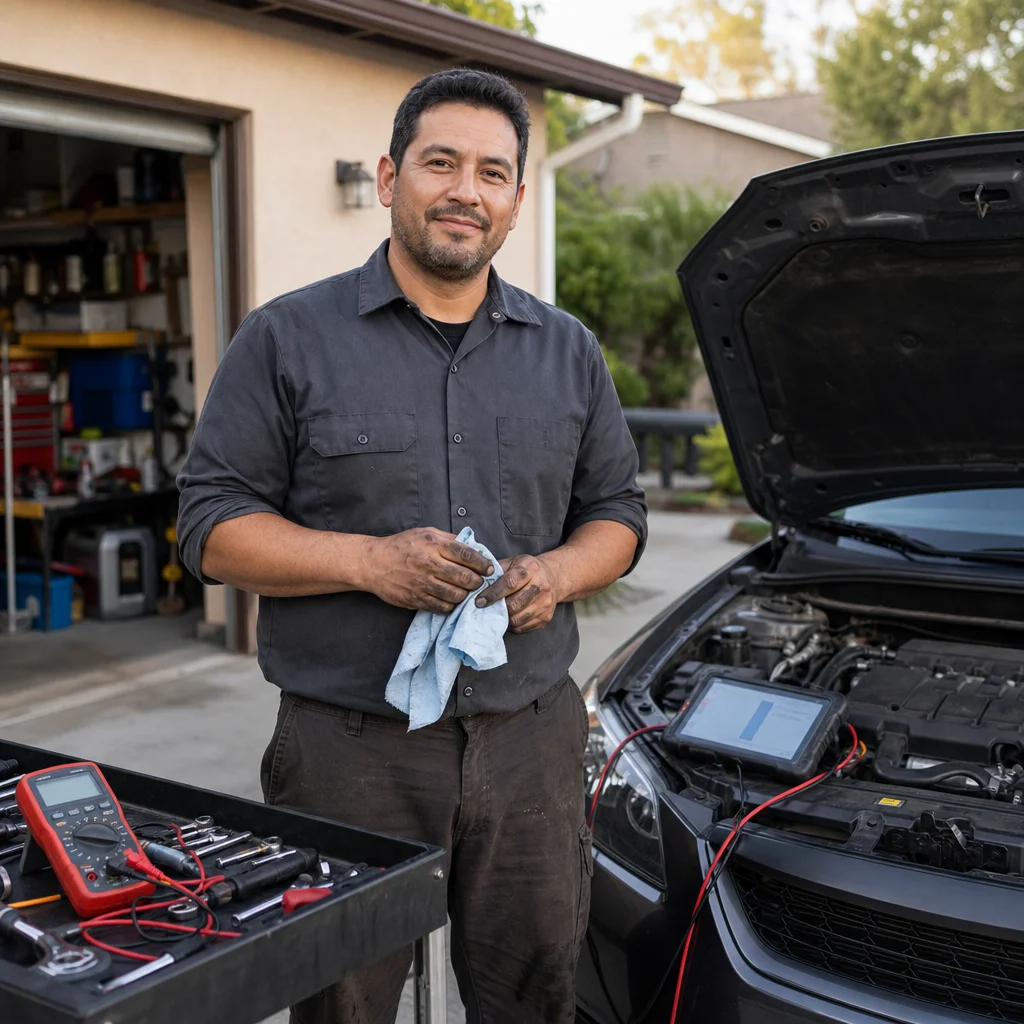
A roadside problem can look like a simple repair until you account for traffic, visibility, weather, and where the vehicle has stopped. Changing a tire on a quiet driveway is one situation; changing it beside a fast-moving highway at night is another.
The useful question isn’t simply whether you can perform the fix. It’s whether doing so from your current location is safer, practical, and likely to solve the problem without creating a second one. Roadside assistance may cost money or take time, but a DIY repair can carry costs that aren’t obvious at first: exposure to traffic, damaged parts, an incorrect repair, or a vehicle that becomes more dangerous to drive.
Start with the location, not the repair
Before opening the trunk or lifting the hood, assess where you and the vehicle are positioned. If you’re stopped in an active travel lane, partly blocking traffic, on the shoulder of a high-speed road, near a blind curve, or in a narrow area with poor visibility, roadside assistance is usually the safer choice. Don't begin a repair just because the mechanical problem appears minor.
Turn on the hazard warning lights if they work, keep your seat belt fastened while you’re inside the vehicle, and move away from traffic only if you can do so safely. On a limited-access highway, getting out and walking along the roadway can expose you to more danger than remaining inside. Follow local emergency guidance and use 911 for an immediate threat, injury, fire, or a vehicle stopped in a dangerous position—not merely as a substitute for routine roadside service.
Weather can change the decision quickly. Heavy rain, snow, ice, high winds, extreme heat, lightning, darkness, and reduced visibility all make a roadside repair harder and increase the chance of losing footing or being struck. A repair that would be reasonable in daylight on a dry, level shoulder may not be reasonable during a storm.
Check your roadside options now: Confirm how to request assistance through your auto insurer, motor club, vehicle manufacturer, or other provider, and review limits such as towing distance, service calls, coverage for the vehicle’s location, and possible out-of-pocket charges. Terms and local emergency procedures can change, so use your current policy or provider information rather than relying on a general online summary.
Separate a true emergency from a routine breakdown
If anyone is injured, the vehicle is smoking or on fire, fuel is leaking, a high-voltage system may be damaged, or you smell strong fuel or burning insulation, stop troubleshooting. Move to a safer location if possible and contact emergency services. Don’t open a smoking hood, crawl under a vehicle supported only by a jack, or attempt to restart a vehicle after a collision if its steering, brakes, wheels, or fluid lines may be damaged.
A minor collision also deserves more caution than a normal breakdown. Even when the body damage looks cosmetic, the impact may have affected the cooling system, suspension, tire, steering, lights, or restraint systems. Photographing the scene and exchanging information may be appropriate, but driving away should depend on the vehicle’s condition and local requirements. If the car is in a traffic hazard or anyone is hurt, prioritize emergency assistance over a DIY assessment.
For a routine problem, ask whether the vehicle can remain safely parked while you decide. A car in a driveway, parking lot, or well-protected shoulder gives you more options than a car stopped on a narrow roadside. If you can wait in a safe place away from traffic, roadside assistance becomes a reasonable resource-saving choice even when you could technically perform the repair.
Flat tires: a good DIY task in the right setting
A tire change is often considered a beginner-friendly repair, but the location determines much of the risk. You need a firm, level surface, enough room to work away from traffic, a usable spare or inflator, a jack designed for that vehicle, and the wheel-lock key if the vehicle uses locking lug nuts. You also need to know whether the spare is a temporary-use tire and how far or how fast it may be driven.
A DIY change may make sense in a driveway or spacious parking area when you’ve practiced the process and the tire problem is straightforward. Read the vehicle’s instructions, set the parking brake, place the transmission in Park or in gear as appropriate, and use the designated lifting point. Never position any part of your body under a vehicle supported only by the emergency jack. If the ground is soft, sloped, icy, or close to moving traffic, call for help instead.
Don’t assume a spare solves every tire problem. A damaged wheel, two flat tires, a missing key, a spare with low pressure, or a tire that has come apart may require a tow or tire service. Driving on a flat tire can damage the wheel and may reduce control, so moving the vehicle farther shouldn't be your default solution.
Dead batteries: low complexity, real hazards
A dead 12-volt battery is commonly handled with a jump-start, portable booster, or battery replacement. The decision is more favorable for DIY work when the vehicle is parked safely, you can identify the battery terminals, and you have the correct equipment and instructions. If the battery is cracked, swollen, leaking, frozen, or hot, don’t connect a booster or jumper cables.
Modern vehicles may have remote battery terminals, multiple batteries, start-stop systems, or manufacturer-specific jump-start instructions. Hybrid and electric vehicles can also contain high-voltage systems that aren't part of a normal 12-volt jump-start. A roadside technician can reduce the chance of connecting equipment incorrectly or damaging sensitive electronics.
If the vehicle starts but the battery warning light remains on, the engine stalls again, or electrical functions behave abnormally, the problem may be the charging system rather than the battery. Continuing to drive could leave you stranded in a worse location. A jump-start is a way to restore power temporarily, not proof that the vehicle is ready for a normal trip.
Overheating: stop driving before it becomes an engine failure
Overheating is one of the clearest situations where saving a service call can become expensive. If the temperature gauge is high, a warning appears, steam is escaping, or coolant is visibly leaking, pull over as soon as it’s safe, switch off the engine, and wait for the system to cool. Never remove a pressurized radiator or coolant reservoir cap while hot; escaping coolant and steam can cause severe burns.
Don't treat adding water as a complete repair. It may be an emergency measure in some circumstances, but the correct coolant, the cause of the loss, ambient temperature, and the vehicle’s instructions matter. A failed hose, fan, thermostat, water pump, belt, or head gasket can leave the vehicle unable to protect the engine. If the temperature rises again, the warning persists, or coolant is pouring out, arrange a tow rather than trying to reach a repair shop under its own power.
The most cost-efficient choice is often the one that prevents major damage. A service call or tow may be inconvenient, but an overheated engine can turn a cooling-system problem into a much larger repair.
Minor breakdowns and “quick fixes”
A vehicle that cranks but won’t start, loses power, makes a new grinding noise, or develops a steering or brake problem needs more than a quick guess. You can perform limited observations from a safe location: check whether the dashboard shows a relevant warning, look for obvious fluid leaks without touching hot components, and note unusual sounds or smells. Avoid repeatedly cranking the engine, bypassing safety switches, or replacing parts without a diagnosis.
A loose fuel cap, discharged battery, or temporarily tripped electrical accessory may be simple. However, a vehicle that starts only intermittently or stops while moving may fail again after you leave. If the cause is uncertain and the vehicle stopped in an exposed location, roadside assistance is usually more efficient than spending an hour experimenting beside traffic.
Diagnostic scanners can help with some warning lights, but a code isn't automatically a failed part. If you use a scanner, treat its result as information for a technician rather than permission to continue driving a vehicle with brake, steering, overheating, or severe engine symptoms.
A simple decision test
Use these questions before choosing between DIY work and assistance:
- Can you get completely out of active traffic? If not, call for help or emergency services as the situation requires.
- Is the weather or visibility making the work unsafe? If yes, don’t trade a service fee for exposure to the conditions.
- Could the problem involve brakes, steering, fuel, fire, high voltage, or major impact damage? If yes, avoid a roadside repair and arrange professional help.
- Do you have the correct tools, parts, instructions, and a safe surface? Missing any one of these can turn a short repair into a prolonged hazard.
- Will the vehicle be reliable after the fix? A temporary restart or spare tire may not make a vehicle suitable for a long drive.
- What is the likely cost of getting it wrong? Compare the service fee with tire, wheel, engine, electronic, or collision damage—and with the possibility of needing a second tow.
If the answers are mostly favorable, a limited DIY task may be reasonable. Work deliberately, keep people away from traffic, and stop if the problem differs from what you expected. If the answers are uncertain, assistance isn't an admission that you lack skill; it’s a way to use the right resources for the setting.
Consider coverage, time, and the actual price
Roadside assistance can be included with an insurance policy, vehicle warranty, motor club membership, credit card benefit, or manufacturer program, but the limits differ. Some services restrict the number of calls, towing distance, vehicle type, or location. Others may charge for labor, additional mileage, replacement parts, or service outside the covered terms.
Even when you have no coverage, ask for the total estimated charge before authorizing non-emergency service. Confirm whether the provider will change a tire, bring fuel, unlock the vehicle, provide a jump-start, or tow it to a location of your choice. If you need a shop, compare convenience with the risk of driving a questionable vehicle farther.
Time matters too. Waiting for a technician may be frustrating, but attempting an unfamiliar repair can take longer and leave you with a vehicle that still needs help. If you’re traveling with children, pets, an older adult, or someone with a medical concern, a professional response may be the more efficient and safer option even for a basic mechanical problem.
The practical rule
DIY roadside repairs make the most sense when the vehicle is in a genuinely safe place, the task is familiar, the equipment is correct, and the result is clear. Roadside assistance is the better choice when traffic, weather, uncertainty, vehicle damage, or the consequences of a mistake outweigh the service cost.
If you’re deciding right now, first protect the people in and around the vehicle, then move away from danger if you can do so safely. Record the symptoms, warning lights, location, and vehicle details for the provider. A careful call for help is often the most economical repair decision—not because every breakdown requires a professional, but because the roadside is a poor place to discover the limits of a DIY fix.