How to Check Whether a Used Car Was Flood-Damaged
Flood exposure often leaves clues in odors, moisture, corrosion, wiring, seat hardware, records, and electronic behavior. I’ll show you how to connect those signs, avoid false reassurance, and decide when a professional inspection is the safer choice.
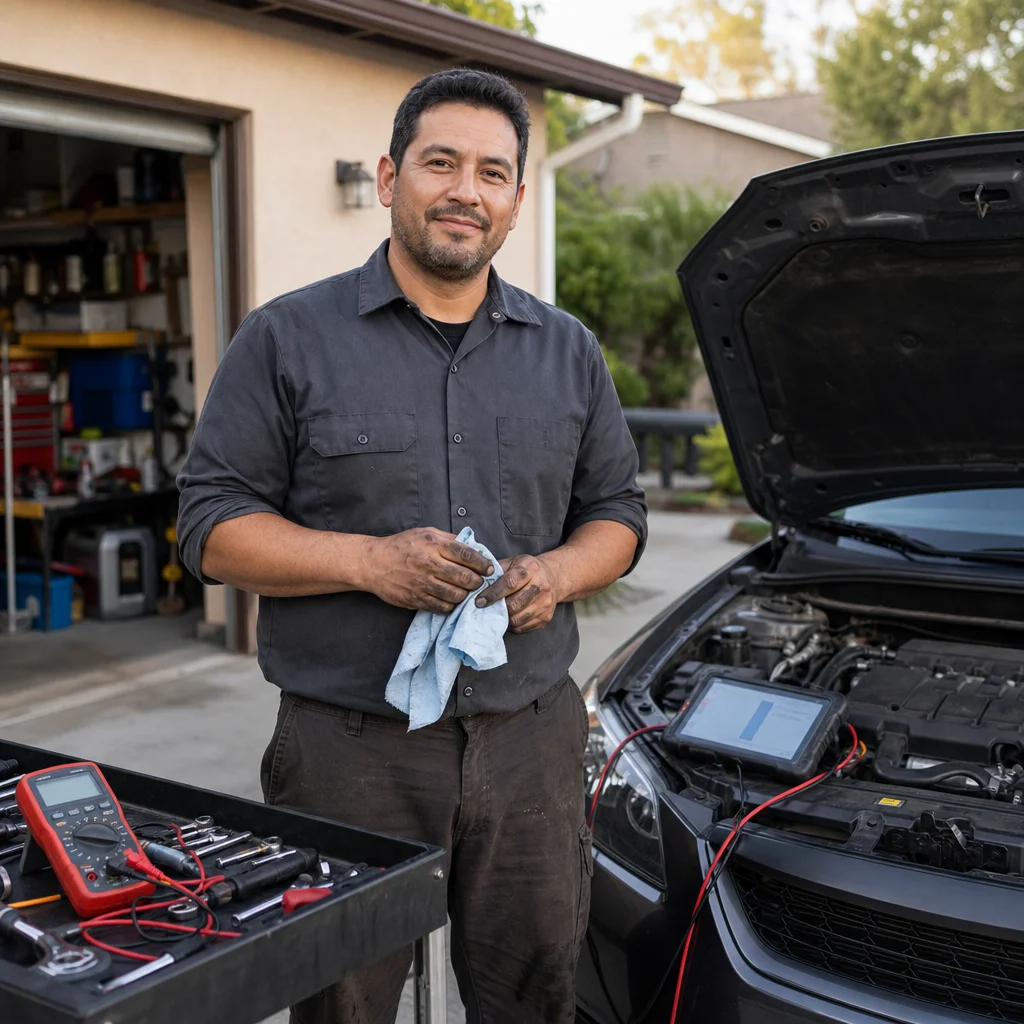
Flood damage is often harder to spot than ordinary accident damage because a vehicle can be cleaned, dried, and made presentable before you see it. The most useful approach isn't to look for one dramatic clue. Instead, compare the car’s smell, materials, fasteners, wiring, records, and electronic behavior for signs that fit together.
A flood-damaged car may develop expensive electrical, corrosion, mold, and safety problems long after the water is gone. Some vehicles can be repaired properly, but a seller’s low price or fresh detailing shouldn’t substitute for evidence of a sound repair. If several warning signs appear—or if the seller won’t allow a thorough inspection—walking away is usually the sensible decision.
Start with the vehicle’s history
Get the VIN before you travel to inspect the car. Use it to obtain a vehicle history report from a reputable provider, and check the VIN through the National Motor Vehicle Title Information System (NMVTIS) sources available to consumers. Look for flood, salvage, rebuilt, junk, insurance, auction, and out-of-state title events. A sudden move between states can deserve extra questions, particularly when the car came from an area affected by major flooding.
A clean title doesn't prove that the vehicle has never been flooded. Title branding and insurance records can be delayed, omitted, or unavailable when the vehicle wasn’t insured, wasn’t declared a total loss, or changed hands before the damage was reported. A history report is useful evidence, not a guarantee.
Ask the seller for maintenance and repair records, including invoices for interior removal, module replacement, wiring repairs, drying, or mold treatment. Compare the mileage and dates in those records with the dashboard and history report. Be cautious if the seller has no documentation for a major repair, offers only vague explanations, or says the vehicle was recently brought from another state without a clear reason.
Verify the car’s paper trail: Check the current title with the issuing state, review available NMVTIS and history-report information, and ask why the vehicle changed states or owners. Title terms and disclosure requirements vary, so confirm the applicable details with your state motor vehicle agency before you buy.
Look and smell before starting the engine
Inspect the vehicle in daylight, preferably when it’s dry. Open the doors, trunk, hood, and fuel door. A strong air freshener, shampoo scent, or chemical odor may be an attempt to cover mildew or damp upholstery. Flood exposure can also leave a stale, earthy smell in carpeting and insulation. Don’t treat a neutral smell as proof of safety; interiors can be thoroughly cleaned or replaced.
Run your hand along the lower carpet edges and examine the carpet backing where it meets the door sills. Lift removable floor mats and inspect beneath them. Look for water staining, tide marks, discolored padding, wrinkled carpet, loose trim, or carpeting that appears newer than the rest of the interior. Pay particular attention to areas under the front seats and behind kick panels, where water can remain unnoticed.
Check the trunk, spare-tire well, and the area around the jack and tools. These recessed spaces can retain water or show rust even after the main cabin has been dried. Inspect the underside of the trunk mat and the seams around body plugs. Mud, silt, grit, or dried debris in places that are normally protected from road dirt can be a meaningful clue.
Use a flashlight to look under the dashboard and around the fuse boxes. Signs such as dried mud, unusual residue, green or white corrosion, or water lines on metal brackets deserve attention. Don’t dismantle panels or disturb airbag components during a casual inspection. If you can’t see an area safely, have a technician examine it.
Inspect metal, wiring, and seat hardware
Corrosion is one of the more useful physical clues, but location matters. Surface rust on exposed fasteners beneath a vehicle can result from ordinary road salt or moisture. Rust on seat rails, seat-belt anchors, springs, brackets, electrical connectors, or protected interior hardware is more unusual and may indicate water intrusion.
Slide the seats through their normal range and look at the rails and mounting bolts. Check exposed seat-belt hardware and the lower portions of the belt webbing without pulling aggressively. Compare the condition of the front and rear seat hardware. A replacement seat or a set of unusually clean fasteners next to rusty hardware can suggest that interior components were removed or changed.
Inspect accessible wiring for swollen insulation, brittle sections, green corrosion, broken connector locks, or signs of recent splicing. Pay attention to connectors under the seats, along the door sills, and near the trunk. These locations can contain wiring for seat occupancy sensors, airbags, power seats, speakers, fuel systems, and body-control functions. A car may appear to run normally while a connector is slowly deteriorating.
Look under the hood and beneath the vehicle for mismatched corrosion. Floodwater can leave silt or rust in brackets, suspension areas, electrical connectors, and other recesses. However, a dirty engine bay by itself isn't evidence of flooding, and a clean engine bay may simply have been detailed. The question is whether the condition is consistent across hard-to-clean areas.
Check the electronics instead of trusting the dashboard
Turn the ignition on without starting the engine and watch the warning lights. Most warning lamps should illuminate briefly as the vehicle performs its self-check, then go out after the engine starts if no fault is present. A missing warning light may mean the bulb or display has been altered, not that the system is healthy. Ask the seller not to start the vehicle before you arrive so you can observe this check yourself.
Test every electrical feature you can reach: headlights, turn signals, brake lights, interior lights, windows, locks, mirrors, climate controls, heated seats, audio equipment, cameras, parking sensors, and dashboard displays. Intermittent operation, flickering, unexplained warning messages, or features that work only after repeated attempts should be taken seriously.
A basic OBD-II scanner can identify stored or pending powertrain codes, but it may not communicate with every body, airbag, or safety module. A car can also have codes erased before a sale. If the scanner reports that emissions monitors are “not ready,” the vehicle may recently have had its codes cleared; that isn’t proof of flood damage, but it is a reason to ask questions and avoid relying on a brief test drive.
A professional scan tool can often check more modules and reveal communication faults or a history of related problems. It still can't certify that the vehicle was never flooded. Electrical damage may be hidden inside harnesses and connectors and may become worse with time, vibration, and humidity.
Take a careful test drive
With permission, start the vehicle cold and listen for unusual cranking, rough running, warning lights, or electrical resets. During the drive, check the transmission, steering, brakes, climate system, and instrument display. Notice whether accessories stop working over bumps or whether warning messages appear after the vehicle warms up.
These symptoms aren't specific to flood exposure. A weak battery, poor repair, accident damage, or ordinary mechanical wear can produce similar behavior. Their importance increases when they occur alongside damp odors, interior corrosion, suspicious records, or evidence that modules and carpets were recently replaced.
Don't test a car in standing water or assume that a short drive proves reliability. Water-related corrosion can take time to affect a connection, and a seller may have prepared the vehicle just long enough to complete a sale. A test drive is one part of the inspection, not the final verdict.
Know which clues are easy to misread
A new carpet, replacement seats, fresh undercoating, or a recently detailed engine bay isn’t automatically suspicious. Cars are sometimes repaired after spills, accidents, or normal wear. Likewise, a little surface rust may be expected in regions that use road salt. Ask what was replaced and why, then compare the explanation with the records and the condition of nearby parts.
The strongest concern is usually a pattern: mildew odor under a heavy fragrance, corrosion on protected seat hardware, silt in the trunk, inconsistent electronic functions, and a history that shows an insurance or auction event. One isolated clue may have an innocent explanation; several unrelated clues that point toward water exposure deserve a professional opinion.
Be especially cautious if the seller refuses a lift inspection, won’t provide the VIN, insists on a rushed transaction, or discourages scanning the vehicle. You don’t need to prove flood damage to decline a purchase. Uncertainty about a vehicle’s history is itself a financial risk when the possible repairs involve wiring, control modules, airbags, and safety systems.
Have a professional inspect before you commit
A pre-purchase inspection by an independent repair shop can include a lift inspection, interior examination, battery and charging checks, scan-tool diagnosis, and a review of visible wiring and connectors. Tell the technician that you’re specifically concerned about flood exposure so the inspection is focused rather than limited to routine mechanical condition.
Choose an independent shop rather than one recommended only by the seller, and ask for a written report with photographs when possible. A mechanic may not be able to determine exactly how high the water reached or when the damage occurred, but they can identify corrosion, missing components, electrical faults, unsafe repairs, and signs that justify rejecting the vehicle.
If the car has a branded title or documented flood history, have the inspection and insurance questions handled before you negotiate. Some insurers may limit coverage for vehicles with certain title histories, and financing or registration requirements can vary. Confirm those practical details yourself rather than assuming the seller’s description is complete.
Flood-damage inspection is an exercise in risk reduction, not a search for a single hidden switch. Check the history, smell and feel the interior, inspect protected metal and wiring, test the electronics, and connect the clues. If the evidence is mixed, spend money on an independent inspection before spending money on the car. When the seller won’t permit that basic due diligence, the safer next step is to keep looking.