How to Work Safely With a Pressurized Cooling System
A pressurized cooling system can release scalding coolant even after the engine is switched off. I’ll explain how the cap, reservoir, waiting period, spill control, and professional pressure testing fit together so you can recover from overheating without adding new hazards.
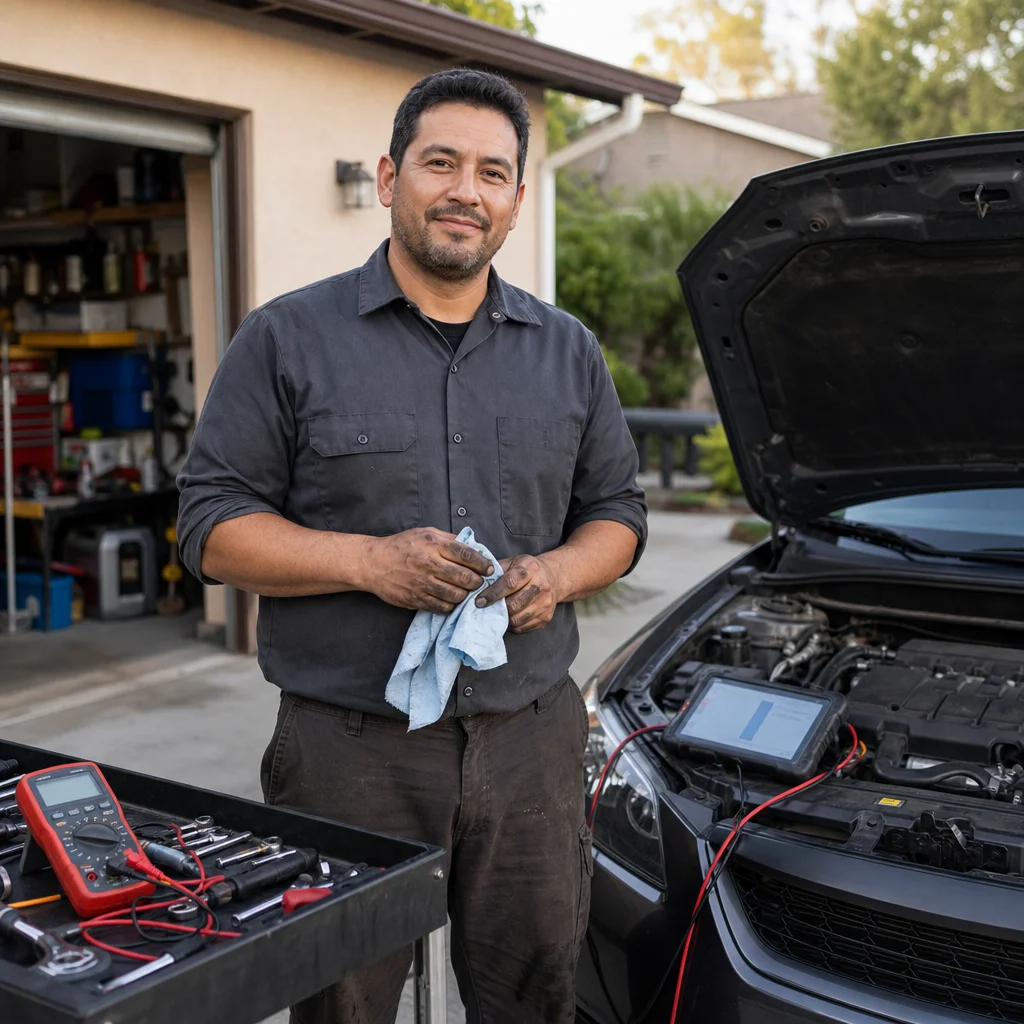
A cooling system that looks calm can still be dangerous. When the engine is hot, coolant expands and the sealed system builds pressure; removing the radiator or expansion-tank cap too soon can release boiling liquid and steam with considerable force. Treating the cap as an ordinary lid is one of the most serious mistakes a beginner can make.
Safe work starts before you touch anything. You need to know whether you’re checking coolant, investigating a leak, recovering from an overheating event, or preparing for a repair. Those situations can look similar from outside, but they don’t all call for the same action. If the temperature warning is on, steam is visible, coolant is pouring out, or the engine has lost power, stop driving and allow the vehicle to cool in a safe place rather than trying to diagnose it at the roadside.
Why the system stays dangerous after shutdown
A typical liquid-cooled engine circulates coolant through passages in the engine and cylinder head, hoses, the radiator, and often a heater core. A spring-loaded pressure cap raises the coolant’s boiling point by maintaining pressure. That helps the engine operate without constant boiling, but it also stores heat and pressure in the system.
Switching off the engine stops the water pump, but it doesn’t instantly remove the heat held in the metal and coolant. In some cases, heat can continue moving into the coolant after shutdown, and pressure may remain or even rise briefly. The outside of a hose or reservoir may not tell you what is happening inside. A quiet engine isn't necessarily a safe engine to open.
The cap may be on the radiator, a pressurized expansion tank, or a remote reservoir, depending on the vehicle. A separate overflow bottle may not be pressurized; however, you should follow the cap markings and the owner’s manual rather than guessing from its appearance. Never remove any cap marked with a hot-pressure warning while the system is hot.
Your first response to overheating
If the temperature gauge moves into the red, a temperature warning appears, or a message tells you to stop, pull over as soon as it is safe. Turn off the engine. Avoid parking over dry grass or other material that could be damaged by heat, and keep people away from the front of the vehicle if steam or spray is present.
Don't remove the cap, add cold water to a hot engine, or lean over the radiator. Opening the hood can help heat escape, but use care around fans, belts, and other moving or hot components. Electric cooling fans can start unexpectedly, including after the ignition is switched off, so keep hands, clothing, and tools away from the fan area.
If you’re on a roadway, your priority is visibility and personal safety. Move away from traffic when possible, use the vehicle’s warning equipment as appropriate, and call for roadside assistance if the location is unsafe. A vehicle that has overheated may have a damaged head gasket, warped component, failed hose, or another problem that won’t be fixed by simply adding coolant.
A sensible waiting period
There is no universal number of minutes that makes every vehicle safe to open. Outside temperature, coolant level, engine load, airflow, and the severity of the overheating event all affect how quickly pressure and temperature fall. Use the manufacturer’s instructions when available, and wait until the engine is thoroughly cool rather than relying on a short timer.
As a practical sign, the upper radiator hose should no longer feel hot or firm from pressure, but don’t squeeze hoses aggressively and don’t use that check as permission to remove a cap if the manual says otherwise. A gauge returning to normal soon after shutdown isn't proof that the coolant is safe to handle. If you see steam, hear hissing, smell very hot coolant, or notice a swollen hose, wait longer and consider professional help.
Check the cap instructions first: Before opening anything, confirm in the owner’s manual which reservoir is pressurized, what coolant specification the vehicle requires, and what procedure the manufacturer gives for a hot or overheated engine. Instructions vary between models.
Opening the system after it has cooled
When the engine and cap are cool, wear safety glasses and gloves that protect against coolant and sharp edges. Stand to one side, keep your face and body away from the cap, and place a thick cloth over it. Turn the cap slowly in the first direction specified by the cap or manual. If you hear pressure escaping, stop and let it vent; don’t continue turning until the hissing has ended.
If the cap resists, the system is still hot or the cap may be damaged. Don’t force it with pliers or use a tool to pry it off. A damaged pressure cap can fail to seal correctly and may need replacement, but replacing it is a separate job from safely opening a hot system.
Once the cap is removed, look for the coolant level only if the vehicle’s design permits that check. Some systems are filled through a pressurized expansion tank, while others use a radiator cap and a separate recovery bottle. The correct cold-fill mark is usually on the reservoir. Don't fill above that mark, and don’t confuse a low bottle with a confirmed leak or a full radiator without consulting the vehicle’s procedure.
Controlling coolant and preventing secondary hazards
Coolant is slippery and can be harmful if swallowed. Its sweet smell can attract pets, and even a small spill can create a danger in a driveway or garage. Keep children and animals away from the work area, use a drain pan or absorbent pads, and wipe up splashes promptly. Never leave a pan of coolant unattended.
Avoid draining coolant onto the ground, into a storm drain, or into household plumbing. Store used coolant in a sealed, labeled container and keep it away from food, children, and animals. Disposal and recycling options differ by location, so check your local household hazardous-waste or automotive recycling service for current instructions. Don’t mix used coolant with oil or other fluids unless the receiving service specifically directs you to do so.
Use the correct coolant specification and mixing method for the vehicle. Some products are premixed; others require the specified proportion of distilled or deionized water. Different coolant technologies aren’t automatically interchangeable, and adding an incompatible product can create maintenance problems. If you don’t know what is already in the system, check the manual or ask a parts supplier or repair professional before topping it off.
Water may be appropriate as a short-term emergency measure in limited circumstances, but it isn’t a general substitute for the specified coolant. It doesn't provide the same freeze protection, corrosion protection, or boiling protection. Never pour cold liquid into a severely hot engine simply to get back on the road; rapid temperature changes can worsen damage, and the underlying failure remains.
Finding a leak without taking unnecessary risks
After the system is cool, inspect the ground, radiator area, hoses, hose connections, water pump area, thermostat housing, and reservoir for wetness, staining, or dried coolant residue. A cooling-system leak may travel along a component before dripping, so the visible spot isn’t always the source. Also look for cracked plastic tanks, loose clamps, damaged belts, and a cap with a deteriorated seal.
Don’t put your hands near a belt, fan, pulley, or hot exhaust component while the engine is running. Never use your fingers to search for a leak from a pressurized system. A pinhole can spray a narrow stream that penetrates skin, and a moving fan can turn a minor inspection into a serious injury.
A cooling-system pressure tester can reveal leaks at a controlled pressure, but it must be used with the correct adapter and pressure limit. The test should be performed only on a cool system, with the engine off, and according to the tester and vehicle instructions. Pumping beyond the vehicle’s specified pressure can create a leak that wasn’t present or damage a weak component. Pressure testing also doesn’t replace diagnosis of internal leaks, combustion-gas intrusion, or an intermittent overheating fault.
When professional equipment is the safer choice
Professional help is appropriate when the vehicle overheated, repeatedly loses coolant, has coolant mixed with engine oil, produces persistent white exhaust, or continues to build pressure after it has cooled. It’s also the sensible option when you can’t identify the correct fill point, the cap is inaccessible, the system requires a special bleeding procedure, or a leak is close to the timing belt or other difficult components.
Some systems need a vacuum-fill tool to prevent trapped air, while others require a prescribed bleeding sequence. Air pockets can cause poor heater performance, false temperature readings, localized overheating, or sudden coolant movement when the system warms. Hybrid and electric vehicles may have separate cooling loops for the battery, inverter, or electronics. Those circuits can require model-specific procedures and shouldn't be treated as identical to the engine loop.
If coolant contacts your skin, rinse thoroughly with water. If it gets in your eyes, flush them with clean water and seek medical advice if irritation continues. If anyone swallows coolant, contact poison-control or emergency services immediately rather than waiting for symptoms. Keep the product container or label available when asking for help.
A safer recovery routine
The safest sequence is simple: recognize the warning, stop in a safe location, shut the engine off, keep away from steam and moving parts, and wait for the system to cool fully. Then identify the correct reservoir, inspect for obvious leaks without touching hazardous areas, and use only the specified coolant if a top-up is appropriate. Don’t use a refill as permission to continue driving when the cause of the overheating is unknown.
If the engine has overheated, have the cooling system inspected before relying on the vehicle for a long trip. A professional can pressure-test the system, verify the cap, check circulation and fan operation, and look for evidence of internal damage. Your job doesn’t have to be repairing every fault; it can be recognizing when a pressurized system is no longer a safe beginner project and stopping before the risk grows.