What to Do When Your Car Overheats in Traffic
An overheating car in traffic can become a serious engine and burn hazard within minutes, so I’ll help you prioritize safe stopping, cooling-system clues, and the evidence that tells you to drive only briefly—or call for a tow.
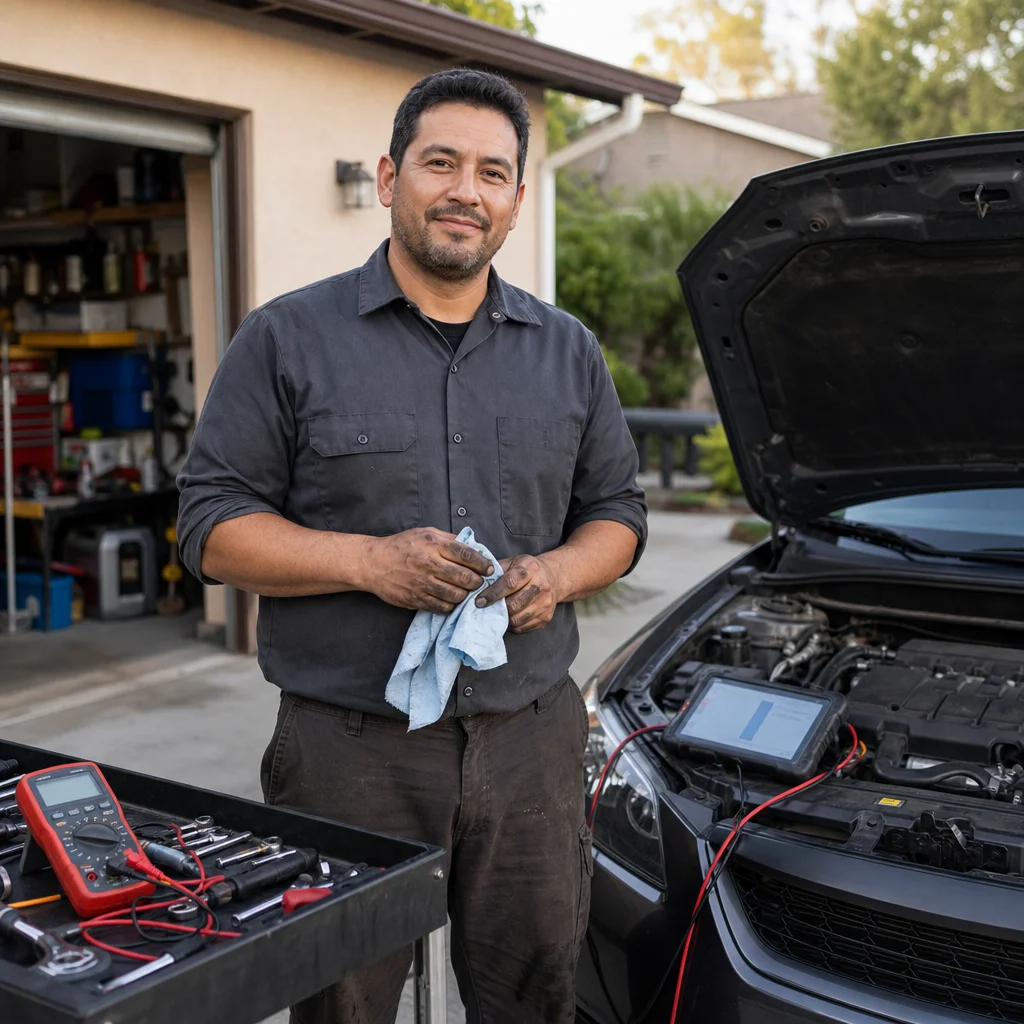
Traffic gives an overheating engine very little time to recover. If the temperature gauge climbs, a red temperature warning appears, or steam rises from under the hood, your first priority isn't reaching your destination; it’s getting people and the vehicle out of danger.
Respond immediately, but don’t panic
Turn off the air conditioning and turn on the heater at its highest temperature and fan setting while you look for a safe way out of the traffic lane. The heater can draw some heat away from the engine, although it may only slow the temperature rise briefly. Open the windows if needed, and use your hazard lights when traffic conditions make your vehicle a hazard.
Move toward the shoulder, a parking area, or another safe location as soon as you can do so without creating a collision risk. Avoid making a sudden stop in a live lane just because the gauge has moved slightly. If the temperature is rising quickly, there’s a warning light, or steam is visible, treat the situation as urgent and stop at the first reasonably safe opportunity.
Once stopped, put the transmission in park or neutral as appropriate, set the parking brake, and switch off the engine. If you’re on a freeway or another high-speed road, remain aware of passing traffic. Stay inside with your seat belt fastened if leaving the vehicle would put you in greater danger, and call roadside assistance or emergency services if the vehicle is in a travel lane or the location is unsafe.
Know the warning signs before you move: Check your owner’s manual now for the meaning of your temperature gauge, warning lights, and any manufacturer-specific instructions for an overheated vehicle. The gauge markings and recommended roadside procedure can vary by model.
Don't open the cooling system while it’s hot
A hot cooling system can be under considerable pressure. Removing the radiator cap, coolant reservoir cap, or a pressurized expansion-tank cap may release boiling coolant and steam, causing severe burns. Don’t lean over the engine bay, and don’t put your hands near the radiator fan. Electric cooling fans can start unexpectedly even after the engine has been switched off.
Wait for the engine to cool substantially before inspecting anything. That may take at least 30 minutes and can take longer after a severe overheat or in hot weather. A surface that looks calm isn’t proof that the coolant is safe to handle. If you see active steam, hear hissing, or smell hot coolant, give the system more time and keep clear.
You can look for obvious danger from a safe distance: a large puddle, a split hose, coolant sprayed around the engine bay, or a drive belt that is missing or damaged. Don’t crawl under the car beside moving traffic, and don’t touch components simply to determine whether they’re hot.
What may have caused the temperature spike
An overheating event in traffic doesn’t always mean the engine is permanently damaged, but the pattern provides useful clues. Stop-and-go driving places heavy demand on the cooling system because there’s little airflow through the radiator. If the temperature rises mainly while idling and falls when the car moves at road speed, a cooling fan, fan control, airflow blockage, or low coolant level may be involved.
A low coolant level can result from a leak, a recently serviced system that wasn’t filled correctly, or gradual loss through a faulty cap or hose. Look for wet spots or dried, crusty coolant residue around hose connections, the radiator, the water pump area, and the reservoir. Coolant color and appearance vary, so don’t identify a fluid solely by color.
A stuck thermostat, failing water pump, blocked radiator, damaged belt, or combustion leak can also prevent proper cooling. A broken serpentine belt may affect other systems as well, depending on the vehicle’s design. A temperature warning that appears suddenly, coolant pouring out, white steam, repeated overheating, or an engine running roughly points to a more serious problem than a brief traffic-related heat rise.
Some vehicles use an electric cooling fan that should run when the engine is hot, while others use a belt-driven fan or a combination of controls. You shouldn’t reach into the engine bay to test a fan. If the fan doesn’t run when the vehicle is safely cooled and the manufacturer’s procedure indicates that it should, that’s useful information for a technician—but it isn’t a reason to keep driving an overheating vehicle.
Temporary heat spike or cooling-system failure?
A temporary spike is more plausible when the gauge rises only briefly, there’s no steam or coolant loss, the warning clears after a safe cool-down, and the vehicle otherwise runs normally. Even then, the event deserves attention. A cooling system can appear normal at idle and fail again under load, and an intermittent fan or low coolant level can become a complete failure without much warning.
A likely cooling-system failure includes any of these signs:
- The gauge reaches the red zone or a temperature warning remains on.
- Steam continues to escape after you stop.
- Coolant is visibly leaking or the reservoir is empty once the engine is cold.
- The engine knocks, runs poorly, loses power, or shuts off.
- The temperature climbs again within minutes of restarting.
- A hose, belt, fan, radiator, or other cooling component is visibly damaged.
- The oil looks milky, the exhaust produces unusual white vapor after warm-up, or coolant repeatedly disappears without an obvious external leak.
These signs justify a tow rather than an attempt to limp home. Continuing to drive can turn a relatively contained cooling-system repair into major engine damage, and an engine that loses power in traffic creates an additional safety risk.
When can you drive after it cools?
The safest choice after a genuine overheat is to have the vehicle towed and inspected. A short drive may be reasonable only when the temperature event was minor, the engine is fully cool, there’s no visible leak or steam, the coolant level is correct according to the owner’s manual, and the vehicle starts and runs normally. You also need a nearby destination where you can stop safely if the temperature rises again.
If you decide to move the vehicle a short distance, keep the air conditioning off, watch the temperature continuously, and avoid heavy traffic, steep grades, high speeds, and long idling. Don’t assume that turning the heater on makes continued driving safe; it is an emergency heat-reduction measure, not a repair. Stop immediately if the gauge rises, a warning returns, steam appears, the engine loses power, or you notice an unfamiliar smell or noise.
Never remove the thermostat, pour cold water onto a hot engine, or add coolant to a pressurized system while it’s hot. A sudden temperature change can damage components, and water may be unsuitable for continued use or incompatible with the vehicle’s coolant requirements. If the cooling system is empty and the engine is hot, waiting for professional help is safer than improvising beside traffic.
What to check after the vehicle is cold
With the engine fully cool and the vehicle parked safely, compare the coolant level with the markings on the reservoir. If the level is low, look for a leak before assuming that adding fluid solves the problem. Use the coolant type and mixture specified by the vehicle manufacturer; different coolant products aren’t automatically interchangeable. If the manual permits an emergency water addition, treat it as a temporary measure and arrange proper service as soon as possible.
Inspect the accessible parts of the serpentine belt and hoses without touching anything that remains hot. A loose, frayed, or missing belt, a soft or swollen hose, a fresh puddle, or coolant residue is a reason not to drive. Check the engine oil level as well, but don’t confuse low oil with a substitute explanation for an active coolant problem. Low oil can contribute to engine heat and damage, but adding oil won’t correct a failed radiator, fan, hose, or water pump.
If no obvious problem appears, the vehicle still needs diagnosis before normal use. A repair shop may pressure-test the cooling system, check fan operation and controls, test the thermostat, inspect coolant circulation, and check for evidence of combustion gases entering the cooling system. A diagnostic scanner can help identify temperature-sensor or fan-control faults, but a code alone doesn’t prove which mechanical part has failed.
Preventing a repeat in traffic
Once the immediate problem is handled, have the cause identified rather than simply clearing the warning or topping off the reservoir. Periodically check the coolant level when the engine is cold, look for small leaks, and follow the maintenance schedule for coolant, belts, hoses, and related components. Keep the front of the radiator and condenser reasonably clear of debris, but use care when cleaning fins because they bend easily.
Pay attention to early clues: a heater that suddenly blows cold air, a sweet coolant smell, a fan running unusually often, a temperature gauge that behaves differently than usual, or a small puddle after parking. Addressing those signs is usually less disruptive than discovering the underlying fault during a commute.
If your car overheats in traffic, shut it down safely, protect yourself from hot coolant and moving traffic, and use the temperature behavior only as a clue—not as permission to keep driving. When the cause is uncertain, the temperature warning returns, or coolant is escaping, a tow is the sensible choice. It protects both the engine and everyone who would otherwise be sharing the road with a vehicle that may fail again.