Why Does the Car Pull Right Only on a Crowned Road?
A crowned road can make a healthy car drift right, but tire pressure, alignment, brake drag, and worn steering parts can turn a normal effect into a warning. I’ll help you separate road slope from problems that deserve inspection.
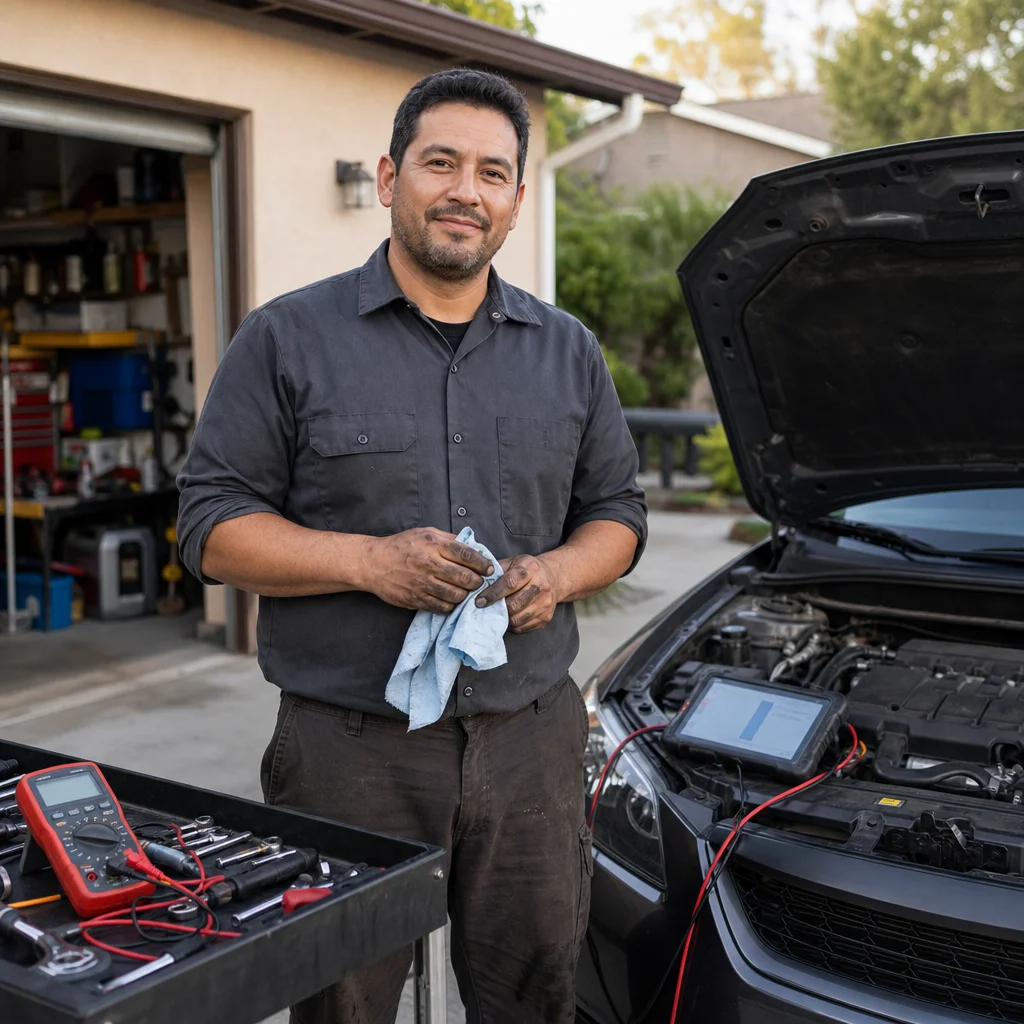
A slight drift to the right on a crowned road is often caused by the pavement rather than a fault in the car. Roads are commonly shaped with a raised center and lower edges so rain can drain away, creating a cross-slope that encourages a vehicle toward the right shoulder.
That effect should be mild and predictable, though. If the car pulls sharply, continues pulling on a reasonably level road, changes direction under braking, or needs constant steering correction, the road crown may only be exposing another problem. A sensible diagnosis starts with the road, then moves through tires, alignment, brakes, and suspension.
Why a crowned road affects steering
The crown is the road’s side-to-side slope. On a typical two-way road, the center is higher than the outside edges, so the right lane slopes down toward the right. Gravity acts on the vehicle through that slope, and the tires follow the combined direction of the pavement and steering geometry. The result can feel like a gentle pull or drift to the right.
The effect varies from road to road. A newly paved or strongly crowned surface may produce more noticeable movement than a broad, nearly flat lane. Ruts, patched pavement, grooves, standing water, and the transition between lanes can also influence the steering. A car may pull one way on one road and feel neutral on another without anything changing mechanically.
Road crown isn't a precise test of alignment. If you evaluate the car only on a sloped road, you may mistake a normal pavement effect for a suspension fault—or overlook a real fault because the road’s slope masks it in one direction.
Choose a safer comparison surface: Test the steering only where traffic, visibility, and road conditions allow it. Use a quiet, reasonably level section of pavement, keep both hands available, and follow the vehicle owner’s safety guidance rather than trying to diagnose the problem at speed.
Start with the simplest checks
Begin with tire pressures when the tires are cold. Use the pressure listed on the driver-door placard or in the owner’s manual, not the maximum pressure molded into the tire sidewall. A tire that is noticeably low can increase rolling resistance and make the car drift toward that side. Unequal pressures can also make a mild road-crown effect feel much stronger.
Look at the tires for uneven tread wear, bulges, cuts, separated tread, or objects lodged in the tread. Wear concentrated on one edge can point toward alignment or suspension trouble. A tire with internal damage may not look obviously flat, so unusual vibration, a changing pull, or a new thumping sound deserves attention.
Consider whether the symptom began after a tire replacement, rotation, wheel repair, pothole impact, or curb strike. Tires can have a built-in tendency to pull because of their construction, sometimes called radial pull or tire conicity. Two tires with similar tread and pressure can still respond differently to the road.
If your vehicle uses a temporary spare, a mismatched tire, or tires with substantially different sizes or types, handling can change. Check the vehicle’s fitment information before swapping tires or changing positions. Some vehicles, including certain all-wheel-drive systems, have specific requirements for tire diameter and replacement strategy.
Separate road crown from a true pull
A useful comparison is to notice what happens on different surfaces rather than making repeated abrupt tests. If the car drifts gently right on a crowned road but feels nearly neutral on a flatter road, crown is a strong possibility. If it pulls right everywhere, the vehicle needs a closer inspection.
Pay attention to how quickly the movement occurs. A slow drift over several seconds with the steering wheel nearly centered may be consistent with pavement slope. A sudden tug, a steering wheel that sits visibly off-center, or a need to hold the wheel against the pull is less likely to be explained by crown alone.
The direction can also provide clues, but it isn't conclusive. A pull that changes when you move between lanes may be pavement-related. A pull that remains the same on both sides of a level road may point more strongly to tires, alignment, a dragging brake, or a suspension problem.
Don't deliberately release the steering wheel in traffic to measure the pull. A road test should be a brief observation under controlled conditions, not an attempt to see how far the vehicle travels unattended. Keep the vehicle within its lane and stop if the steering, braking, or tires feel unsafe.
Alignment and steering geometry
Wheel alignment describes the angles at which the wheels meet the road. The main settings include toe, camber, and caster, though the exact adjustment options depend on the vehicle. A pothole or curb impact can alter an angle, and worn components can allow the setting to change while driving.
A right pull can result from unequal alignment from side to side, but the steering wheel may also sit crooked when the car is traveling straight. Uneven caster or camber can affect directional stability, while incorrect toe commonly contributes to tire wear and a nervous or wandering feel. Alignment symptoms can overlap, so replacing a part or adjusting one setting based only on the pull’s direction can waste money.
A proper alignment check should include an inspection of steering and suspension components first. If a tie-rod end, ball joint, control-arm bushing, wheel bearing, or other part is loose or damaged, an alignment reading may not remain correct. Ask for the measured readings and the vehicle-specific specifications rather than assuming a printout showing “green” values explains every handling concern.
Confirm the correct specifications: When arranging an alignment or suspension inspection, provide the exact year, make, model, trim, and drivetrain. Alignment targets and tire requirements can differ between versions, and current owner-manual or manufacturer information is more reliable than a generic chart.
Don’t overlook a tire or brake problem
Tire-related pulls are common because the tires are the only parts in direct contact with the road. A tire may have uneven construction, different wear from its mate, or a pressure problem. If the pull began after installation, a technician may be able to compare the tires’ behavior by moving them in a permitted position or using a diagnostic tire test. Tire rotation patterns aren't universal, especially with directional or staggered tires, so don’t rearrange them casually.
A brake that drags can pull the vehicle toward one side, particularly after the brakes heat up. A sticking caliper, restricted brake hose, seized slide, or parking-brake problem may cause one wheel to run hotter than the others. Other clues include a burning smell, reduced fuel economy, a hot wheel, uneven pad wear, or the vehicle pulling more strongly after braking.
Avoid touching a wheel or brake component to compare temperatures after driving. Brakes can remain hot enough to burn you, and a damaged tire or wheel may also be dangerous. If you notice smoke, a strong burning odor, grinding, a brake warning light, or a substantial change in braking, stop in a safe location and arrange professional help rather than continuing the test.
Suspension damage and steering effort
A worn or damaged suspension part can make the vehicle react differently to road slope and bumps. Look for clunks, rattles, excessive bouncing, uneven ride height, vibration, or steering that feels loose. A damaged spring, bent control arm, deteriorated bushing, or worn ball joint can affect both alignment and safety.
Power steering issues can create a different sensation from a simple pull. A low fluid level on a hydraulic system, an electric-assist fault, or unequal steering assistance may make the wheel feel heavy or inconsistent. Warning lights, whining, notchy steering, or sudden changes in steering effort should be treated as a reason to stop diagnosing through road tests.
Some vehicles naturally have steering characteristics that make them more sensitive to crown, tire design, or crosswind. A front-wheel-drive car, a vehicle with wide tires, and a car with a short or stiff suspension may transmit road conditions more clearly than a heavier vehicle with softer suspension. That can explain sensitivity, but it doesn't excuse a new or worsening symptom.
When the pull is probably normal—and when it isn’t
A mild, repeatable drift toward the low side of a crowned road is generally less concerning when the tires are correctly inflated, the steering wheel is close to centered, braking is straight, and the vehicle tracks normally on a flatter surface. Even then, the behavior shouldn't be so strong that it demands continuous correction.
Arrange an inspection if the pull is present on level roads, has appeared suddenly, is getting worse, follows a pothole or collision, or comes with uneven tire wear, vibration, noises, or a crooked steering wheel. Treat pulling during braking as a higher priority because it can affect your ability to control the vehicle in an emergency.
If you’re unsure whether the surface is actually level, don’t rely on visual judgment alone. A road can look flat while still having a cross-slope, and a parking lot can have drainage angles or worn channels. A qualified technician can compare tire condition, brake temperatures using suitable equipment, steering and suspension play, and alignment measurements.
The practical order is simple: check cold tire pressures and visible tire condition, compare the behavior on a safe and reasonably level road, then have the vehicle inspected if the pull persists or comes with other symptoms. Road crown can explain a gentle rightward drift, but a strong, new, or inconsistent pull is worth treating as a vehicle problem until the tires, brakes, alignment, and suspension have been checked.