What Does a Flashing Check Engine Light Mean?
A flashing check engine light usually means an active misfire that can quickly turn a manageable repair into catalytic-converter damage. I’ll explain what to prioritize, when to stop driving, and how to choose the least wasteful next diagnostic step.
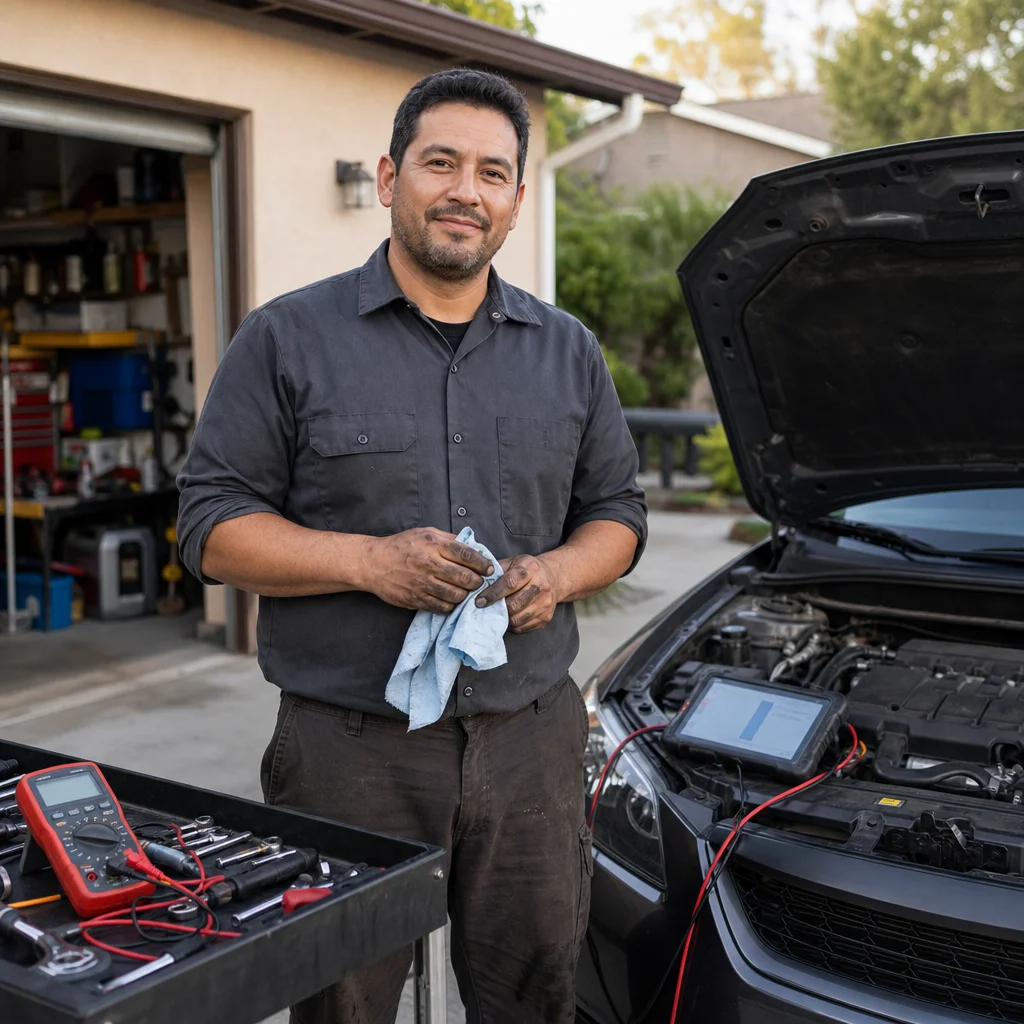
A flashing check engine light deserves more attention than a steady one. In most vehicles, it means the engine computer has detected a misfire severe enough to threaten the catalytic converter, although the exact warning strategy varies by vehicle. Continuing to drive normally can turn a fault such as a worn spark plug into a much more expensive exhaust-system repair.
What a flashing check engine light usually means
An engine misfire occurs when one or more cylinders fail to burn their air-fuel mixture correctly. The result may be unburned fuel entering the exhaust. If that fuel reaches a hot catalytic converter, it can ignite inside the converter and raise its temperature beyond what the converter can tolerate.
That is why a flashing warning is generally more urgent than a steady check engine light. The computer isn't simply reporting that an emissions reading is outside its expected range; it is often warning that the current operating condition could cause damage. You may also notice shaking, hesitation, reduced power, a strong fuel smell, popping from the exhaust, or an uneven idle.
The light may flash only under acceleration and return to a steady light while idling. That doesn't necessarily mean the problem has gone away. Heavy load can make a weak ignition coil, damaged spark plug, fuel-delivery problem, or mechanical fault show itself more clearly.
Decide whether to keep moving: If the engine is shaking badly, losing power, producing smoke, smelling strongly of raw fuel, or flashing continuously, pull over somewhere safe and arrange a tow or professional assessment. A short, gentle trip may be reasonable only when the vehicle is running smoothly enough to control safely and a repair professional specifically advises it.
What you should do immediately
First, reduce engine load. Ease off the accelerator, avoid hard acceleration, and switch off unnecessary accessories if doing so doesn't affect visibility or safety. Move out of traffic to a safe location. Don't keep driving at highway speed simply because the car still moves under its own power.
Once stopped, look for obvious signs without reaching into a hot or moving engine compartment. Check whether there is smoke, a strong smell of fuel, leaking fluid, or a temperature gauge that is climbing. If the engine is overheating, smoking, or behaving dangerously, shut it off and seek roadside assistance.
If the light stops flashing after you slow down, you still need to treat the event as significant. The computer may have detected the misfire only during the condition that triggered it. Turning the engine off can also temporarily clear the symptoms without fixing the cause.
Don't repeatedly restart the engine to see whether the warning returns. Several restart attempts can add more unburned fuel to the exhaust, especially if the underlying ignition or fuel problem remains. Avoid clearing the code before it is read, since erasing codes removes useful diagnostic information and resets some vehicle monitors.
Why driving can make the repair more expensive
The catalytic converter is designed to clean exhaust gases after combustion has occurred. It isn't designed to burn a large quantity of raw fuel. An active misfire can overheat the converter’s internal material, causing it to melt, break apart, or become restricted.
A damaged converter can create additional symptoms, including poor acceleration, reduced fuel economy, rattling, or an engine that feels increasingly unable to breathe. Replacing it may cost substantially more than correcting the original misfire. The exact repair cost depends on the vehicle, the failed part, labor rates, and whether other damage is present, so a flashing light is a reason to diagnose promptly rather than guess at a parts replacement.
A misfire can also wash fuel onto the cylinder wall in some operating conditions. That fuel can reduce lubrication on the cylinder surface and dilute the engine oil. This isn't an automatic result of every brief misfire, but it is another reason not to continue using the vehicle as if the warning were routine.
Common causes of a flashing warning
Worn or fouled spark plugs are common causes, particularly when the vehicle has missed its normal plug service or has developed an oil or coolant leak into a plug well. A failing ignition coil, damaged coil connector, or ignition-wire problem can produce a similar symptom. On many modern vehicles, the computer can identify the affected cylinder and store a code such as P0301 for a misfire on cylinder one or P0300 for random or multiple-cylinder misfires.
Fuel-related faults are also possible. A weak or clogged injector, low fuel pressure, contaminated fuel, or an intake leak can upset the mixture enough to cause misfires. Mechanical problems, including low compression, a valve-train fault, or incorrect timing, are less convenient possibilities but shouldn't be dismissed when basic ignition checks don't solve the problem.
The code identifies a detected condition, not always the failed part. For example, a cylinder-specific misfire code doesn't prove that the spark plug is bad. A technician may need to inspect the plug, swap components between cylinders, test injector operation, check compression, or examine live data before selecting a repair.
Using a scanner without wasting money
If the vehicle is safely parked and you already own a compatible diagnostic scanner, reading the stored and pending codes can provide useful direction. Record the codes and any freeze-frame information before clearing anything. Freeze-frame data may show engine speed, load, temperature, and other conditions present when the fault was recorded.
A basic code reader may not display manufacturer-specific information or detailed live data. It also can't determine whether the underlying problem is a coil, plug, injector, wiring fault, or mechanical issue by itself. Treat the scanner as a way to communicate symptoms more clearly, not as an automatic parts-ordering tool.
If the light is flashing and the engine is running roughly, don't spend an hour testing parts in a driveway while the engine continues to misfire. A code scan performed at a parts store may be useful, but store scanning policies and equipment vary, and you shouldn't drive an unsafe or severely misfiring vehicle there just to obtain a code.
Check the information before acting: Use your owner’s manual to confirm what a flashing warning means for your specific vehicle, then verify any towing, roadside-assistance, or diagnostic recommendation with the manufacturer, a qualified repair shop, or your vehicle’s service information. Warning-light behavior and safe operating limits differ by model.
When a short drive might be acceptable
The safest option for a continuously flashing light or a severely rough-running engine is usually a tow. That is especially true if the vehicle has very little power, can't maintain a safe speed, smells strongly of fuel, is overheating, or the warning begins flashing under ordinary driving rather than only during a brief event.
There are situations in which a repair professional may advise a short, low-speed drive to a nearby shop. That decision should consider traffic, distance, weather, vehicle control, and how severely the engine is misfiring. Keep engine speed and load low, avoid steep hills and rapid acceleration, and stop if the vehicle worsens. These steps reduce risk; they don't make continued driving harmless.
Don't assume that a newer vehicle, a hybrid, or a vehicle with a recently replaced battery is exempt. Modern control systems can detect misfires quickly, but a new battery or reset computer may erase learned information without correcting the mechanical problem.
Avoid these common mistakes
The most expensive mistake is treating the warning as a minor inconvenience because the vehicle still starts. Another is replacing every ignition part at once without testing. Spark plugs and coils are plausible causes, but replacing parts at random can leave the actual fault unresolved and make the eventual diagnosis harder.
It is also unwise to disconnect the battery or clear the codes before a shop sees the vehicle. That can erase evidence, reset readiness monitors, and complicate emissions-related inspection requirements where applicable. Requirements vary by state and can change, so check your state’s current motor-vehicle guidance rather than relying on general advice if an inspection is approaching.
Finally, don't crawl under the vehicle, touch hot exhaust components, or work around belts and fans while the engine is running. A flashing warning is a diagnostic problem, but the first priority is still safe control of the vehicle and safe access to the repair.
The sensible next step
Treat a flashing check engine light as an active problem, not a maintenance reminder. Reduce load, move to safety, check for overheating or other serious symptoms, and arrange diagnosis before normal driving resumes. If you can safely obtain the codes, record them without assuming they name the failed part. The most cost-efficient repair is usually the one that identifies the misfire early and prevents secondary catalytic-converter damage.