What Does a Sweet Smell Inside the Car Mean?
A sweet smell may point to a coolant leak, but it can also come from a harmless spill or HVAC odor. I’ll help you make the first useful checks, recognize overheating risks, and decide whether to drive, arrange a tow, or book a repair.
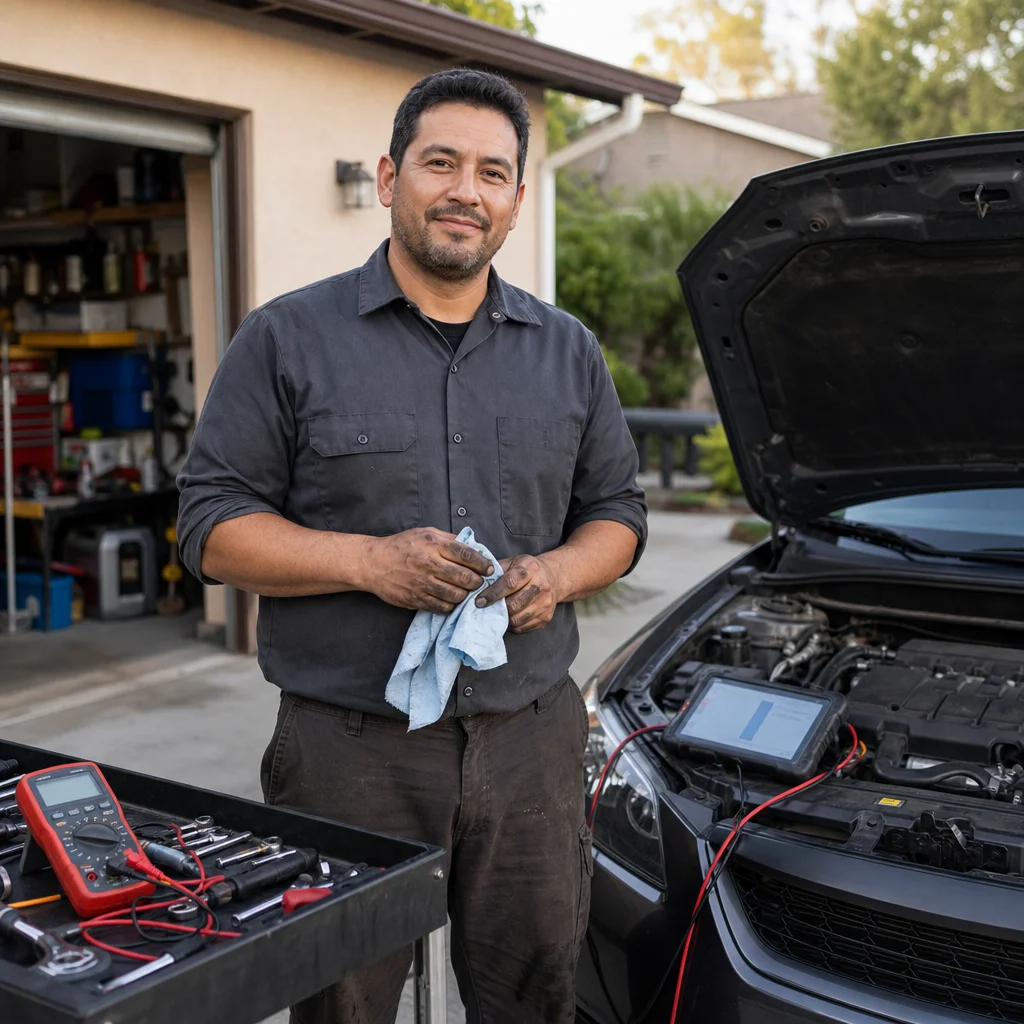
A sweet smell inside the car often makes drivers think of spilled soda or an air freshener. Sometimes that’s all it is, but a maple-syrup-like odor can also mean engine coolant is leaking and entering the passenger compartment through the heating system. The important decision isn't simply identifying the smell—it’s determining whether the car is safe to keep driving.
What the smell usually means
Modern engine coolant, sometimes called antifreeze, commonly has a sweet chemical odor. It circulates through the engine and usually passes through a small radiator called the heater core. Warm air from the heater blows across that component and into the cabin. If coolant leaks from the heater core, hoses, or connections, the smell can travel through the vents.
A coolant leak elsewhere in the engine bay may also be noticeable inside the car, especially when the ventilation system draws in outside air. In that case, you might smell coolant more strongly after parking, with the hood open, or when the fan is running. The odor can linger even after a small leak has stopped dripping.
Not every sweet smell is coolant. A sugary drink, cleaning product, scented accessory, or residue from a previous spill can produce a similar smell. Windshield-washer fluid may also have a noticeable fragrance, although its odor varies by product and is often more alcohol-like than syrupy. A smell that appears only after someone spills something in the cabin is less concerning than one that becomes stronger when you use the heater or notice other cooling-system symptoms.
Signs the heater core may be leaking
A heater-core leak tends to leave clues inside the passenger compartment. Look for a greasy or slightly oily film on the inside of the windshield, especially when the defroster is used. The windows may fog more readily than usual, and the fog can be difficult to clear. You may also notice dampness or a sweet-smelling residue on the front passenger-side carpet, although the location varies by vehicle design.
The cabin heater may stop producing steady heat. It might blow cool air, alternate between warm and cool, or work normally until the coolant level drops further. A gurgling sound behind the dashboard can occur when air enters the cooling system, but that sound alone doesn’t prove a heater-core problem.
A heater-core leak matters because it can reduce the amount of coolant available to control engine temperature. It can also make the windshield harder to see through and leave slippery residue on interior surfaces. Those are reasons to treat the problem as more than an unpleasant odor.
Check for evidence under the hood
With the engine fully cool, inspect the coolant reservoir and the area around it. The reservoir usually has low and high markings, but its location and appearance differ between vehicles. A low level, dried crust, wet hose connection, or colored residue can support the suspicion of a leak. Coolant colors vary widely, so color alone isn't a reliable way to identify the fluid or choose a replacement.
Look around the radiator, hoses, thermostat housing, water pump area, and the ground beneath the front of the vehicle. Some leaks appear only while the cooling system is warm and pressurized, so a dry driveway doesn't rule one out. A leak may also run along a component before dripping, making its original source difficult to see.
Don't remove a radiator cap or pressurized expansion-tank cap while the engine is hot. Hot coolant can spray out and cause serious burns. Keep your hands, clothing, and tools away from belts and fans, since electric cooling fans can start unexpectedly even when the engine is off.
Check the cooling system safely: Let the engine cool completely, then compare the reservoir level with the markings in your owner’s manual. Verify the specified coolant type and the correct filling procedure before adding anything; never mix products based only on color, and never use the smell as a reason to open a hot cap.
Decide whether it’s safe to drive
A mild odor with a normal temperature gauge, a full coolant reservoir, no visible leak, and no windshield-fogging problem may allow you to arrange a short trip to a repair shop—but it still deserves prompt attention. Keep the trip limited, avoid heavy traffic or steep routes if possible, and monitor the temperature gauge continuously. If the smell grows stronger or the cabin begins fogging, stop reassessing the situation and arrange other transportation.
Don't continue driving if the temperature gauge rises above its normal position, an overheating warning appears, steam comes from under the hood, the coolant level is very low, or coolant is visibly leaking. Stop in a safe location, switch off the engine, and allow it to cool. A tow is usually safer and less expensive than turning a small cooling-system repair into major engine damage.
A coolant warning light can mean different things depending on the vehicle. Treat it seriously, consult the owner’s manual for the exact warning, and don’t assume that adding coolant immediately makes the car safe. If the system is leaking quickly, the new coolant may simply escape before it can protect the engine.
There’s another reason to avoid driving with a suspected heater-core leak: coolant vapor or residue can affect visibility. If the windshield develops a film or fog that the defroster can't clear reliably, driving becomes a visibility problem even if the engine temperature remains normal.
What a repair shop may test
A technician will typically begin by checking the coolant level, inspecting accessible components, and looking for traces of leakage. A cooling-system pressure test can help reveal a small external leak that isn’t obvious during a visual inspection. If the cabin shows heater-core symptoms, the technician may inspect the heater hoses, the firewall connections, and the area under the dashboard.
If no external leak is visible, the shop may consider an internal engine coolant leak or another cooling-system fault. A combustion-gas test, compression-related testing, or other diagnostic methods may be appropriate depending on the symptoms. These tests are useful when coolant is disappearing without leaving a clear puddle.
Repair difficulty varies considerably. A loose hose clamp or damaged hose may be relatively straightforward, while replacing a heater core can require substantial dashboard disassembly. The odor alone can't tell you which repair is needed, so replacing parts based only on the smell is a poor use of money.
Harmless odors and simple checks
If the smell is strongest near a cup holder, floor mat, or recently cleaned surface, inspect for a spill before assuming a mechanical failure. Remove washable mats, check beneath the front seats, and wipe up residue with a suitable interior cleaner. Don’t use a strong fragrance to cover the odor; masking it can make a developing leak harder to notice.
Pay attention to when the smell occurs. An odor that appears only when the heater or defroster runs points more toward the HVAC system or heater core than one that is present with the ventilation off. A smell that follows the vehicle from outside may come from a leak in the engine bay. If it occurs after recent service, check whether coolant was spilled during the work—but don’t dismiss a persistent smell solely because maintenance was just performed.
Coolant is hazardous if swallowed and can attract animals because of its sweet taste. Clean up spills promptly, keep containers closed, and don’t leave drained fluid where children or pets can reach it. Follow local disposal requirements or use an appropriate automotive-fluid collection point rather than pouring it onto the ground or into a drain.
The sensible next step
Start with a cold-engine inspection and a review of the symptoms: coolant level, visible leaks, windshield film, damp carpet, heater performance, and the temperature gauge. If the odor is isolated and clearly comes from a cabin spill, clean the area and see whether it disappears. If it returns, changes with heater use, or appears alongside any cooling-system warning, arrange an inspection.
When the engine is overheating, coolant is rapidly escaping, or visibility is affected, don’t drive to diagnose the problem. Shut the vehicle down safely and have it towed. When the warning signs are absent, a short, cautious trip to a qualified repair facility may be reasonable, but the underlying leak still needs attention before normal driving resumes.