Which Car Repairs Should You Not Attempt in an Apartment Parking Lot?
Apartment parking lots limit more than workspace: noise, spills, lifting, fire risk, and access can change which repairs are reasonable. I’ll explain how these factors fit together so you can choose a safer alternative without guessing.
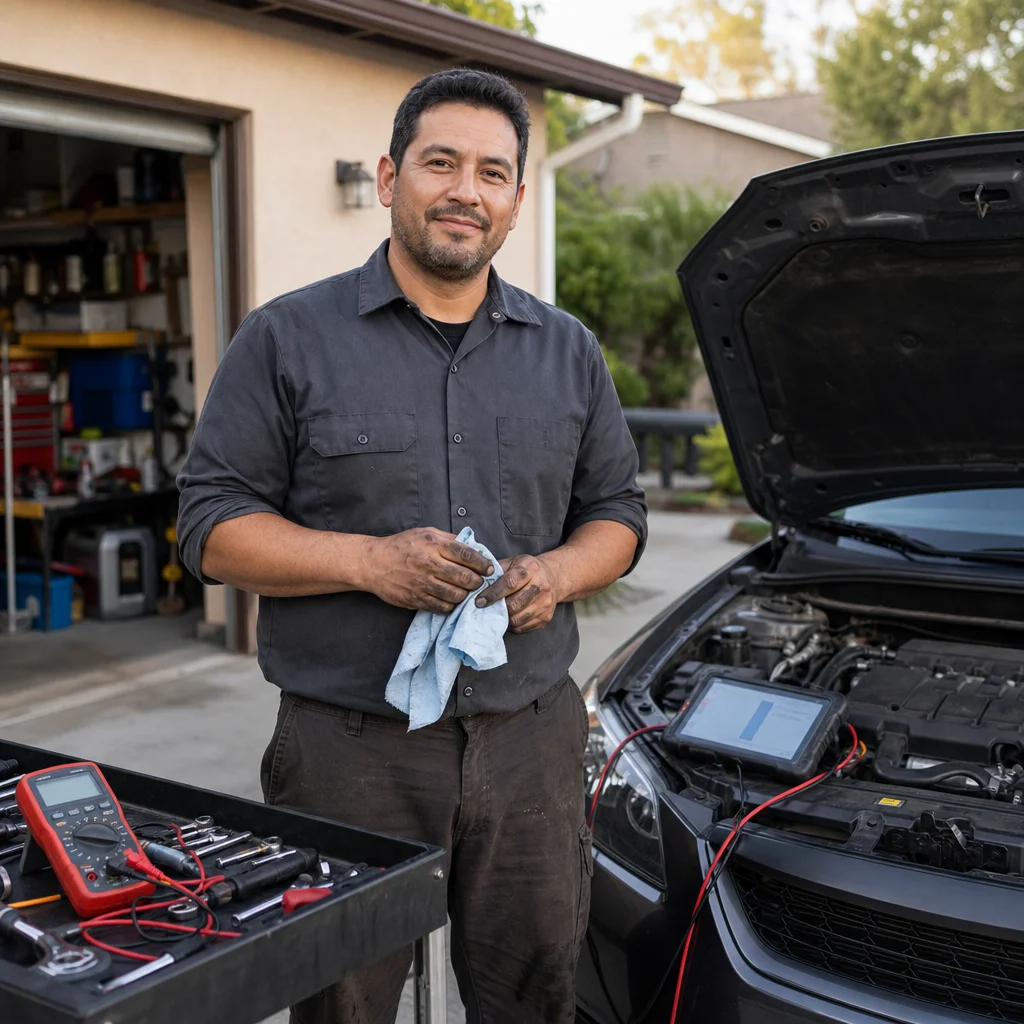
A repair that seems manageable in a driveway can become unsafe or unacceptable in an apartment parking lot. You may lack a level surface, permission to work on the vehicle, adequate lighting, a way to contain fluids, or enough room to keep other residents away from the car.
The key question isn’t only whether you know how to perform the repair. It’s whether the location lets you control the main risks if something goes wrong. A useful rule is that repairs involving substantial lifting, hazardous fluids, heat, fire, loud tools, or a disabled vehicle usually belong in a proper workshop.
Repairs that should stay out of the parking lot
Jobs involving serious lifting or support
Avoid repairs that require you to work underneath a vehicle unless you have a suitable, level work area and properly rated lifting equipment. This includes replacing fuel tanks, exhaust components, suspension parts, transmissions, differentials, and many underbody shields. A tire change using the vehicle’s supplied jack is one thing; keeping a vehicle raised while you remove major components is another.
A parking lot can hide problems that matter. Pavement may slope toward a drain, the surface may be cracked or soft, and passing vehicles can create vibration or distraction. The parking brake and wheel chocks are important, but they don’t turn an unsuitable lifting location into a safe workshop. Never rely on a hydraulic jack alone to support a vehicle while you work beneath it.
Brake and suspension work deserves particular caution. Replacing a brake pad or wheel assembly might be possible in some controlled settings, but a mistake can affect steering or stopping. If the vehicle must remain elevated for a long period, springs need to be compressed, or a hub, knuckle, or control arm must be separated, arrange a shop or a qualified mobile mechanic instead.
Fuel-system and large-fluid repairs
Don't attempt repairs that open the fuel system in an apartment parking lot. Fuel-pump replacement, fuel-line work, fuel-tank removal, injector replacement involving opened lines, and draining a tank can release flammable vapors and liquid fuel. Even a small spill can spread across pavement, enter a storm drain, or create a hazard for residents and vehicles.
The same concern applies to jobs involving large amounts of engine oil, transmission fluid, coolant, brake fluid, power-steering fluid, or refrigerant. An oil change may look routine, but an apartment lot is a poor place for it if you can’t prevent spills, collect the old fluid, and transport it for proper recycling. A damaged drain plug or overturned container can turn a short job into a cleanup and disposal problem.
Air-conditioning service should generally be left to a properly equipped technician. Refrigerant handling requires recovery equipment, and intentionally releasing refrigerant is prohibited under federal environmental rules. The equipment and procedures also vary by refrigerant type, so a simple-looking recharge isn't a good parking-lot project.
Welding, cutting, grinding, and open flames
Keep repairs involving welding, torch work, open flames, or significant sparks out of a residential parking area. Exhaust repairs that require cutting or welding, seized fasteners that you plan to heat, and body repairs involving a torch can ignite fuel vapors, dry vegetation, plastic parts, or nearby materials. Sparks can travel farther than expected, especially around parked cars.
Grinding and cutting also create noise, metal fragments, and dust. An angle grinder may damage nearby paint or windows, and a fire extinguisher within reach doesn't remove the underlying risk. If a repair needs heat or cutting to remove a fastener, have the work done in a controlled shop environment.
Battery work isn't automatically harmless. Disconnecting a conventional 12-volt battery for a basic service task is usually very different from welding near the vehicle, jump-starting a damaged battery, or working on a battery that is swollen, cracked, leaking, or hot. Stop if you notice smoke, a strong chemical odor, hissing, or unusual heat, and move people away rather than continuing to diagnose it beside other vehicles.
High-voltage hybrid and electric-vehicle repairs
Don't open, disconnect, or repair a hybrid or electric vehicle’s high-voltage battery system in an apartment lot. High-voltage cables are often marked with bright colors, but visual identification alone isn’t enough. The battery can retain dangerous energy, and disabling procedures, insulated tools, personal protective equipment, and manufacturer-specific training may be required.
This includes battery-pack removal, inverter and motor work, high-voltage cable repairs, and attempts to dry or repair a vehicle that has been exposed to flooding. A qualified repair facility can isolate the system and assess hidden damage. Treat a damaged or smoking electric vehicle as an emergency rather than a do-it-yourself project.
Repairs that immobilize the vehicle or block access
A parking lot is shared space, so a repair becomes unsuitable when it prevents residents from using spaces, lanes, entrances, or emergency access. Engine replacement, transmission removal, clutch work, major cooling-system disassembly, and extensive body repairs can leave a vehicle partly dismantled for hours or days. Parts, tools, jack stands, and removed components also create trip and vehicle-damage hazards.
Noise matters as well. Impact guns, air compressors, hammering, grinding, and repeated engine running may violate property rules or disturb residents even when the mechanical work itself is technically possible. A repair that requires several attempts is especially difficult to manage politely in a dense community.
Repairs involving airbags or seat-belt pretensioners
Airbag modules and seat-belt pretensioners contain pyrotechnic devices. Steering-wheel airbag replacement, dashboard removal around passenger airbags, and work on deployed restraint systems should be handled according to the vehicle manufacturer’s procedures by a trained technician. Improper handling can cause sudden deployment or leave the restraint system unable to protect occupants in a crash.
Replacing a fuse or inspecting an accessible connector isn't the same as repairing the restraint system. If the airbag warning light is on, don’t assume the problem is minor because the vehicle still drives normally. Arrange diagnosis with a shop that can read the relevant safety-system codes and complete the required post-repair checks.
Check your parking rules and repair limits: Before starting any vehicle work, review your lease, condominium or homeowners association rules, and local requirements for noise, fluid disposal, disabled vehicles, and use of shared parking areas. These rules can differ by property and jurisdiction.
How to decide whether a small repair is reasonable
Some low-risk tasks may be practical if the property permits them and the vehicle can remain safely parked. Examples can include replacing windshield wipers, changing a cabin air filter, replacing a headlight bulb when access is straightforward, checking fluid levels, installing a battery in good condition, or replacing a small trim piece. Even these jobs need enough light, stable footing, and a way to keep screws, fluids, and tools from becoming hazards.
Before you begin, consider five questions. Can the vehicle stay safely on the ground? Will the job release fuel, refrigerant, or a large amount of fluid? Will you need heat, sparks, loud powered tools, or extended engine running? Can you finish the work in the time allowed? If the repair fails, can the car still be moved without creating a hazard?
If any answer is concerning, change the plan. A repair manual or video can explain the mechanical steps without explaining whether your parking space is an appropriate worksite. Location is part of the repair decision, not an afterthought.
Safer alternatives for apartment residents
A mobile mechanic may be suitable for some repairs, but “mobile” doesn’t mean every job can be performed safely in a parking lot. Ask in advance whether the technician handles the specific repair, brings the necessary lifting and diagnostic equipment, manages fluids, and can work within the property’s rules. Major lifting, fuel-system work, high-voltage repairs, and jobs requiring a controlled shop may still need a traditional facility.
For a vehicle that can’t be driven, roadside assistance can arrange a tow or, in some cases, a limited on-site service. Tell the provider what happened and whether the vehicle is leaking fuel, smoking, sitting low, or showing signs of battery damage. Accurate information helps them send the right equipment and avoid putting a technician in an unsafe situation.
You can also ask a repair shop whether it offers after-hours drop-off, pickup and delivery, or a diagnostic appointment before committing to a larger repair. A diagnosis may reveal that the vehicle only needs a sensor, hose, or electrical connection rather than the major repair you feared. Don’t dismantle the vehicle in the lot just to save the cost of an initial inspection.
What to do if a parking-lot repair starts going wrong
Stop work if the vehicle shifts, a jack moves, a fluid begins spreading, fuel odor becomes strong, wiring heats up, or smoke appears. Keep residents and children away, avoid starting the engine, and don’t wash automotive fluids toward a drain. For a fuel fire or an actively burning vehicle, move away and call emergency services rather than trying to manage it with improvised equipment.
For a spill, prevent people and vehicles from driving through it if you can do so without entering danger, then contact property management and the appropriate cleanup or emergency service. Don’t hide a spill under absorbent material and leave it behind. Automotive fluids can remain hazardous even when the pavement looks dry.
A parking lot is best treated as a place for limited, low-risk maintenance—not as a substitute for a garage. If the job needs you under a raised vehicle, exposes flammable or pressurized materials, creates heat or sparks, involves high-voltage systems, or leaves the car disabled and parts scattered around it, use a shop or qualified mobile service. That choice may cost more upfront, but it reduces the chance of injury, property damage, rule violations, and a repair that becomes harder to recover from.