Why Does a Car’s Oil Pressure Warning Appear Only at Hot Idle?
I’ll compare the common causes of an oil-pressure warning that appears only when the engine is hot and idling, from low oil and faulty wiring to worn bearings, while explaining the safest next diagnostic step.
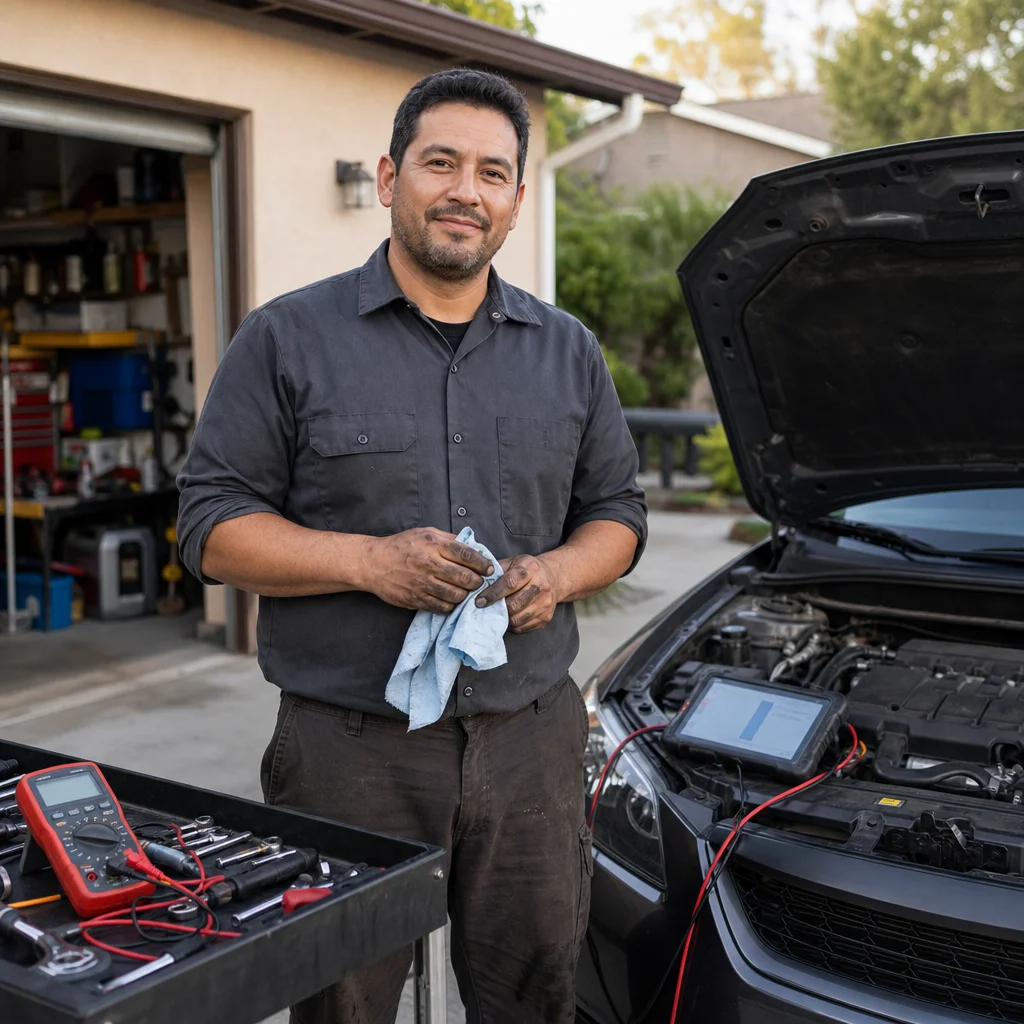
A warning that appears only after the engine warms up and drops to idle is easy to dismiss as an electrical nuisance. It may be a faulty pressure switch, but it can also indicate that the engine’s real oil pressure is falling below a safe level when the oil becomes thinner and the oil pump turns more slowly.
The distinction matters because continuing to drive with genuinely low oil pressure can damage bearings, the camshaft, turbocharger, or other lubricated parts in a short time. You can make a few sensible checks yourself, but the warning should be treated as a lubrication problem until testing proves otherwise.
Why the warning appears at hot idle
Engine oil becomes less viscous as its temperature rises. That is normal and is part of how oil flows through the engine. At the same time, the oil pump usually spins more slowly at idle than it does while driving. If the engine has adequate clearances and the correct oil, pressure should remain high enough to satisfy the pressure switch or sensor. If the margin is small, the warning may appear only under these conditions.
Raising the engine speed can make the warning disappear because the pump is turning faster. That doesn't prove the problem is harmless. It only means the pump is producing more pressure at a higher speed, or that vibration and electrical conditions have changed. A warning that goes away when you touch the accelerator still deserves a proper diagnosis.
The dashboard symbol is generally an oil-pressure warning, not a direct measurement of oil level. Some vehicles use an oil-level sensor as well, but the red oil-can symbol commonly responds to a pressure switch or pressure sensor. Your owner’s manual should identify the warning and describe the required response.
Protect the engine first: If the oil-pressure warning stays on, flashes repeatedly, or appears with ticking, knocking, or other abnormal engine noise, switch off the engine as soon as you can stop safely. Check the oil only on level ground after allowing hot parts and oil to cool enough for safe handling; don't continue driving simply because the light disappears at higher rpm.
Low oil level: the first check, not the final diagnosis
A low oil level is one of the quickest causes to check. If the sump contains too little oil, the pickup can uncover briefly during braking, cornering, or acceleration. A low level can also allow the pump to draw in air or provide less reserve as the oil heats and thins. At hot idle, those effects may become noticeable sooner.
Park on reasonably level ground, turn the engine off, and follow the vehicle manufacturer’s procedure for checking the dipstick. Some engines require a short wait after shutdown, while others specify a particular checking method. Read the dipstick carefully and add the correct oil in small amounts if it is below the safe range. Avoid filling above the maximum mark; overfilling can also cause problems.
Look for evidence of a leak around the oil filter, drain plug, oil pan, valve cover, or engine seals. A low reading without an obvious puddle can still result from gradual consumption or a leak that reaches hot components and burns away. If the level is correct, adding more oil isn't a solution and may make diagnosis harder.
Oil viscosity and oil condition
The oil’s viscosity affects how readily it flows when cold and how much resistance it offers when hot. An oil that is too thin for the engine, the operating conditions, or the manufacturer’s specification may produce lower hot-idle pressure. The wrong oil can enter the engine after an incorrect service, a mistaken top-up, or a repair where the specification was overlooked.
Oil that is badly degraded, fuel-diluted, contaminated, or mixed with coolant may also fail to protect the engine properly. Fuel dilution can occur with some running problems, while coolant contamination may create a milky appearance or an unusual rise in oil level. Neither condition should be treated as a simple viscosity choice.
Use the viscosity and performance specification listed for your exact engine and climate in the owner’s manual or a manufacturer service source. Don't automatically switch to a much thicker oil to make the warning disappear. A thicker oil may temporarily increase pressure, but it can also slow oil flow during cold starts, interfere with variable-valve-timing systems, or conceal worn internal parts.
Confirm the oil specification: Before topping up or changing the oil, verify the exact viscosity, performance standard, oil capacity, and checking procedure for your engine. Requirements can differ between engines that use the same model name, and the correct choice may depend on the vehicle’s year, engine code, temperature range, or emissions equipment.
A faulty pressure switch, sensor, or wiring
The warning may be false. A pressure switch is usually a simple device that changes electrical state when pressure crosses a set threshold. A pressure sensor may send a variable signal to the engine computer or instrument cluster. Either component can fail from age, internal leakage, contamination, or heat-related electrical faults.
The wiring and connector deserve attention too. Oil can enter a switch connector, insulation can rub against the engine, and a loose or corroded terminal can create an intermittent warning. Because the fault appears when the engine is hot, heat expansion or vibration may be affecting the switch, connector, or wire. A scan tool may reveal a related fault code on vehicles that monitor the sensor electronically, but a code doesn't replace a pressure test.
A switch that leaks oil through its body or connector is especially suspect, but visual inspection alone can't prove that the engine has normal pressure. Replacing the switch before measuring pressure is sometimes reasonable when its failure is clear and the part is accessible. If the warning returns, or if there is any uncertainty, test actual pressure rather than continuing to substitute parts.
Worn bearings and internal engine wear
Engine bearings provide controlled clearances around the crankshaft and connecting rods. As those clearances increase with wear, more oil can escape through the bearing surfaces. The pump may still be working, but the engine can lose pressure most noticeably when hot oil is thin and the pump is turning slowly.
This cause becomes more concerning when the warning is accompanied by deep knocking, rumbling, low oil pressure at more than just idle, metal in the drained oil, or a history of neglected oil changes. Not every worn engine makes an obvious noise, however. A quiet engine can still have pressure below specification.
Other internal causes include a worn or damaged oil pump, a restricted pickup screen, a sticking pressure-relief valve, a damaged pickup tube or seal, and sludge that interferes with oil flow. These faults generally require more investigation than a level check or sensor replacement. An engine that has recently suffered a timing failure, overheating event, or major repair may need especially careful inspection.
The right diagnostic sequence
Start with the warning’s behavior. Note whether it appears only at hot idle, whether it flickers during turns or braking, whether it stays on above idle, and whether the engine makes unusual sounds. Also note recent oil changes, repairs, overheating, oil consumption, or jump-start and wiring work. These details help separate a level problem from a heat-sensitive electrical fault or a developing mechanical problem.
Next, check the oil level and condition using the correct procedure. If the level is very low, add the specified oil only enough to reach the safe range, inspect for a significant leak, and avoid treating the refill as a complete repair. If the oil looks contaminated or the level is unexpectedly high, don't keep running the engine while trying to diagnose it.
If the level and oil specification appear correct, the most useful next test is usually a mechanical oil-pressure test. A technician removes the pressure switch or sensor and connects a calibrated gauge at the appropriate port. The engine is then checked at specified temperatures and speeds, with the results compared with the manufacturer’s limits for that engine.
This test separates an electrical warning from a real pressure problem. Normal mechanical pressure points toward the switch, sensor, wiring, instrument cluster, or control system. Low pressure directs attention toward the oil, filter, pump, pickup, relief valve, engine clearances, or another lubrication fault. Testing at the correct hot temperature matters because a cold reading can look reassuring while missing the condition that triggers the warning.
A basic code reader can be useful if the vehicle stores sensor-related faults, but it can't measure oil pressure unless it is part of a system specifically designed to do so. Likewise, briefly revving the engine to make the light go out isn't a diagnostic test.
When to stop and arrange professional help
Stop driving and arrange recovery if the warning remains on, returns frequently, appears while cruising, or is joined by engine noise, a low oil reading, visible oil loss, overheating, or a loss of power. The risk is greater on engines with turbochargers or other components that depend on a steady oil supply. A short drive to a repair shop may turn a manageable sensor fault into an expensive engine failure.
If the warning disappears after correcting a low level and doesn't return, you should still investigate why the level was low. Check it again after the next few trips and look for leaks or unusual consumption. If the warning returns with a normal level, stop relying on the dashboard behavior and have actual pressure measured.
The sensible path is simple: verify the oil level and specification, stop the engine when the warning indicates a continuing pressure problem, and confirm real pressure with a mechanical gauge before condemning major engine parts. A faulty switch is possible, but it is the safe response—not the hopeful guess—to prove that the engine is receiving adequate oil pressure.