Why Does an Automatic Transmission Shift Hard When Cold?
I’ll compare the normal cold-shift behavior caused by temperature and software with problems involving fluid, pressure, sensors, or the engine, then explain which checks you can make yourself and when diagnosis is the better choice.
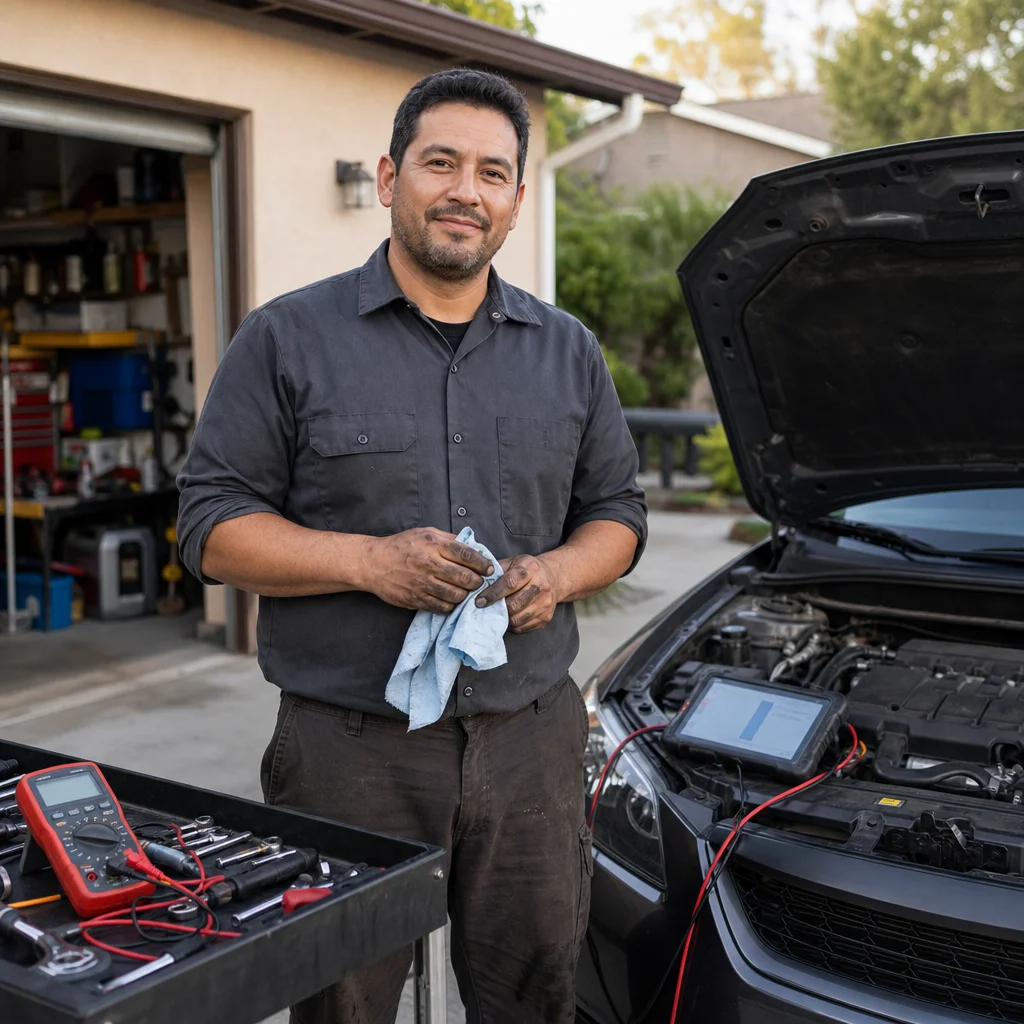
A firm shift from Park into Drive or a sharp 1–2 shift on a cold morning can be unsettling, especially when the transmission feels normal after several minutes. In many vehicles, some extra firmness is an intentional cold-start behavior. In others, it points to a fluid, electrical, engine, or hydraulic problem that becomes less noticeable as the vehicle warms up.
The useful distinction isn't simply whether the transmission shifts hard when cold. It’s whether the behavior is consistent with the vehicle’s normal warm-up strategy, whether it is getting worse, and whether other symptoms appear with it.
Why cold temperature changes shifting
Automatic transmissions use fluid to lubricate components, transfer hydraulic pressure, operate clutches and bands, and control the torque converter. Cold fluid is thicker than warm fluid, so it doesn’t move through small passages and control circuits in exactly the same way. The transmission control module and valve body are designed with this change in mind, but the first few shifts can still feel more pronounced.
Many vehicles intentionally hold lower gears longer after a cold start. This can help the engine and emissions equipment reach operating temperature sooner. The transmission may use higher line pressure or delay torque-converter lockup during this period. Those choices can produce a firm or more noticeable shift without meaning that an internal part is failing.
A brief, repeatable firmness that disappears as the vehicle reaches normal temperature is generally less concerning than a shift that feels like a bang, causes a delay before engagement, or remains harsh after warm-up. The vehicle’s age, mileage, service history, transmission design, and ambient temperature all matter.
Very low temperatures can make the effect more obvious in northern climates. A vehicle parked outside overnight may behave differently at 10°F than it does at 50°F. That difference alone doesn’t prove a fault, but a sudden change from the vehicle’s previous behavior deserves attention.
Confirm the cold-start baseline: Check the owner’s manual for the specified fluid, cold-weather operating guidance, and any instructions for checking the transmission level. Service procedures and software updates can vary by year, engine, and transmission, so use information for the exact vehicle rather than a general fluid chart.
The main causes to consider
Normal temperature and software behavior
The simplest explanation is that the transmission is following its programmed cold-start strategy. A slightly firmer 1–2 or 2–3 shift for the first few minutes may be normal, particularly if there is no slipping, warning light, delay, shudder, or loss of power. Some vehicles also make a noticeable engagement when you select Reverse or Drive while the fluid is cold.
That doesn’t mean every harsh cold shift should be dismissed as “just the computer.” Normal behavior should be reasonably consistent. It should improve as the vehicle warms, and it shouldn’t progressively become more severe or spread to additional shifts.
Incorrect, degraded, or low fluid
Transmission fluid isn't a universal product. The wrong specification can alter friction characteristics, seal behavior, and hydraulic control. Fluid that is badly oxidized or contaminated may also behave poorly, although color alone isn't a reliable test of condition.
A low fluid level can allow the pump to draw air, especially during acceleration, cornering, or an incline. That may cause delayed engagement, flaring engine speed, erratic shifts, or noise in addition to a hard shift. Some transmissions have no traditional dipstick and require a temperature-specific level-check procedure. Adding fluid without following that procedure can leave the level too high or too low.
Leaks are more important than the small amount of fluid on the ground might suggest. A wet transmission pan, cooler line, axle seal, or connector can eventually lower the level enough to affect operation. Don't assume that a leak has stopped because you no longer see a fresh spot on the driveway.
Pressure-control or valve-body problems
The transmission uses solenoids and valve-body passages to regulate hydraulic pressure. A sticking solenoid, restricted passage, worn valve bore, or pressure-control fault can make a clutch apply too quickly. Cold fluid may exaggerate the problem, while warmer fluid makes the symptoms seem temporarily better.
These faults often affect a specific shift or operating condition. You might notice a harsh 1–2 shift, a hard Reverse engagement, or a shift that becomes worse after the vehicle sits overnight. Diagnostic trouble codes may be stored even when the dashboard warning light is off, but a code doesn't automatically identify the failed part. Pressure testing and scan-data analysis may be needed.
Adaptive data or software issues
Modern transmissions adjust clutch timing and pressure based on learned values. If the battery has recently been disconnected, the transmission or engine control module has been replaced, or a repair has changed operating conditions, the learned data may be incomplete or unsuitable. A control-module software update may also address a known shift concern on some vehicles.
Resetting adaptive values isn't a universal repair. The vehicle may need a prescribed relearn procedure, and clearing the values without fixing an underlying problem can make shifting worse for a time. A repair manual, manufacturer service information, or a shop with transmission-capable scan equipment is more useful here than a generic reset instruction.
Engine problems that feel like transmission problems
The transmission responds to engine torque. An engine misfire, unstable idle, dirty throttle body, faulty airflow or throttle-position signal, or inconsistent fuel delivery can make a normal gear change feel abrupt. A weak or failing battery can also create low-voltage faults that affect control modules, especially during a cold start.
Pay attention to whether the engine itself runs roughly. If the vehicle stumbles, the tachometer jumps, the check-engine light flashes, or the engine speed rises and falls during the shift, the transmission may not be the only system involved. An engine diagnostic scan can be as important as a transmission scan.
Mounts and driveline movement
Worn engine or transmission mounts can make a normal change in torque feel like a jolt. The shift may be accompanied by a clunk when moving from Reverse to Drive or when getting on and off the accelerator. This is a mechanical movement problem rather than a hydraulic shift problem, although both can exist at the same time.
Inspecting mounts safely usually requires more than looking from above. Don't place any part of your body under a vehicle supported only by a jack, and avoid trying to reproduce a severe clunk while standing near moving components.
How to judge whether it is normal
Start by describing the symptom precisely. Note the outside temperature, how long the vehicle has been parked, whether the engine was fully cold, which gear change feels harsh, and whether the issue disappears after a short drive. Also note whether the engine speed rises between shifts, whether engagement is delayed, and whether the vehicle moves with a bang when selecting Drive or Reverse.
A short video of the instrument panel and the sound can help a repair shop, but don’t record while handling a phone during driving. If the concern is safe to observe, have a passenger record it or make notes after parking.
A cold shift is more likely to be a manageable observation when it is mild, predictable, and limited to the first few shifts. It is more concerning when it is new, worsening, present at all temperatures, or paired with slipping, shuddering, a burning smell, fluid loss, or warning messages.
Check for symptoms that change the priority: Before continuing to drive normally, look for a flashing warning light, delayed engagement, slipping, a transmission-temperature warning, fluid leaking onto hot components, or a loss of forward or reverse drive. These signs warrant prompt professional diagnosis rather than repeated test drives.
Sensible checks before paying for major work
Look beneath the vehicle for fresh fluid, but identify the fluid carefully. Automatic transmission fluid may be red, brown, or nearly clear depending on its age and formulation, while engine oil, coolant, and gear oil can appear similar in poor lighting. Don’t crawl under the vehicle without proper support.
Check the battery terminals for looseness or heavy corrosion and consider having the battery and charging system tested if cold starts are slow or electronic symptoms occur. A basic code reader may find engine codes, but many inexpensive readers can't access transmission modules or manufacturer-specific data. A code-free dashboard doesn't rule out a stored transmission fault.
Review service records for the last fluid service, the exact fluid used, and any previous transmission or battery work. Avoid adding universal fluid, using an additive as a first response, or authorizing a power flush solely because a cold shift feels harsh. Some vehicles require a particular fluid, level-check temperature, filter procedure, or service method. A flush can also be inappropriate for a transmission with an existing mechanical problem.
If the vehicle has a known service bulletin or software update related to shift quality, the correct remedy may be different from replacing parts. A qualified shop can check the vehicle identification number and transmission data against current manufacturer information. This is especially worthwhile when the symptom began after a battery replacement, module repair, or recent transmission service.
When a professional diagnosis makes sense
Arrange diagnosis soon if the shift is severe enough to move the vehicle abruptly, if engagement is delayed, or if the transmission slips before catching. Continuing to drive while a clutch is slipping can create heat and additional wear. A hard shift that occurs only when cold can still damage components if it results from excessive pressure or an internal control fault.
Ask the shop to explain what was found rather than accepting “the transmission needs replacing” as the first conclusion. Useful diagnostic work may include a full module scan, a road test from cold, fluid-level verification using the specified procedure, examination for leaks, engine-performance checks, and targeted pressure or electrical testing. The appropriate sequence depends on the vehicle and symptoms.
Replacement or rebuild decisions should follow evidence of internal wear, not just a harsh first shift. If the problem is caused by a sensor, wiring issue, mount, fluid-level error, software update, or valve-body component, the repair may be substantially different from replacing the complete transmission. Current labor rates and parts prices vary widely by location and vehicle, so obtain a written estimate that identifies the suspected cause and the proposed testing.
A slightly firm shift during cold operation can be part of the way an automatic transmission warms itself up. The mistake is treating every cold shift as normal—or treating every one as proof of catastrophic failure. Compare the behavior with the vehicle’s usual pattern, verify the correct fluid and service information, check for related engine or electrical symptoms, and stop relying on normal warm-up if the shift is harsh, worsening, or accompanied by slipping, delay, leaks, or warning signs.