Why Does an Automatic Transmission Slip Only After It Warms Up?
A warm-only slip may point to fluid or pressure loss rather than a failed transmission. I’ll explain the first checks, useful diagnostic tests, and the clues that separate a serviceable problem from internal clutch wear or overheating.
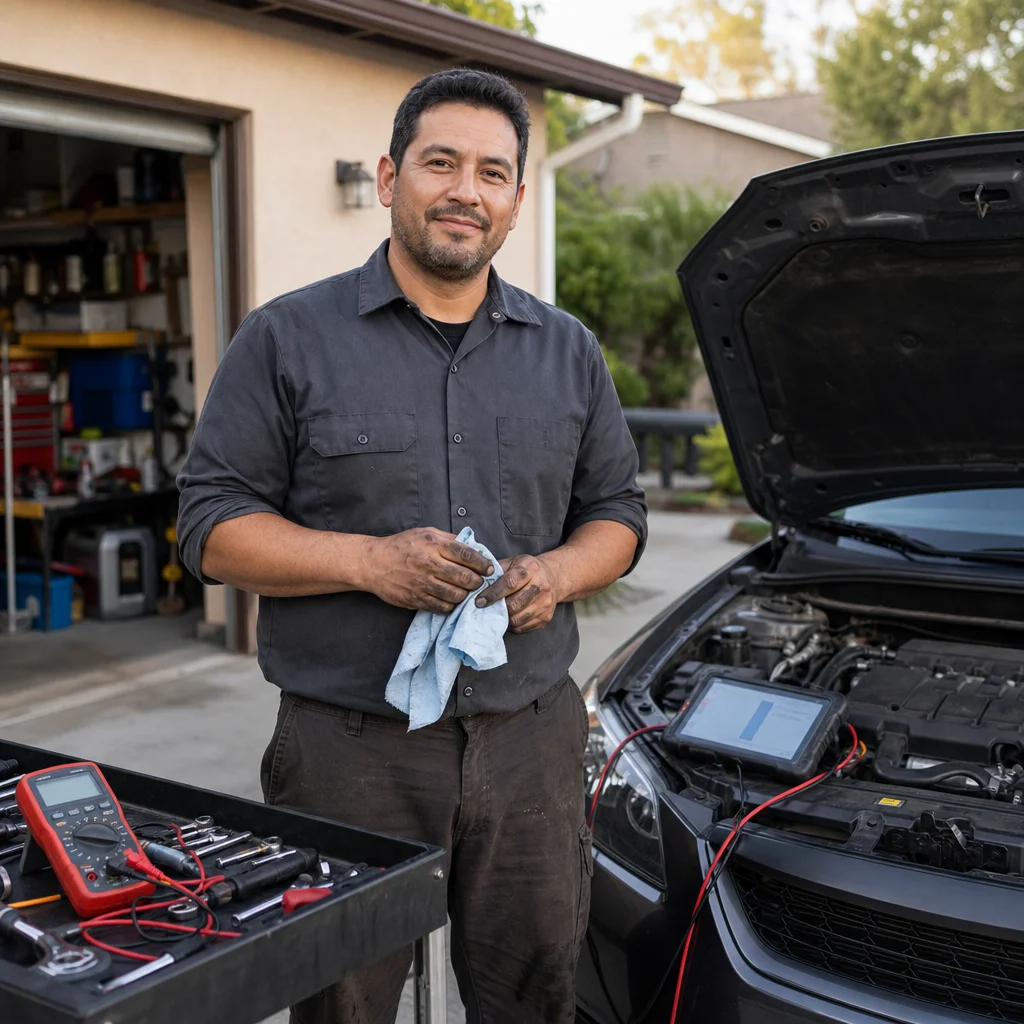
An automatic transmission that shifts normally when cold but slips after warming up is giving you a useful clue. Heat changes fluid viscosity, hydraulic clearances, electrical behavior, and the transmission’s ability to shed heat. That doesn't identify one failed part by itself, but it helps narrow the investigation.
First, make sure the symptom really is transmission slip. Then check the fluid correctly, scan for codes, and look for evidence of low pressure, a sticking solenoid, overheating, or worn internal clutches. Replacing the transmission before those checks can turn a manageable repair into an unnecessarily expensive one.
Confirm what “slipping” feels like
True slip usually means engine speed rises without a matching increase in vehicle speed. You may notice the tachometer flare during an upshift, a delayed engagement, or a sensation that the vehicle is losing drive while climbing a hill. The problem may become more obvious after ten or twenty minutes of driving, when the fluid and transmission case are hot.
Other problems can feel similar. A harsh shift isn't always a slip, and an engine misfire can feel like a transmission is losing power. A failing torque converter clutch may cause shudder or a small change in engine speed at steady cruise rather than a broad loss of drive. A delayed shift may also result from an electronic control problem without significant clutch damage.
Pay attention to the conditions that trigger the fault. Note the gear, vehicle speed, throttle position, road grade, fluid temperature if available, and whether turning the ignition off temporarily changes the behavior. These observations can help a technician reproduce the problem and can prevent parts from being replaced based on a vague description.
Start with fluid level and condition
Low fluid is one of the most common reasons a transmission begins acting worse when hot. A low level can let the pump draw air or uncover a pickup during acceleration or cornering. Once the fluid warms and becomes thinner, a marginal level or leak may produce a larger pressure loss.
Check for leaks around the transmission pan, drain plug, cooler lines, axle seals, electrical connector, and the area where the transmission meets the engine. A leak may leave a red, brown, or nearly black oily mark, but color isn't a reliable identification method on every vehicle. Some newer fluids are deliberately dyed differently, and old fluid can look very dark.
The checking procedure varies considerably. Some transmissions use a dipstick, while others have a level plug and must be checked at a specified fluid temperature with the vehicle level and the engine running. The correct procedure may also require moving the selector through each range first. Follow the vehicle-specific service information rather than adding fluid until it appears full.
Check the level by the specified method: Before adding or draining anything, confirm the correct fluid type, temperature range, vehicle position, and selector position for your transmission. An incorrect level or fluid can create symptoms that resemble a mechanical failure.
Fluid condition can provide clues, but it isn't a complete diagnosis. A burnt smell, unusually dark fluid, or visible friction material suggests overheating or internal wear. Metallic particles or large debris in the pan are more concerning than normal fine residue on a magnet. Clean-looking fluid doesn't prove that the clutches, valve body, or pump are healthy.
Don't use a chemical additive as a substitute for diagnosis. Additives can change friction characteristics and may temporarily alter a symptom without fixing the cause. Use only the fluid specified for the transmission unless the manufacturer’s service information gives another approved option.
Why heat exposes a marginal problem
Automatic transmissions depend on hydraulic pressure to apply clutch packs and bands. As fluid warms, it becomes less viscous. A healthy pump and valve body can maintain the required pressure, but a worn pump, leaking seal, sticking valve, or restricted filter may not. The result can be delayed clutch application or clutch slip after the transmission reaches operating temperature.
Heat can also change the behavior of electrical components. A shift solenoid may stick when hot, or a sensor may begin sending an implausible signal only after its internal parts expand. The transmission control module may respond by commanding the wrong pressure or shift timing. A warning light is helpful when present, but not every mechanical or hydraulic problem sets a code.
Overheating creates a related cycle. Excessive load, a blocked cooler, low fluid, restricted airflow, or a failing auxiliary cooler can raise transmission temperature. Hot fluid loses some of its protective margin, and repeated slipping generates still more heat. If the problem is ignored, a condition that began with pressure loss can damage the friction material and hard parts.
Use scan data before replacing parts
A capable scan tool can show transmission codes, input and output speed, commanded gear, shift timing, solenoid commands, and sometimes calculated fluid temperature or line pressure. A basic code reader may not access the transmission control module, so “no engine codes” doesn't mean the transmission has no stored information.
Look for a mismatch between commanded and actual behavior. If the control module commands a gear but input speed rises while output speed fails to follow, the data supports slip. If the module repeatedly detects an incorrect gear ratio, the cause could be low pressure, a solenoid, a speed sensor, or worn clutches. The code points toward a system; it doesn't automatically identify the replaceable part.
Live data is most useful when captured during the warm failure. A cold test drive that appears normal may miss the problem entirely. If you can't safely monitor data while driving, have a second person operate the scan tool or let a shop perform the test. Avoid looking down at a device while the vehicle is moving.
Test hydraulic pressure when symptoms are hot
A line-pressure test is often the most useful next step when fluid level and scan results don't explain the symptom. A technician connects a pressure gauge to the specified test port and compares readings at idle, in different ranges, and under the conditions listed in the service information. The important comparison isn't simply “high” or “low”; it is whether pressure matches the vehicle’s specifications when the transmission is hot and the fault is occurring.
Low pressure may result from a worn pump, restricted filter, leaking valve body, damaged seals, or a low fluid supply. Normal pressure at the main port doesn't rule out a problem in a particular clutch circuit. Some transmissions require additional tests, electronic pressure control checks, or specialized equipment to isolate that circuit.
Pressure testing involves hot fluid, rotating components, and a moving vehicle. Use the correct adapter and procedure, secure the gauge where it can be read without entering the vehicle’s path, and follow the service information. If you don't already have the equipment and experience, this is a sensible point to use a transmission specialist.
Consider solenoids, valve bodies, and filters
A solenoid or valve-body fault is more plausible when the transmission slips in one gear, flares during a particular shift, or improves temporarily after a control module reset. Electrical resistance, connector condition, wiring, commanded current, and actual pressure all matter. A solenoid that measures correctly when cold may still stick or respond slowly when hot.
A restricted filter can limit fluid supply, although the exact symptoms depend on the transmission design. On some units the filter is accessible during a pan service; on others it is internal or part of a larger assembly. Removing the pan can reveal debris and let you inspect the magnet, but it can't always distinguish a valve-body problem from clutch-pack wear.
A fluid and filter service may be appropriate when the fluid is low, contaminated, or overdue according to the manufacturer’s maintenance information. It isn't a guaranteed cure for a transmission that is already slipping. A power flush may also be unsuitable for some vehicles or conditions, so ask what procedure is recommended and why it fits the diagnosis.
When internal clutch wear becomes more likely
Worn clutch packs become more likely when slip occurs in several gears, the fluid contains substantial friction material, pressure falls in a way that points to internal leakage, or the symptom has steadily worsened despite a correct fluid level and functioning controls. A transmission may still move normally when cold because thicker fluid temporarily masks worn seals or clutch clearances.
Internal wear usually can't be confirmed by a simple visual inspection. A shop may combine pressure readings, scan data, fluid and pan inspection, stall or clutch tests where appropriate, and teardown findings. If the unit slips badly in reverse and forward ranges, loses drive after warming, or leaves heavy debris in the pan, continued testing should be balanced against the risk of causing more damage.
Decide whether to drive it
Short, gentle driving to a repair facility may be reasonable when the transmission engages reliably, the fluid level is correct, and there is no severe noise, burning smell, large leak, or sudden loss of drive. Avoid towing, steep grades, hard acceleration, and repeated attempts to make it “catch.” Those conditions can multiply heat and friction damage.
Stop driving and arrange a tow if the vehicle won't move, drops out of gear, has a rapidly worsening slip, leaks heavily, overheats, or produces smoke or a strong burnt odor. Don't crawl under a running vehicle supported only by a jack, and don't check hot fluid near moving belts, fans, or rotating components.
The efficient diagnostic path is usually simple: verify the symptom, inspect for leaks, check the fluid using the correct procedure, retrieve transmission codes and live data, and measure hot hydraulic pressure when needed. Those steps can separate a low-fluid, electrical, or hydraulic problem from internal clutch damage. Once the evidence is clear, you can choose between a service, a targeted repair, or transmission replacement with far less guesswork.