What a Diesel Owner Should Know About Regeneration Warnings
Regeneration warnings make more sense when you connect the diesel particulate filter, exhaust temperature, driving conditions, and warning stages. I’ll explain what each part means and how to decide whether to keep driving, perform a required procedure, or seek diagnosis.
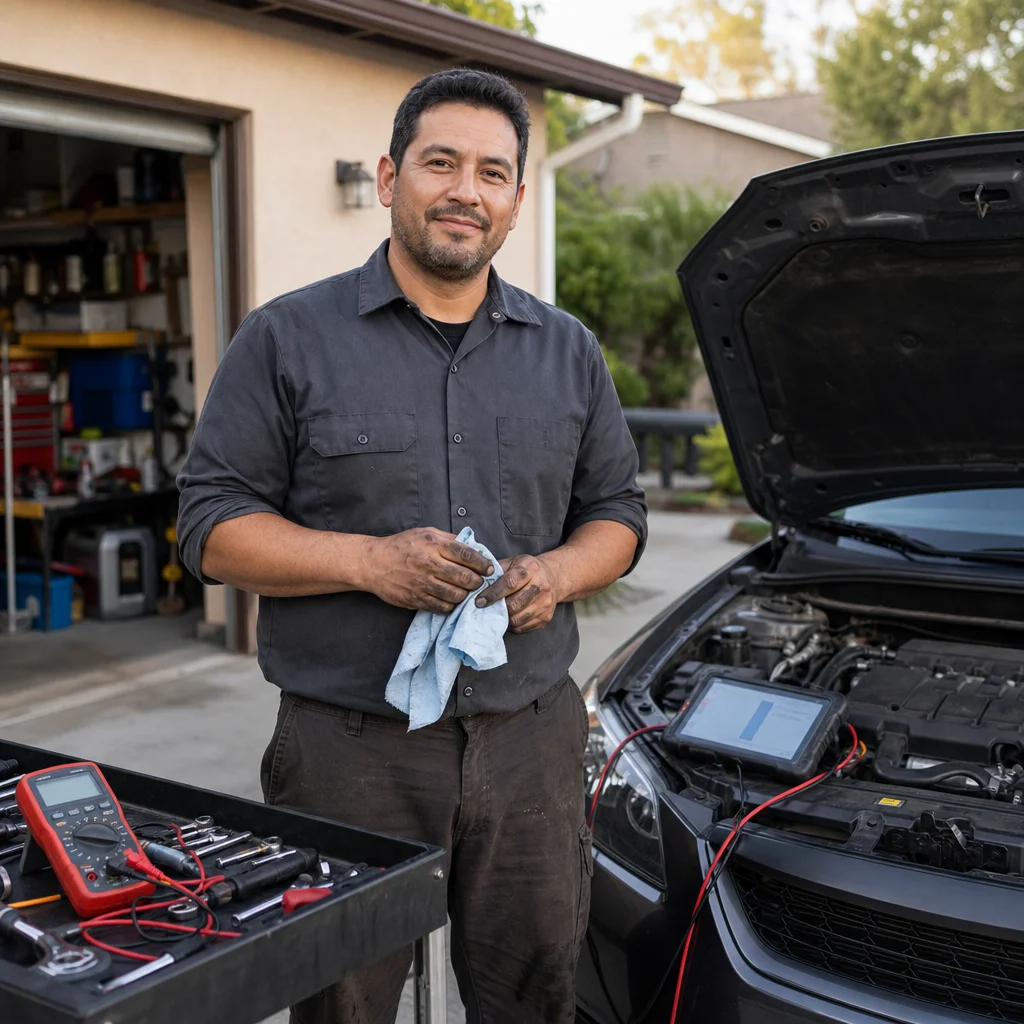
A regeneration warning isn't automatically a sign that your diesel engine needs an expensive repair. In many cases, it means the diesel particulate filter (DPF) has collected soot and the vehicle needs the right conditions to burn that soot away. The important decision is knowing which warning you’re seeing, whether regeneration can happen normally, and when continued driving could make the problem worse.
The details vary by engine, model year, emissions system, and instrument panel. Your owner’s manual takes priority over general guidance, especially for required driving speeds, temperatures, parked-regeneration procedures, and warning-light meanings.
What regeneration is doing
A DPF sits in the exhaust system and traps soot produced by diesel combustion. That keeps much of the particulate matter from leaving the tailpipe, but the filter can't collect soot indefinitely. Regeneration is the process of raising exhaust temperature high enough to burn accumulated soot into a much smaller amount of ash.
There are two broad types of regeneration. Passive regeneration can occur during normal driving when the exhaust becomes hot enough, such as during sustained highway operation. Active regeneration is managed by the engine and emissions controls. The system may adjust fuel injection or other operating conditions to raise exhaust temperature when the filter needs cleaning.
Regeneration doesn't remove everything from the filter. Soot can be burned, but ash gradually remains and may eventually require professional DPF cleaning or filter replacement. A regeneration warning usually concerns soot loading or the system’s inability to complete a cleaning cycle; it doesn't by itself tell you how much ash is present or identify the underlying cause.
Why short trips can trigger warnings
Regeneration works best when the engine and exhaust stay hot for long enough. Repeated short trips, extended idling, low-speed stop-and-go driving, cold weather, or frequent shutdowns can prevent a cycle from completing. The vehicle may keep postponing regeneration until the filter reaches a higher soot load, at which point it displays a message or warning lamp.
This doesn't mean every diesel owner needs to take a weekly highway trip, and it doesn't mean a warning should be ignored. It means your normal use may not provide the operating conditions the emissions system needs. A vehicle used mainly for short errands may need a manufacturer-specified drive cycle or, if the warning has progressed, a technician’s service procedure.
Other problems can also interrupt or prevent regeneration. Possible contributors include a faulty temperature sensor, pressure sensor, exhaust-gas recirculation problem, fuel-injection issue, air-intake fault, low fluid level in systems that use a separate exhaust additive, or another emissions-system malfunction. If the warning returns quickly after a completed regeneration, treat that pattern as a diagnostic clue rather than simply repeating the drive.
How to interpret the warning stages
Warning stages aren't standardized across all diesel vehicles. One manufacturer may use a DPF symbol, another may show a text message, and a third may combine the DPF warning with a check-engine light or reduced-power message. Even the color and flashing behavior can differ. Think of the stages below as a decision framework, not a universal translation of every dashboard.
An initial or steady regeneration message
An early message often means the filter is approaching its soot limit and the vehicle is asking for conditions that allow automatic regeneration. If the vehicle otherwise runs normally, the usual response is to consult the manual and follow its prescribed driving procedure. That may involve driving continuously at a specified road speed or engine load after the engine is fully warmed up.
Plan the drive so you can maintain the required conditions without unnecessary stops. Don't use a shoulder, parking area, or other unsafe location to force a procedure. Keep watching the dashboard, and stop relying on a routine drive if the warning doesn't clear as the manual says it should.
A stronger warning or flashing indicator
A stronger warning generally means the filter has accumulated more soot or that earlier regeneration attempts were unsuccessful. The vehicle may still drive normally, but the margin for delay is smaller. Some vehicles will request a parked or manual regeneration, while others require a scan tool or service-center procedure.
At this point, check for other warnings and changes in how the vehicle runs. Loss of power, unusual exhaust smoke, excessive heat, rough running, or a check-engine light makes professional diagnosis more appropriate than trying repeated drive cycles. Continuing to operate a vehicle with a heavily loaded filter can increase backpressure and may lead to reduced-power operation.
Reduced power, stop messages, or multiple warnings
A reduced-power or “service required” message is a clear change in the decision. The system may have reached a soot-load threshold at which it will no longer permit normal regeneration, or it may have detected a fault that makes regeneration unsafe or ineffective. Don't assume a longer drive will solve it.
Follow the manual’s instructions for stopping or arranging service. If the vehicle is losing power in traffic, move to a safe location rather than trying to protect the engine by continuing at highway speed. A professional may need to read fault codes, inspect differential-pressure readings and temperature data, and determine whether the filter can be regenerated, cleaned, or must be replaced.
Match the warning to your manual: Before attempting a drive cycle or parked regeneration, verify the exact symbol, required operating conditions, fuel and fluid requirements, and stop conditions for your make, model, and engine. Manufacturer procedures and safety instructions can differ substantially.
When a drive cycle may be reasonable
A manufacturer-directed drive cycle is most reasonable when the warning is at an early stage, the vehicle is operating normally, and the manual specifically permits the procedure. Start with a properly warmed engine and enough fuel for the trip. Follow the stated speed, gear, engine-speed, and duration requirements rather than guessing from advice meant for another diesel.
Expect the vehicle to behave somewhat differently during regeneration. The cooling fan may run more often, idle speed may change, fuel consumption may rise temporarily, and the exhaust may smell hotter than usual. These signs can be normal for the vehicle, but they don't override a warning that says to stop or seek service.
Choose an open route away from dry grass, leaves, flammable materials, heavy pedestrian areas, or enclosed spaces. Exhaust components can become extremely hot during regeneration. Never attempt a parked regeneration in a garage unless the vehicle manufacturer explicitly provides a safe procedure and the location meets all required ventilation and clearance conditions; many such procedures aren't suitable for enclosed areas.
Interrupted regeneration: what to do
Turning the engine off during regeneration once isn't usually proof that damage has occurred. A vehicle may simply attempt the process again later. However, repeated interruptions can allow soot to build, particularly when the vehicle is used for short trips. If a warning remains on, returns soon afterward, or escalates, the correct response is to follow the manual’s next step rather than repeatedly shutting down and restarting in the hope that the message disappears.
Don't try to “finish” regeneration by driving aggressively, towing unnecessarily, or holding the engine at high speed in neutral. Regeneration depends on controlled exhaust temperature and system monitoring, not on making the engine work as hard as possible. Driving outside the manufacturer’s instructions can add risk without addressing a sensor, fuel, air, or exhaust fault.
If the vehicle shuts down a regeneration attempt, note what happened: the warning stage, approximate driving conditions, other dashboard messages, and any change in power or exhaust behavior. That information can help a technician distinguish a normal interruption from a problem that is preventing the cycle from completing.
When professional diagnosis is the better choice
Arrange diagnosis promptly when the warning is flashing, accompanied by a check-engine or reduced-power light, or still present after the specified procedure. Service is also the sensible choice when the vehicle has repeated regeneration warnings, enters limp mode, produces unusual smoke, runs poorly, or shows signs of excessive exhaust heat or a fluid leak.
A proper diagnosis is more than clearing the warning. A technician may check stored fault codes, calculate soot and ash loading, compare exhaust pressure readings, test temperature sensors, inspect the exhaust system for damage, and look for the cause of repeated failed regenerations. Replacing a DPF without addressing the cause can allow the replacement to load up again.
Ask what the diagnosis found and whether the proposed service is a forced regeneration, an on-vehicle cleaning, removal and cleaning, or replacement. Those are different procedures with different implications. A forced regeneration may be unsuitable if the filter is damaged, excessively ash-loaded, or affected by another engine problem.
Habits that reduce repeat warnings
Use the vehicle in a way that matches its emissions system when possible. Combining short errands, allowing the engine to reach normal operating temperature, and including occasional uninterrupted driving may give an automatic regeneration a better opportunity to complete. Follow the maintenance schedule for oil, filters, exhaust-fluid systems, and software updates, since incorrect oil or neglected maintenance can affect emissions-system operation.
Avoid unnecessary idling and don't ignore smaller warning messages. A DPF warning that is addressed at an early stage is generally a simpler decision than one accompanied by reduced power and multiple fault codes. Keep records of when warnings appear, how often regeneration seems to occur, and whether the vehicle is mainly used for short trips.
The practical rule is simple: an early warning with normal vehicle behavior may call for the manufacturer’s specified driving conditions; an escalating warning, repeated failure, or change in vehicle operation calls for diagnosis. Treat the dashboard message as information about the filter and the wider emissions system, not as a command to drive harder. When the vehicle’s instructions and general advice conflict, use the vehicle’s instructions and seek professional help when the system no longer permits a normal regeneration.