How to Check for a Clogged Diesel Particulate Filter Before a Forced Regeneration
I’ll help you distinguish a soot-loaded diesel particulate filter from a sensor, engine, or oil-dilution problem before you request a forced regeneration. You’ll learn what warning signs, scan data, driving history, and fluid checks can—and can't—tell you safely.
A forced regeneration can clear accumulated soot, but it isn’t a universal repair for a diesel particulate filter (DPF) warning. If the filter is restricted because of a failed sensor, poor combustion, excessive oil, or another engine fault, commanding regeneration may waste time or create a serious safety problem.
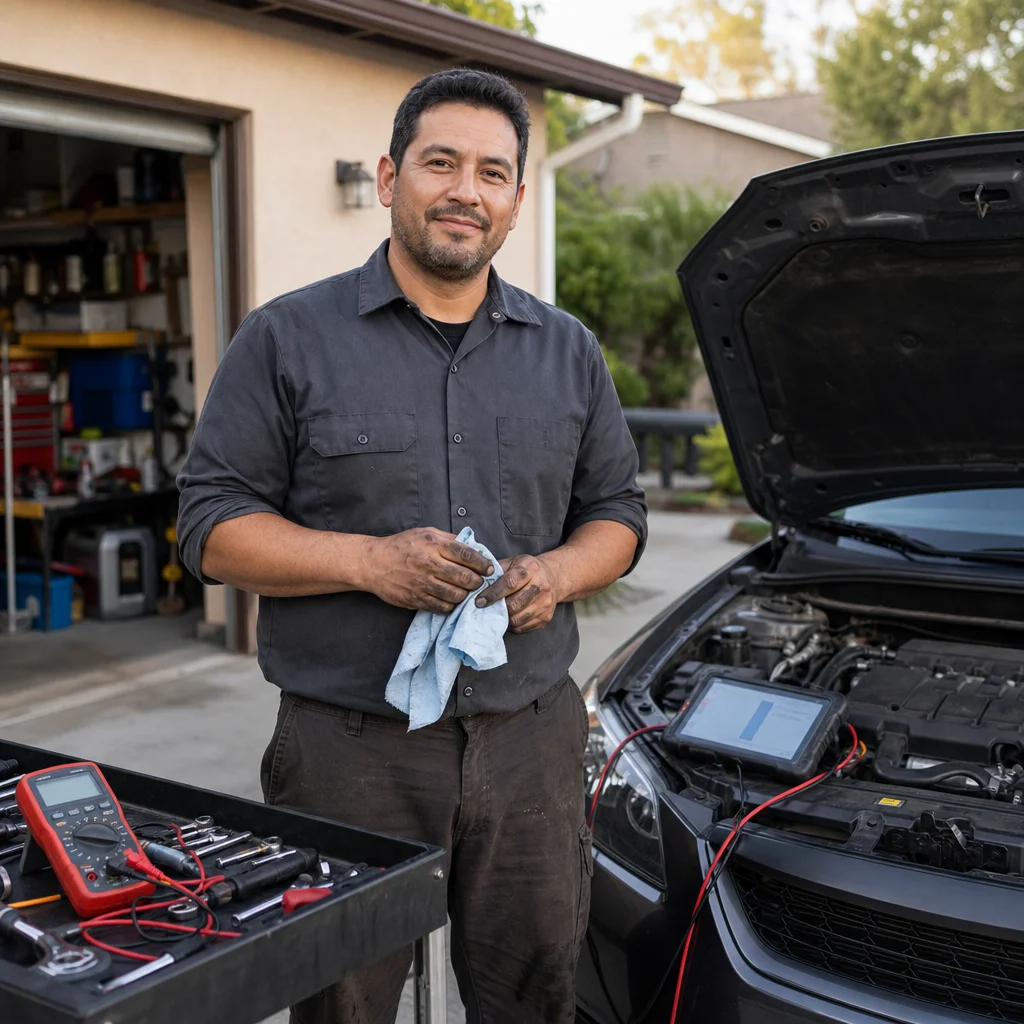
The sensible approach is to confirm why the DPF is loaded before asking the vehicle to raise exhaust temperatures. You can often make that decision with the warning lights, fault codes, live data, oil level, and recent driving conditions. Some tests and regeneration procedures, however, require a scan tool with manufacturer-specific functions and a trained technician.
Start with the warning signs and fault codes
A DPF that needs regeneration may produce a warning message, a DPF symbol, reduced performance, or a change in the engine’s idle and cooling-fan behavior. Some vehicles increase idle speed or continue running the cooling fan after you stop because an active regeneration is underway or has recently ended. These signs suggest the emissions system is working, but they don’t prove that the filter itself is clogged.
A flashing warning, a check-engine light, a glow-plug warning, a limp-mode message, or a severe power reduction deserves more caution. The engine control module may have stopped regeneration because it detected a fault that makes high exhaust temperature unsafe or ineffective. Continuing to request regeneration without reading the codes can turn a diagnostic problem into a damaged DPF, turbocharger, or exhaust component.
Read stored, pending, and manufacturer-specific codes before clearing anything. A basic code reader may show a generic emissions code but not the live data or detailed fault information needed for a proper diagnosis. Record the codes and freeze-frame information first; clearing them can remove useful clues and may reset learned soot or regeneration data on some vehicles.
Confirm the required procedure first: Check your owner’s manual and vehicle-specific service information for the permitted regeneration method, warning-light meanings, oil-check requirements, and scan-tool conditions. Exact temperature limits, pressure limits, and fault-code responses vary by engine and model year.
Understand what differential pressure data tells you
The DPF traps soot in the exhaust, and the pressure difference between its inlet and outlet generally rises as flow becomes more restricted. A differential-pressure sensor measures that difference through small hoses or pipes connected before and after the filter. A scan tool may display the result as pressure, voltage, or a calculated load value at idle and under a specified engine speed.
This data is useful, but it must be interpreted in context. A high reading at a known engine speed can support the diagnosis of restriction. A low or implausible reading doesn't automatically mean the DPF is clear. Split, blocked, melted, or incorrectly connected pressure hoses can produce misleading readings. The sensor itself can drift or fail, and an exhaust leak near a connection can affect the pressure signal.
Compare the pressure reading with engine speed, exhaust flow, and the manufacturer’s specifications rather than relying on a universal number found online. A reading that looks acceptable at idle may become abnormal under load. Conversely, a high reading during a brief throttle increase may be expected on one engine and excessive on another.
The calculated soot load is also not the same as physical filter restriction. The control module estimates soot from pressure, temperature, fuel use, driving history, and regeneration events. If a sensor is inaccurate or a regeneration was interrupted, the calculated value may not match the actual condition. Ash accumulation is another issue: ash remains after soot burns and gradually reduces the filter’s available capacity. Regeneration removes soot, not ash.
Look for the cause of the soot load
A filter can become soot-loaded because the vehicle hasn't reached the conditions needed for normal regeneration. Repeated short trips, extended idling, low-speed operation, and frequent shutdowns can prevent the exhaust from staying hot long enough. This is common in vehicles used mainly for errands or urban driving, though the exact regeneration strategy differs by model.
A healthy engine can also produce too much soot. A malfunctioning EGR system, leaking injector, restricted air intake, turbocharger or boost problem, poor-quality combustion, or another fuel-system fault may overload the DPF faster than regeneration can recover it. In that situation, a forced regeneration treats the symptom while the engine continues making excess soot.
Inspect the air filter and intake system for obvious problems, and check whether other fault codes point to boost pressure, EGR operation, fuel injection, exhaust temperature, or oxygen measurement. Don’t replace parts solely because a DPF code is present. The filter may be doing its job by collecting soot from an upstream fault.
Temperature sensors matter as well. The engine relies on them to control and monitor regeneration. If a sensor reports an implausible temperature, the control module may inhibit regeneration or misjudge whether it completed. A forced cycle with inaccurate temperature feedback can be ineffective or expose the exhaust to conditions the system isn't correctly monitoring.
Check oil level and possible fuel dilution
Many diesel engines use late fuel injection to raise exhaust temperature during active regeneration. Some of that fuel can pass the piston rings and enter the crankcase, particularly when regeneration is repeatedly interrupted. The result is oil dilution: the oil level may rise, the oil may smell strongly of diesel, or its lubricating properties may be reduced.
Check the oil on level ground using the manufacturer’s stated procedure. Compare the current level with the normal range and consider whether it has increased since the last service. A rising level or clear fuel smell is a reason to stop and obtain professional advice before requesting regeneration. Don't assume that an oil change alone fixes the cause; repeated failed regenerations may continue until the underlying problem is repaired.
Oil consumption can create a related DPF problem. A turbocharger fault, worn engine, or other source of oil entering the exhaust can load the filter with noncombustible material and damage the emissions system. Blue smoke, unexplained oil loss, or an oil-soaked intake deserves diagnosis rather than a regeneration command.
Never add oil above the maximum mark to compensate for a suspected dilution problem. Excess oil can cause its own engine damage, and some diesels can draw excess oil into the intake. If the level is substantially above the permitted range, follow the vehicle-specific service advice or arrange recovery to a qualified repair facility.
Decide whether driving or forced regeneration is appropriate
A normal regeneration during suitable driving may be appropriate when the vehicle has only a routine DPF-loading message, no prohibitive fault codes, a normal oil level, and no symptoms suggesting an engine or sensor failure. The owner’s manual may describe the required speed, duration, fuel level, and other conditions. Follow those instructions instead of trying to reproduce a generic internet procedure.
A forced regeneration is different. It commands the engine and exhaust system to create high temperatures while the vehicle is stationary or under controlled workshop conditions. It can be useful after the cause of the problem has been corrected and the system data supports regeneration. It isn't a substitute for checking the pressure sensor, temperature sensors, oil, and related engine systems.
Avoid forcing regeneration when there is a flashing or severe warning, a major loss of power, a suspected fuel or oil leak, abnormal smoke, overheating, a failed temperature sensor, an active engine-management fault, or evidence that the filter is already severely restricted. A badly blocked filter may overheat, crack, or restrict exhaust flow further during the attempt. Combustible materials near the exhaust can ignite, and the exhaust components can remain extremely hot after the procedure.
If you use a scan tool, make sure it supports the exact vehicle and function you intend to use. A generic “DPF reset” function may reset a service value without cleaning the filter, while an unsupported forced-regeneration command may fail or create incorrect learned data. Don't confuse resetting the DPF replacement or ash counter with regenerating the filter.
A practical pre-regeneration check
Before deciding, gather the information that separates a routine soot load from a larger fault:
- Note every warning light, message, performance change, unusual smoke, and recent regeneration attempt.
- Read and record all relevant diagnostic trouble codes before clearing them.
- Check differential-pressure data at the manufacturer’s specified engine speeds and compare it with the correct specifications.
- Inspect the pressure-sensor hoses and connections for obvious blockage, damage, disconnection, or leaks.
- Review exhaust temperature readings and look for implausible values.
- Check the oil level and smell, and ask whether it has risen since the last service.
- Consider the vehicle’s recent use, including short trips, extended idling, towing, and repeated interrupted regeneration.
- Look for faults that could be producing excess soot, such as air, boost, EGR, injector, or turbocharger problems.
This checklist doesn't replace a physical restriction test or filter inspection when the data is contradictory. A workshop may need to measure exhaust backpressure directly, test the pressure sensor, inspect the filter for ash or damage, and verify that the engine can meet the conditions required for regeneration.
When professional diagnosis is the safer choice
Arrange professional help when the vehicle is in limp mode, the filter-load estimate is severe, the warning is flashing, the oil is diluted, or another engine fault is active. Professional equipment can display manufacturer-specific soot and ash values, regeneration history, sensor plausibility, and the conditions that caused the control module to inhibit regeneration.
A DPF cleaning service may be appropriate for an ash-loaded or otherwise serviceable filter, but it should follow diagnosis. A cracked, melted, contaminated, or structurally damaged filter may need replacement. Removing or bypassing the DPF isn't a repair and may violate emissions requirements in your region; it can also create drivability and inspection problems.
The best decision is usually straightforward: verify the oil and fault status, confirm that pressure and temperature data are credible, and identify why soot accumulated. If the evidence points to a routine, manageable soot load, use the vehicle’s documented regeneration procedure. If the evidence points to a sensor, engine, oil, or severe restriction problem, repair and diagnosis should come before any forced regeneration.