How to Communicate a Repair Budget to a Mechanic Clearly
A repair budget works best when diagnosis, priorities, approval limits, and follow-up decisions are connected from the start. I’ll show you how to discuss each part clearly so you can control costs without making the conversation adversarial.
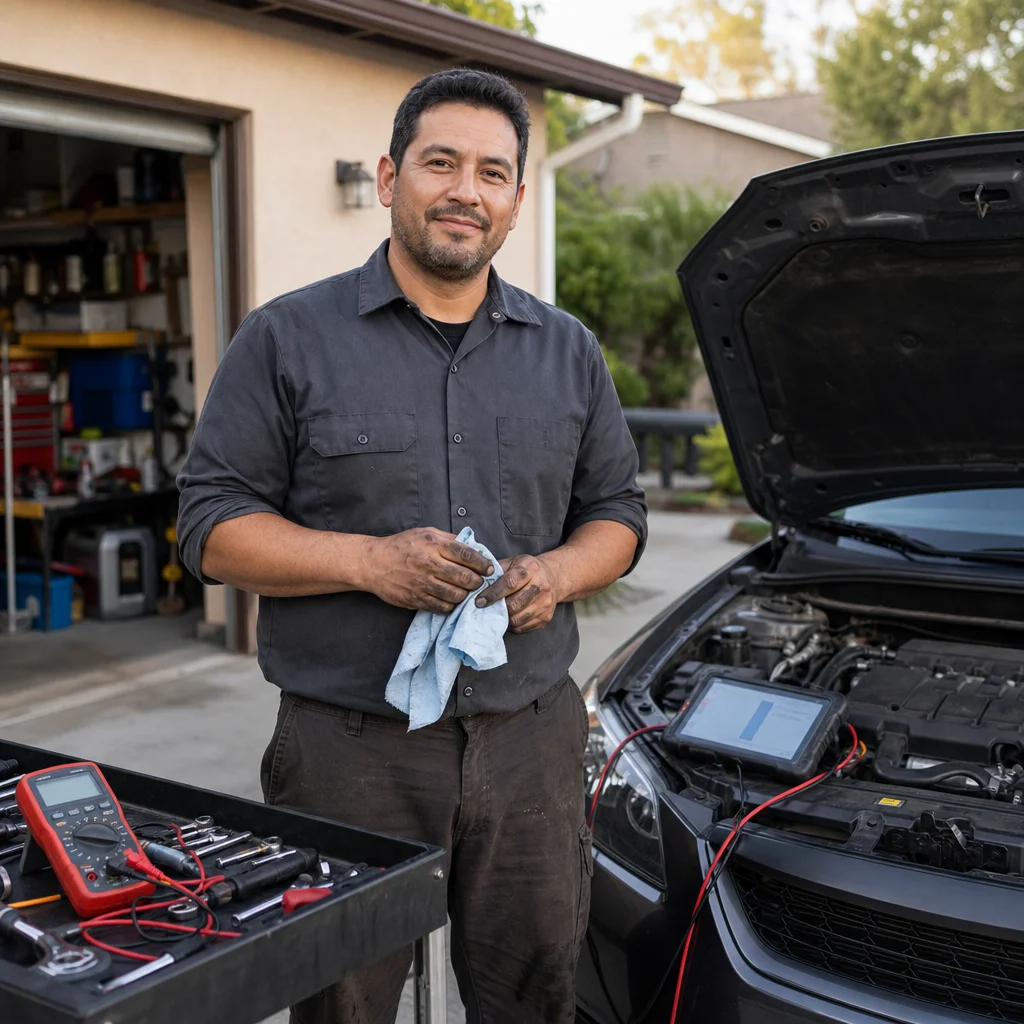
A repair conversation can become confusing when “find the problem,” “fix the problem,” and “make the car safe” are treated as one expense. A mechanic may need diagnostic time before knowing which parts are required, while you may be trying to stay within a firm spending limit. Clear communication helps both sides work with the same information.
The goal isn’t to force a mechanic into an artificially low number or to approve every recommendation without question. It’s to define what you’re authorizing, what you’re not authorizing yet, and how you want unexpected findings handled.
Start by separating diagnosis from repair
Before discussing a total budget, ask what the initial diagnostic work is intended to determine. A warning light scan, electrical testing, leak diagnosis, road test, and mechanical inspection can require different amounts of time. The first estimate may cover investigation rather than a repair itself.
You can say:
“I’m comfortable authorizing up to $___ for diagnosis today. Please contact me before doing repair work beyond that amount.”
That sentence establishes three useful boundaries: the purpose of the first visit, the maximum you’re authorizing at that stage, and the need for further approval. Ask whether the diagnostic charge is applied toward the repair if you proceed, but don’t assume that it is. The shop’s policy may vary.
If you already know the symptoms, describe them in observable terms. Explain when the problem occurs, how long it lasts, whether it changes with temperature or speed, and whether any warning lights appeared. “The engine shakes for about 30 seconds after a cold start, then smooths out” gives the technician more useful information than “the car runs badly.”
State your budget as a decision limit
A budget can mean several different things. It might be the amount you can spend immediately, the amount you’re willing to spend on this particular repair, or the maximum value you want to put into an older vehicle. Explain which one applies.
For example:
- “I can spend up to $800 today, but I need approval before going over that.”
- “Please identify the work needed to make the vehicle safe first. I can consider comfort or convenience items later.”
- “I’m deciding whether this repair makes sense on a high-mileage car, so please separate urgent work from recommendations.”
- “I don’t have a fixed maximum yet. I’d like an estimate for the likely repair range before authorizing anything beyond diagnosis.”
A budget limit shouldn't be presented as permission to select the cheapest possible part or skip a safety-critical procedure. If the mechanic says the known problem can't be properly repaired within your limit, ask what options exist and what compromises each option involves.
It also helps to distinguish a firm ceiling from a notification threshold. A firm ceiling means work must stop unless you give new approval. A notification threshold means the shop should call when the cost reaches a certain point, but you may still approve more. Use the wording that matches your intention.
Ask for priorities, not just a long list
Inspection reports often include several findings, and they don’t all carry the same urgency. Ask the mechanic to group the recommendations by consequence and timing rather than treating every item as equally important.
Useful questions include:
- “Which issue affects safe operation right now?”
- “Which problem could cause further damage if I wait?”
- “What can reasonably wait until the next service?”
- “Are any items recommendations based on age or wear rather than a current failure?”
- “If I can only do one repair today, which one would you choose and why?”
You can request separate estimates for immediate work, near-term maintenance, and optional improvements. This makes the budget easier to manage and reduces the chance that a useful recommendation gets mistaken for an emergency.
Safety-related work deserves careful attention. Brakes, steering, tires, suspension components, fuel leaks, overheating, and damaged restraint systems can affect whether the vehicle should be driven. If the mechanic advises against driving it, ask what specific condition creates the risk and what transportation or repair option is appropriate. Don’t turn a budget limit into a reason to continue using a vehicle that may be unsafe.
Confirm the spending boundary: Before work begins, repeat the diagnostic limit, repair limit, and approval requirement in one sentence. Ask the shop to record those instructions on the work order so everyone is working from the same authorization.
Make additional work require a clear conversation
Unexpected findings are common once a vehicle is disassembled or tested further. Your original approval may not cover the extra parts, labor, or related repair. Tell the shop how you want those discoveries handled.
A direct script is:
“If you find anything that changes the estimate, please stop and call me. Tell me what failed, what it will cost, whether it affects safe operation, and what happens if I wait.”
This request gives you more than a new price. It asks for the information needed to make a sensible decision. You can also set a smaller amount the shop may approve without calling, such as a minor consumable or a closely related adjustment, but only if you genuinely want that flexibility.
Ask for the revised total, not just the added amount. A change in parts or labor may affect taxes, shop supplies, diagnostic charges, or the expected completion time. You don’t need an exact final figure in every situation, but you should understand the updated range and what remains uncertain.
If the mechanic calls while you’re busy, ask for the details by text or email when practical. A written message gives you time to review the recommendation and creates a clearer record than trying to remember a rushed phone conversation.
Clarify what the estimate includes
Two estimates can look different because they describe different scopes of work. Before comparing prices or approving a repair, ask whether the estimate includes parts, labor, diagnostic time, shop fees, taxes, fluid disposal, programming, alignment, testing, and any required follow-up.
You can ask:
“Can you walk me through what is included in this total and what could still change it?”
Also ask what type of replacement part is being proposed. Depending on the repair, a new original-equipment part, aftermarket part, remanufactured component, or used part may have different costs, availability, and warranty terms. The cheapest option isn’t automatically the right choice, particularly for safety-related systems or components that are difficult to access.
You don’t need to make the mechanic defend every line item. A calm request for scope and assumptions is enough. If a recommendation is unclear, ask for the reason in plain language: “Is this required to complete the repair, or is it a separate recommendation while the vehicle is already apart?”
Use approval language that leaves little ambiguity
Short, specific statements are safer than vague phrases such as “go ahead with whatever it needs.” That phrase may be understood as broad authorization, even if you meant “do what’s necessary to diagnose it.”
Consider language like:
- “I authorize diagnosis only, up to $___.”
- “I approve the brake repair described in estimate , up to $ total.”
- “I approve the additional part and labor discussed on the phone, bringing the estimate to approximately $___.”
- “I’m declining that recommendation for now. Please note it on the invoice and tell me whether it affects safe operation.”
- “Please don’t replace additional parts unless you contact me first.”
If you approve work verbally, repeat the decision and ask the shop to document it. If you change your mind, communicate that promptly and ask what costs have already been incurred. Depending on the stage of the repair, parts may have been ordered or labor may already have been performed.
Review the written approval: Check that the work order or message identifies the vehicle, authorized repairs, spending limit or estimate, and any instruction to obtain approval before additional work. Keep the estimate, updates, and final invoice together.
Handle disagreements without making them personal
A question about cost isn’t an accusation. You can challenge an unclear recommendation while recognizing that diagnosis involves judgment and that quality work requires time and appropriate parts.
Try asking, “What evidence led you to that conclusion?” rather than “Are you sure you’re not just adding things?” If two repairs are possible, ask for the difference in expected durability, risk, and future labor. If the estimate is higher than expected, say, “I need to pause and review this before approving it,” rather than feeling pressured to decide immediately.
You can also request a second opinion, especially when the repair is expensive, the diagnosis is uncertain, or the recommendation involves major engine, transmission, electrical, or structural work. Tell the first shop what has already been tested and what has been approved. A second inspection may have a fee, and the second mechanic may not be able to guarantee a diagnosis without repeating tests.
Be cautious about approving a partial repair when the shop explains that it won’t address the underlying safety problem. Ask what the partial work will accomplish and whether it could create a false sense that the vehicle is ready to drive. Saving money is useful only when the result remains appropriate for how you intend to use the vehicle.
Close the conversation with a shared plan
Before the work begins, make sure you know the next decision point. That might be a call after diagnosis, an update when the vehicle is disassembled, or a final inspection before payment. Ask when you should expect the update and who will contact you.
At pickup, compare the final invoice with the approved scope. Ask what was repaired, what tests were completed, whether any recommendations remain, and whether there are operating or break-in instructions. If a warning light remains on or the original symptom continues, raise it before leaving rather than assuming it will resolve later.
A clear repair budget isn't just a number. It is a sequence of decisions: pay for the information needed to identify the problem, prioritize work by safety and consequence, approve a defined scope, and require a new conversation when the plan changes. When you state those steps plainly, you protect your finances while giving the mechanic a fair and workable set of instructions.