What Information Should You Give a Mechanic Before Authorizing Diagnosis?
I’ll help you organize the symptoms, timing, warning lights, recent work, and driving conditions a mechanic needs before diagnosis begins. You’ll also learn how to set clear authorization limits so the shop can investigate efficiently without assumptions or unexpected work.
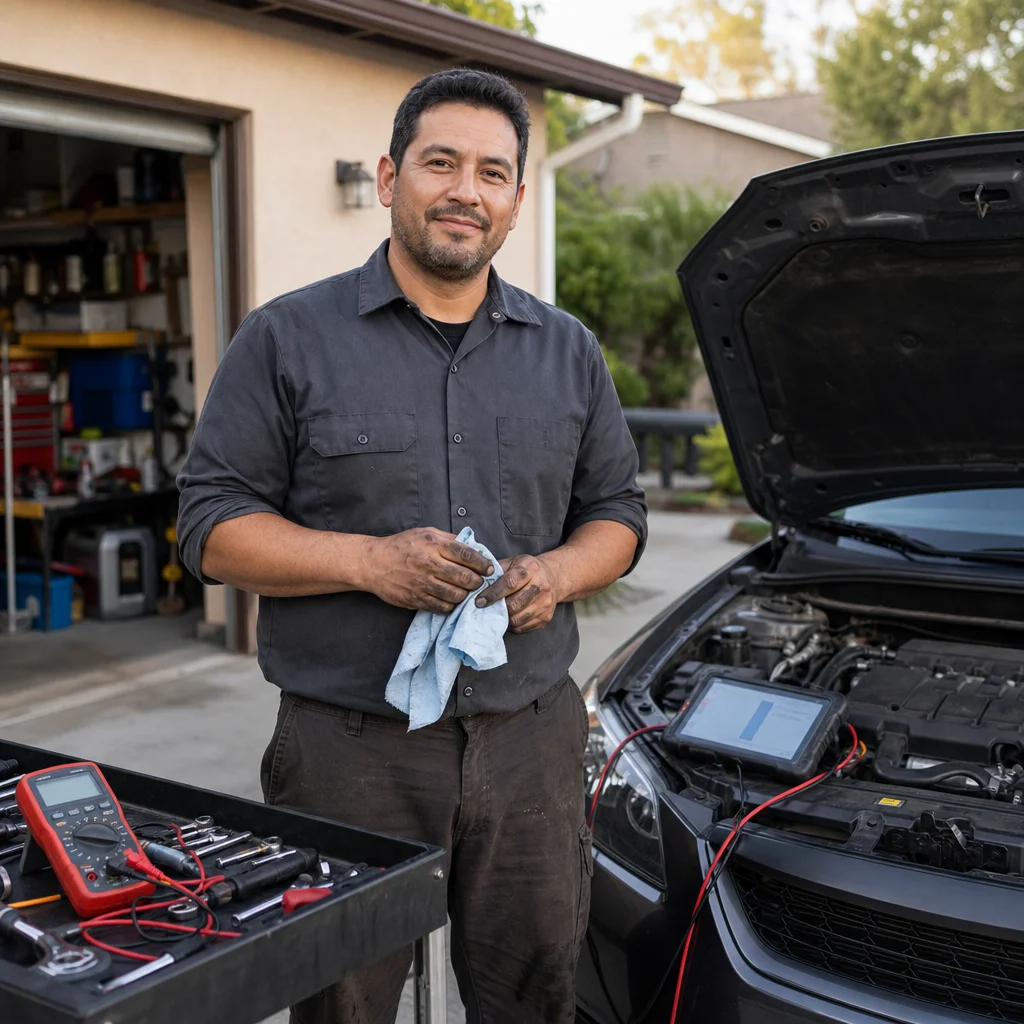
The information you give a mechanic before diagnosis can make the difference between a focused inspection and a long search through possibilities. You don’t need to identify the failed part yourself. Your job is to describe what the vehicle is doing, when it does it, and what changed before the problem appeared.
A clear account helps the technician reproduce the symptom, choose sensible tests, and avoid chasing unrelated clues. It also gives you a better basis for deciding whether to authorize additional diagnostic time or repairs.
Start with the symptom, not your theory
Describe what you observe in plain terms. “The engine shakes when stopped in Drive” is more useful than “I think the transmission is failing.” A theory can be helpful if you label it as a possibility, but leading with a suspected cause may cause you and the shop to focus too narrowly.
Try to explain the problem as a change in the vehicle’s behavior:
- It cranks but won’t start.
- It starts normally but stalls after several minutes.
- The steering wheel vibrates above a particular speed.
- The brake pedal feels soft or travels farther than usual.
- A warning light appears after the vehicle warms up.
- The air conditioning works intermittently.
Include what the vehicle does not do when that helps narrow the situation. For example, you might say that the noise occurs only while turning left, not while braking, or that the engine runs normally once the vehicle is moving. Negative details can be just as useful as the obvious symptom.
Avoid vague descriptions such as “it sounds bad” or “it drives weird” unless you immediately add specific examples. If you’re unsure how to describe a noise, compare it with a familiar sound—clicking, humming, scraping, squealing, clunking, or hissing—and explain where you hear it.
Explain when and how the problem occurs
Timing is one of the most valuable parts of your report. Tell the mechanic whether the symptom happens when the engine is cold, after the vehicle has warmed up, or in both conditions. Mention whether it occurs during starting, idling, acceleration, cruising, braking, turning, reversing, or shifting.
Driving conditions can reveal patterns that a short shop-lot test may not reproduce. Note relevant details such as:
- Approximate speed or engine speed
- Outside temperature or heavy rain
- Hills, rough pavement, or stop-and-go traffic
- How long the vehicle has been driven
- Whether the fuel level is low or the vehicle is heavily loaded
- Whether the problem appears only with the air conditioner, headlights, or another accessory operating
If the symptom is intermittent, write down when it happens instead of waiting for your memory to fill in the gaps. A simple note might say, “The hesitation occurred twice during a 20-minute drive, both times while accelerating from a stop with the engine warm.” That is more useful than “It hesitates sometimes.”
Also tell the shop whether the condition is getting worse, staying about the same, or becoming less frequent. A problem that has changed quickly may deserve different attention from one that has remained minor for months.
Report every warning light and message
Tell the mechanic which warning lights or dashboard messages appeared, even if they later went away. Include whether a light is on steadily, flashing, or appearing only under certain conditions. If you took a photograph of the message or instrument panel, keep it available.
A flashing warning light, an overheating message, an oil-pressure warning, or a brake warning can change the urgency of the situation. Don’t assume a light is unrelated because the vehicle still seems to drive normally. Some problems allow normal driving for a short time while still requiring prompt attention.
If you used a code reader, provide the exact diagnostic trouble codes and any freeze-frame information the device displayed. Don’t replace a part solely because a code mentions a sensor or system. A code often identifies a condition the computer detected, not the failed component itself. The mechanic needs to know the code as one clue among several.
Tell the shop if someone cleared the codes, disconnected the battery, or recently replaced the battery. Clearing codes can remove useful stored information and may reset the vehicle’s readiness monitors, which can affect subsequent testing.
Confirm the warning-light details: Before handing over the keys, show the mechanic any photos, code-reader results, or dashboard messages and explain whether each light is steady, flashing, or intermittent. Ask whether the vehicle is safe to drive while diagnosis is scheduled.
Give a timeline of recent work and changes
A recent repair, maintenance service, accident, modification, or change in driving pattern may be relevant even if it seems unrelated. Provide dates or approximate mileage for work such as oil changes, brake service, tire replacement, battery installation, cooling-system repairs, electrical work, or engine repairs.
Mention parts that were replaced, fluids that were added, and any work performed by another shop or by you. If you have invoices, service records, or parts information, bring them or send clear copies. The mechanic doesn’t need a perfect vehicle history, but accurate records can prevent duplicated tests and help identify whether a symptom began after a particular job.
Include less obvious changes too. Examples include installing larger wheels, a trailer hitch, aftermarket lighting, a remote starter, audio equipment, suspension parts, or a performance device. Modifications don’t automatically cause a problem, but they can affect electrical loads, clearances, handling, or the way a system is diagnosed.
Tell the mechanic if the vehicle recently hit a pothole, encountered standing water, ran very low on fuel, overheated, or was jump-started. Explain anything unusual that happened immediately before the symptom began, without assuming that event is definitely the cause.
Describe what you’ve already tried
Be straightforward about inspections, adjustments, repairs, and tests you’ve already performed. Include actions that produced no change, such as replacing a fuse, tightening a battery connection, adding fluid, rotating tires, or using a scan tool.
This information can save time and prevent the technician from repeating the same steps. It can also identify new variables. For example, if a battery was disconnected, a connector was unplugged, or a component was replaced with a non-original part, the shop may need to account for that during testing.
If you made a temporary repair, say exactly what it was and whether it remains in place. Don’t conceal a failed DIY attempt because you’re concerned about being judged. A mechanic needs an accurate starting point more than a polished story.
Separate observation from assumption
A useful handoff distinguishes what you know from what you suspect. You know that the vehicle makes a grinding sound during braking. You may suspect the brake pads are worn. Share both, but keep them separate: “I hear grinding when braking, and I’m concerned the pads may be worn.”
This approach gives the technician room to inspect related causes, such as a damaged rotor, a loose shield, a seized caliper, or debris. It also helps protect you from authorizing a repair based only on a guess.
When possible, describe frequency and severity without exaggeration. “It happened three times this week” gives a clearer picture than “It happens constantly.” If you’re unsure whether a fluid is leaking, say that you found a wet spot rather than identifying it as oil. The technician can verify the substance and source.
Explain the vehicle’s safety impact
Tell the shop if the vehicle pulls to one side, loses braking ability, overheats, loses power in traffic, has a fuel smell, shows exposed wiring, or has a tire or steering problem. Also mention whether the symptom affects your ability to control the vehicle or whether it occurs only as a noise or inconvenience.
If the vehicle has a serious warning sign, ask whether it should be driven to the shop or transported. The safest choice depends on the specific condition, vehicle, and distance. Avoid making a normal trip simply because the vehicle still starts.
You should also mention passengers or operating needs that affect the decision, such as a vehicle used to transport children, travel long distances, or carry heavy loads. Those details don’t change the diagnosis, but they can help you discuss the risk of continuing to drive.
Set the limits of diagnostic authorization
Before diagnosis begins, ask what the initial diagnostic charge covers. A shop may define diagnosis as a visual inspection, a scan, a road test, a certain amount of labor, or a combination of procedures. Policies vary, so ask how additional time, teardown, testing, or specialist equipment will be handled.
Give a clear authorization limit. For example, you might authorize the initial inspection up to a stated amount and request a call before additional diagnostic work or any repair. Make sure the shop understands whether you are authorizing diagnosis only or diagnosis plus a specific repair.
Ask what information you’ll receive if the cause isn’t confirmed during the initial visit. A useful report should explain what was tested, what was found, what remains uncertain, and what the next step would involve. “No problem found” is less useful than a description of the conditions under which the symptom couldn't be reproduced.
Clarify the diagnostic agreement: Before approving work, ask for the diagnostic fee, what it includes, the amount of additional work that requires your approval, and whether the fee is applied to a later repair. Confirm these terms with the shop because fees and policies differ.
Prepare a concise handoff
You can write the main details in your phone before arriving. Include the vehicle’s year, make, model, engine if known, current mileage, primary symptom, first occurrence, conditions that reproduce it, warning lights, recent work, and anything you already tried. Put the most important safety concern first.
A short written summary is especially helpful when several symptoms overlap. For example: “Engine cranks normally but takes two or three attempts to start when cold. No warning light. Started after battery replacement last month. Runs normally once started.” That summary gives the mechanic a starting pattern without pretending to diagnose the cause.
At drop-off, walk through the summary and point out anything that could be missed during a routine drive. If the problem occurs only after 30 minutes on the highway or only during a left turn, say so explicitly. Ask whether the technician needs the vehicle cold, fueled to a certain level, or available for an extended test.
Good information won’t guarantee a quick diagnosis, particularly when a symptom is intermittent or involves several systems. It does reduce guesswork and makes the next decision clearer. Describe what you observed, provide the timeline and records, identify safety concerns, and authorize diagnostic work in defined stages. That gives the mechanic useful evidence while keeping you in control of the repair process.