How to Decide Whether a Repair Is Safe Without a Torque Specification
Some repairs tolerate careful judgment, while others become unsafe the moment you guess at clamp load. I’ll show you the first checks that reveal whether you can proceed, where to find a trustworthy specification, and when a fastener belongs in professional hands.
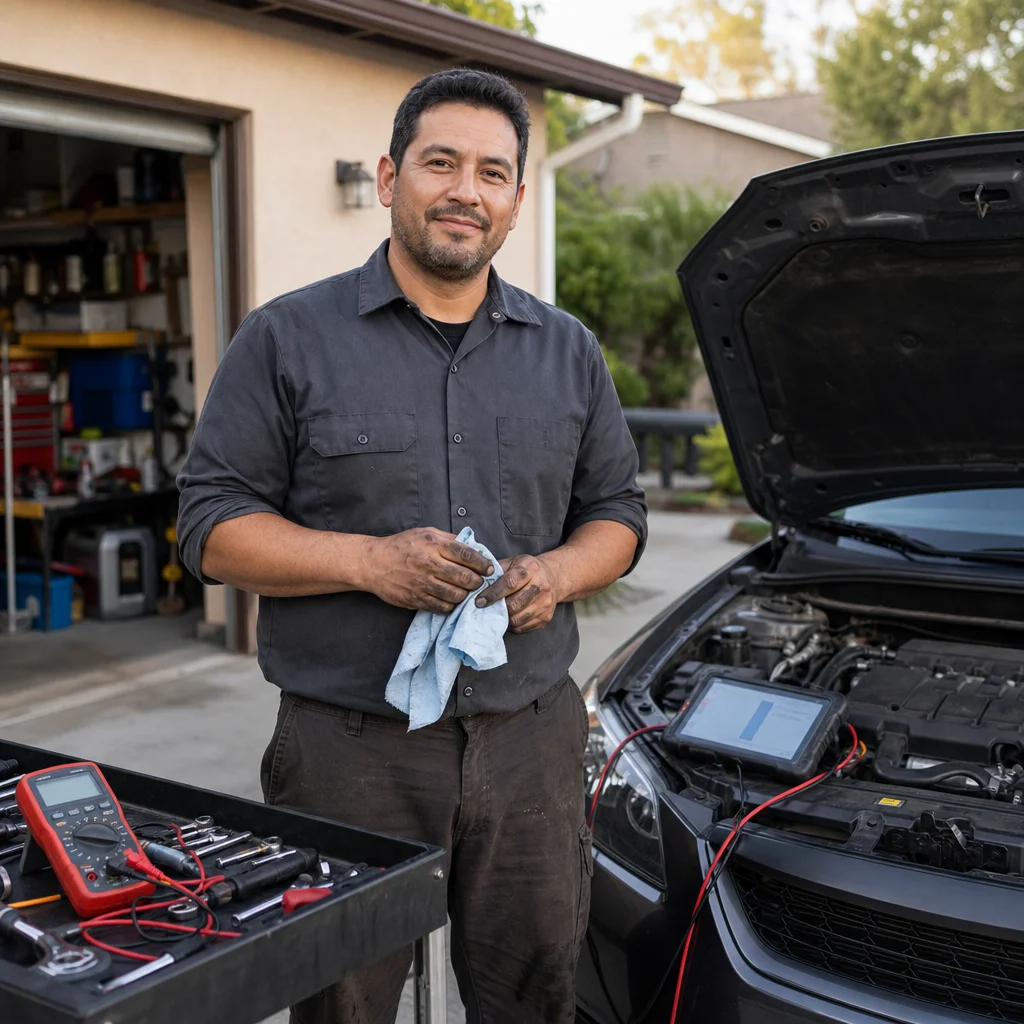
A missing torque specification doesn’t automatically mean a repair is impossible. Some low-risk fasteners can be tightened with reasonable care, while others control braking, steering, suspension, engine timing, or pressure containment and shouldn’t be guessed at. The important decision isn't whether you can make the fastener tight; it’s whether you can create the correct clamping force without knowing the required method.
Torque is only an indirect way to produce clamping force. Friction in the threads and under the fastener head can change how much tension results from the same torque reading. Lubrication, corrosion, damaged threads, a prevailing-torque nut, a washer, and the specified tightening sequence can all affect the result. That’s why “it feels tight” isn't a substitute for a specification when the fastener has a safety-critical job.
Start by identifying what the fastener does
Before looking for a wrench or socket, identify the component and ask what could happen if the fastener loosens, breaks, or is unevenly tightened. A cover that keeps dust away from a nonpressurized component is a different risk from a bolt that holds a brake caliper, wheel, steering part, seat belt, or suspension joint in place.
Fasteners deserve the most caution when they secure a part that:
- affects braking, steering, wheel retention, or suspension movement;
- contains high hydraulic, fuel, refrigerant, or combustion pressure;
- holds a timing, rotating, or load-bearing component in position;
- is part of a restraint system, such as an airbag or seat-belt mounting;
- uses a specified tightening angle after an initial torque; or
- is difficult to inspect after installation because it is buried or inaccessible.
If the repair falls into one of these groups, the absence of a torque specification is a strong reason to pause. The risk isn’t limited to overtightening. An under-tightened joint can move, leak, loosen, or fatigue over time; overtightening can stretch a bolt, damage threads, distort a housing, or cause a fastener to fail later.
Look for the specification before deciding
The best source is the service information for the exact vehicle, engine, transmission, and repair. Start with the owner’s manual if it contains relevant maintenance information, then check the factory service manual or a reputable professional repair-information system. A repair procedure is more useful than an isolated torque number because it may also specify bolt replacement, thread condition, lubricant, tightening order, a torque-plus-angle method, or a second tightening pass.
Parts manufacturers sometimes provide installation instructions for replacement hubs, suspension components, filters, sensors, drain plugs, or other assemblies. Treat those instructions as useful for that particular part, but make sure they apply to your vehicle and installation. A generic value printed on a package may not account for the vehicle’s original fastener, joint design, or tightening sequence.
A parts counter, dealership service department, independent repair shop, or professional technician may be able to point you toward the correct information. Vehicle forums and videos can help you understand the repair, but they are weak final authorities when the post doesn’t identify the exact model, year, engine, fastener, and procedure. Two similar-looking bolts can have different requirements.
Confirm the exact tightening method: Before continuing, verify the vehicle and component, the fastener location, the units, whether the threads should be clean or lubricated, and whether the instructions require a torque angle or a new bolt. If you can’t confirm those details, stop rather than convert a guess into a number.
Also check whether you’re reading the specification correctly. Newton-metres, pound-feet, and pound-inches are different units, and a misplaced decimal can cause serious damage. A torque wrench must be set to the unit shown by the source or converted carefully. Don’t confuse a specification for a nearby fastener with the one you removed.
Decide whether the joint is low risk
Proceeding without a published value is most defensible when the fastener is noncritical, accessible for inspection, and unlikely to cause immediate danger if its tightness is slightly imperfect. Examples may include some plastic covers, splash-shield hardware, trim brackets, light-duty clamps, and uncomplicated nonpressurized brackets. Even here, the fastener and surrounding material must be in good condition.
The repair should also have a forgiving design. A small bolt threaded into a robust metal bracket is generally less vulnerable than a small fastener threaded into plastic, thin aluminum, or a fragile casting. A joint with a gasket may require enough even compression to seal, so a seemingly minor fastener can still create a leak if tightened unevenly.
For a low-risk joint, use the correct fastener, clean and inspect the threads, start it by hand, and tighten it evenly. Follow the component maker’s instructions if they provide a method even without a numerical torque value. Stop if the fastener binds, bottoms out before the parts meet, spins without tightening, or requires unusual force. Those signs can indicate damaged threads, the wrong hardware, a cross-threaded hole, or a mismatched part.
A torque wrench can still be useful, but it doesn’t make an unknown specification known. Its click or digital reading only tells you the applied torque. It can't tell you whether that torque is appropriate for the joint, whether the fastener is already stretched, or whether the threads are producing abnormal friction.
Recognize the reasons to stop
Stop and find reliable repair information when the fastener is part of a wheel, brake, steering, suspension, restraint, or high-pressure system. Also stop when the manufacturer may require a one-time-use fastener. Torque-to-yield bolts are tightened through a controlled amount of stretch and are often not intended for reuse. Reinstalling one by feel can produce a joint that looks correct but doesn't have the intended strength.
The same applies when the procedure calls for an angle gauge, a particular sequence, a specific lubricant, threadlocker, a prevailing-torque nut, or a measured preload. These details are part of the engineering of the joint, not optional refinements. Tightening one bolt fully before the others can warp a cover or create uneven load even when every individual bolt reaches the right number.
You should also stop if you find damaged threads, corrosion in a structural joint, a cracked mounting point, a stretched or necked bolt, a missing washer, or hardware that doesn’t match the removed part. Replacing the fastener with a similar-looking grade or length can be unsafe. If a bolt breaks during removal, avoid drilling into a critical component unless you’re equipped to extract it without damaging the mounting surface.
A repair isn't a good candidate for improvisation if you can’t support the vehicle securely, keep the work area clean, or verify that the component is reassembled correctly. Safe access is part of the repair decision. Never rely on a jack alone while working underneath a vehicle, and follow the vehicle and equipment maker’s current safety instructions for lifting and support.
Don’t use common shortcuts as substitutes
“Hand tight plus a quarter turn” has no consistent meaning across fasteners, tools, materials, or people. The same is true of copying the feel of a bolt removed from another location. Removal torque is affected by corrosion, previous tightening, heat, and thread damage, so it doesn’t reliably reveal the original installation torque.
A generic chart can be helpful for understanding fastener grades and thread sizes, but it usually describes a particular set of assumptions about material, lubrication, and fastener condition. It isn't automatically the correct value for a vehicle joint. Avoid applying a chart value to a critical automotive fastener unless a qualified source specifically says that method is appropriate.
Threadlocker also doesn’t replace a torque specification. It may be part of the manufacturer’s procedure, but different products have different strengths and curing requirements. Adding it where it wasn’t specified can change installation friction and make later service difficult.
Make the decision conservatively
If the fastener is low risk, the parts are undamaged, the installation is accessible, and reliable instructions describe the method, you may be able to complete the repair with careful, even tightening. Marking the fastener and checking it after a short period can help you notice movement, but a mark is only an inspection aid; it doesn't prove that the original clamp load was correct.
If the fastener is safety-critical or the joint’s behavior depends on an unknown torque, use a manufacturer or professional repair source before proceeding. When that information is unavailable, have a qualified mechanic perform or inspect the repair. The cost of a consultation is small compared with correcting a damaged component or dealing with a failure while driving.
The minimalist safe approach is simple: classify the joint, find the exact procedure, and refuse to guess when the fastener controls safety, pressure, alignment, or structural load. A torque wrench is valuable when you have the right specification and method. Without them, stopping is often the most mechanically sound step you can take.