What a Burning Oil Smell Can Reveal About an Engine Leak
I’ll compare the clues that point to oil leaking onto hot engine parts, oil burning inside the engine, or a smaller seep that can wait for service. You’ll learn where to look first, which checks save money, and when continued driving is a poor trade-off.
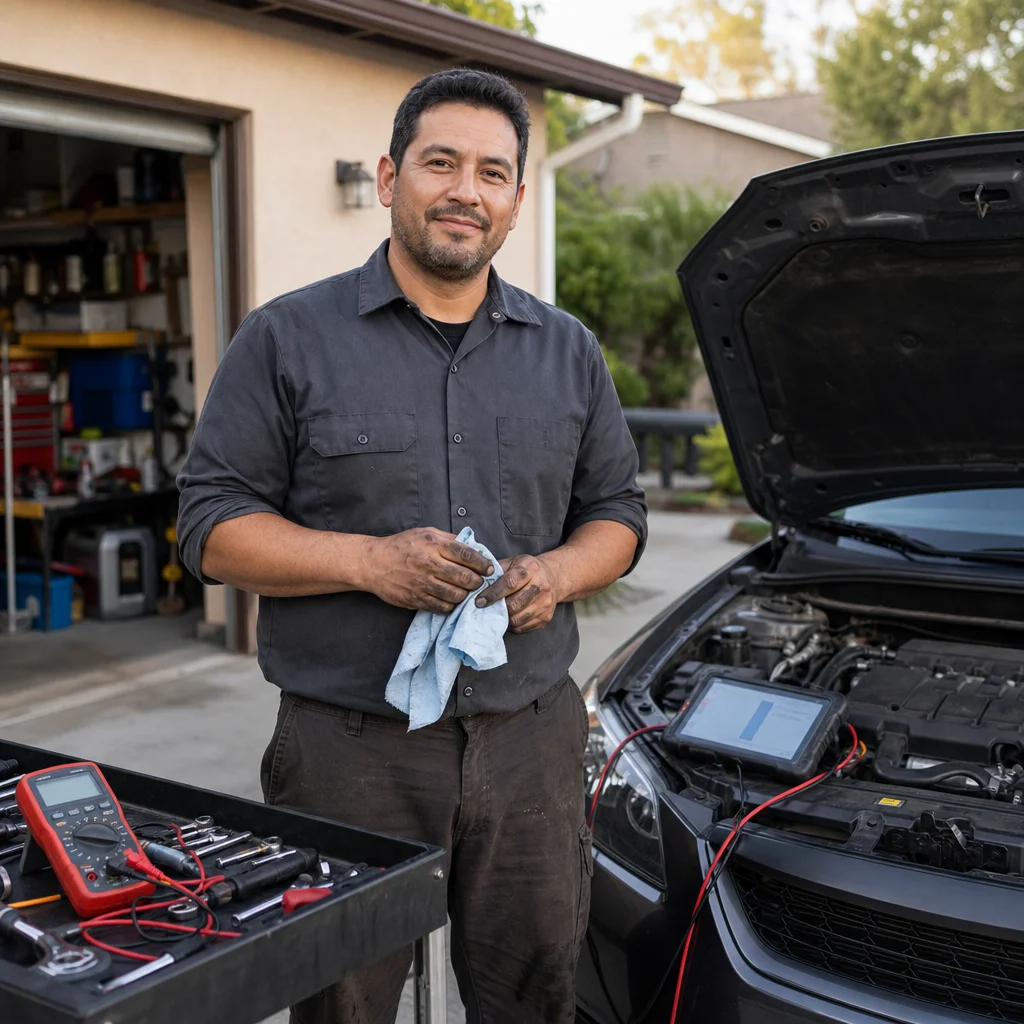
A burning oil smell usually means oil is reaching a hot surface, but the smell alone doesn’t tell you whether the source is a minor seep or a leak that could quickly become dangerous. The most useful clues are where the smell is strongest, whether you see smoke or blue exhaust, and how quickly the oil level is falling.
You can often narrow down the problem without replacing parts at random. Start with the simplest external leak checks, then consider internal oil burning if the engine bay is dry. The goal isn't merely to find oil somewhere; it’s to determine how the oil is getting there and whether delaying the repair could damage the engine or create a fire risk.
Why leaking oil smells when it reaches the exhaust
Engine oil normally stays inside passages, seals, and the crankcase. If a gasket, seal, filter, plug, or other component allows oil to escape, the oil can run across the engine or drip downward. When it reaches a hot exhaust manifold, catalytic converter, exhaust pipe, or heat shield, it can smoke and produce a sharp, acrid smell.
That smell may enter the cabin through the ventilation system, especially when the vehicle is stopped or moving slowly. It can also appear after parking because residual heat continues to bake oil left on the exhaust. A small leak may therefore smell worse after a drive even when the oil level hasn't changed noticeably.
Oil on an exhaust component is different from oil that is simply dampening the outside of the engine. A wet area near the top of the engine can spread downward, making the lowest visible spot look like the source. Tracing the leak upward is usually more useful than replacing the part nearest the ground.
The main external leak locations
Valve cover and upper-engine leaks
A valve cover sits near the top of many engines, and its gasket can harden or flatten with age. Oil may seep from the cover’s edge, around bolt areas, or near seals for ignition components. On some engines, oil escaping from this area runs onto the exhaust manifold below, creating a strong burning smell and occasional wisps of smoke.
Oil around the top of the engine is an important clue, but don’t assume the valve cover gasket is automatically at fault. Oil can also come from a filler cap, a seal, a sensor, or a component mounted nearby. Clean, fresh oil appearing at the highest wet point is more convincing than oil pooled at the bottom.
Oil filter, drain plug, and lower-engine leaks
A loose or damaged oil filter seal can leak after an oil change. Some filters have an old gasket stuck to the mounting surface, while others may be under-tightened or over-tightened. A drain plug with a damaged sealing washer can also drip from the bottom of the oil pan.
These leaks often leave spots under the vehicle rather than producing a smell immediately. However, oil can be blown backward while driving or land on a hot exhaust part, so the location of a driveway spot may not match the location of the smell. Check the filter area, drain plug, and oil pan after the engine has cooled.
Front and rear engine seals
Crankshaft seals and other lower-engine seals can leak, though identifying them may require removing covers or other components. Oil at the front of the engine may spread onto belts or pulleys, while oil near the transmission bellhousing can suggest a rear seal or a leak from higher up.
These repairs vary considerably by vehicle because access is a major part of the job. Before approving an expensive repair, it’s reasonable to ask whether the source has been positively identified or whether the diagnosis is based only on oil appearing at the bottom of the engine.
External leakage versus internal oil burning
External oil leaks usually leave one or more of these signs: a wet engine surface, drops or spots beneath the vehicle, smoke from under the hood, or a smell that is strongest outside the cabin near the engine bay. The exhaust at the tailpipe may look normal.
Internal oil burning happens when oil enters the combustion chambers and burns with the fuel. Blue or blue-gray exhaust smoke, especially during acceleration, after idling, or when restarting after deceleration, can point in that direction. Some engines consume oil without producing obvious smoke, particularly if the catalytic converter masks part of the visible exhaust.
Oil consumption by itself doesn't prove that the engine has an internal failure. A small external leak can lower the level just as steadily, and some vehicles have known consumption patterns that require monitoring. The useful comparison is between the measured oil level, visible leaks, exhaust behavior, and the interval over which the level changes.
A faulty or restricted crankcase ventilation system can complicate the picture. Excess crankcase pressure may push oil past seals, while a ventilation problem can contribute to oil entering the intake. If the engine is dry outside but consumes oil, a technician may need to check the ventilation system, compression, leak-down results, or other engine-specific evidence rather than guessing from the smell.
Decide whether to keep driving: Stop using the vehicle and arrange professional help if you see active dripping onto hot exhaust parts, smoke increasing under the hood, an oil-pressure warning, a rapidly falling dipstick level, a strong fuel smell mixed with the oil smell, or signs of fire. A mild odor with no visible leak still deserves prompt diagnosis, but these warning signs raise the risk substantially.
A sensible inspection sequence
Begin on level ground with the engine off and cool. Check the oil level using the vehicle’s prescribed method, since some engines require a brief wait after shutdown or have a special procedure. Record the level rather than relying on a quick glance, and don’t add oil above the full mark.
Look from the top down for fresh, shiny oil. Then inspect the sides and underside with a flashlight. Follow wet trails upward toward their highest point. Old oil may be dark and sticky, while fresh oil can remain amber or brown depending on the oil’s age and the engine. Dirt can hide the boundary, so a thorough cleaning followed by a short, controlled recheck may help confirm the source.
Don't reach around a running engine near belts, fans, pulleys, or hot exhaust parts. Avoid using your hands to search for a leak. If an inspection requires lifting the vehicle, use properly rated stands on suitable support points; a jack alone isn't a safe support system. Don’t crawl underneath a vehicle that is supported only by a jack.
If the source remains unclear, a repair shop can clean the engine and use an approved leak-detection method. Dye can be useful when several possible sources are close together, but it should be used according to the product and vehicle manufacturer’s guidance. Paying for a focused diagnostic step can be cheaper than replacing a valve cover, filter housing, or seal that was never leaking.
How urgency changes the repair decision
A slow seep from a cool part of the engine may allow time to schedule service, provided the oil level remains stable and no warning signs appear. That doesn't make it harmless indefinitely. Oil can spread, contaminate belts or electrical connectors, damage rubber components, or eventually reach the exhaust as the leak worsens.
An active leak onto the exhaust deserves faster attention even if the engine still runs normally. The immediate concern isn't only oil loss but also smoke and the possibility of ignition. Likewise, an oil-pressure warning should be treated as a lubrication emergency rather than as a reminder to schedule a routine gasket repair. Shut the engine off as soon as it is safe and follow the vehicle manufacturer’s instructions.
Internal oil burning creates a different set of risks. Continued oil consumption can damage emissions components and, if the level gets too low, the engine itself. Blue smoke after a cold start may suggest one group of causes, while smoke under acceleration or after a long idle may suggest another, but these patterns are clues rather than a complete diagnosis.
Where you can save money—and where you shouldn’t
The least expensive useful step is often careful observation: check the oil level, note when the smell occurs, look for smoke, and identify whether the odor enters the cabin. Take photographs of wet areas and keep track of how much oil you add and over what distance. This information can shorten diagnostic time and prevent a shop from having to reproduce an intermittent symptom.
Avoid repeatedly adding oil without finding the source. Topping up may be necessary to protect the engine temporarily, but it isn't a repair, and it can hide how quickly the level is dropping. Also avoid stop-leak additives as a first response. They may not address the actual cause and can create new problems in systems that depend on precise oil flow or seal behavior.
A repair is a better value when the source is confirmed, the failed seal or component is replaced with a suitable part, and the area is cleaned so a new leak can be identified. For a simple, accessible gasket or filter issue, a capable owner may be able to handle the job with the correct tools and service information. Repairs involving pressurized fuel, timing components, major disassembly, or uncertain engine damage are better evaluated by an experienced mechanic.
What to do next
After the engine cools, verify the oil level and inspect for fresh oil from the top of the engine down. Pay particular attention to areas above the exhaust, the oil filter and drain plug, and any location where oil is accumulating near belts or wiring. Then compare what you find with the exhaust color, driveway spots, and the conditions that make the smell appear.
If the evidence points to a contained seep and the level is stable, schedule a repair rather than ignoring it. If you see smoke from the engine bay, active oil on hot exhaust components, an oil-pressure warning, or rapid oil loss, don’t treat the vehicle as suitable for normal driving. A few minutes spent confirming the oil level and documenting the symptoms can save money, while recognizing a high-risk leak can prevent a much more expensive outcome.