Why Does a Car Hesitate for a Few Seconds After a Cold Start?
I’ll compare the most likely causes of a brief cold-start hesitation, from temperature-sensor and air-leak faults to weak fuel delivery, ignition problems, and low battery voltage, so you can choose sensible checks before replacing parts.
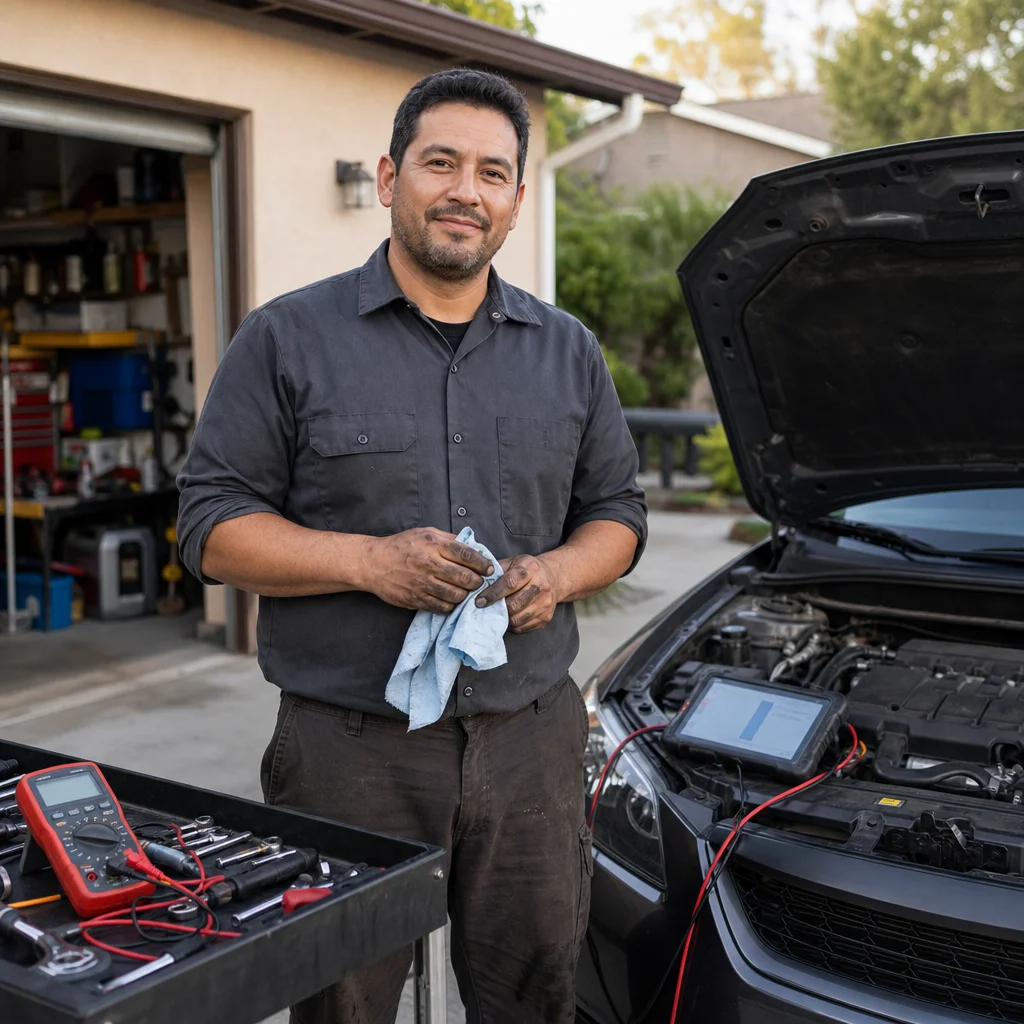
A car that hesitates for a few seconds after a cold start is often reacting to a problem in the small window between cranking and reaching a stable idle. The engine may stumble when you press the accelerator, feel as if it will stall, or recover once it has run briefly. That timing is useful: a fault that is much worse cold than warm points toward systems that control the engine’s starting mixture and early running behavior.
Several causes can produce the same symptom. A coolant-temperature sensor may report that the engine is warmer than it really is. An intake leak can add unmeasured air. Low fuel pressure, weak ignition, or a battery that pulls system voltage down during cranking can also leave the engine struggling until conditions stabilize. The most efficient approach is to compare cold-start evidence instead of replacing parts by guesswork.
Why cold starts expose problems
A cold engine needs a different air-fuel mixture and ignition strategy than a warm engine. Fuel doesn't vaporize as readily on cold intake surfaces, so the engine computer generally adjusts fueling and idle control during the first moments after startup. The exact strategy varies by vehicle, but it may use coolant temperature, intake-air temperature, airflow, throttle position, oxygen-sensor feedback, and crankshaft speed.
Once the engine warms, fuel vaporizes more easily and the computer begins relying more heavily on feedback from the oxygen sensors. A marginal component can therefore cause a noticeable stumble only during cold operation. As the engine warms, the same fault may become less obvious rather than disappearing completely.
The duration matters. A hesitation lasting one or two seconds after startup suggests a different path from a persistent misfire, a stall at every stop, or a problem that appears equally when warm. Note whether the engine starts immediately, whether the idle speed fluctuates, whether pressing the accelerator makes it worse, and whether the symptom occurs only after the car has sat overnight.
Check the pattern first: Before testing parts, compare the first cold start of the day with a warm restart. Record outside temperature, how long the engine hesitates, whether the check-engine light flashes, and whether the symptom changes when electrical accessories are switched on.
Temperature sensors and cold-start information
The engine coolant temperature sensor is one of the first suspects when a vehicle behaves poorly only while cold. It tells the engine computer how warm the engine is, and that information influences fueling, ignition timing, idle speed, and sometimes transmission behavior. If the sensor or its wiring falsely reports a warm engine, the computer may not provide the enrichment the cold engine needs.
A scan tool can reveal a useful clue without immediately proving the sensor is bad. After the vehicle has been parked long enough to reach outside temperature, the coolant-temperature reading and intake-air-temperature reading should usually be reasonably close. They don’t have to match perfectly, especially if the vehicle is in the sun or the sensors are located in different areas, but a clearly implausible reading deserves investigation.
Look for a temperature value that is stuck, changes abruptly, or rises in a way that doesn’t fit the engine warming. Check the sensor connector and wiring for corrosion, loose terminals, damaged insulation, or coolant contamination. On some vehicles, a failed sensor can also cause hard starting, poor fuel economy, an elevated idle, or a cooling fan that behaves unexpectedly.
The intake-air-temperature sensor can create a similar issue, particularly when it is integrated into the mass-airflow sensor or manifold-pressure sensor. It is less often the sole cause of a brief stumble, but its reading contributes to the computer’s estimate of how much air and fuel the engine needs.
Unmetered air and vacuum leaks
An engine can hesitate when air enters after the mass-airflow sensor or through a split vacuum hose. That extra air isn't included in the computer’s initial fueling calculation, so the mixture can become too lean during the first moments after starting. Small leaks are often more noticeable cold because rubber contracts, idle control is working harder, and the engine has less tolerance for a mixture error.
Inspect the intake boot between the airflow sensor and throttle body, especially the folds underneath. Also examine small vacuum hoses, the positive-crankcase-ventilation system, brake-booster hose, intake-manifold gasket area, and any fittings connected to the intake tract. A loose clamp can produce a symptom similar to a failed sensor.
Fuel-trim data can help separate an air leak from other causes. If short- and long-term fuel trims are strongly positive at idle but improve when engine speed is raised, an intake leak is more likely. This pattern is a clue, not a verdict: fuel-trim ranges differ by vehicle, and an exhaust leak, contaminated airflow sensor, or low fuel supply can distort the same readings.
Avoid spraying flammable liquids around a running engine to search for leaks. A smoke test is safer and more conclusive when a visual inspection doesn’t find the problem. A repair shop can perform one, and some owners can use an appropriate nonflammable testing method designed for automotive intake systems.
Fuel delivery and mixture control
Cold-start hesitation can result from insufficient fuel pressure, restricted fuel flow, a weak pump, a leaking injector, or a purge-valve problem. A pump may still produce enough pressure once the engine is running but take too long to build pressure after the car has sat. In that case, the engine may crank normally, stumble briefly, and then run better.
Pay attention to whether cycling the ignition on and off for a few seconds before cranking changes the symptom. If it does, fuel-pressure loss while parked becomes more plausible, although this simple test can't identify whether the pump, pressure regulator, check valve, injector, or another part is responsible. A fuel-pressure gauge and the vehicle’s service information are needed for a proper diagnosis.
A leaking injector can cause a rich cold start, while a restricted injector may create a lean stumble. Signs of an excessively rich mixture can include a fuel smell, dark exhaust, difficult restarting after a short soak, or a spark plug that is unusually wet or dark. Don’t assume that a fuel smell is harmless; fuel leaks and vapor leaks require prompt attention.
The evaporative-emissions purge valve is another edge case. If it is stuck open, fuel vapor or air can enter the intake at the wrong time, sometimes causing a rough start after refueling or after the vehicle sits. A purge-related fault may set a diagnostic code, but the absence of a code doesn’t rule it out.
Ignition faults that show up when cold
Worn spark plugs, weak ignition coils, damaged boots, or moisture around the ignition system can cause a cold misfire that clears as the engine warms. Cold combustion is less forgiving, so an ignition component with a marginal internal fault may work well enough at operating temperature but fail during the first few seconds.
Scan for misfire codes even if the check-engine light is off. Some vehicles store pending codes or misfire counts without turning on the warning light. If one cylinder repeatedly shows a misfire, inspect its plug and coil, then use a sensible component-swapping test only when the vehicle’s design allows it. If the misfire moves with the coil, the coil becomes more suspect; if it stays with the cylinder, consider the plug, injector, compression, or wiring.
A flashing check-engine light generally indicates an active misfire that can damage the catalytic converter. Reduce driving and avoid repeated hard acceleration until the cause is diagnosed. A steady warning light still deserves attention, but the urgency depends on the stored code and how the engine is running.
Battery voltage and cranking speed
Low battery voltage can make a cold-start problem look like a fuel or sensor failure. Cold temperatures reduce available battery performance, while engine oil becomes more resistant to turning. During cranking, voltage may drop enough to reduce starter speed or disrupt the operation of electronic controls. A weak battery can also expose a marginal ground connection.
Notice whether the starter sounds slower on cold mornings, the interior lights dim sharply, or the clock and radio reset. Inspect battery terminals and engine-to-body ground connections for looseness or corrosion. A battery can show an acceptable resting voltage and still fail a proper load or conductance test, so a parts-store test or professional battery test may be more useful than a quick voltage check.
If the hesitation occurs only when several electrical loads are switched on, check the charging system as well. A failing alternator, poor ground, or loose drive belt can affect system voltage after startup. Don’t disconnect the battery while the engine is running as a charging-system test; that can damage electronics on many modern vehicles.
Verify voltage safely: Use the vehicle manufacturer’s test procedure and meter connection points. Battery and charging-system readings vary by design and temperature, so treat generic voltage numbers as screening clues rather than a replacement for the specified test.
A practical diagnostic order
Start with the easiest information: scan for stored, pending, and history codes; inspect the intake tract; and check battery terminals and visible wiring. Then compare cold scan-tool readings with the actual overnight conditions. A temperature reading that is implausible before startup can move the sensor circuit higher on the list, while normal temperature data shifts attention toward air, fuel, ignition, or voltage.
Next, watch live data during the first minute. Look for unstable engine speed, unusual fuel trims, misfire counts, airflow readings that don’t respond smoothly, and system voltage that drops abnormally during cranking. The exact expected values depend on the engine, so the service manual or a reliable vehicle-specific data source should guide interpretation.
If the symptom is repeatable, test one system at a time. Check for intake leaks before condemning an airflow sensor. Measure fuel pressure during the failure rather than only after the engine has warmed. Test ignition components under the conditions that produce the misfire. This sequence prevents a common mistake: replacing an expensive sensor because it is easy to name when the actual problem is a cracked hose or weak battery.
Some faults require equipment or precautions that make professional diagnosis the sensible choice. Pressurized fuel systems, high-voltage ignition components, moving belts and fans, and fuel-vapor leaks all carry risks. If the engine stalls in traffic, the warning light flashes, fuel leaks are visible, or testing requires opening the fuel system without the correct tools, stop troubleshooting at home.
A brief cold-start hesitation is usually best treated as a pattern to investigate, not a single-part diagnosis. Temperature data, intake leaks, fuel pressure, ignition performance, and cranking voltage can overlap, but each leaves different clues. Begin with the cold-start scan and a careful visual inspection, then confirm the leading theory with a targeted test before buying replacement parts.