Why Won't the Engine Start After It Rains?
I’ll explain how rain can expose weak ignition parts, battery connections, sensors, and wiring, then help you separate a harmless damp connection from a problem that needs professional diagnosis before repeated starting attempts cause more trouble.
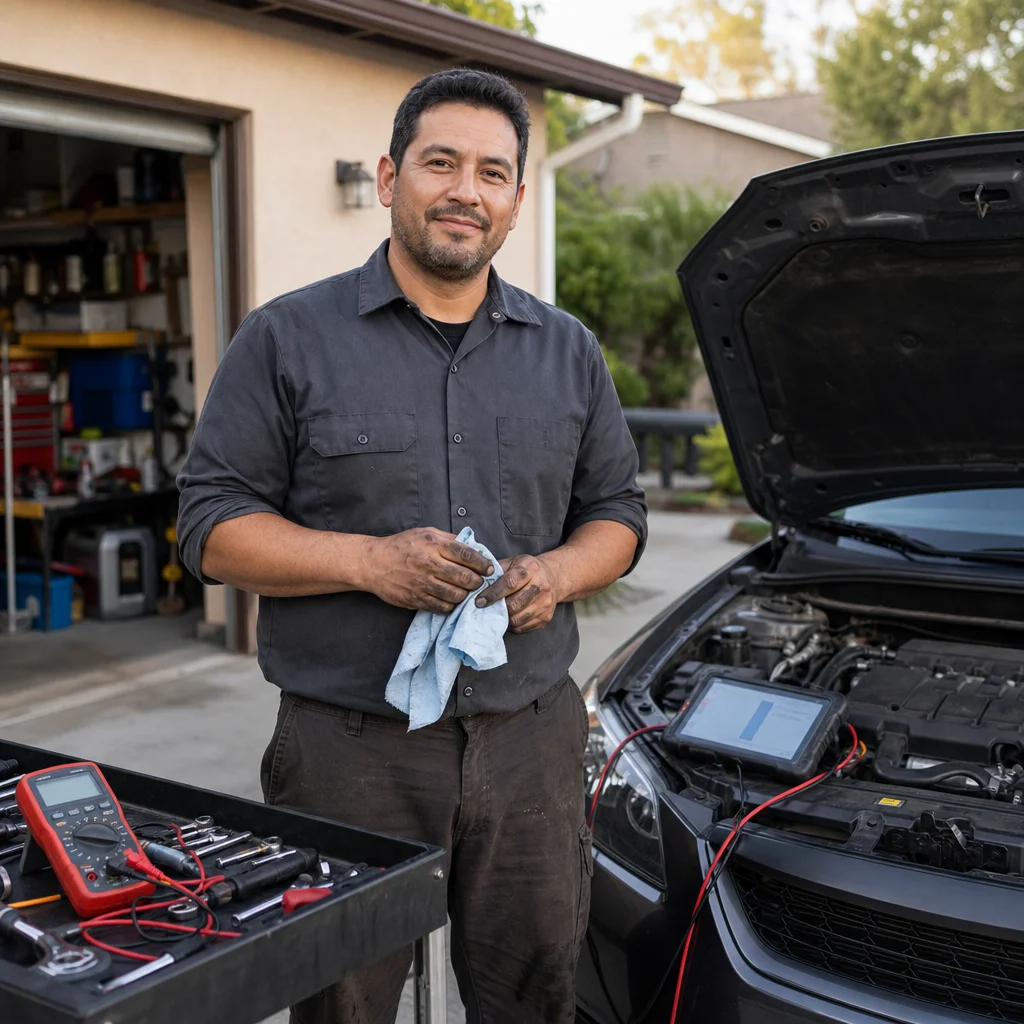
Rain usually doesn’t create an engine problem from nothing. More often, it reveals a weak part or connection that was already close to failing. Moisture can interfere with ignition, increase resistance at corroded battery terminals, enter an electrical connector, or expose damage in wiring and seals.
The first useful question is whether the engine cranks when you turn the key or press the start button. A normal cranking sound points toward ignition, fuel, or engine-management problems. A click, slow crank, or complete silence points more toward the battery, connections, starter circuit, or a safety interlock.
Start with the symptoms
If the starter turns the engine at its usual speed but the engine never catches, listen for any attempt to start. A brief stumble can suggest that ignition or fuel is present but unreliable. A completely steady crank with no sign of combustion could involve a wet ignition component, a failed sensor, or a separate fuel or electrical fault that rain merely exposed.
If the engine cranks slowly, the dashboard lights dim sharply, or you hear repeated clicking, start with battery power rather than moisture around the engine. A weak battery may still operate some lights while lacking enough current to spin the starter and power the vehicle’s control systems properly. Cold or damp weather can make a marginal battery seem worse, but rain itself isn’t a substitute for a battery test.
If nothing happens when you try to start, check whether the vehicle recognizes Park or Neutral, whether a clutch pedal is fully depressed on a manual transmission, and whether the security indicator is behaving normally. These symptoms can be unrelated to rain, even if the failure happened during a storm.
Before another starting attempt: If the vehicle stalled in standing or rising water, don’t restart it. Water may have entered the air intake, and cranking an engine with water inside can cause severe mechanical damage. Move to a safe location and arrange professional inspection instead.
How moisture affects ignition
Older gasoline engines commonly use a distributor cap and plug wires. A small crack, worn seal, or damaged wire can allow moisture inside or let high-voltage electricity leak to the wrong path. The result may be hard starting, misfiring, rough running, or a complete no-start condition that improves after the engine compartment dries.
Many newer vehicles use individual ignition coils mounted over the spark plugs. These systems have fewer exposed high-voltage parts, but a cracked coil boot, damaged seal, oil or water around a spark plug, or a loose electrical connector can still cause trouble. A damp coil or plug well may produce an intermittent misfire rather than a total failure.
With the engine off and the key removed, look for obvious water around ignition coils, plug-wire ends, or the distributor area if your vehicle has one. Don’t touch ignition components while someone is cranking the engine. Ignition voltage can be dangerous, and moving parts under the hood create additional hazards.
Drying may help confirm that moisture is involved, but it isn’t a complete repair. Use only a clean, dry cloth on accessible surfaces and follow your vehicle’s repair information for any electrical cleaner or replacement procedure. Don’t use an open flame, high heat, or indiscriminate spray around wiring and ignition parts.
Check the battery and its connections
Rain can make an existing battery connection problem more noticeable. Corrosion between a terminal and its cable increases electrical resistance. A loose ground strap can do the same thing, and moisture may temporarily change how that poor connection behaves. The symptoms are often slow cranking, clicking, flickering lights, or electrical systems that reset when you try to start.
With the engine off, inspect the battery terminals for looseness, heavy white or blue-green buildup, damaged cable ends, and signs that the battery case is cracked or leaking. Don’t lean tools across the battery terminals, and don’t try to tighten a terminal that requires force or has a damaged clamp. If the battery is swollen, leaking, or badly damaged, avoid handling it and seek assistance.
If the terminals look clean and tight but the engine still cranks slowly, the battery may need a charge or a proper load test. The starter, engine ground strap, or charging system could also be responsible. A jump-start may get you moving, but it doesn’t explain why the vehicle failed and may not be safe if the battery is damaged.
Look for wiring and connector problems
Water can enter a connector when its seal is torn, a wire has been repaired poorly, or a splash shield is missing. Common trouble spots include connectors near the front of the engine, wheel wells, the battery, and the underside of the vehicle. Rodent damage or previous repairs can leave insulation exposed, allowing moisture to create an intermittent short or poor signal.
Inspect only what you can reach safely without removing covers or pulling on wiring. Look for a connector that is partly unplugged, a broken locking tab, green or white corrosion, wet insulation, or a wire rubbing against metal. Don’t probe random terminals with a test light or jumper wire; modern control modules and sensors can be damaged by an incorrect connection.
A moisture-related sensor problem may prevent starting if the engine computer loses a critical signal. The crankshaft position sensor is one example: without a reliable engine-speed signal, the computer may not control spark or fuel injection correctly. Camshaft sensors, throttle-related wiring, and other components can also be affected, but the specific cause varies by vehicle.
Use a scanner when the engine cranks normally
A basic OBD-II scanner can show stored or pending fault codes, and some scanners display live data while the engine is cranking. A code can narrow the search, but it doesn’t automatically identify the failed part. For example, a sensor-related code may result from damaged wiring or a connector problem rather than a sensor that needs replacement.
Scan the vehicle before clearing codes if possible. Record the codes and the conditions shown by the scanner, then compare them with the symptoms. If the scanner can't communicate with the vehicle, check the diagnostic connector’s power and the relevant fuse only if you’re comfortable doing so; a communication failure can point to a power-supply or network problem.
Don’t replace several expensive parts simply because rain preceded the failure. Confirming whether the engine has spark, fuel pressure, and a usable crank signal requires the right equipment and procedures. If you lack those tools, the recorded symptoms and scan codes will still give a repair shop a useful starting point.
Common mistakes that make the problem worse
Repeatedly cranking for long periods can discharge the battery and overheat the starter. Use short attempts with pauses between them. If the engine begins to crank more slowly, stop and address the battery rather than continuing to try.
Avoid spraying a pressure washer or garden hose into the engine bay. Cleaning may be appropriate for some vehicles, but forcing water into connectors, ignition components, air intakes, or fuse boxes can turn a minor moisture problem into a larger one. Don’t cover a hot engine with plastic or place anything near belts, fans, or exhaust components.
A temporary restart after the vehicle dries doesn’t prove the problem is gone. Moisture may have exposed a cracked boot, failing coil, corroded connector, or damaged seal. If the engine runs roughly, the check-engine light flashes, or the vehicle stalls again, stop driving when it’s safe. A flashing warning light can indicate a misfire that may damage the catalytic converter.
When to call for help
Arrange professional diagnosis if the vehicle has been in deep water, the battery or wiring is visibly damaged, fuel is leaking, electrical components smell burnt, or the engine won’t crank after a safe battery check. You should also seek help when the engine cranks normally but won’t start and you can’t safely test ignition or fuel systems.
For a vehicle that starts after drying, schedule an inspection if the symptom returns in wet weather. Tell the technician whether the engine cranked normally, whether it misfired, how long it sat before restarting, and whether any warning lights appeared. Those details can distinguish a wet ignition component from a battery, sensor, or wiring fault.
Rain-related no-start problems are often found by separating the symptom into stages: confirm whether the engine cranks, inspect battery connections, look for accessible moisture or damage, and scan for useful codes. Keep the checks limited to safe visual inspections unless you have the tools and training for electrical testing. A temporary recovery is helpful, but finding the weak seal, connection, or component is what keeps the next storm from producing the same failure.