What a Sluggish Engine After Refueling May Be Telling You
The engine runs rough, hesitates, or nearly stalls just after you fill the tank, but the cause may be fuel, vapor control, or a fueling mistake rather than a failed pump. I’ll help you sort the likely possibilities with a small set of sensible checks.
The timing is a useful clue: if the engine becomes sluggish immediately after refueling, something connected to the fuel or evaporative-emissions system deserves attention first. That doesn’t prove the fuel pump is failing. In many cases, the problem is a wrong fuel, contaminated fuel, a fuel cap or vapor-control issue, or a purge valve that’s allowing too much vapor into the engine.
A brief stumble can have a simple explanation, while repeated hesitation, stalling, or hard starting deserves a more deliberate diagnosis. You can often narrow the possibilities without replacing parts at random.
Start with what changed at the fuel stop
Think about the exact sequence. Did the engine run normally on the way to the station? Did the trouble begin while leaving, after driving a few minutes, or only when you tried to restart? Did you fill the tank completely, top it off after the nozzle clicked, or add fuel from a container?
Those details matter because a fault that appears only after refueling points toward a different group of causes than a problem that is present all the time. A weak fuel pump can cause low power, but it usually doesn’t wait specifically for the fuel door to open. If the vehicle also has long crank times, misfires under load, or loss of power with a low tank, the pump and fuel-pressure system move higher on the list. If the symptoms are strongest immediately after filling, vapor and fuel-quality problems are often more plausible starting points.
Confirm the fuel before chasing components
Check the receipt, pump selection, and fuel door or owner’s manual. Putting gasoline in a diesel vehicle, or diesel in a gasoline vehicle, can cause severe running problems and may damage the fuel system if the engine is operated. Likewise, a vehicle that requires or permits a particular ethanol blend may not run correctly when the wrong blend is used. Don't rely only on the color of the pump handle; station layouts and colors vary.
Confirm the fill-up details: Before driving farther, verify the fuel type, the label on the pump, and whether the fuel was intended for your vehicle. If the wrong fuel may have been added, stop operating the engine and arrange professional advice rather than trying to dilute the tank by adding more fuel.
If the problem began after fueling at an unfamiliar or recently serviced station, contaminated fuel is another possibility. Water or debris can make an engine run poorly, though symptoms may continue beyond the first few minutes and may affect more than one vehicle that used the same source. Save the receipt and avoid discarding any useful information about when and where you bought the fuel.
The main causes to consider
Incorrect, poor-quality, or contaminated fuel
The wrong fuel can produce anything from rough running to a no-start condition. A gasoline engine receiving diesel may smoke, misfire, and lose power. A diesel receiving gasoline can suffer inadequate lubrication in parts of its high-pressure fuel system. The safest response depends on the vehicle and how far it was driven, so avoid repeated restarts when the mistake is suspected.
Poor-quality gasoline can also cause hesitation or misfires, particularly if the tank was nearly empty and the vehicle picked up sediment or water. However, don’t assume every post-refueling symptom means the station sold bad fuel. Ignition faults, air leaks, and unrelated sensor problems can happen at the same time by coincidence. A mechanic can test a fuel sample when contamination is a serious concern.
An evaporative-emissions problem
Your vehicle’s fuel tank produces vapors, and the evaporative-emissions system stores and routes those vapors into the engine to be burned under controlled conditions. The system commonly includes a fuel cap, vent lines, a charcoal canister, and a purge valve.
A loose, damaged, or incorrectly fitted fuel cap can trigger a warning light, although it usually doesn’t make the engine dramatically sluggish by itself. A purge valve that is stuck open is more closely associated with trouble immediately after refueling. During a fill-up, the engine may receive an excessive amount of fuel vapor through the purge system. The result can be a long crank, rough idle, stumbling, or a near-stall after starting.
A scan tool may show an evaporative-emissions or mixture-related code, but a code doesn't automatically identify the failed part. For example, an EVAP leak code can involve a cap, hose, vent valve, canister, or wiring. Use the code as a direction for testing, not as permission to replace the most expensive component named in a parts catalog.
Vapor-lock-like behavior or excess heat
Traditional vapor lock occurs when fuel vaporizes in a part of the fuel-delivery system where the pump needs liquid fuel. Modern vehicles are designed to resist this problem, so the phrase is sometimes used loosely for hot-soak, tank-venting, or fuel-pressure symptoms that feel similar.
Heat can make a marginal condition more noticeable. A restricted tank vent, abnormal tank pressure, low fuel pressure, or fuel with unusual volatility may contribute to hard starting or hesitation after a hot stop. A pattern that appears only on very hot days, after a long drive, or when the tank is filled to the top provides useful evidence.
Don’t remove the fuel cap immediately after a drive just to listen for pressure as a diagnostic test. A small change in pressure can occur normally, and fuel vapors are flammable. If the tank is visibly swollen, leaking, or releasing a strong fuel odor, move away from ignition sources and have the vehicle inspected.
A fueling error that is easy to overlook
Overfilling the tank after the nozzle first clicks off can push liquid fuel into the evaporative-emissions system. That can saturate the charcoal canister and create driveability problems, especially after starting or refueling. The extra few cents of fuel aren’t worth the possible repair.
The filler neck, cap, or vent system may also be damaged or restricted. If the nozzle repeatedly clicks off, fuel backs up, or filling the tank is unusually slow, treat that as a symptom rather than squeezing the trigger repeatedly. A venting problem can affect both refueling and engine operation.
A minimalist diagnostic path
Begin with observations that cost nothing. Note the fuel type, approximate amount added, outside temperature, whether the tank was topped off, and whether the engine improves after several minutes. Check that the cap is installed as the owner’s manual describes, and look for obvious fuel leakage or a strong raw-fuel smell without crawling beneath the vehicle.
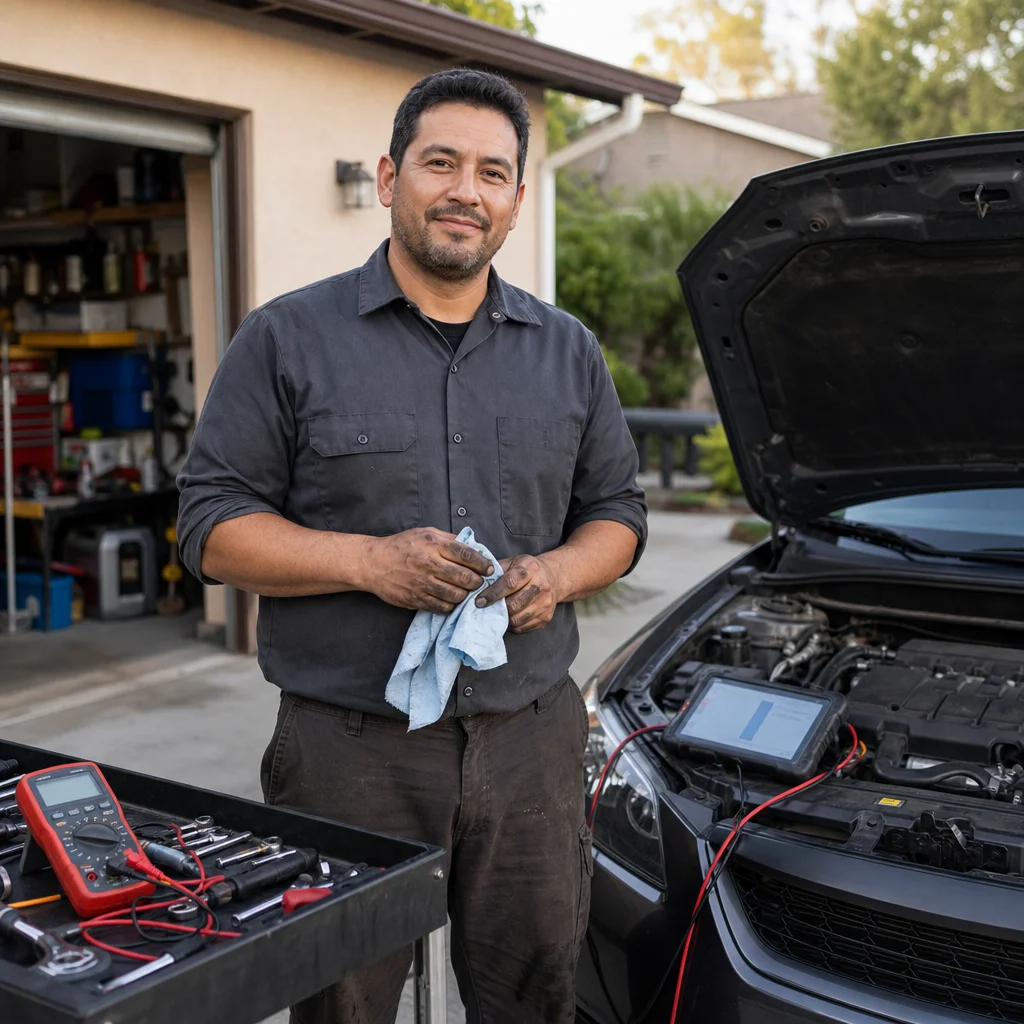
Next, check for warning lights with a basic scan tool. Record stored and pending codes before clearing anything. Look for EVAP, fuel-trim, misfire, and mixture-related information, but keep the timing in mind. A purge-related code supports further testing of that system; it doesn't prove the purge valve is the only problem.
If the engine is running normally now but the event repeats after every fill-up, a repair shop can test purge-valve operation, tank venting, and fuel pressure. If it runs badly all the time, diagnosis should widen to ignition, air intake, sensors, injectors, and fuel delivery. Fuel-pressure testing is more useful than guessing from the symptom alone. The specified pressure and test procedure vary by vehicle, so follow the service information rather than improvising with incompatible fittings.
Avoid opening fuel lines, probing pressurized fuel systems, or testing near sparks, cigarettes, heaters, or running electrical equipment. Gasoline vapors can ignite even when no liquid spill is obvious. If the engine stalls in traffic, loses power severely, leaks fuel, or produces a strong persistent fuel odor, stop in a safe place and arrange assistance instead of continuing to troubleshoot on the roadside.
When the fuel pump becomes a stronger suspect
A fuel pump deserves more attention when the evidence points to low or inconsistent fuel pressure: extended cranking in several situations, repeated stalling under load, a whining pump, loss of power during acceleration, or symptoms that worsen with a low tank. A pump can fail after a refueling event, but the timing alone doesn’t establish that relationship.
Fuel filters, pump wiring, a pressure regulator, restricted lines, and a failing relay can create similar symptoms. Some vehicles integrate these parts into a larger module, while others use separate serviceable components. Testing pressure during the actual failure, and checking whether it holds after shutdown, can separate several possibilities more effectively than installing a pump first.
The sensible next step
If the sluggishness was brief and the engine now runs normally, confirm the fuel, stop topping off the tank, monitor whether the warning light appears, and record whether the problem returns at the next fill-up. If the same pattern repeats, have the EVAP purge and vent systems checked before authorizing a fuel-pump replacement.
If the wrong fuel, suspected contamination, fuel leak, severe misfire, or repeated stalling is involved, don’t keep driving to see whether it clears. The safest and most efficient diagnosis starts with the recent fueling event, then uses scan data and pressure or vapor-system tests to confirm the cause. That approach keeps a small post-refueling clue from turning into an unnecessary parts-swapping exercise.