Why Does the Engine Run Rough Only After Refueling?
When your engine stumbles or nearly stalls after you fill the tank, I’ll help you separate a loose cap, EVAP fault, contaminated fuel, and more serious fuel-system problems so you can choose sensible next steps and know when to stop driving.
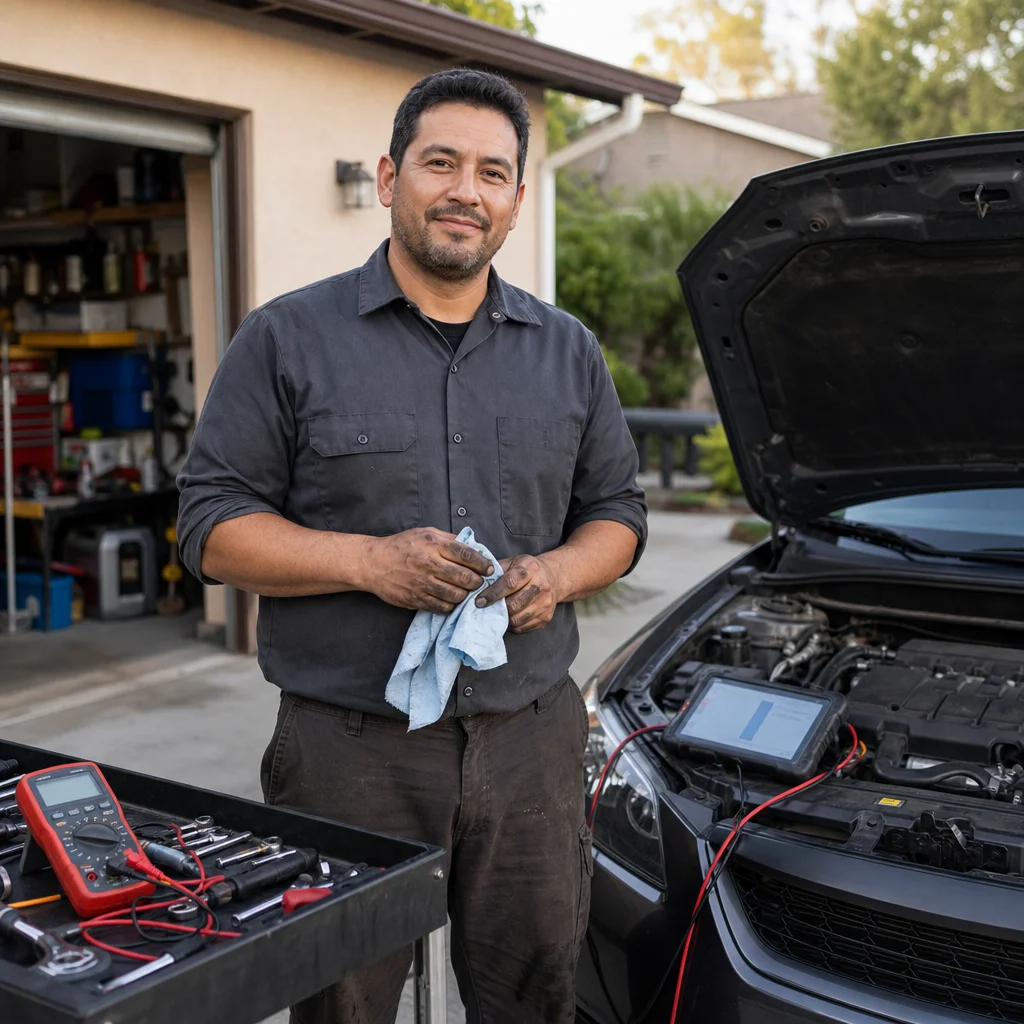
A rough-running engine immediately after refueling can feel too specific to be a coincidence. In many cases, the fuel stop is connected to the problem—but not necessarily because the engine received bad fuel. Refueling changes the pressure and vapor conditions in the tank, and that can expose a fault in the evaporative-emissions system or a problem with the fuel itself.
The most useful clues are what the engine does, how long the symptom lasts, and whether it happens after every refueling or only at one station. A brief stumble with no warning lights is different from a persistent misfire, a strong fuel smell, or an engine that stalls and won't restart.
Start with the symptoms
Pay attention to the first few minutes after you leave the pump. Does the engine crank for a long time before starting, start normally and then idle roughly, hesitate when you accelerate, or stall when you stop? Note whether the problem improves after several minutes of driving. Also listen for an uneven idle and watch for a flashing or steady check-engine light.
A rough idle that begins right after adding fuel and gradually improves is especially suggestive of an evaporative-emissions, or EVAP, problem. By contrast, ongoing hesitation, loss of power, or misfiring under load may point toward contaminated fuel, an ignition fault, or a separate engine problem that happened to appear at the same time.
The fuel cap matters, but it isn't the only possible cause. A loose or damaged cap commonly triggers a check-engine light, yet it usually doesn't make the engine run severely rough by itself. If the cap is missing, cracked, or can't tighten properly, replace it with the correct type and see whether the symptom returns. Don't assume that replacing the cap will fix a persistent misfire.
The most common EVAP-related cause: a purge valve
Your fuel tank produces gasoline vapors. The EVAP system stores those vapors in a charcoal canister and later routes them into the engine to be burned under controlled conditions. A purge valve regulates when those vapors enter the intake system.
If the purge valve sticks open, the engine may receive too much vapor—or, in some cases, liquid fuel pulled from a saturated canister—when you refuel. The result can resemble an overly rich mixture: hard starting, stumbling, rough idle, or stalling shortly after the fuel cap is removed and replaced. The problem may become more obvious when the tank is filled completely.
A scanner may show EVAP-related codes such as P0440, P0441, P0442, or P0455, but the code doesn't identify the failed part with certainty. A purge-flow code can result from a valve, hose, wiring, canister, or another leak. Misfire codes may also appear if the engine runs poorly enough, so replacing ignition coils or spark plugs solely because a misfire code is present can waste money.
Overfilling the tank can contribute to the same type of problem. Once the pump clicks off, repeatedly topping off the tank can send liquid fuel into components designed to handle vapor. That may saturate the charcoal canister and cause difficult starting or rough running. Stopping at the first automatic shutoff is the safer habit for the vehicle and the fuel system.
Other possible causes
Contaminated or incorrect fuel
If the engine runs poorly after refueling at one particular station, contaminated fuel deserves attention. Water, sediment, or an incorrect fuel blend can cause hesitation, misfires, hard starting, and reduced power. These symptoms often continue beyond the first few minutes and may affect the engine at different speeds.
A gasoline engine that received diesel fuel, or a diesel engine that received gasoline, needs a different response from ordinary troubleshooting. Don't keep driving to see whether the wrong fuel burns off. Turn the vehicle off as soon as it is safe, avoid repeated restarting, and arrange for the tank and fuel system to be assessed and drained by a qualified professional. The exact procedure and potential damage depend on the vehicle and the amount of incorrect fuel.
If you suspect bad fuel, keep the receipt and record the station, pump, fuel type, and approximate time. Don't open the fuel system or attempt to siphon fuel using improvised equipment. A repair shop can test a fuel sample and check fuel pressure, injector operation, and related systems.
A problem unrelated to refueling
The timing may be coincidental. A weak ignition coil, worn spark plug, failing injector, vacuum leak, or sensor problem can become noticeable during the same drive as a fuel stop. Weather, a hot engine, and the transition from highway speed to idling can also expose an existing fault.
A rough engine that continues after the tank is partly used, occurs at other times, or gets worse under acceleration shouldn't be treated as an EVAP issue without further testing. The refueling event is a clue, not a diagnosis.
A venting or fuel-tank pressure fault
The fuel tank must admit air as fuel leaves and manage vapor as conditions change. A blocked vent, defective vent valve, damaged hose, or restricted charcoal canister can create abnormal tank pressure. You may notice a strong hiss when removing the cap, though a small amount of pressure or vacuum can be normal and the sound alone doesn't identify the fault.
Repeated difficulty filling the tank, a pump nozzle that keeps clicking off, fuel odor near the vehicle, and rough running after refueling together make a broader EVAP inspection more worthwhile. Because some parts are located near the tank and fuel lines, diagnosis is often best left to a shop if you don't have the proper equipment and experience.
Decide whether to continue driving: Stop and arrange assistance if the check-engine light is flashing, the engine is stalling in traffic, you smell raw fuel, fuel is leaking, the vehicle has very little power, or the engine is shaking violently. A steady warning light with a mild, stable symptom may allow a short trip for diagnosis, but avoid unnecessary driving and follow your vehicle’s manual.
A sensible troubleshooting sequence
First, confirm the basic details. Check that the cap is the correct one, that it is seated fully, and that the fuel door and filler area aren't visibly damaged. Look for wetness or a strong fuel odor without touching spilled fuel. If the problem began after filling from a portable container, consider whether the fuel could have been stale, contaminated, or the wrong type.
Next, let the vehicle’s behavior guide the urgency. If it starts normally, idles slightly rough, and then runs smoothly, schedule a scan and inspection rather than immediately buying parts. If it repeatedly hard-starts after every fill-up, mention that exact pattern to the technician; it can be more useful than simply reporting “rough idle.”
If you have an OBD-II scanner, read stored and pending codes before clearing them. Write down the codes and freeze-frame information if the scanner provides it. Clearing the codes erases useful evidence and doesn't repair the cause. A basic scanner can't perform every EVAP test, but it can reveal whether the vehicle has recorded an EVAP fault, misfire, fuel-trim problem, or another clue.
Don't use a code as permission to replace the associated component immediately. For example, an EVAP leak code may require a smoke test to locate a cracked hose or loose connection, while a purge-valve problem may require a flow or electrical test. The correct repair depends on the test results and the vehicle’s design.
If the vehicle has driven normally since the refueling event and the symptom hasn't returned, continue to monitor it without ignoring a warning light. Note the fuel station, fuel level, outside temperature, starting behavior, and how long the rough running lasted. Patterns often make an intermittent fault easier to diagnose.
When a professional inspection makes sense
Seek professional help promptly when the engine continues to misfire, the vehicle stalls, the fuel smell remains, or the symptom occurs after every refueling. A shop can check for EVAP leaks, test purge and vent operation, measure fuel pressure, inspect ignition performance, and determine whether the fuel is contaminated. These tests are more reliable than guessing from the timing alone.
A fuel-system problem can also create a safety concern. Gasoline vapors ignite easily, and a leak near hot exhaust components or electrical equipment shouldn't be treated as a routine check-engine-light issue. Park the vehicle outdoors away from flames and ignition sources if it is safe to do so, and get professional assistance rather than continuing to drive.
In practical terms, a rough run only after refueling most often points toward the purge side of the EVAP system, overfilling, or a fuel-quality issue—but those possibilities have different repairs. Start by checking the cap and recording the pattern, avoid topping off the tank, scan for codes if you have a suitable tool, and escalate quickly when there is a flashing warning light, fuel odor, leakage, stalling, or a suspected wrong-fuel fill.