What a Whistling Noise Under the Hood Can Tell You
I’ll help you compare belt, vacuum, intake, and turbocharger noises by when they occur, how they respond to engine speed, and which safe visual checks can narrow the cause before you decide whether professional diagnosis is needed.
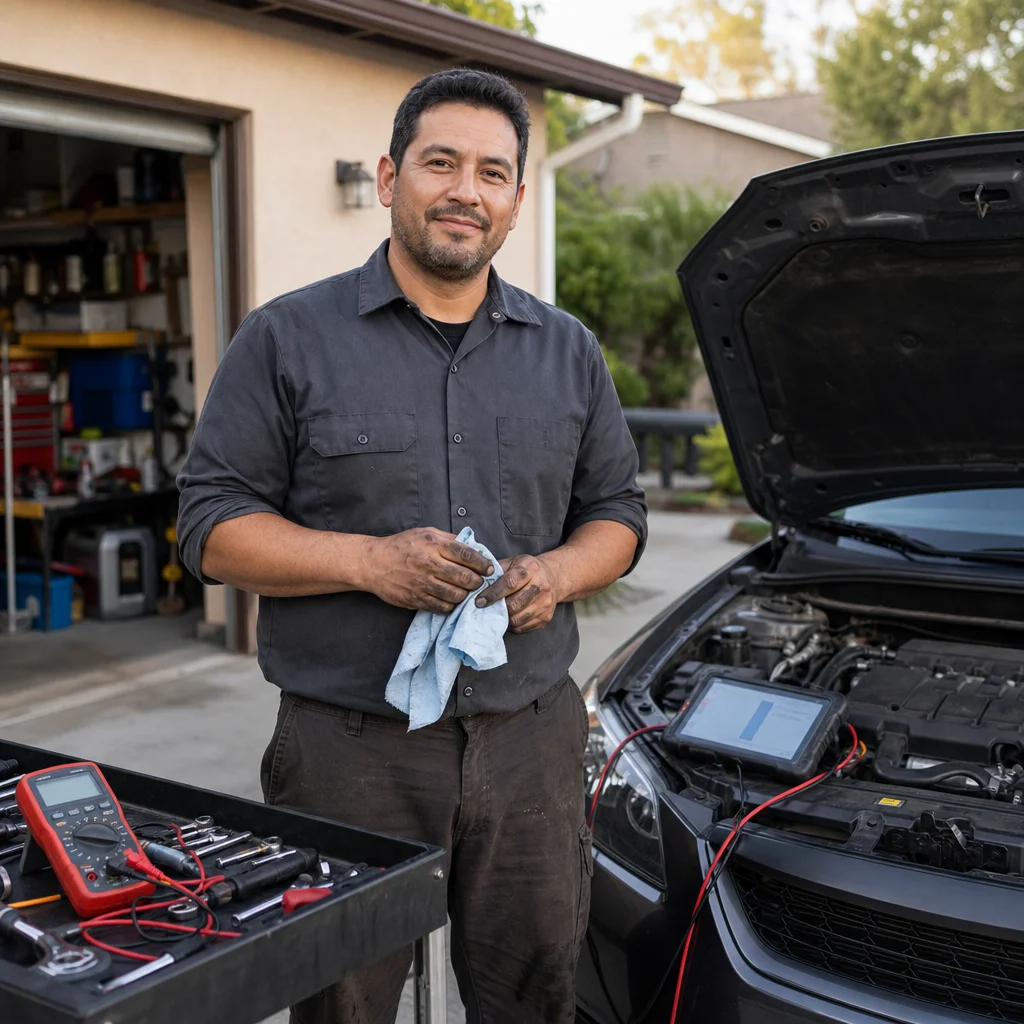
A whistling noise under the hood can be as minor as a slipping belt or as important as an intake or boost leak. The sound alone rarely identifies the failed part, but its timing gives you useful clues: does it happen only at startup, rise with engine speed, appear during acceleration, or continue while the engine idles?
You can often narrow the possibilities without removing parts or reaching near moving components. Start by observing when the whistle occurs, then inspect the belt and air-intake plumbing with the engine off. If the noise is accompanied by overheating, a warning light, loss of power, rough running, or a damaged belt, stop treating it as a harmless sound and arrange a proper diagnosis.
Begin with when the whistle happens
A noise that appears immediately after a cold start and fades as the engine warms often points toward a belt-drive issue. A serpentine belt can slip briefly when it is damp, worn, contaminated, incorrectly tensioned, or heavily loaded by an accessory. A weak tensioner or rough idler pulley can also create a high-pitched sound. If switching on the air conditioner makes the whistle louder, the added compressor load may be exposing a belt or pulley problem.
A whistle that follows engine speed isn't automatically a belt noise. Many under-hood sounds become faster or higher-pitched as the engine revs because the belt, pulleys, intake airflow, and turbocharger all respond to engine speed. The useful distinction is what else changes with it. A belt squeal may be most obvious during startup, steering at low speed, or air-conditioner engagement. An air leak is often clearer during throttle changes or acceleration.
If the sound occurs only while driving and disappears when you release the accelerator, consider the intake and, on a turbocharged vehicle, the boost system. A noise that remains while the vehicle is stationary may be easier to trace because you can vary the engine speed without road or tire noise. Don't rev the engine aggressively just to reproduce a sound, especially with the hood open.
A belt or pulley problem
A slipping serpentine belt usually produces a sharp squeal or whistle from the front or side of the engine. It may be strongest when the engine is first started, when electrical and climate-control loads are high, or during a sudden change in engine speed. A belt that looks shiny, glazed, cracked, frayed, or contaminated with oil or coolant deserves attention even if the noise comes and goes.
Look at the belt with the engine off and the key removed. Check whether it is seated squarely in each grooved pulley and whether any ribs are missing or damaged. Also look for fluid around the belt path. A new belt won't solve the underlying problem if a leaking seal or hose is contaminating it, or if a pulley is misaligned.
The tensioner and idler pulleys can cause noise even when the belt appears acceptable. A worn bearing may sound like a whine, growl, or whistle and can change as the pulley rotates. Testing pulley play or spinning components may require belt removal, which is best left to someone familiar with the vehicle. Never place fingers, clothing, or a tool near a running belt to locate the sound.
Don't spray belt dressing or another chemical onto a moving belt as a diagnostic shortcut. It may temporarily change the sound without correcting the fault, and it can contaminate components or make the real cause harder to identify.
A vacuum leak or crankcase leak
A vacuum leak allows air to enter the engine from a place the control system didn't expect. That escaping or entering air can create a steady, high-pitched whistle or hiss, particularly at idle. Common areas include small vacuum hoses, the intake manifold gasket, the throttle-body area, and crankcase ventilation components such as a PCV valve or hose.
The engine may also idle unevenly, stumble, surge, or set a check-engine light when the leak is large enough. On some vehicles, the engine computer can compensate for a small leak for a while, so the absence of a warning light doesn't rule one out. A whistle that is loudest at idle and changes when you lightly open the throttle is consistent with this type of problem, though it isn't proof.
With the engine off and cool, inspect accessible rubber hoses for splits, collapsed sections, loose ends, or brittle plastic connectors. Pay particular attention to the underside of hoses, where a crack may be difficult to see. Check that hose clamps and intake connections are seated, but don't overtighten plastic fittings. Some leaks are inside a valve or gasket and won't be visible.
Smoke testing is usually more reliable than guessing. A repair shop can pressurize or smoke-test the intake or crankcase system with equipment designed for that purpose. Avoid spraying flammable liquids around a hot or running engine to search for a change in idle speed. That method introduces fire risk and can damage components.
Look before you reach: Shut the engine off, remove the key, let hot parts cool, and inspect only from a safe position. Keep hands, loose clothing, hair, and tools away from belts, fans, pulleys, and the throttle mechanism whenever the engine is running.
An intake duct or air-filter housing leak
A leak in the intake tract can sound like a whistle, especially when the engine is drawing a large amount of air during acceleration. Inspect the duct between the air-filter housing and throttle body for splits, loose clamps, warped sealing surfaces, or a disconnected breather hose. The noise may be close to the air-filter box or near the throttle body rather than at the belt end of the engine.
An intake leak after the airflow sensor can cause rough running or fuel-trim problems because some of the air entering the engine isn't being measured correctly. A leak before the sensor may still create noise without producing the same symptoms. If the air-filter housing was recently opened, confirm that the filter, lid, and clips are installed correctly.
Some engines use resonators, one-way valves, or electronically controlled intake flaps. These can make normal airflow sounds more noticeable, and a damaged diaphragm or loose fitting can add a whistle. Avoid assuming that every new intake sound means the engine is being damaged; compare the noise with changes in performance, warning lights, and visible damage.
A turbocharger or boost-system noise
Turbocharged engines naturally make some whistling or spooling sounds as exhaust energy drives the turbocharger and compressed air moves through the intake system. A mild, consistent whistle that rises during acceleration can be normal for that vehicle. The owner’s manual or a technician familiar with the specific engine can provide a better baseline than a general description.
A sudden change in the sound is more significant than the mere presence of a whistle. A split charge-air hose, loose clamp, leaking intercooler connection, or failed diverter or bypass valve can produce a louder whistle or rushing-air sound under boost. These problems may be accompanied by reduced power, hesitation, smoke, unusual oil consumption, or a check-engine light.
A turbocharger with worn bearings may produce a siren-like whine, scraping sound, or rapidly worsening noise rather than a simple air whistle. Don't remove an intake pipe to inspect the turbocharger while the engine is running. Checking shaft play, compressor-wheel damage, or oil accumulation requires care, and the correct interpretation varies by turbocharger design.
If the vehicle suddenly loses power, enters a reduced-power mode, produces heavy smoke, or develops a harsh turbo noise, avoid repeated hard acceleration. Continued driving may turn a manageable hose or control problem into more extensive damage. A scan for stored diagnostic trouble codes can help, but codes should support a physical inspection rather than replace it.
Other sounds that can be mistaken for a whistle
An exhaust leak near the manifold or a gasket can make a sharp puffing or whistle, often louder during acceleration. Look for black soot around an exhaust joint, but don't touch exhaust components while hot. Exhaust leaks can also allow harmful gases into the passenger compartment, so a suspected leak deserves prompt attention.
A power-steering system, where fitted, may whine when the steering is turned, particularly if fluid is low or air has entered the system. A cooling fan can create a strong rushing sound that changes with temperature, while an alternator or other accessory bearing may produce a whine rather than a clean whistle. The location and operating condition matter as much as the pitch.
A brake-booster or other vacuum-related hiss may be heard near the firewall and can be associated with a change in brake-pedal feel. Any change in braking performance is a reason to stop driving and seek professional help rather than continue testing the noise.
A sensible diagnostic sequence
Start by recording the conditions instead of trying to identify the sound from memory. Note whether the engine is cold or warm, whether the car is stationary, whether the air conditioner is on, and whether the sound appears during acceleration, deceleration, steering, or braking. If safe, a short recording from outside the vehicle can help a technician, but don't hold a phone near moving parts.
Next, perform the simple engine-off inspection: examine the serpentine belt, look for fluid contamination, check accessible intake hoses and clamps, and inspect the air-filter housing. Look for loose wiring or plastic covers that could be vibrating, but don't pull on unfamiliar connectors or hoses.
If the sound changes with a specific accessory, disappears when the engine warms, or is accompanied by poor running, that information narrows the diagnosis. A scan tool can reveal misfire, fuel-trim, airflow, or boost-related codes on many vehicles, although a clear scan doesn't prove that the mechanical system is sound. The most useful repair decision combines the sound, symptoms, visible condition, and test results.
You should arrange prompt professional help if the belt is frayed or walking off a pulley, the engine is overheating, the noise is rapidly worsening, the vehicle has major power loss, smoke, a burning smell, unstable idle, or a warning light that is flashing. Belt failure can disable systems that depend on it, and some engines can suffer serious damage if the belt’s driven accessories stop operating.
The practical approach is to treat the whistle as a clue rather than a diagnosis. Cold-start noise and visible belt damage point you toward the belt drive; an idle whistle with rough running suggests an air or vacuum leak; acceleration-only noise on a turbocharged engine raises the intake and boost system; and a sudden siren-like sound calls for caution. Once you have recorded the conditions and completed the safe visual checks, you’ll have much better information for deciding whether a hose or clamp is an obvious repair or whether the vehicle needs a technician’s testing.