How to Tell Tire Pull From a Steering or Suspension Problem
A vehicle that drifts may need nothing more than a pressure correction—or may have a brake, alignment, or suspension problem. I’ll show you which checks to prioritize first so you can separate a tire issue from a repair that needs attention.
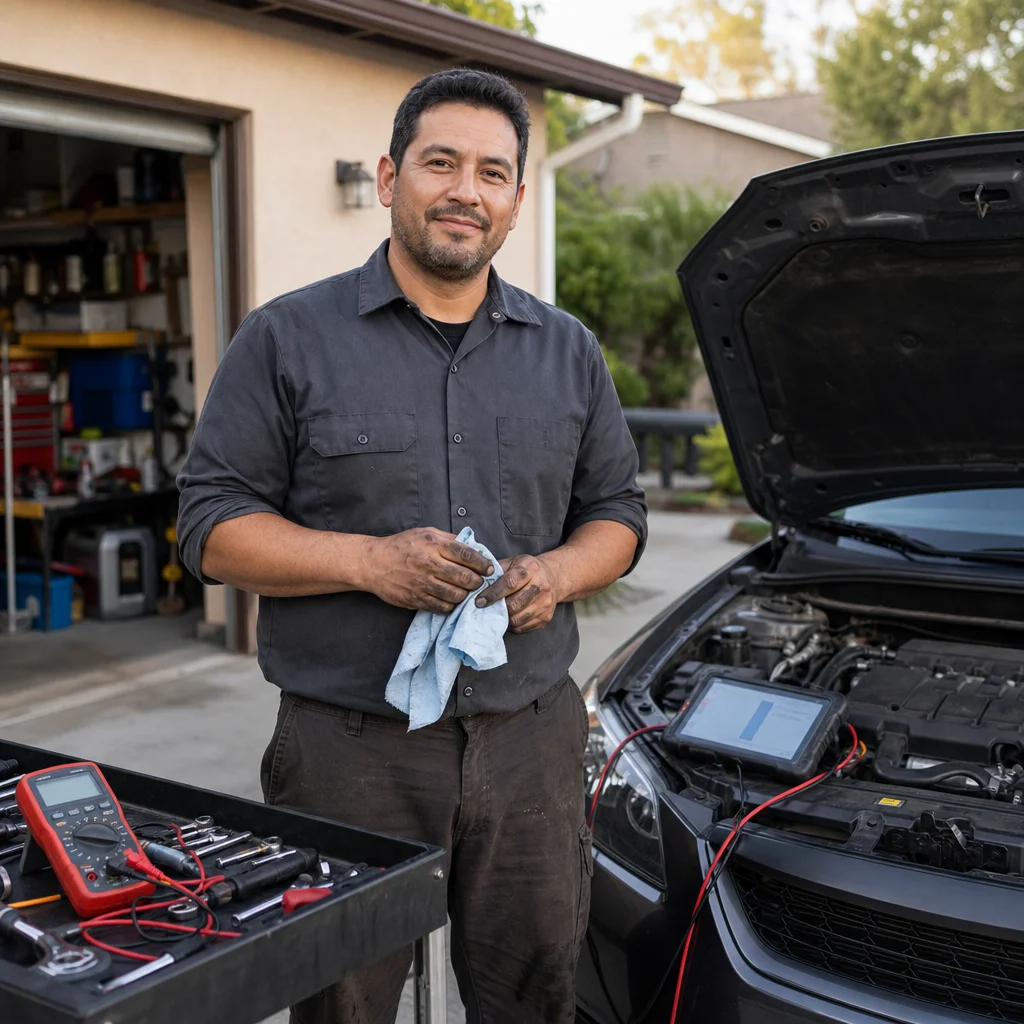
A vehicle that pulls to one side can make a simple tire problem feel like a steering or suspension failure. The important first step isn't replacing parts; it’s identifying whether the pull changes with the tires, follows the road surface, or remains after basic tire checks.
You can often narrow this down with a tire-pressure gauge, a careful visual inspection, and a short, controlled test drive. More serious symptoms—loose steering, clunking, uneven braking, or a tire that is losing air—deserve prompt inspection rather than repeated road testing.
Start with what “pulling” actually means
A mild drift isn't always a mechanical fault. Most roads are slightly crowned so water can drain, and that slope can make a vehicle move gradually toward the right. Wind, road grooves, and uneven pavement can create a similar sensation. Test on a reasonably flat, straight road with light traffic, and compare both directions when possible.
A true pull usually requires steady steering correction. The vehicle may move left or right as soon as you release slight pressure on the steering wheel, or it may pull harder when you brake. A steering wheel that sits off-center while the vehicle travels mostly straight is a different clue: it often points toward alignment or a steering component rather than tire conicity alone.
Pay attention to whether the problem is constant, appears only while braking, changes after the tires warm up, or follows a particular road. Those details are more useful than simply describing the car as “pulling.”
The minimalist first check: tire condition and pressure
Check all four tire pressures when the tires are cold. Use the pressure listed on the driver-door placard or in the owner’s manual, not the maximum pressure molded into the tire sidewall. A difference between the left and right tires on the same axle can cause a noticeable drift, especially on the front axle.
Look for a slow leak, a visible bulge, a bent wheel, uneven tread wear, or an object in the tread. Check whether one tire is substantially more worn than its partner on the same axle. A tire with separated internal belts can sometimes produce a pull, vibration, or irregular wear even when its tread still appears acceptable.
Don't rely only on appearance. A tire can be underinflated without looking obviously flat, and a damaged tire may not show its problem until it is loaded while driving. If a pressure is low again after you inflate it, have the tire, valve, and wheel checked instead of treating the symptom as normal air loss.
Verify the Correct Starting Pressure
Before comparing how the vehicle tracks, use the vehicle manufacturer’s cold-pressure specification and confirm that the tires are the correct size and type for the vehicle. Pressure recommendations can differ by model, load, and tire position, so check the current owner’s manual or door-placard information.
How tire conicity creates a pull
A tire doesn't have to be visibly defective to create a pulling force. Differences in the tire’s internal construction, stiffness, or manufacturing shape can make it behave as though it wants to roll slightly toward one side. This is commonly called tire conicity or tire lead. The wheel alignment may be within specification, yet the vehicle still drifts.
The strongest clue is that the pull changes when the front tires are repositioned. On a vehicle with non-directional tires, a qualified technician may swap the two front tires from side to side for diagnosis. If the pull reverses direction, a tire-related cause becomes more likely. If the pull moves substantially or disappears after a tire is moved, the tire or wheel assembly deserves closer attention.
Not every tire can be moved from one side to the other. Directional tires must continue pointing in their designed rotation direction, and some vehicles use different tire sizes front and rear. Staggered wheel-and-tire setups also limit what can be swapped. Don't perform a side-to-side change that violates the tire’s rotation marking or the vehicle’s fitment requirements.
A tire rotation can also change the symptom without proving that conicity is the only cause. Tread wear, wheel damage, and alignment problems can overlap. Treat the tire-position test as a way to narrow the diagnosis, not as permission to ignore a worn or damaged chassis part.
When alignment is the likely explanation
Alignment controls the direction in which the wheels point and the way the tires contact the road. The main angles are toe, camber, and caster. You don’t need to calculate them to recognize the common clues: an off-center steering wheel, a persistent pull on a flat road, or tire wear concentrated on one edge.
Unequal caster from side to side can cause a vehicle to pull even when the tires are properly inflated. Unequal camber can contribute as well. Incorrect toe is more often associated with rapid or feathered tread wear, but it can also make the vehicle feel unsettled and require frequent steering correction.
An alignment problem may follow a pothole or curb impact, but it can also develop as parts wear. An alignment service should include an inspection of the steering and suspension. Adjusting alignment angles without finding a bent or loose component can produce a temporary result or an alignment that can't be held.
Ask for the before-and-after alignment readings if you pay for an alignment. The useful question isn't whether every number is exactly centered; it is whether the readings are appropriate for your specific vehicle and whether the shop can explain any large difference between the sides. Specifications vary by vehicle, model year, suspension configuration, and sometimes load condition.
Signs the steering or suspension needs attention
Worn or damaged steering and suspension parts usually create more than a simple, repeatable drift. Watch for looseness in the steering wheel, wandering over bumps, a clunk when turning or braking, repeated bouncing, uneven ride height, or a vehicle that changes direction when you accelerate or lift off the throttle.
Possible sources include a worn tie-rod end, ball joint, control-arm bushing, strut mount, wheel bearing, or damaged suspension component. A bent part can result from an impact even if the tire didn't lose air. Some failures are difficult to confirm with a driveway inspection because the component must be loaded or measured correctly.
Don't get underneath a vehicle supported only by a jack. If you inspect underneath, use solid jack stands on a suitable surface and follow the vehicle’s lifting points. A basic visual check from outside the vehicle is safer for many owners: compare ride height, look for leaking struts, and inspect for obviously damaged parts without forcing or prying on anything.
A steering or suspension problem is more urgent when the vehicle feels loose, the steering wheel jerks over bumps, or the pull is accompanied by a wheel vibration. Stop using the vehicle and arrange an inspection if you see a cracked component, a badly damaged tire, or a wheel that isn't securely mounted.
A pull that appears only during braking
If the vehicle pulls only when you press the brake pedal, begin thinking about braking forces rather than tire conicity. A sticking caliper, restricted brake hose, uneven pad contact, contaminated friction material, or a problem with the braking system can make one side slow more than the other.
A brake pull may be accompanied by a hot wheel, a burning smell, unusual pad wear, or the vehicle continuing to drag after you release the pedal. After a short drive with minimal braking, you can compare the temperature of the wheel areas from a safe distance using an infrared thermometer. Don't touch a wheel, rotor, or caliper to judge its temperature; brake components can be hot enough to cause burns.
Temperature comparisons are only clues. A brake that is dragging can damage the rotor, tire, or other components, and braking problems affect control of the vehicle. If the vehicle pulls strongly under braking, a warning light is on, the pedal feels abnormal, or one wheel is much hotter than the others, have the braking system inspected promptly.
A simple diagnostic order
Use this order to avoid spending money on parts before checking the basics:
- Check cold tire pressures against the vehicle specification.
- Inspect tread wear, sidewalls, valves, wheels, and any signs of a slow leak.
- Test on a familiar, reasonably flat road in both directions, noting whether the pull is constant or braking-related.
- Confirm that the steering wheel is centered and look for suspension or steering symptoms.
- If the tires are suitable for it, have their positions changed as a diagnostic step.
- Arrange an alignment and chassis inspection if the pull remains, the wheel is off-center, or wear is uneven.
- Treat a braking-only pull, loose steering, severe vibration, or damaged tire as a higher-priority repair.
The purpose of this sequence is to separate inexpensive, reversible checks from measurements and repairs that require proper equipment. It also prevents a common mistake: aligning a vehicle before confirming that its tires are matched, correctly inflated, and free of damage.
When to stop diagnosing and call a professional
A gradual drift with even tire wear and normal steering feel may justify starting with pressure correction and a tire-related diagnosis. A persistent pull after those checks is a good reason for a professional alignment inspection, particularly if the vehicle recently struck a pothole or curb.
Don't continue road-testing a vehicle that has a loose steering component, a damaged tire, a strong brake pull, severe vibration, or a wheel that becomes unusually hot. Those symptoms can affect control or indicate damage that can't be judged reliably in a driveway.
The most efficient repair is the one supported by the symptom pattern. Correct pressure and a tire-position test can identify a tire-related pull; an off-center wheel and uneven wear point more toward alignment; braking-only movement suggests the brake system; and looseness, clunks, or changing direction over bumps raise concern about steering or suspension parts. Start with those distinctions, document what changes, and use an inspection when the evidence moves beyond what basic tools can safely confirm.