Why Do New Tires Still Create a Pull?
A new set of tires can expose differences in conicity, inflation, alignment, and road surface that feel like one problem. I’ll show how these causes interact and how to separate a tire-related pull from a chassis or steering fault.
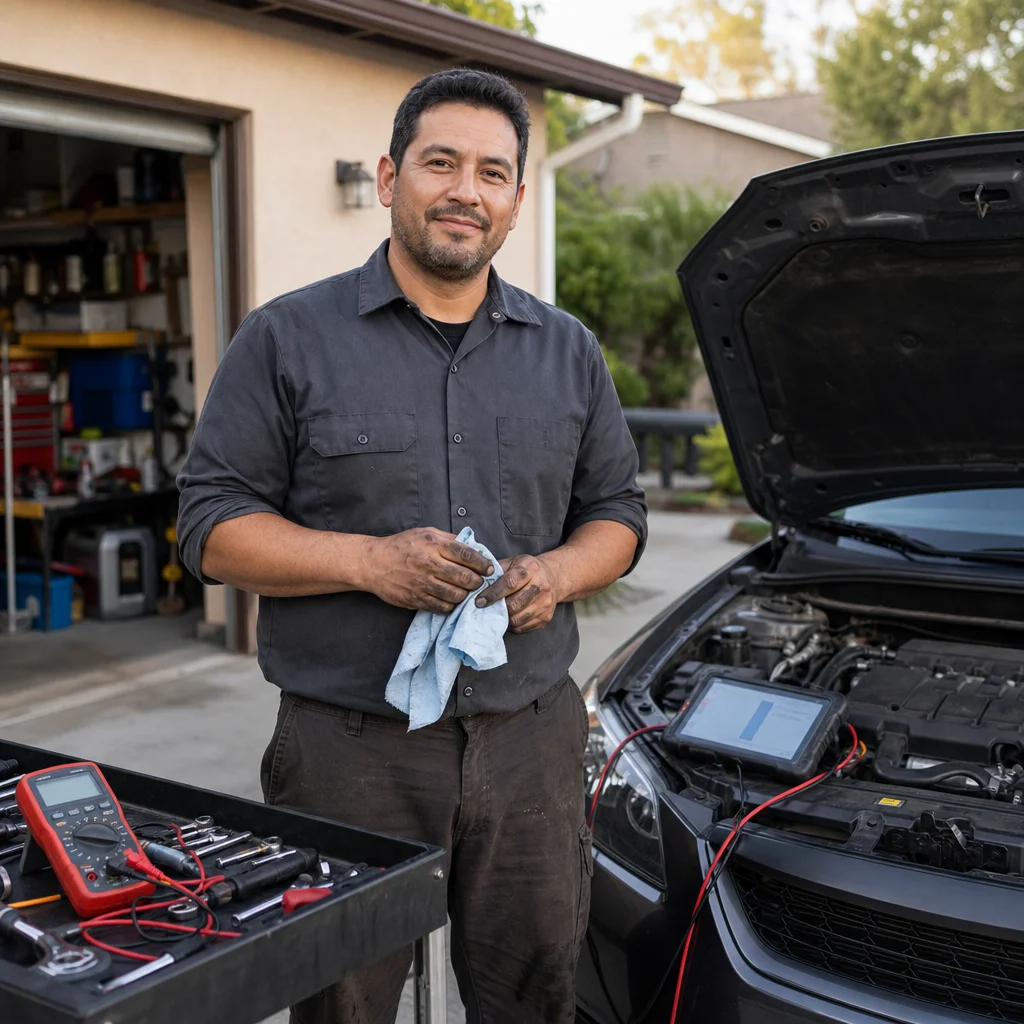
A vehicle that pulls after new tires can make you question the installation, the alignment, or even the tires themselves. The change may be related to the tires, but it can also reveal a condition that was already present and less noticeable with the old, worn set.
The useful approach is to separate a normal road-induced drift from a genuine vehicle pull, check the simple causes first, and then use a controlled tire-position test. That sequence helps you avoid replacing parts when the real issue is tire behavior—or blaming the tires when the suspension or alignment needs attention.
First, distinguish a pull from a road-induced drift
Most roads are crowned so rainwater moves toward the edge. On a typical two-way road, the surface slopes slightly toward the right shoulder. A vehicle may therefore drift right when you loosen your grip, even if its alignment and tires are healthy. The effect can be stronger on some lanes and roads than others.
A genuine pull is usually more consistent. The vehicle may move toward one side on a reasonably level road, require steady steering correction, or change direction when you move the tires. A drift can be gradual and surface-dependent, while a pull often feels like the vehicle is actively steering itself.
Don't test this by releasing the steering wheel in traffic. Keep both hands available, choose a safe, lightly traveled stretch, and treat the road surface as part of the test. A flat parking area can help you check whether the steering wheel returns naturally, but it can't replace a road test because pavement slope affects the result.
How new tires can create a pull
Conicity and ply steer
A tire is intended to roll straight, but its construction isn't perfectly uniform. Slight differences in the belts, tread, sidewalls, or manufacturing process can make a tire behave somewhat like a cone. The larger effective diameter on one side causes it to generate a lateral force as it rolls. This tendency is commonly called conicity.
A related behavior, often described as ply steer, results from the way the tire’s internal layers are arranged and loaded. You don't need to identify which construction effect is responsible to diagnose the problem: the important point is that a tire can produce a sideways force even when its tread looks normal and its pressure is correct.
A tire with this characteristic can pull more noticeably when installed on the front axle, where its lateral force directly influences steering. Moving it to the rear may reduce the steering sensation without eliminating the tire’s tendency. New tires can also make the issue more obvious because their tread is unworn and their construction differs from the previous set.
Inflation differences
A small pressure difference between the front tires changes their contact patches and cornering response. The lower-pressure tire generally has more sidewall flex and can make the vehicle feel less willing to track straight, although the exact sensation varies with tire size, construction, load, and vehicle design.
Pressure should be checked when the tires are cold, using the pressure specified on the vehicle’s doorjamb label, fuel-door label, or owner’s manual. The maximum pressure molded into the tire sidewall isn't normally the vehicle’s recommended operating pressure. Check all four tires, including the spare if it is part of the vehicle’s monitoring system, and confirm that the valve caps and valve stems are in good condition.
Confirm the cold pressures first: Use the vehicle manufacturer’s pressure specification, not the sidewall maximum, and recheck after the car has been parked long enough for the tires to cool. If the pressure-monitoring system has been serviced or a warning remains, follow the vehicle’s reset procedure in the owner’s manual.
Pressure isn't always the whole explanation. A tire may lose air slowly through a puncture, bead leak, or damaged valve, so compare pressures again after driving normally for a day or two. A recurring difference deserves inspection rather than repeated inflation.
Tire position and side-to-side effects
The same tire can feel different depending on where it is installed. A front tire’s conicity is transmitted directly through the steering system, while a rear tire may create a less obvious directional force. This is why moving tires can be both a repair and a diagnostic test.
Tire position also matters because the wheels may not be identical. A bent rim, uneven wheel balance, or a tire that isn't seated uniformly on the bead can create vibration or directional behavior. These faults may appear after installation and can be mistaken for an alignment problem.
Directional tires, asymmetric tires, staggered wheel arrangements, and vehicles with special rotation requirements limit what you can safely move. Never install a directional tire backward simply to perform a test. If the wheels can't be swapped in the required pattern, a tire shop can use a controlled rotation, force-matching procedure, or another diagnostic method.
Alignment can still be involved
New tires don't correct an alignment problem. In some cases, they make it easier to notice because the new tread has a different shape, stiffness, and contact patch from the worn tires.
The most relevant alignment measurements are usually camber, caster, and toe. Camber describes the wheel’s inward or outward tilt when viewed from the front. Unequal camber can contribute to a pull. Caster affects steering stability and self-centering; a side-to-side difference can make the vehicle favor one direction. Toe describes whether the tires point slightly inward or outward when viewed from above. Incorrect toe commonly causes uneven tread wear, though it can also make the vehicle feel nervous or unwilling to track straight.
A steering wheel that is off-center and a vehicle that pulls are related clues, but they aren't identical. The wheel may be centered incorrectly after an alignment, or the vehicle may pull because of unequal caster or camber even when the wheel appears nearly straight. Ask for the alignment measurements and the before-and-after results rather than relying only on the phrase “the alignment is good.”
Suspension damage can produce similar symptoms. Worn control-arm bushings, a bent steering component, a damaged strut, a shifted subframe, or unequal ride height can alter alignment under load. If the pull began after a pothole or curb impact, the new tires may be coincidental.
A controlled way to separate tire pull from chassis problems
Begin with a visual inspection. Look for uneven tread wear, a bulge, a damaged sidewall, a tire mounted against its directional arrow, an asymmetric tire installed incorrectly, or a wheel that doesn't appear to sit correctly. Confirm that the tire sizes and load ratings match the vehicle’s requirements. Check pressures cold and make sure the lug nuts were tightened using the vehicle’s specified procedure.
Next, test on a familiar, reasonably smooth road in both directions when conditions allow. If the car drifts right in one lane but left or much less in the opposite lane, road crown is probably contributing. Record whether the steering wheel is centered, whether the pull is constant, and whether braking or acceleration changes it.
If the vehicle has non-directional tires and a conventional rotation layout, a technician can swap the two front tires from side to side for a short diagnostic drive. If the pull changes direction, becomes substantially weaker, or moves to the opposite side, one of the front tires is a strong suspect. The tires may need to be returned to their original positions after the test, depending on the result and the vehicle’s rotation requirements.
If the pull remains in the same direction after the front tires are exchanged, the tires are less likely to be the primary cause. Alignment readings, wheel condition, suspension components, and possible brake drag deserve closer attention. This test isn't absolute: changing tire position also changes how wheel and tire assemblies interact, and some vehicles can't use this method safely.
A directional or staggered setup calls for a different strategy. A shop may move the suspect tire from front to rear on the same side, compare the vehicle’s behavior, or use a tire force measurement machine. Those methods can narrow the cause without violating the tire’s directional or fitment requirements.
Other problems that can resemble a tire pull
A brake caliper that doesn't release fully can create a pull, often accompanied by excess heat or a burning smell at one wheel. Don't touch a wheel or brake component immediately after driving to check its temperature; hot brakes can cause serious burns. Uneven wheel temperature should be assessed with appropriate equipment by someone qualified to do so.
A wheel bearing problem may produce noise, looseness, or a change in behavior while cornering. Loose steering components, a damaged tire belt, and a bent wheel can also affect tracking. Vibration is a particularly useful clue: a pull without vibration points in a different direction from a pull combined with a shake, although the symptoms can overlap.
Electronic steering systems can add another layer. Some vehicles use steering-angle calibration or lane-keeping assistance that may influence how the car feels on a crowned road. Turn driver-assistance features off only as directed by the owner’s manual and only for a controlled diagnostic comparison. They shouldn't be used to mask a mechanical problem.
When to stop driving and get help
A mild, repeatable drift after a tire change can usually be investigated methodically. Stop and arrange an inspection sooner if you see a sidewall bulge, rapid pressure loss, exposed cords, severe vibration, loose steering, unusual knocking, or a pull that becomes strong during braking. Those symptoms can indicate a tire, wheel, brake, or suspension problem that shouldn't be diagnosed through extended road testing.
For a persistent pull, ask the installer to verify the tire positions, cold pressures, wheel seating, balance, and alignment readings. If the front-tire swap changes the direction of the pull, request a tire-focused diagnosis rather than an automatic alignment adjustment. If the direction doesn't change, have the chassis and brake system checked as well.
The most efficient conclusion comes from the order of the evidence: confirm pressure and fitment, account for road crown, perform a suitable tire-position test, and then inspect alignment and suspension if the behavior stays with the vehicle. New tires may be responsible, but they can just as easily be revealing a pre-existing condition that needs a different repair.