What Causes Steering to Feel Loose Near Center?
A car that wanders near center may need only pressure correction—or it may have worn steering parts. I’ll help you sort the inexpensive checks from faults that make driving to a repair shop unsafe.
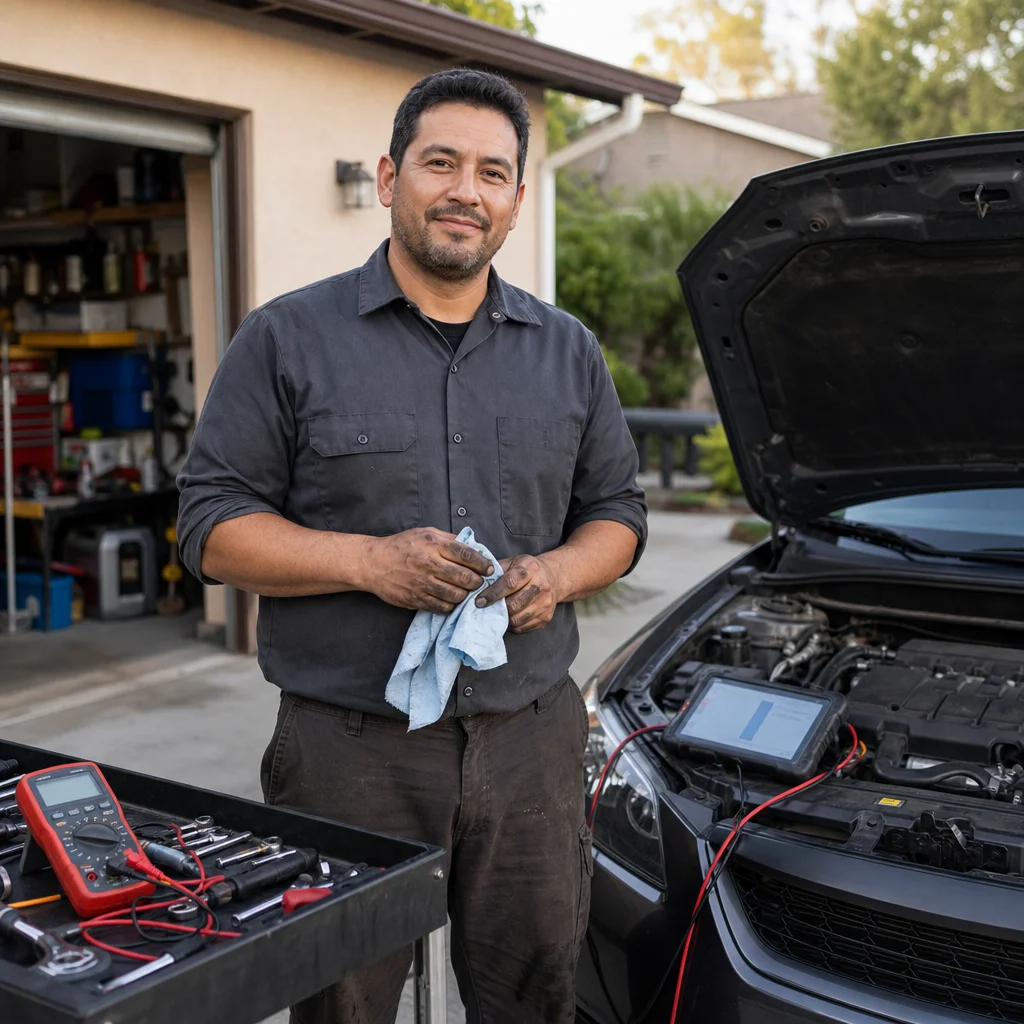
Steering that feels loose near the center can mean the wheel moves a little before the tires respond, or that the car wanders and needs frequent corrections. Those sensations overlap, but they don’t point to exactly the same fault. Tire pressure and alignment are sensible first checks; worn linkage, rack mounts, or suspension bushings need a closer inspection.
The most cost-efficient approach is to start with checks that require no parts and little equipment. If the problem is sudden, severe, or accompanied by noise or visible damage, skip the diagnosis and treat it as a safety issue.
What “loose near center” can mean
With the car parked, you may be describing free play: the steering wheel turns slightly while the front wheels remain mostly still. On the road, you may instead be describing wandering, where the vehicle drifts and needs repeated small steering inputs. A vehicle can have one symptom without the other.
Road crown, wind, worn tires, and an uneven surface can make a car seem less precise even when the steering components are sound. Test the behavior on a level, reasonably smooth road at a safe speed, and compare it with how the car normally feels. Don’t mistake a small amount of normal steering assist movement for a mechanical fault, but don’t dismiss a new change either.
Start with tire pressure and tire condition
Check all four tires when they’re cold, using the pressure listed on the driver’s door-jamb label or in the owner’s manual. The number molded into the tire sidewall is normally a maximum rating, not the vehicle’s recommended setting. A front tire that is low, or a pair of tires with noticeably different pressures, can make the car feel vague and can increase the amount of correction needed near center.
Look for uneven tread wear, a bulge, a cut, exposed cords, or a tread pattern that appears to separate. Feathered or sawtooth wear can point toward alignment or worn suspension parts. A tire with internal damage may not look obviously flat, so a sudden change in steering feel deserves more caution than a gradual change.
If the tires are properly inflated and the symptom remains, don’t buy an alignment immediately just because the car wanders. Alignment is an important possibility, but it is most useful after obvious tire and mechanical problems have been ruled out.
Decide whether the next trip is safe: Don't continue driving if steering effort changes suddenly, the wheel has substantial free movement, the car pulls sharply, a tire is damaged, or you hear a heavy clunk while turning or braking. Park safely and arrange an inspection or tow. If the symptom is mild and unchanged, keep any trip to a repair facility short, slow, and away from heavy traffic—but stop if the behavior worsens.
Check alignment symptoms before paying for a repair
Incorrect toe alignment is a common reason a car feels nervous or wanders. The steering wheel may sit off-center while traveling straight, and the tires may wear more quickly on one edge. A vehicle can also pull to one side, although road slope and tire differences can produce a similar sensation.
Alignment doesn't normally create a large amount of mechanical free play by itself. It changes the direction in which the wheels point, while looseness usually means something is moving when it should be held firmly. An alignment check is still worthwhile when the car has hit a pothole or curb, the wheel is no longer centered, or the tire wear supports that possibility.
A good shop should inspect the steering and suspension before adjusting alignment. If a tie rod, ball joint, control-arm bushing, or rack mounting point is loose, alignment numbers may not stay correct and adjustment can hide the underlying problem only briefly.
Inspect the steering linkage and rack area
The steering system transfers movement from the steering wheel to the front hubs through several joints and mounting points. Depending on the vehicle, these may include inner and outer tie rods, a steering rack, rack mounts, a steering shaft joint, a pitman arm and idler arm, or a center link. Wear in any of these can produce play near the center.
A basic parked inspection can reveal torn rubber boots, leaking power-steering fluid, a visibly displaced component, or a clunk when an assistant gently moves the steering wheel left and right. Keep the engine off unless the vehicle’s procedure requires otherwise, and stay clear of moving belts, fans, and pinch points. The movement should be small and controlled rather than repeated forcefully.
Finding the source under the car is harder than it sounds. A joint may move only when loaded in a particular direction, and normal-looking boots don't prove that the joint inside is good. Don’t place any part of your body under a vehicle supported only by a jack. If the inspection requires wheel removal or lifting the car, use properly rated stands on a suitable surface and follow the vehicle’s lifting points.
A worn steering rack can create looseness around the straight-ahead position, especially if its internal wear is concentrated where the vehicle spends most of its time driving. Rack mounting bushings can also allow the entire rack to shift slightly. Adjusting a rack without identifying the cause can make steering bind or fail to return properly, so this is generally a professional diagnosis rather than a beginner repair.
Consider suspension bushings and related parts
Suspension bushings control how the control arms and other components move under braking, acceleration, and cornering. When a bushing cracks, separates, or softens, the wheel’s alignment can change as the load changes. The result may feel like loose steering even though the steering wheel and rack have no obvious free play while parked.
Worn control-arm bushings often show up as a pull under braking, a knock over bumps, or uneven tire wear. A worn ball joint can cause similar looseness and is a more urgent concern because it helps locate the wheel. Wheel bearings, strut mounts, and stabilizer components can add noise or movement as well, although they don’t all cause the same near-center sensation.
Suspension parts should be checked with the appropriate tests for that vehicle. Simply grabbing a tire and rocking it can suggest a problem, but it can't reliably identify which component is worn. If there is visible movement at a joint, a damaged mounting point, or a clunk that follows steering input, have the vehicle inspected before replacing parts based on guesswork.
A sensible troubleshooting sequence
First, note when the symptom occurs. Is it present only at highway speed, during braking, over bumps, or during slow turns? Does the steering wheel move without an immediate response, or does the car respond but then drift? These details help separate tire, alignment, linkage, and suspension possibilities.
Next, check cold tire pressures and inspect the tires. Confirm that the wheel nuts appear present and that there is no obvious tire or wheel damage. If the car recently received new tires, suspension work, or an impact, include that history when describing the problem.
Then arrange a steering and suspension inspection, asking for the source of any play before authorizing an alignment or parts replacement. A shop can safely lift the vehicle, check joints under load, inspect rack mounts, measure alignment, and compare the findings with the manufacturer’s specifications. If alignment is needed after worn components are replaced, it should generally be the final adjustment rather than the first guess.
When the inexpensive check is enough—and when it isn’t
Correcting tire pressure may restore normal feel when pressure was the only issue. A tire replacement can solve a damaged or internally defective tire, while an alignment can correct wheel angles that changed after an impact or through normal wear. These are relatively contained fixes, but only when the inspection supports them.
Loose steering caused by a tie rod, ball joint, rack mount, or steering rack is different. Those parts affect the driver’s ability to control the vehicle, and the cost of delaying diagnosis can be much greater than the cost of an inspection. A repair estimate should identify the failed component and explain whether an alignment is required afterward.
Don’t try to compensate by tightening the steering rack adjustment or installing parts from a guess. Steering systems need smooth movement as well as minimal play; removing play at the wrong point can make the wheel stick or fail to self-center.
Begin with the door-jamb tire pressures, tire condition, and the circumstances in which the looseness appears. If those checks don’t explain the change, schedule a steering and suspension inspection before spending money on alignment or replacement parts. When the symptom is sudden, pronounced, or paired with clunks, pulling, or visible damage, the sensible cost-saving decision is to stop driving and arrange professional help rather than risk a larger failure.