How Summer Heat Changes Battery and Tire Maintenance
I’ll explain how hot weather affects battery strength, tire pressure, and aging rubber, then help you compare quick checks, preventive maintenance, and replacement decisions before a long drive in a hot climate.
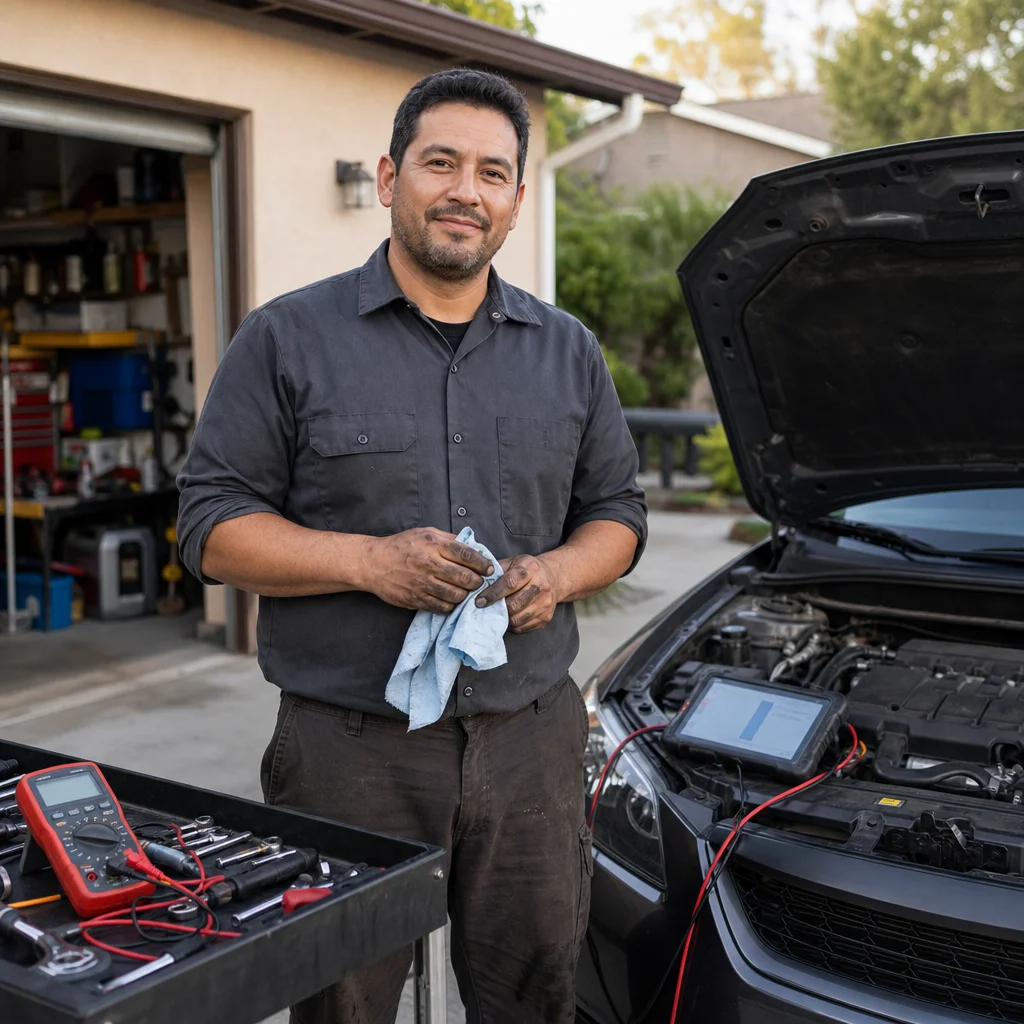
Summer heat changes two parts of your vehicle that are easy to overlook: the battery and the tires. Heat can make a weak battery fail with little warning, while high pavement temperatures increase tire stress and expose problems that may not be obvious during a short local trip.
The goal isn’t to maintain everything at the most aggressive level. It’s to focus your time and money on the checks that reduce the greatest risk before extended hot-weather driving.
Why heat is hard on the battery
A car battery has to supply electrical power while the engine is off and strong starting current when you turn the key or press the start button. High temperatures speed up the chemical reactions inside a lead-acid battery. That may temporarily make the battery seem strong, but it also accelerates internal wear, water loss, corrosion, and plate damage.
This creates an important trade-off: cold weather often reveals a weak battery, but hot weather can shorten its life and leave less reserve for the next demanding start. A battery that starts the car normally in the morning may still be nearing the end of its useful life.
Heat is especially hard on batteries installed in engine compartments with limited airflow. Frequent short trips can add another problem because the alternator may not have enough time to replace the energy used during starting. Heavy electrical loads, such as air conditioning, cooling fans, and high blower speeds, also increase demand while the vehicle is running.
Battery checks that matter most
Start with a visual inspection. Look for a swollen case, cracks, leaking fluid, loose terminals, or heavy white, blue, or green corrosion around the connections. A swollen battery isn't a cleaning problem; it can indicate internal damage and should be assessed for replacement.
The battery terminals should be secure and free of buildup. If you clean corrosion yourself, switch the vehicle off, wear eye protection and gloves, and avoid allowing tools to bridge the positive terminal and nearby metal. Disconnecting a battery can affect clock settings, radio presets, window programming, or other vehicle systems, so check the owner’s manual first.
If the battery has removable caps, don’t assume you should add water automatically. Many modern batteries are sealed or designed to be maintenance-free, and opening them may be unsafe or unnecessary. Follow the battery manufacturer’s instructions rather than using a generic routine.
A voltage reading can provide useful information, but it isn’t a complete battery health test. A battery may show acceptable resting voltage and still fail under the high current required for starting. A proper load or conductance test is more useful when the battery is older, the engine cranks slowly, or you’ve noticed intermittent starting problems.
Confirm your battery’s limits: Before replacing or testing the battery, check the owner’s manual or the battery label for the correct group size, terminal arrangement, and required starting rating. Vehicle charging systems and battery-management systems may require a specific replacement type or a reset after installation.
How summer heat changes tire pressure
Tire pressure changes with temperature. As the air inside a tire warms, its pressure rises; as it cools, pressure falls. The pressure you see after driving on hot pavement is therefore higher than the pressure you would measure when the tires are cold.
That doesn't mean you should lower the pressure after a hot drive. The recommended pressure on the driver’s doorjamb label or in the owner’s manual is normally a cold-inflation pressure. If you release air from a hot tire until it matches that number, the tire may be underinflated after it cools.
Underinflation allows more sidewall flex and increases heat buildup. It can reduce handling stability, increase tread wear at the edges, and raise the chance of tire damage during a heavily loaded or high-speed trip. Overinflation reduces the amount of tread in contact with the road and can make the ride harsher, although a modest pressure rise from normal heating is expected.
Check pressure before driving, ideally after the vehicle has been parked for several hours and the tires are out of direct sun. Use a reliable gauge, check all four tires and the spare, and replace missing valve caps. If one tire is significantly lower than the others, look for a puncture, leaking valve, or wheel problem instead of simply adding air and moving on.
The tire-pressure monitoring system is useful, but it shouldn’t replace a manual check. Many systems warn only after pressure has dropped substantially, and some don't display the actual pressure for each tire. The warning threshold and reset procedure also vary by vehicle.
Heat, pavement, and aging rubber
The air temperature is only part of the problem. Asphalt can become much hotter than the surrounding air, especially in direct sunlight. That heat passes through the tread and increases the temperature of the tire during driving. Long highway speeds, heavy cargo, low pressure, and towing add still more stress.
Tires also age while parked. Ultraviolet light, ozone, repeated heating and cooling, and long periods of inactivity gradually affect the rubber. A tire can have plenty of visible tread and still have aging-related cracks or reduced flexibility.
Inspect the sidewalls and tread for cracks, cuts, bulges, blisters, exposed cords, or objects lodged in the tread. Small surface lines in a tire’s lettering area may not mean the same thing as deep cracks extending through the rubber. If you see cracking in the grooves or sidewall, or any bulge, have the tire inspected by a qualified tire professional rather than trying to judge its safety from appearance alone.
Check the date code molded into the tire sidewall when you’re evaluating older tires. The final four digits generally identify the week and year of manufacture. Tire manufacturers and vehicle makers may provide different recommendations based on the tire’s age, condition, storage, and use, so the date is a reason to inspect and verify—not an automatic substitute for a condition assessment.
Don’t overlook the spare
A spare tire may spend years in a trunk, underbody carrier, or rear compartment without being checked. It can lose pressure, develop age-related cracking, or be difficult to access when the vehicle is loaded for travel. Confirm that the jack, wrench, adapter, and locking-wheel-nut key are present as well.
Temporary spares often have different speed and distance limitations from the regular tires. Those limits are printed on the spare or listed in the owner’s manual. A full-size spare may still need its own pressure check and may not match the vehicle’s other tires in age or condition.
Choosing where to spend your effort
If your battery is several years old and the vehicle has shown slow cranking, a battery test is usually a better investment than replacing it purely because summer has arrived. Testing can help you avoid both an inconvenient failure and an unnecessary replacement. If the case is swollen, leaking, or damaged, the trade-off changes: replacement and safe handling take priority over further diagnosis.
For tires, pressure correction is the simplest and least expensive step, but it only helps when the tires are structurally sound. A tire with a nail, sidewall damage, severe uneven wear, or an unexplained pressure loss needs inspection. Replacing one tire can be less expensive immediately, but matching tread depth, tire type, and axle requirements may make a pair or a complete set the better choice. Ask the tire shop how the proposed replacement will match the remaining tires and your vehicle’s drivetrain.
If your tires are older but look acceptable, compare their age, condition, tread wear, and intended trip. A short local drive isn't the same as a heavily loaded highway journey through extreme heat. The longer and more demanding the trip, the less room there is for marginal tires or a battery with uncertain reserve.
Check the trip-specific requirements: Before loading the vehicle, verify the cold tire pressures, maximum load, speed information, spare-tire limits, and any towing guidance in the owner’s manual, doorjamb label, and tire markings. These details vary by vehicle and can change what is safe for your particular trip.
A sensible pre-trip sequence
A few days before extended driving, inspect the battery and measure all tire pressures while cold. Correct the pressures to the vehicle’s specified values, not the maximum pressure molded into the tire sidewall unless your vehicle documentation specifically calls for it. Look for leaks, damage, unusual wear, and signs of battery corrosion.
Next, arrange a battery test if the battery is older, starting performance has changed, or the vehicle will be far from convenient repair services. Check the tire age and condition, including the spare. If you find a problem, dealing with it before the trip gives you more choices than reacting on a hot shoulder of the road.
On the day of departure, avoid making pressure adjustments based only on a reading taken after driving. If a tire-pressure warning appears, slow down safely, inspect the tires when possible, and measure them after they have cooled enough for a meaningful comparison. A warning, vibration, pulling sensation, or new noise deserves attention rather than repeated resets.
Summer heat doesn’t require a complicated maintenance program. Give priority to cold tire-pressure checks, tire condition and age, battery testing when its condition is uncertain, and the spare equipment you may otherwise forget. Those steps help you spend money where it has the greatest practical effect—and recognize when a professional inspection is the safer choice.