A Seasonal Car Care Checklist for Hot Summer Weather
Common difficulty: summer heat can expose weak cooling systems, underinflated tires, tired batteries, and low fluids at the worst time. I’ll help you focus on the small set of checks that matter most before hot weather arrives, without turning routine maintenance into a major project.
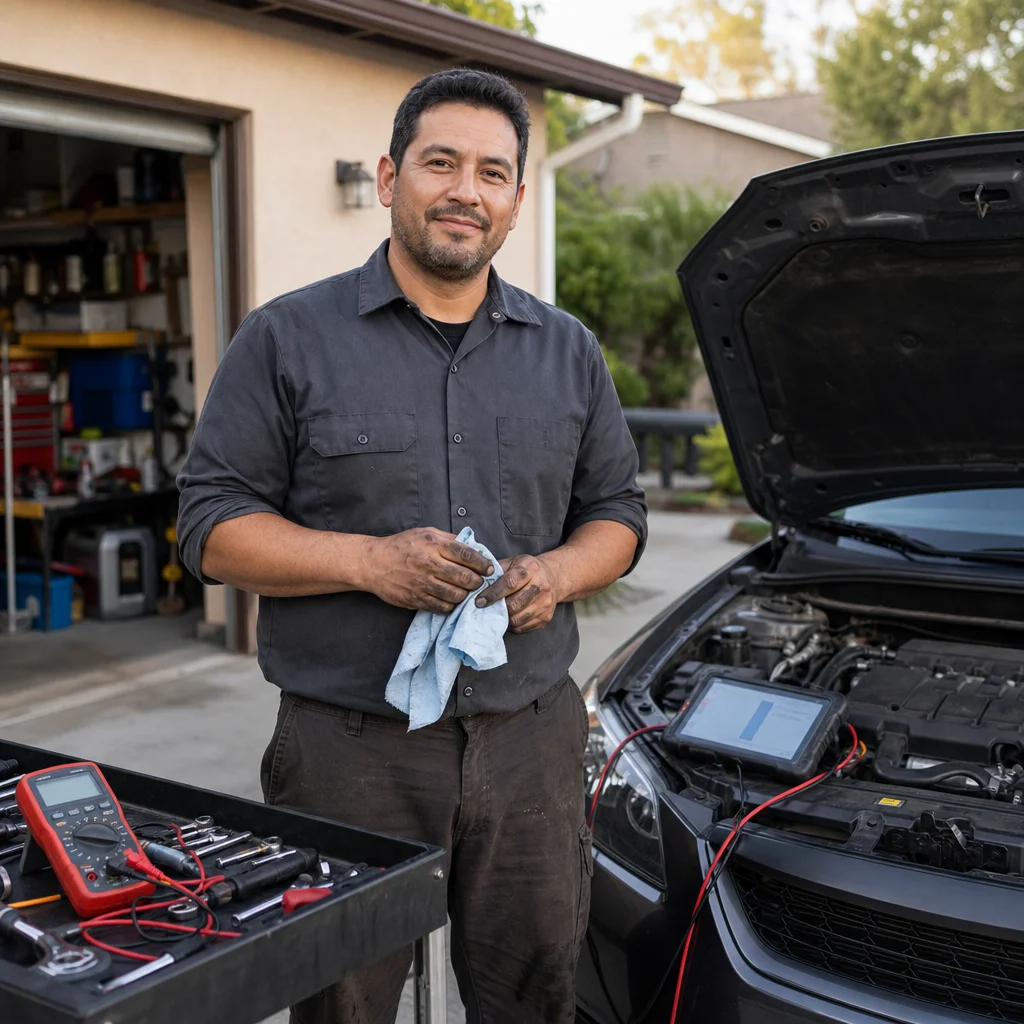
Hot weather puts extra strain on several parts of your vehicle at once. A cooling system that seemed adequate in spring may struggle in traffic, while heat can worsen battery problems, increase tire pressure, and make a weak air-conditioning system much more noticeable. You don’t need an elaborate seasonal service to prepare, but you should check the components most likely to affect reliability and comfort.
The simplest approach is to work through the cooling system, air conditioning, tires, battery, and fluids. Do the checks when the vehicle is parked safely and the engine is cool. If you find a leak, warning light, damaged tire, or overheating symptom, treat it as a repair issue rather than something to monitor casually.
Start with the cooling system
The engine’s cooling system is the highest-priority summer check. With the engine completely cool, look at the coolant level in the translucent expansion or overflow reservoir. The level should sit between the marked minimum and maximum lines. If it’s low, check the owner’s manual for the correct coolant type and the proper way to add it. Different coolant formulas aren’t always interchangeable, and adding the wrong product can create problems later.
Never remove a radiator cap or pressurized coolant cap while the engine is hot. Hot coolant and steam can cause serious burns. Wait until the engine has cooled fully, and don’t rely only on the dashboard temperature gauge to decide that it’s safe to open the system.
Look around the reservoir, radiator area, hoses, water pump area, and beneath the front of the vehicle for wet spots or crusty residue. A small leak may leave a colored or white deposit even after the liquid has dried. Squeezing a hose isn't a reliable way to diagnose the system, and you shouldn’t handle hot hoses or moving belts.
Inspect the visible radiator and condenser surfaces for heavy blockage from bugs, leaves, or dirt. Air must pass through these heat exchangers, but avoid bending delicate fins with a pressure washer or forcing debris deeper into the stack. If the engine temperature rises above normal, the temperature warning light appears, or steam comes from under the hood, pull over safely, switch off the engine, and arrange professional help after it cools.
Confirm the correct coolant: Before topping up, check your owner’s manual or the coolant container for the specified type and mixing instructions. If the level keeps falling, adding more coolant is only temporary; the leak needs diagnosis.
Test the air conditioning before the hottest day
Run the air conditioner while the vehicle is parked outside or in a well-ventilated area. Set it to its coldest setting, select recirculated air, and check whether the air becomes properly cold after a few minutes. Make sure the blower works at each speed and that airflow reaches the vents you select.
Weak cooling can have several causes, including a restricted cabin air filter, a failing blower motor, a refrigerant leak, a compressor problem, or a fault with the controls. Replacing a dirty cabin filter may be a straightforward maintenance task if your vehicle’s manual provides access instructions. Refrigerant service is different: the system is pressurized, and using the wrong product or an inaccurate refill can damage components or create a safety hazard.
Pay attention to unusual noises, a burning smell, water collecting inside the cabin, or air that alternates between cold and warm. A small amount of clear water beneath the vehicle after using the air conditioner is often condensation, but fluid inside the cabin or an oily residue deserves inspection. If the system isn’t cooling, schedule diagnosis before you depend on it for a long trip.
Check tires when they’re cold
Summer heat and long highway drives make tire condition especially important. Inspect each tire for uneven wear, cracks, bulges, cuts, or objects lodged in the tread. A bulge in the sidewall indicates internal damage and shouldn't be treated as a cosmetic defect. Have the tire assessed promptly rather than driving on it at highway speed.
Set tire pressure when the tires are cold, ideally before driving or after the vehicle has been parked for several hours. Use the pressure listed on the driver’s door-jamb label or in the owner’s manual, not the maximum pressure molded into the tire sidewall. Check all four tires and the spare if your vehicle has one. The pressure monitoring system is useful, but it may not warn you about a gradual loss soon enough for routine maintenance.
Check tread wear using the built-in wear bars or a tread-depth gauge, and look for wear concentrated on one edge. Uneven wear can point to alignment, suspension, or inflation problems. Rotate the tires only according to the vehicle or tire manufacturer’s recommended pattern, since some vehicles use different front and rear sizes or directional tires.
Don’t bleed air from a tire simply because its pressure is higher after driving or sitting in the sun. Pressure naturally rises as the tire warms. Measure and adjust it cold, then replace the valve cap and recheck for a slow leak if one tire repeatedly loses pressure.
Give the battery a quick inspection
Heat can shorten battery life, especially in regions where high temperatures are common for long periods. Check that the battery is held securely and that the terminals are free of heavy corrosion. A white, blue, or greenish buildup around a terminal can interfere with starting and may indicate that cleaning or further inspection is needed.
Don’t disconnect or clean a battery casually if you’re unsure how your vehicle’s electronics will respond. Some vehicles require specific procedures after battery power is removed, and a battery can produce sparks or corrosive material if handled incorrectly. Wear eye protection, keep metal tools from bridging the terminals, and follow the vehicle manual if you clean the connections yourself.
A slow start, flickering lights, repeated jump-starts, or a battery that is several years old are reasons to have the starting and charging systems tested. A test result is more useful than guessing from the battery’s appearance. If the battery case is swollen, cracked, or leaking, avoid handling it and arrange professional replacement.
Top up essential fluids carefully
Check the engine oil, windshield washer fluid, brake fluid, and, if equipped, power-steering fluid according to the markings and instructions in the owner’s manual. Park on level ground and allow the engine to sit as directed for an accurate oil reading. Low oil can increase wear, but adding too much is also harmful, so add small amounts and recheck.
Brake fluid shouldn't simply be topped up whenever it is low. A falling level may reflect worn brake pads or a leak, and either condition deserves inspection. If the brake pedal feels soft, the vehicle pulls while braking, or a brake warning light appears, don’t postpone diagnosis for a seasonal checklist.
Look for fluid leaks under the vehicle and around accessible reservoirs. Oil, coolant, transmission fluid, and brake fluid can look different, but color and appearance change with age, so don’t rely on visual identification alone. If you can’t identify a leak safely, place a piece of cardboard beneath the parked vehicle to help show where it is coming from, then ask a qualified technician to inspect it.
The windshield washer reservoir is easy to overlook and useful during summer rain, road spray, and insect buildup. Use washer fluid rather than plain water where freezing protection, cleaning performance, or the vehicle manufacturer’s instructions call for it. Replace worn wiper blades if they smear or skip across the glass.
Keep a small summer emergency kit
A charged phone, drinking water, a flashlight, basic first-aid supplies, and reflective warning equipment are sensible additions to the vehicle. A properly inflated spare, jack, and lug wrench are just as important, but make sure you know where they are and whether the jack has a safe lifting point for your vehicle. Many newer vehicles have an inflator and sealant instead of a spare, so check the kit’s expiration date and instructions.
For a long trip, carry the owner’s manual or keep the vehicle’s digital manual available offline. You should also know how to find the tire-pressure label, coolant reservoir, oil dipstick, and emergency shutoff information. These small preparations reduce hurried decisions if a warning light or flat tire appears in extreme heat.
A minimalist summer sequence
If you have limited time, begin with tire pressure and condition, coolant level and visible leaks, engine oil, air-conditioning performance, and battery condition. Those checks cover the most important summer reliability and safety concerns without requiring you to disassemble anything. Add a look at the washer fluid, wipers, spare or inflator kit, and emergency supplies before a long drive.
Do the inspection several days before travel, not in the departure-hour rush. That gives you time to replace a tire, order a filter, or arrange a professional inspection if something is wrong. After preparation, continue watching the temperature gauge, warning lights, tire-pressure alerts, and changes in starting or braking behavior. Summer maintenance works best as early detection: a small problem found in the driveway is usually easier to address than the same problem on a hot roadside.