How Cold Weather Changes Tire Pressure and Starting Performance
I’ll explain how falling temperatures change tire pressure, battery output, engine-oil flow, and starting behavior, then help you build a practical winter routine for checking pressures, preparing the battery, choosing suitable oil, and deciding when a weak start needs professional attention.
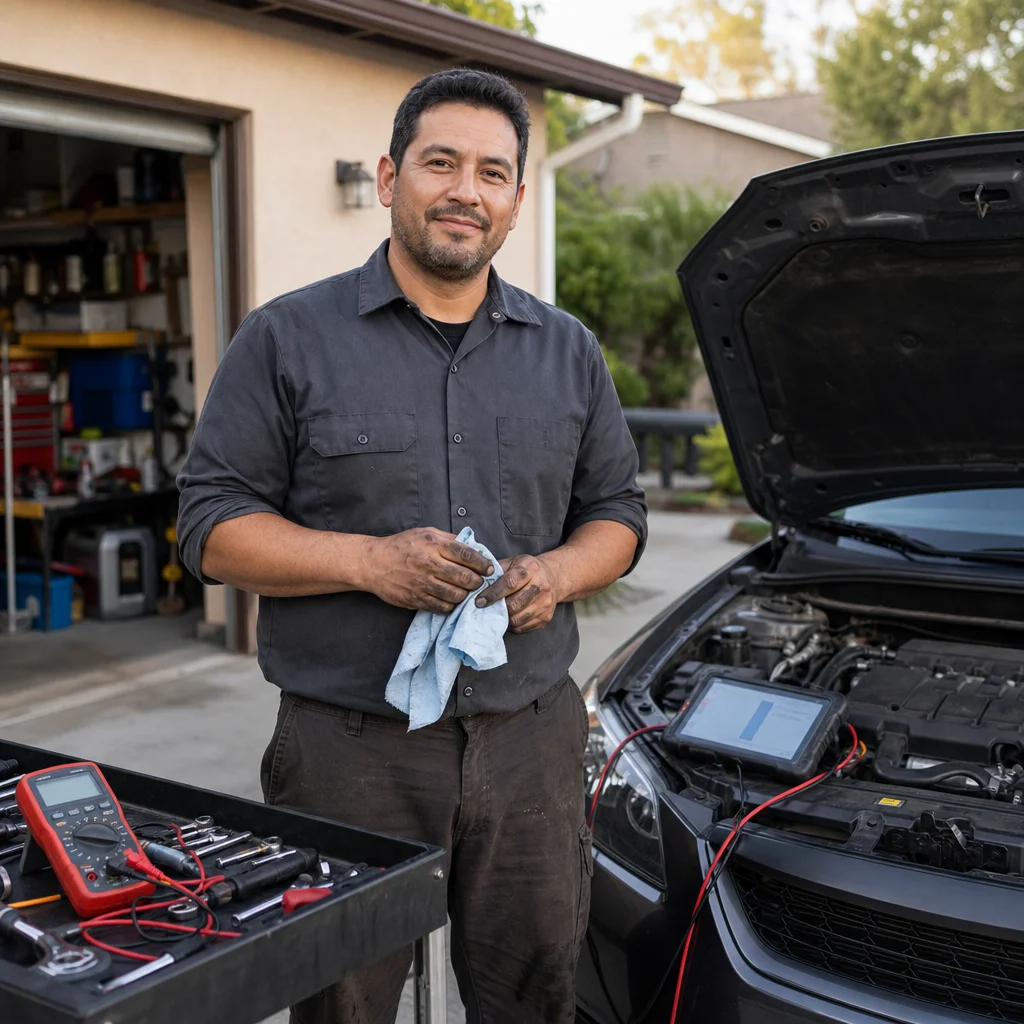
Cold weather can turn a vehicle that seemed fine yesterday into one that cranks slowly, starts reluctantly, or displays a low-tire-pressure warning. The changes usually come from several effects happening at once: colder air contracts inside the tires, batteries deliver less power, and engine oil becomes harder to move.
Understanding those effects helps you decide what needs attention first. You may only need to adjust the tires and allow the engine a little more time to start, or you may be seeing a battery, charging, or mechanical problem that winter has exposed.
Why tire pressure drops in cold weather
Tire pressure is affected by temperature because the air inside the tire contracts as it gets colder. A commonly used estimate is a loss of about 1 psi for every 10°F drop in temperature, or roughly 0.1 bar for every 10°C drop. That is an approximation, not a substitute for measuring the tire directly, but it explains why a tire can show a warning after a sharp overnight freeze.
The tire hasn't necessarily developed a leak. If you set the pressure during a mild afternoon and the temperature later falls substantially, the pressure may be lower even though the amount of air hasn't changed. The pressure can rise again as the tires warm during driving, but you shouldn't rely on that temporary increase to correct an underinflated tire.
Underinflation increases rolling resistance and can make steering feel less precise. It also allows the tire sidewall to flex more, which can increase heat buildup during driving. Overinflation isn't a good correction either: adding too much air reduces the tire’s intended contact behavior and can make the ride harsher.
Use the pressure listed on the driver’s doorjamb label or in the owner’s manual, not the maximum pressure molded into the tire sidewall. Check all four tires when they are cold, ideally before driving or after the vehicle has been parked for several hours. Don't adjust one tire based only on how it looks; modern radial tires can be significantly underinflated without appearing flat.
Check your winter pressure target: Confirm the manufacturer’s cold-tire pressure in the doorjamb label or owner’s manual, and check whether your vehicle has a separate spare-tire specification. Local winter-tire requirements and tire-pressure-monitoring procedures can vary, so verify current regional rules and your vehicle’s instructions.
How cold affects starting performance
A starting system has to do more work in cold weather while the battery is able to provide less power. The battery’s chemical reaction slows as temperatures fall, reducing the current it can deliver. At the same time, cold engine oil resists movement more strongly, so the starter motor must turn the engine against greater drag.
This combination produces familiar symptoms. The engine may crank more slowly than usual, the interior lights may dim noticeably during cranking, or the starter may make a single click instead of turning the engine. A slow crank is different from an engine that cranks at a normal speed but doesn't catch; the two problems call for different checks.
Cold weather doesn't automatically mean the battery is defective. However, it can reveal a battery that is already weak, undercharged, corroded at the terminals, or near the end of its service life. A battery can seem adequate in mild weather and lose enough reserve in a deep freeze that it can no longer start the engine reliably.
Diesel engines may be more sensitive to low temperatures because they depend on heat created by compression, along with glow plugs or another intake-heating system on many vehicles. Diesel owners should follow the vehicle’s starting procedure, including waiting for the applicable preheat indicator when instructed. Don't assume that repeated long cranking is the best response to a difficult start.
Engine oil, fuel, and other cold-weather effects
Engine oil thickens as it gets colder. The oil’s viscosity rating tells you how it behaves across a temperature range; the first number in a designation such as 5W-30 relates to cold-temperature performance, while the second describes viscosity at operating temperature. The correct grade depends on the engine and climate, so a thicker oil isn't automatically better protection.
Many modern vehicles are designed around a specific low-temperature oil grade. Using the wrong oil can make cold starts harder or affect lubrication during the first moments after startup. Check the owner’s manual for the required viscosity and specification rather than choosing solely by what is available on a store shelf.
Fuel systems can also behave differently in severe cold. Gasoline generally remains usable at ordinary winter temperatures, but water contamination in the fuel system can freeze and restrict flow. Diesel fuel is more directly affected by cold-weather gelling, which is why diesel fuel sold for winter use may have different cold-flow properties. If you drive a diesel, follow the manufacturer’s guidance and use fuel appropriate for the conditions.
A vehicle that starts but runs roughly for a short time may have moisture, ignition, fuel, or sensor issues rather than a simple temperature effect. Cold weather can make borderline components harder to diagnose, but it shouldn't be used to dismiss a persistent warning light, misfire, or stalling problem.
A practical winter preparation routine
Start with the tires because pressure is easy to check and directly affects control. Measure them when cold, set each one to the recommended pressure, and inspect the tread for uneven wear, cracking, bulges, or embedded objects. If you use winter tires, confirm that their size and load rating match the vehicle’s requirements. Check the spare as well; it is often forgotten until it is needed.
Next, assess the battery and its connections. Look for loose or heavily corroded terminals, damaged cables, and a battery case that is cracked or swollen. Don't handle a damaged battery casually. If the battery is several years old or the vehicle has already shown slow cranking, have the battery and charging system tested before the coldest weather arrives. A battery test is more useful than judging its condition from age alone.
Keep the fuel level reasonably high during periods of severe weather. This gives you more flexibility if traffic stops, a road closes, or you need to wait in the vehicle. It also reduces the amount of humid air in a nearly empty fuel tank, although maintaining a full tank isn't a cure for a damaged or contaminated fuel system.
Check the coolant level only when the engine is cold, and use the coolant type and mixture specified for the vehicle. Never remove a pressurized radiator or coolant reservoir cap from a hot engine. Inspect the windshield-washer fluid label too: summer fluid can freeze in the reservoir or lines, while winter-rated fluid is formulated for lower temperatures.
Keep a suitable scraper, gloves, flashlight, booster cables or a correctly rated jump pack, and a phone charger in the vehicle. Learn the proper jump-start connection points before you need them. Some vehicles have sensitive electronics, hybrid systems, or manufacturer-specific procedures, so the owner’s manual takes priority over a generic connection sequence.
Verify equipment for your vehicle: Before freezing conditions arrive, check the manual for the correct jump-start points, battery location, towing instructions, and any hybrid or diesel-specific precautions. Also confirm the cold-weather ratings of your washer fluid, coolant, and emergency power equipment.
What to do when the engine cranks slowly
Turn off unnecessary electrical loads such as the heater fan, heated seats, headlights, and audio system before attempting to start, while keeping safety equipment and required lighting in use. Press the brake or clutch as the vehicle requires and use the normal starting procedure. Don't hold the starter continuously for long periods; repeated extended cranking can overheat the starter and drain the battery.
If the vehicle uses a conventional key, pause briefly between attempts. If the engine cranks progressively more slowly, stop before the battery is fully discharged. A jump start may get you moving, but it doesn't explain why the vehicle failed. Once running, the alternator may recharge some of the battery, but a short drive isn't guaranteed to restore a deeply discharged battery.
If you use a jump pack or another vehicle, connect it only as the manufacturer directs. Keep sparks and flames away from the battery, and don't attempt to jump a battery that is frozen, cracked, leaking, or visibly swollen. When in doubt, arrange roadside assistance rather than improvising around a damaged battery.
An engine that cranks normally but won't start points away from a simple weak-battery problem. It may involve fuel delivery, ignition, sensors, immobilizer systems, or—in a diesel—the preheat system. Continuing to crank can drain the battery without solving the underlying fault.
When cold-weather symptoms need professional attention
Have the vehicle checked if the battery repeatedly goes flat, the charging warning light appears, the starter grinds or clicks after a known-good battery is installed, or the engine stalls once warm. A tire that repeatedly loses pressure also needs inspection for a puncture, valve problem, wheel damage, or a bead leak rather than repeated inflation alone.
Seek help promptly for a flashing check-engine light, severe misfire, fuel smell, burning odor, overheating, or unusual exhaust smoke. These symptoms can indicate risks that aren't explained by cold temperature. If a vehicle is difficult to control, has a damaged tire, or is stranded in unsafe conditions, prioritize getting to a safe location over attempting a roadside repair.
Cold weather changes normal vehicle behavior, but it shouldn't make you accept a warning light, repeated no-start condition, or unsafe tire as normal. Check pressure when the tires are cold, use the specified oil and fluids, evaluate the battery before a major freeze, and separate slow cranking from a normal-speed no-start. Those decisions address the most common winter effects while making it clearer when testing or repair by a qualified professional is the sensible next step.