How Often Should You Replace a Car’s Brake Fluid?
I’ll clarify why brake-fluid replacement intervals differ, what a moisture tester can—and can't—tell you, and which warning signs mean your car needs professional brake service rather than a routine fluid change.
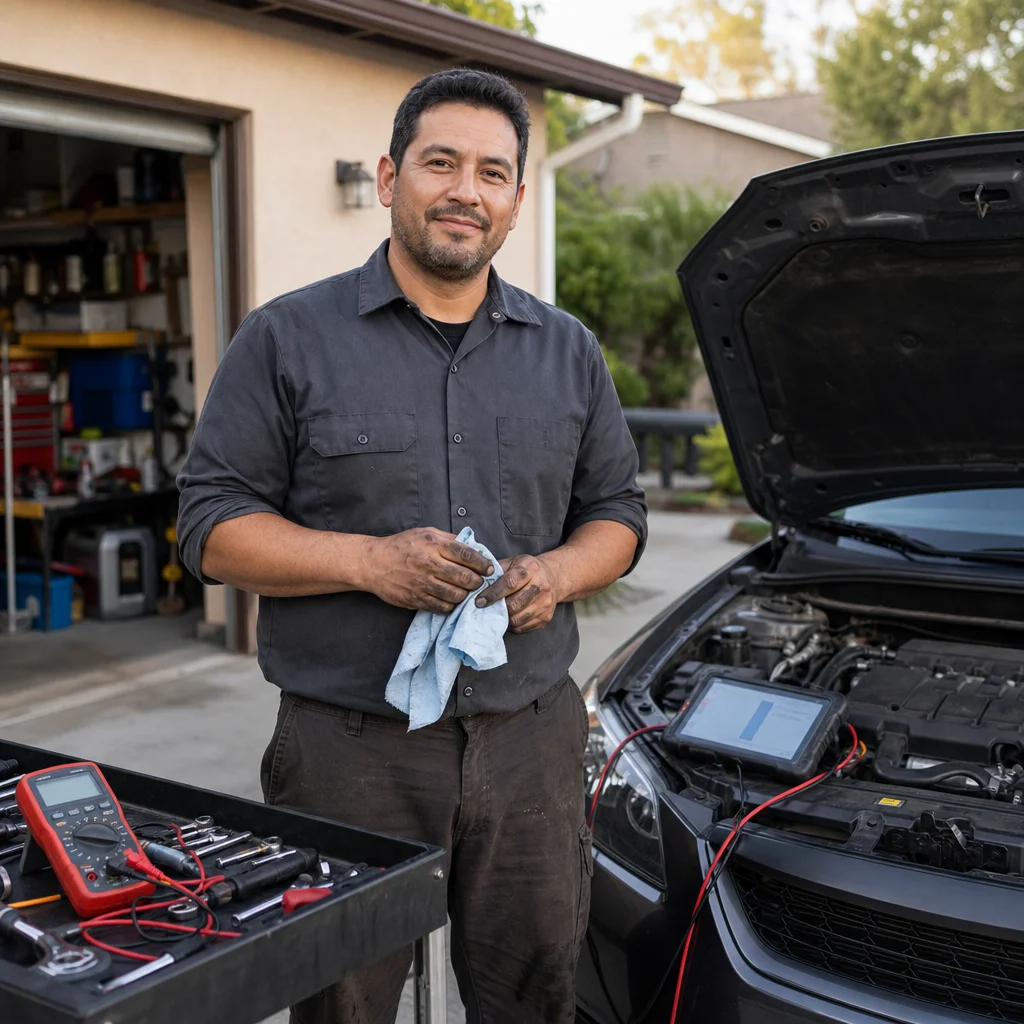
Brake fluid doesn't have one universal replacement schedule. The right interval depends on the vehicle manufacturer’s recommendation, the fluid type, climate, driving conditions, and the fluid’s actual condition. Some owners replace it on a time-based schedule, while others wait for a service inspection or test result.
Because brake fluid affects the system that lets you stop, it’s worth treating the interval as a maintenance decision rather than a guess. A fluid change can help protect braking performance and expensive components, but it won’t repair a leak, worn brake parts, or a hydraulic fault.
Start with the vehicle’s maintenance schedule
Your owner’s manual is the best starting point. Manufacturers may specify a replacement interval such as every two or three years, recommend inspection at regular services, or provide different guidance for normal and severe use. Some manuals don’t give a fixed interval at all. That doesn’t necessarily mean the fluid lasts forever; it may mean the manufacturer expects its condition to be checked during scheduled maintenance.
The interval can also vary between models from the same manufacturer. A vehicle with a shared brake-fluid reservoir, a particular electronic brake-control system, or a different fluid specification may have different service requirements. Check the maintenance schedule for your exact model year rather than relying on a general recommendation found online.
Confirm your vehicle’s service requirement: Check the owner’s manual or the manufacturer’s current service information for the specified brake-fluid type, replacement interval, and any required bleeding procedure. If the vehicle is under warranty or covered by a service plan, confirm whether the work must follow a particular procedure or be performed by an approved facility.
If you can’t find a clear interval, a qualified repair shop can inspect the system and test the fluid. A time-based change may still be sensible for an older vehicle, one that has spent years in a humid environment, or one with an unknown maintenance history.
Why brake fluid gradually deteriorates
Most automotive brake fluid used in modern cars is glycol-based, including DOT 3, DOT 4, and DOT 5.1 fluids. These fluids are hygroscopic, which means they absorb moisture over time. Moisture can enter through microscopic openings in rubber hoses, seals, and the reservoir’s vented cap or diaphragm. The system can remain sealed against visible leaks and still slowly take on water.
Water lowers the fluid’s boiling point. Under heavy braking, such as repeated downhill stops or track use, the brakes generate substantial heat. Fluid with too much moisture can begin to form vapor at a lower temperature. Because vapor compresses much more easily than liquid, the pedal can feel soft or sink farther than expected. That is a serious loss of braking margin.
Moisture can also contribute to corrosion inside the master cylinder, calipers, wheel cylinders, hydraulic control unit, and brake lines. The exact risk depends on the system and the fluid, but old fluid isn't merely a cosmetic concern. Replacing it at a sensible interval helps reduce contamination and supports long-term reliability.
Brake fluid can become contaminated in other ways, too. Dirt introduced while the reservoir is open, incorrect fluid, rubber debris from deteriorating components, and fluid that has been overheated can all affect the system. A dark color may suggest aging or contamination, but color alone isn't a reliable replacement schedule.
What moisture testing can and can’t tell you
A repair shop may use an electronic moisture tester, test strips, or a boiling-point tester. These tools answer slightly different questions, and their results shouldn’t be treated as interchangeable.
A moisture tester estimates the percentage of water in a fluid sample. It can be useful as one part of an inspection, especially when the result is clearly high or when the vehicle has no documented service history. However, readings can vary with the tester, the fluid formulation, the sample location, and the condition of the equipment. A reservoir sample may not represent the fluid in every caliper or wheel cylinder.
Boiling-point testing is more directly related to heat performance, but it also has limitations. The result depends on the instrument, the sample, and whether the sample represents the system. A test may show that the fluid has acceptable moisture content today, but it can't prove that the fluid is free of corrosion products, dirt, incompatible fluid, or problems elsewhere in the hydraulic system.
A low moisture reading also doesn’t override the manufacturer’s maintenance recommendation in every situation. Testing can support a decision, but it shouldn’t be used to dismiss an established service interval without understanding why that interval exists. Conversely, a high reading is a reason to arrange service—not a reason to keep driving until the pedal feels different.
Signs that call for service sooner
Some symptoms point to a fault rather than ordinary fluid aging. Arrange an inspection promptly if the brake pedal feels spongy, sinks while you hold steady pressure, requires pumping, or suddenly travels farther than usual. These conditions can result from air in the hydraulic system, a leak, a failing master cylinder, overheated fluid, or another brake problem.
A low fluid level deserves attention as well. Brake fluid can fall as friction material wears, but a noticeable or repeated drop may indicate a leak. Look for wetness around the master cylinder, brake lines, calipers, wheel cylinders, or inside a wheel. Don't simply top off the reservoir and assume the problem is solved. A leak can reduce braking ability quickly.
A brake warning light, an anti-lock brake warning, or a traction-control warning may also indicate a problem that a basic fluid change won’t fix. Some vehicles use the same hydraulic system for electronic brake control, and diagnosing or bleeding those systems may require a scan tool and a manufacturer-specific procedure.
Dark or cloudy fluid is another reason to have the system inspected, but it isn't a stand-alone diagnosis. Fluid color can vary by type and age, and a dirty reservoir may not reflect conditions throughout the system. The inspection should include the fluid, leaks, hoses, lines, brake hardware, and pedal operation.
Choosing the correct fluid and service method
Use only the specification listed on the reservoir cap or in the owner’s manual. DOT 3, DOT 4, and DOT 5.1 are generally glycol-based, but they aren't automatically interchangeable for every vehicle. DOT 5 is silicone-based and shouldn't be substituted for a glycol-based specification. Some cars also require a particular low-viscosity or manufacturer-approved fluid for their brake-control system.
Don't use an opened container that has been sitting around for a long time. Brake fluid absorbs moisture from the air, so a previously opened bottle may already be contaminated. Use a fresh, sealed container that meets the required specification, and keep the fluid away from painted surfaces because it can damage automotive paint.
A proper replacement normally involves removing old fluid while adding fresh fluid and bleeding the hydraulic circuits in the correct sequence. The procedure varies. Some vehicles can be serviced with conventional bleeding, while others require a scan tool to cycle the ABS hydraulic unit. A simple reservoir drain and refill changes only part of the fluid and may leave older fluid in the lines and components.
DIY bleeding is possible on some straightforward systems if you have the correct equipment, the right fluid, a reliable way to support the vehicle, and a service procedure for the exact car. You need to prevent the reservoir from running dry and avoid introducing air. If the pedal becomes soft afterward, stop driving and correct the problem before the vehicle returns to the road.
How driving and climate affect the decision
Frequent heavy braking, mountain driving, towing, track use, and high operating temperatures put more heat into the brake system. They may justify more frequent inspections or fluid replacement than ordinary commuting. A vehicle that is driven only occasionally isn't automatically exempt: long periods of storage, age, humidity, and unknown maintenance history can still matter.
Climate is relevant, but it doesn’t create a simple Canada-versus-United States rule. Coastal and humid regions may expose the system to more moisture, while winter road salt can increase corrosion risk around lines and fittings. Cold weather can also reveal existing problems, although low temperatures alone aren't a reason to use a different fluid unless the manufacturer specifies one.
If you recently bought a used vehicle and there is no reliable record of brake-fluid service, having the system inspected and the fluid tested is sensible. If the condition is uncertain or the vehicle is several years beyond its stated interval, replacing the fluid may be more predictable than trying to infer its history from color or a quick reservoir check.
A sensible replacement rule
Follow the manufacturer’s interval when one is provided, and treat testing as supporting evidence rather than a complete verdict. If there is no clear schedule, ask a qualified technician to assess the fluid and the entire hydraulic system, especially when the vehicle has an unknown history or is used for towing, mountain driving, or repeated heavy braking.
Replace the fluid sooner when a test indicates excessive moisture, when contamination is suspected, or when a required brake repair has introduced air or opened the hydraulic system. But remember that a fluid change isn't a cure for a low pedal, a warning light, or a fluid leak. Those symptoms call for diagnosis first.
For many everyday vehicles, a documented change at the manufacturer’s recommended time is the simplest long-term choice. It avoids relying on appearance alone, reduces moisture-related deterioration, and gives the technician an opportunity to find leaks or damaged components before they become a more serious braking problem.