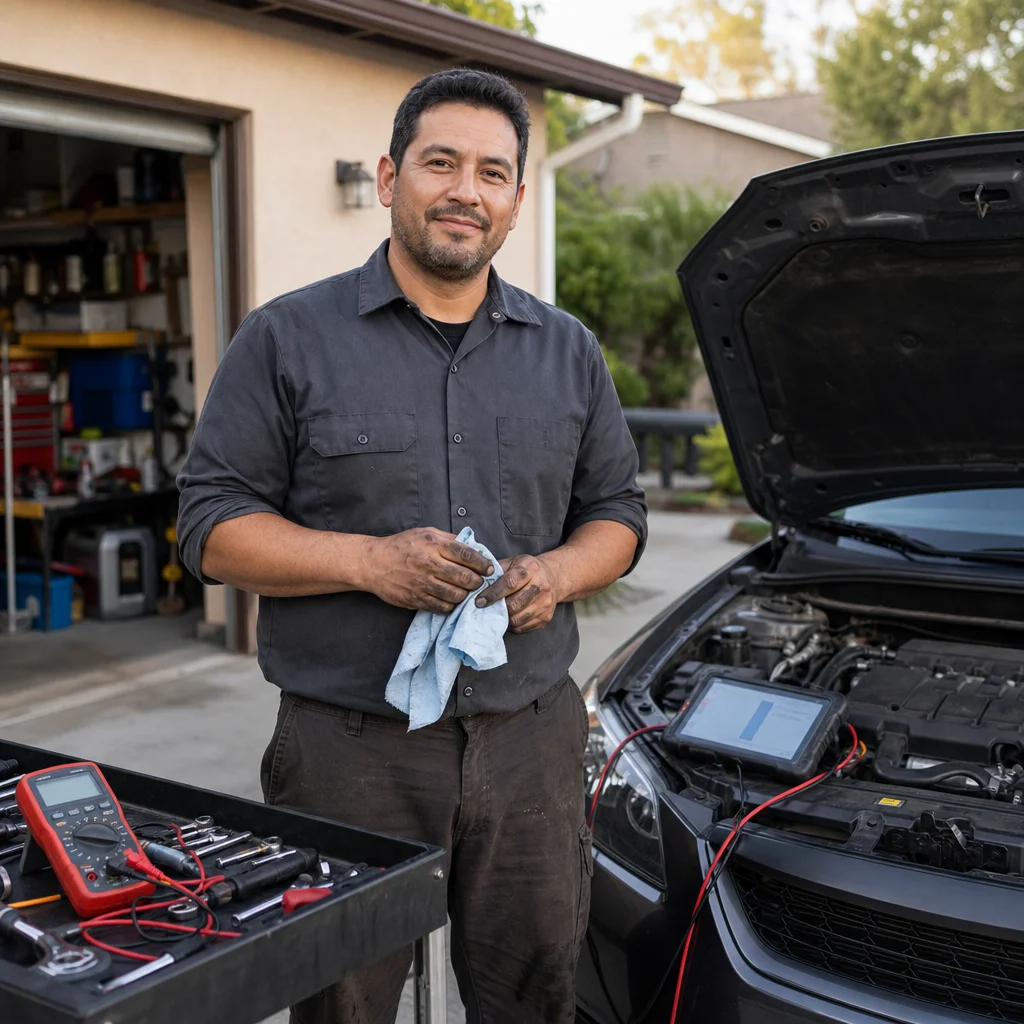
A scan tool can connect fuel pressure, fuel trims, misfires, and hard starting into a useful diagnostic picture, but it can't replace every physical test. I’ll explain how these clues fit together and when a mechanical pressure test is the safer decision.
Read article →
I’ll clarify when calling roadside assistance is the safer and more resource-efficient choice than attempting a repair yourself. You’ll learn how to weigh traffic, weather, vehicle condition, tools, and the actual risk of staying beside the road.
Read article →
Road salt attacks brake and fuel lines in different ways, often hiding serious corrosion beneath ordinary-looking surface rust. I explain how the damage develops, which signs deserve attention, and how to decide whether you need an inspection on a lift.
Read article →
A seized or press-fit ball joint can turn a routine suspension repair into a high-risk project. I’ll explain how joint design, rust, access, tooling, and alignment needs should shape your decision to work at home or call a shop.
Read article →
A worn engine mount can turn normal vibration into a larger drivetrain and safety problem. I’ll explain which support method, replacement parts, and verification steps deserve priority so you can judge whether this repair fits your equipment and experience.
Read article →
I’ll explain how to match the right wiper adapter, protect your windshield while the arm is raised, and confirm that the new blades sit securely and wipe cleanly without leaving gaps or scratches.
Read article →
I’ll clarify the parts of a wheel speed sensor replacement that cause the most trouble: freeing a seized sensor, preserving the harness and clips, and confirming that the ABS fault is actually gone. You’ll also learn when a damaged connector or hub makes this job more than a sensor swap.
Read article →
Pressing a bearing isn't automatically safer than replacing a complete hub assembly. I’ll explain how to choose the lower-risk approach and protect the bearing with correct support, orientation, and torque.
Read article →
I’ll compare the sealing, coolant-recovery, and bleeding choices that matter most when replacing a thermostat, including when a paper gasket, O-ring, sealant, or new housing is the better approach for preventing a repeat leak.
Read article →
I’ll explain how to replace a thermostat while limiting trapped air, from preparing the cooling system and installing the seal to bleeding, checking for leaks, and deciding when the vehicle’s specific procedure needs professional help.
Read article →