When a Windshield Repair Requires Calibration Afterward
I’ll compare when a windshield repair or replacement may require ADAS calibration, what the camera and sensor work involves, and which scan results and documentation you should request before driving away.
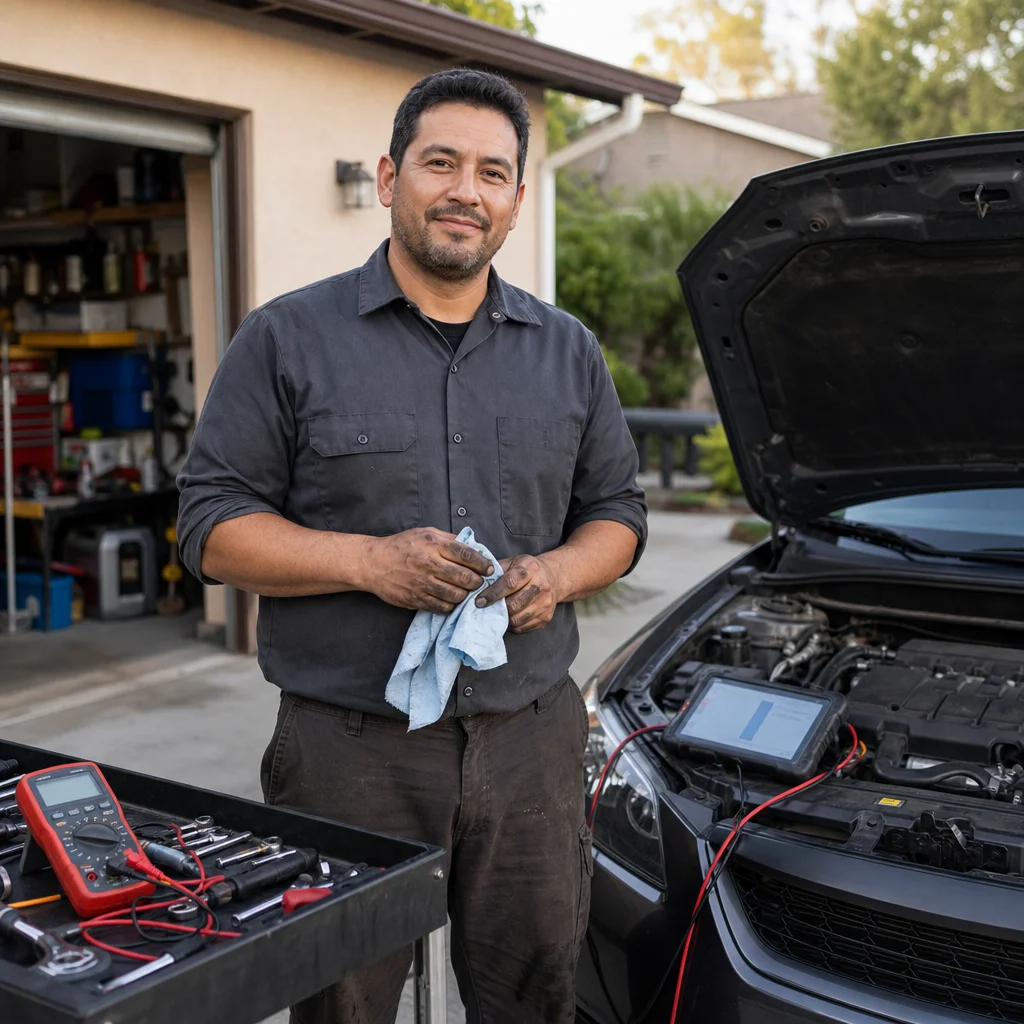
A windshield job can look complete while an important driver-assistance camera still needs attention. The question isn't simply whether the glass was replaced; it is whether the work changed the camera’s view, mounting position, or relationship to the vehicle’s safety systems.
For cost and resource efficiency, you want neither unnecessary calibration nor a shortcut that leaves a warning undiagnosed. The right approach is to identify which sensors your vehicle uses, ask what the manufacturer requires, and leave with documentation showing what was checked.
When windshield work can affect driver assistance
Many vehicles place a forward-facing camera near the top center of the windshield, often behind the rear-view mirror. It may support lane-departure warnings, lane-keeping assistance, forward-collision warnings, automatic emergency braking, traffic-sign recognition, adaptive cruise functions, or automatic high beams. Some vehicles use more than one camera or combine camera information with radar and other sensors.
A small chip repair usually doesn't disturb the camera or its bracket. However, location matters. A repair directly in the camera’s viewing area can leave optical distortion, resin marks, or damage that affects image quality. The vehicle manufacturer may specify areas where windshield damage can't be repaired or where replacement is required instead. A technician should check the vehicle-specific guidance rather than relying only on the size of the chip.
Windshield replacement presents a greater chance of affecting calibration. The replacement glass must have the correct shape, thickness, optical properties, camera mounting area, and markings. Even a windshield that physically fits may not be suitable for every camera-based system. Removing and reinstalling the camera can also change its position by a small amount, which may be enough to affect how the system interprets lane lines, vehicles, or obstacles.
Other work can create a calibration requirement even if the windshield wasn't the original problem. Examples include a damaged camera bracket, changes to suspension height, wheel alignment problems, a collision, replacement of a front bumper or grille, or work involving a radar sensor. The exact requirements vary by make, model, equipment, and the repair procedure described by the manufacturer.
Repair, replacement, and calibration are different decisions
It helps to separate three questions that are often treated as one.
First, can the existing windshield be repaired safely and within the vehicle manufacturer’s limits? If yes, the camera and its mounting may remain untouched. That doesn't automatically prove that no further inspection is needed, especially if the damage is close to the camera’s view.
Second, does the windshield need to be replaced? Replacement may be necessary because of the damage location, size, cracking, poor repair quality, or the manufacturer’s restrictions. Choosing replacement glass based only on price can create problems if it lacks the correct camera window or mounting features.
Third, after the work, does the vehicle require an ADAS inspection, aiming procedure, or calibration? Calibration establishes the camera’s reference to the vehicle. A diagnostic scan may check for stored faults, while calibration may require a specific target setup, measurements, road driving, or both. A scan that shows no warning code isn't necessarily proof that calibration was completed.
Some vehicles perform a relearn or calibration procedure while driving under specified conditions. Others require a stationary procedure using targets and carefully measured distances. Some require both. A shop may call these procedures “static,” “dynamic,” or “static and dynamic” calibration, but the terminology and required steps are vehicle-specific.
How to decide whether calibration is likely
Start with the owner’s manual or the vehicle manufacturer’s service information, using the exact year, model, trim, and driver-assistance package. Two versions of the same model may use different cameras or have different requirements. A repair shop that works with your vehicle should be able to identify the system and explain whether the windshield operation affects it.
Calibration is more likely to be required when:
- the forward-facing camera was removed or repositioned;
- the camera bracket or windshield mounting area was disturbed;
- the windshield was replaced rather than simply repaired;
- the new glass has a different camera area, optical characteristics, or approved part specification;
- the vehicle has an active warning for a camera, lane-assistance, collision-warning, or similar system;
- the manufacturer’s procedure lists windshield replacement as a calibration trigger; or
- related work changed wheel alignment, ride height, bumper position, or another sensor’s location.
Calibration may be less likely after a straightforward chip repair away from the camera’s field of view when the camera, bracket, and windshield remain undisturbed. That isn't a universal exemption. Ask the installer to document why calibration isn't required instead of accepting a casual assumption that “the car seems fine.”
Confirm the vehicle-specific requirement: Before approving the job, ask the installer to check the manufacturer’s procedure for your VIN or exact vehicle configuration and explain whether the work calls for inspection, calibration, or no additional procedure.
What to ask the windshield installer or repair shop
A useful conversation is specific but doesn't need to be technical. Tell the shop that your vehicle has driver-assistance features and ask whether the camera is mounted to the windshield or mirror area. Ask which replacement glass part they plan to use and whether it is approved or specified for the camera system on your vehicle.
You can also ask these questions:
- Will the forward-facing camera or its bracket be removed, loosened, or reinstalled?
- Does the manufacturer require calibration after this repair or replacement?
- If calibration is required, will it be performed in-house or by another qualified facility?
- Is the procedure static, dynamic, or both, and what conditions are needed to complete it?
- Will the shop perform a post-repair diagnostic scan and check for driver-assistance faults?
- What documentation will I receive showing the procedure and result?
The answer should account for your actual vehicle, not just the shop’s general experience with similar cars. A technician may have replaced many windshields, but calibration equipment, software access, target placement, and manufacturer procedures still need to match your vehicle.
If a shop says calibration is unnecessary, ask whether that conclusion is based on the vehicle manufacturer’s instructions and whether the camera position and view were checked after installation. If a shop says calibration is mandatory, ask what specific procedure applies and what records will show that it passed. These questions can prevent both avoidable spending and an incomplete repair.
What documentation is worth keeping
The paperwork doesn't need to be complicated, but it should identify the work clearly. Keep the invoice showing the date, vehicle identification information, windshield part information if available, and whether the camera or related components were removed or reinstalled.
If calibration was performed, request a record that identifies the calibration type and result. A useful report may include diagnostic trouble codes before and after service, the system tested, target or road procedure used, equipment information, and a statement that the procedure was completed successfully. The exact format varies by shop and manufacturer.
Also ask whether any driver-assistance warning remains active. A warning that appears immediately after the repair may indicate a connector, bracket, camera-view, software, or calibration issue. Don't assume that clearing the warning is the same as correcting its cause.
Documentation can matter later if you sell the vehicle, make an insurance claim, return for a related problem, or need to show another repair facility what was done. It also gives you a more useful basis for comparing prices. A low quote that excludes required calibration may not be the lower-cost option once the missing service is added.
Why a road test isn't enough by itself
After a windshield replacement, you may be tempted to test lane keeping or collision warnings on the drive home. That isn't a safe substitute for the required procedure. Driver-assistance features aren't intended to replace your attention, and their behavior can vary with weather, road markings, lighting, traffic, and sensor condition.
A system that appears to work may still be aimed incorrectly. For example, a camera with a slightly changed angle might recognize lane markings on one road but respond late or incorrectly on another. Conversely, a temporary warning may result from conditions such as dirt, condensation, glare, or a blocked camera area rather than a failed calibration. The shop should diagnose the vehicle according to the applicable procedure instead of judging the result from one short drive.
Before leaving, look through the camera’s viewing area from the driver’s seat. Check for stickers, haze, adhesive residue, scratches, moisture, or distortion where the camera looks through the glass. Confirm that the camera housing and mirror area are secure. If a dashboard warning remains, have it explained before you accept the repair as complete.
Check the handoff records: Before driving away, confirm that the invoice identifies the glass work and that any required calibration or post-repair scan is recorded with a result—not merely listed as an optional service.
When to use a different shop
A windshield specialist may be the right choice for the glass work, while a dealership or ADAS-capable repair facility may be better equipped for calibration. The important factor isn't the logo on the building; it is whether the facility has the correct procedure, equipment, space, and information for your vehicle.
Consider getting another opinion if the shop can't identify the camera system, can't say what glass specification is being installed, dismisses an active warning, or offers to “reset” the system without explaining the required calibration. You should also pause if the shop claims every vehicle needs calibration or that no vehicle ever needs it. Both blanket answers ignore the vehicle-specific nature of the work.
Because equipment availability, insurance coverage, and legal requirements can vary by location and change over time, confirm those details with your insurer, vehicle manufacturer, and local repair facility. Don't treat an insurer’s preferred-shop list or a state inspection rule as a substitute for the manufacturer’s technical procedure.
The sensible cost-saving choice is to pay for the work the vehicle actually requires, not to skip a necessary calibration or add one without a reason. Ask for the exact glass specification, the manufacturer-based decision about calibration, and clear completion records. If the camera or its mounting was disturbed, or if the replacement procedure calls for calibration, have it completed before relying on the vehicle’s driver-assistance features.