What Causes a Steering Wheel to Shake Only While Braking From Highway Speed?
When your steering wheel stays steady at cruising speed but shakes as you slow from highway speed, the brake system is a leading suspect—not the only one. I’ll show you how to separate brake judder from tire, wheel, bearing, and suspension faults before choosing a repair.
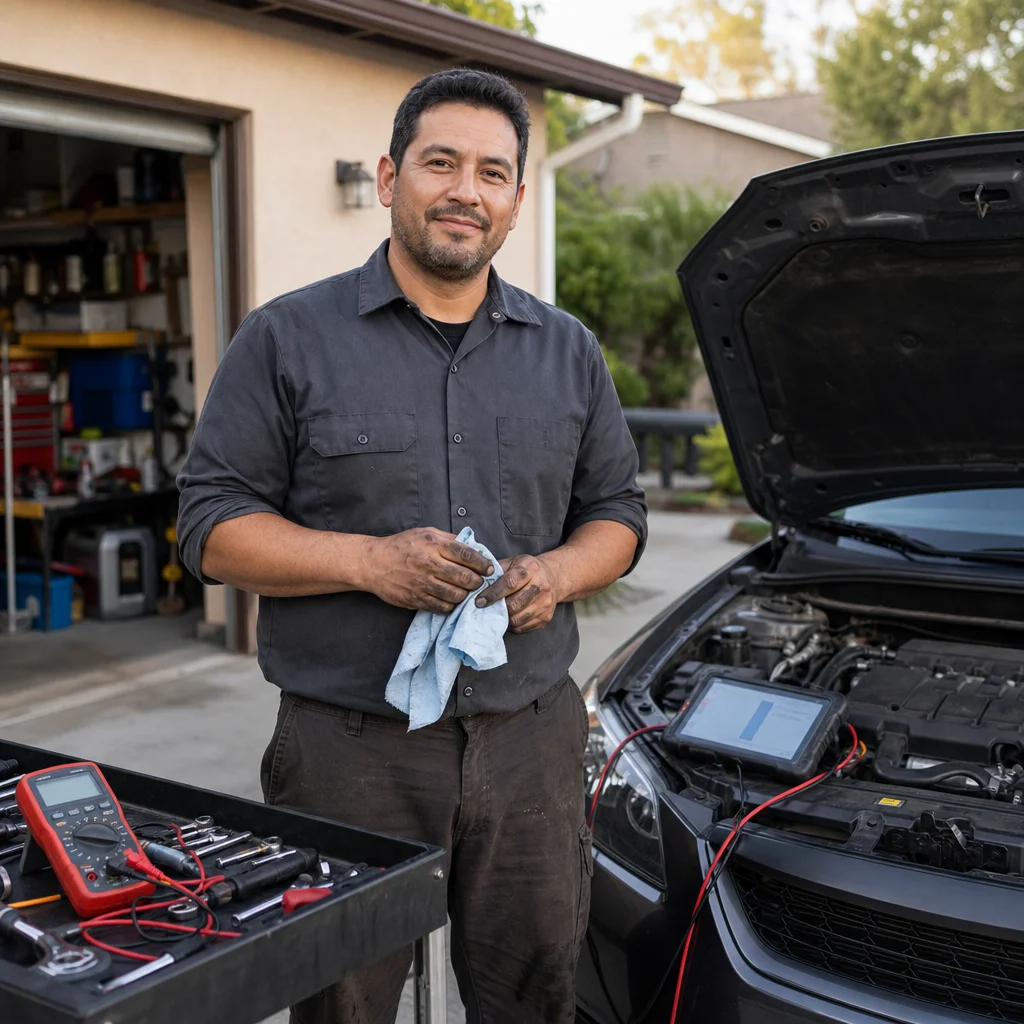
A steering wheel that shakes only when you brake from highway speed is giving you a useful clue: the vibration depends on both vehicle speed and brake application. That makes the front brake system a strong suspect, but it doesn’t prove the rotors are the problem. Tire defects, wheel runout, worn suspension parts, and wheel-bearing play can all become more noticeable during deceleration.
The practical decision is whether the symptom points to a brake-related fault that needs inspection soon, or to a broader wheel and suspension problem that can affect handling even when you aren’t braking. Paying attention to exactly when the shaking starts, where you feel it, and what changes it will help you avoid replacing parts by guesswork.
What the braking pattern tells you
If the steering wheel is smooth while cruising but begins to oscillate when you press the brake pedal, the most likely issue is an uneven braking force at the front axle. The front brakes handle a large share of the vehicle’s stopping work, and small differences in braking force from one side to the other can be transmitted through the steering system.
People often call this a “warped rotor,” but that description is usually too simple. A brake disc can have measurable thickness variation, lateral runout, uneven friction material transfer, or a poor fit against the hub. Any of these conditions can make the brake pads grip more strongly at some points in the disc’s rotation than others. At higher wheel speed, those repeated changes are felt as a shake.
The vibration may be strongest through the steering wheel, but you might also feel a pulse in the brake pedal. A mild pedal pulse doesn’t automatically identify the cause, yet steering-wheel movement plus pedal pulsation makes a front brake or front hub problem more likely than a rear brake problem.
Brake judder often becomes more obvious after several brake applications, during a long downhill run, or when braking firmly from a high speed. It can also appear after a brake job if the hub face wasn’t clean, the wheel was tightened unevenly, a caliper is sticking, or the new parts have developed uneven contact. That doesn’t mean every recently installed rotor is defective; installation and operating conditions matter too.
Use extra care on the next drive: If the vehicle pulls sharply, the brake pedal feels soft, a wheel becomes unusually hot, you smell overheated brakes, or the shaking is severe, reduce speed and have the vehicle inspected rather than continuing highway driving. Don't work beneath a vehicle supported only by a jack.
Compare the symptom in different conditions
A simple symptom comparison can narrow the possibilities before any parts are removed. It’s safest to observe these differences during normal, controlled driving—not by repeatedly making aggressive stops.
- Shake only while the brake pedal is applied: Front brake judder, hub runout, or a caliper problem moves higher on the list.
- Shake at a particular speed even when coasting: Tire or wheel imbalance, a damaged tire, wheel runout, or a driveline issue becomes more likely.
- Shake while accelerating or climbing, then fade when you lift off: A driveline or axle problem may be involved rather than the brakes.
- Vehicle pulls to one side during braking: A sticking caliper, restricted brake hose, uneven pad friction, tire issue, or suspension fault could be responsible.
- A low growl that changes when you gently turn left or right: A wheel bearing deserves attention, although noise alone isn’t a conclusive test.
- Clunking over bumps or loose steering response: Inspect the suspension and steering linkage instead of assuming the brake discs are at fault.
The speed at which the vibration begins is also useful. A brake-related shake usually follows the application of the brakes: the faster the wheel is rotating, the more frequent or intense the pulsation may feel. A wheel-balance problem commonly produces vibration at a repeatable road speed whether you’re braking or not. The two faults can exist together, so a smooth coast doesn’t completely rule out a tire or wheel problem.
The most likely brake-related causes
Disc thickness variation or uneven friction transfer
The brake disc doesn’t need to look visibly bent to produce judder. Slight differences in disc thickness or in the layer of pad material deposited on its surface can change braking torque as the disc rotates. This is one reason replacing only the pads may not cure a vibration that is already present.
Repeated heavy braking followed by holding the pedal firmly while the brakes are very hot can contribute to uneven material transfer. A sticking caliper, seized slide pin, or pad that doesn’t release correctly can keep heat concentrated in one area. Rust on a vehicle that sits for long periods can also create an uneven contact surface, though light surface rust normally clears after ordinary braking.
Hub or rotor runout
Runout means a rotating part doesn't stay perfectly true. Excessive runout can come from a distorted disc, a damaged hub, debris trapped between the hub and disc, or uneven wheel installation. Rust flakes on the hub face can hold the disc at an angle, and excessive or uneven lug-nut torque can distort the assembly or make an existing problem worse.
A proper diagnosis uses a dial indicator to measure disc and hub runout and a micrometer to check disc thickness at multiple points. The exact allowable values differ by vehicle, so use the manufacturer’s service information rather than applying a universal tolerance.
Caliper or hose problems
A caliper slide that binds can leave one pad in contact with the disc. A piston that doesn’t retract properly can create heat, uneven pad wear, and a pull. A restricted flexible brake hose can sometimes behave like a one-way valve, allowing pressure to apply but not release normally.
Look for a strong difference in pad thickness from side to side, blue or heavily discolored friction surfaces, taper wear, or one wheel that is much hotter than its opposite wheel. Don’t compare wheel temperature by touching it after a drive. An infrared thermometer can help with comparison, but it doesn’t replace a brake inspection.
Tire, wheel, bearing, and suspension alternatives
A damaged tire can mimic brake vibration. A separated belt, bulge, flat spot, or severe uneven wear may only become obvious at higher speeds or when weight transfers forward during braking. Inspect the tread and sidewalls for irregularities, but remember that internal tire damage may not be visible. A tire shop can check runout and uniformity with the tire mounted on a balancing machine.
Wheel imbalance usually produces a speed-related shake that continues when you lift off the brake pedal. A bent wheel may behave similarly. If the steering wheel shakes during highway cruising and the braking action merely makes it more noticeable, check tire pressure, wheel condition, balance, and runout before condemning the brake parts.
A worn wheel bearing can allow movement at the hub and alter how the disc runs. Bearing problems often bring humming, rumbling, or looseness, but early wear may not make much noise. Suspension and steering wear—such as loose tie-rod ends, ball joints, control-arm bushings, or strut-mount components—can let braking forces move the wheel, producing a shimmy or clunk.
These faults are more serious to ignore than an annoying vibration because they can affect wheel control. If you find noticeable looseness during an inspection, don’t rely on a brake-parts replacement to make the vehicle safe.
A sensible diagnostic order
Start with the easiest observations. Confirm whether the shake occurs during ordinary cruising, whether it changes with brake pressure, whether the pedal pulses, and whether the car pulls. Check tire pressures and look for tire or wheel damage. If the wheels were recently removed, confirm that the lug nuts were tightened in the correct pattern and to the vehicle maker’s specified torque.
Next, inspect the brakes with the vehicle safely supported. Compare pad thickness, look for uneven wear, check that the caliper slides move as designed, and examine the disc for severe scoring, heat discoloration, or corrosion. A visual inspection can identify problems, but it can't measure disc thickness variation or runout accurately.
If the symptom clearly occurs only under braking, measure the front discs and hubs rather than replacing parts automatically. If the discs are beyond the vehicle’s limits, replace or machine them only when the component and service information allow machining. New pads should be installed with a compatible friction surface, and the cause of abnormal heat or uneven wear should be corrected at the same time.
If measurements are within specification, move to the tires, wheels, bearings, and suspension. A shop may use a wheel balancer, runout gauges, a lift inspection, and brake-temperature comparisons to separate overlapping faults. Tell the technician exactly when the vibration occurs; “it shakes” is less useful than “the steering wheel oscillates only during firm braking above highway speed, with no shake while coasting.”
When replacing parts isn't enough
Replacing both front discs and pads can be a reasonable repair when the discs are worn, contaminated, out of specification, or affected by uneven friction transfer. But new parts can develop the same symptom if a sticking caliper remains, the hub is rusty, the wheel is installed unevenly, or the vehicle repeatedly overheats the brakes.
Brake work should normally be treated as an axle-level service: follow the vehicle manufacturer’s guidance about replacing components in pairs, use the correct parts, and don’t mix friction materials or procedures casually. Afterward, follow the pad-and-disc bedding instructions supplied for those parts or by the vehicle manufacturer. Avoid holding the brake pedal at a stop immediately after a series of hard stops when the brakes are extremely hot.
If you’re not equipped to support the vehicle securely, measure runout, or inspect steering and suspension joints, this is a sensible repair to leave to a qualified technician. A steering vibration under braking isn't a good place to save time by skipping the inspection that identifies the actual cause.
The most useful conclusion is conditional: a shake that appears only when braking from highway speed often points toward front brake judder or a front hub issue, especially when the pedal pulses. A shake that remains at the same road speed without braking points more toward a tire or wheel problem, while pulling, clunks, noise, or looseness broaden the investigation to calipers, bearings, steering, and suspension. Note those differences, inspect the simple possibilities first, and measure before replacing expensive parts.