How to Check Whether a Car’s Remote-Start System Is Draining the Battery
I’ll help you distinguish a weak battery from excessive standby draw, faulty remote-start wiring, or normal cold-weather behavior. You’ll learn how to test the system without randomly pulling fuses or using an unsafe bypass that could create a new electrical problem.
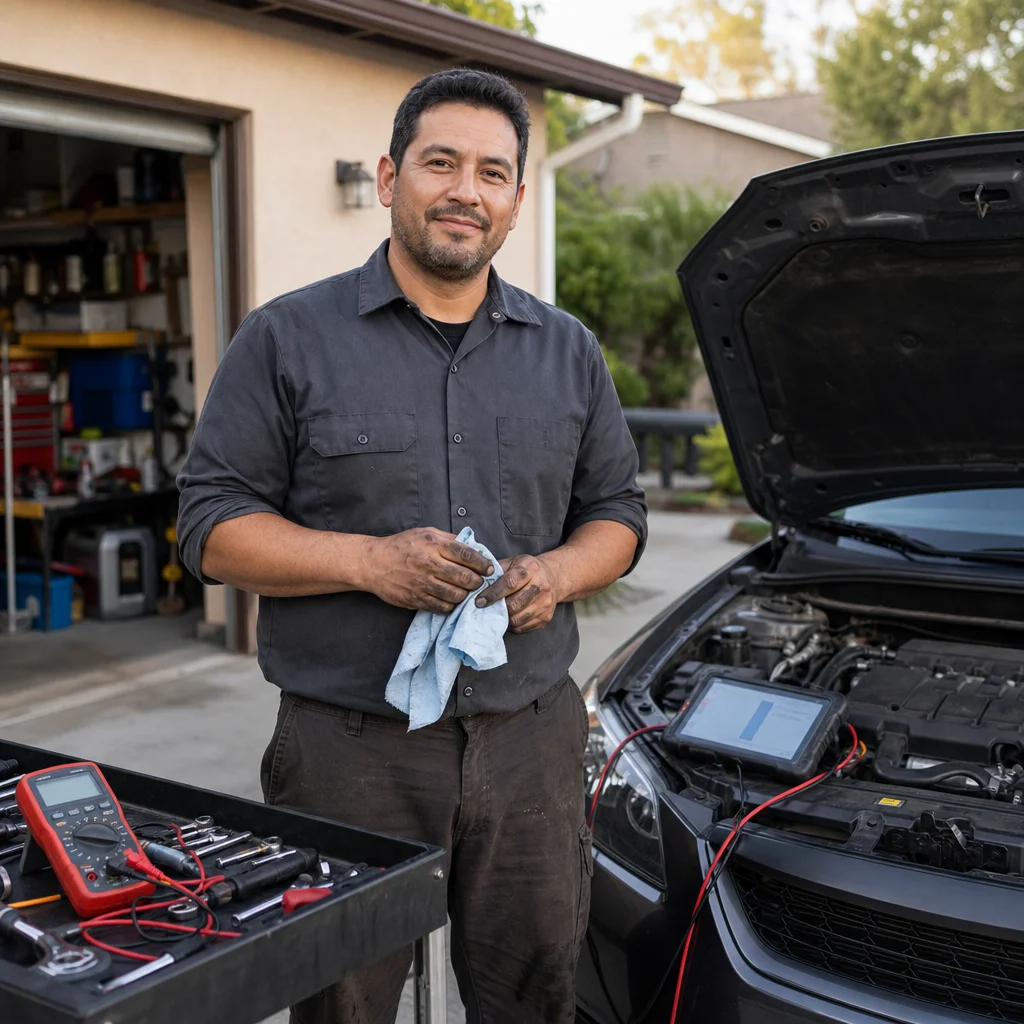
A remote-start system can leave you with a dead battery, but the system itself isn’t automatically the cause. Cold temperatures, short trips, an aging battery, poor installation, or another module that fails to go to sleep can produce the same symptom. The useful question is whether the vehicle has excessive key-off draw and, if so, whether the remote-start equipment is responsible.
You can narrow that down with a few careful checks. Start with the battery’s condition, then measure the vehicle’s resting current after all modules have gone to sleep. If the draw is high, isolate the remote-start system using its documented service procedure rather than pulling random fuses or cutting wires.
Start by confirming the symptom
A battery that fails after one cold night may not be experiencing a parasitic drain. Cold reduces the battery’s available starting power, while engine oil becomes thicker and the starter requires more effort. A marginal battery can work acceptably in mild weather and fail suddenly when temperatures drop.
Driving habits matter as well. Short trips may not replace the energy used to start the engine, especially when the heater, rear defroster, heated seats, lights, and blower motor are running. If the vehicle starts normally after a longer drive or after charging the battery, the problem may be insufficient charging rather than remote-start standby draw.
Look for a pattern before testing. Does the battery go flat only when the vehicle is parked for several days, or does it fail overnight? Does the problem occur after using remote start, or even when remote start is never activated? Does the vehicle crank slowly before the battery becomes completely dead? These details help separate a weak battery from a persistent electrical load.
Check the battery before blaming the remote starter
Inspect the battery terminals and cable connections. They should be clean, tight, and free of looseness or heavy corrosion. Check the negative cable’s connection to the body and engine as well. A poor connection can cause slow cranking and charging problems that look like battery drain.
If the battery has been deeply discharged, charge it fully with a suitable charger before measuring key-off current. A simple voltage check after charging is useful but not a complete battery test. A fully charged battery often measures close to 12.6 volts at rest, but surface charge, temperature, and battery condition affect the reading. A battery can show a reasonable voltage and still fail under the load of the starter.
A proper battery load or conductance test is worthwhile if the battery is more than a few years old, has been discharged repeatedly, or struggles in cold weather. Also check the charging system once the engine is running. A weak alternator or poor charging connection can leave the battery undercharged and make an ordinary standby load seem responsible.
Confirm the battery’s baseline first: Charge and test the battery before chasing remote-start wiring. Measuring a drained or damaged battery can send you toward the wrong diagnosis.
Understand what the remote-start system should do
A correctly installed remote starter normally has a low standby draw while the vehicle is locked and parked. Its control module remains available to receive a command from the remote or smartphone system, but it shouldn't behave as though the ignition is on. The starter, ignition, accessory, and security interfaces should be inactive until a start request is received.
The exact draw depends on the vehicle, the remote-start brand, optional alarm or telematics equipment, and how the system communicates with the factory network. Some systems also include a separate cellular module that can consume more power than a basic one-way remote starter. A module that never enters sleep mode, a stuck relay, incorrect data-bus integration, or poor wiring can raise the draw substantially.
Remote start can also expose an existing weakness without causing it. For example, repeated cold starts may use more battery energy than the alternator replaces during short trips. The remote-start system may then appear to be at fault because the battery dies after several programmed starts, even though its parked draw is normal.
Measure key-off current safely
A digital multimeter with a current function can measure the amount of electricity leaving the battery while the vehicle is parked. A low-current DC clamp meter is often easier and safer because it avoids disconnecting the battery cable. Whichever method you use, understand the limits of the tool before connecting it.
For a series multimeter test, turn off the vehicle, remove the key or keep the key well away from the vehicle, and close or latch the doors and hood as needed. Connect the meter between the disconnected negative battery cable and the negative battery post, using the meter’s high-current connection first if its instructions require that. Never place a meter in series and then attempt to start the engine, operate high-current accessories, or lock and unlock the vehicle repeatedly. Those actions can exceed the meter’s fuse rating.
Modern vehicles may take several minutes to shut down their interior, security, network, and convenience systems. Keep the vehicle undisturbed while watching the reading. Opening a door, pressing a key-fob button, touching a handle, or waking the hood switch can restart the sleep process. Some vehicles require a longer period or a specific procedure before the reading is meaningful.
Once the vehicle is asleep, record the stabilized current rather than the brief peak immediately after locking it. A short-lived increase is normal while modules finish their shutdown routines. A reading that remains elevated after the specified sleep period is more significant.
Verify the sleep period for your vehicle: Don’t label a draw excessive while the car’s modules are still active. Check the owner’s or service information for the expected shutdown time, then avoid disturbing the vehicle until the reading stabilizes.
There is no single current value that applies to every car. Many older vehicles settle somewhere in the tens of milliamps, but modern vehicles with alarms, connected services, and additional control modules may have different specifications. Treat a persistent reading above the vehicle manufacturer’s specification as the reason for further diagnosis—not as proof that the remote starter is defective.
Compare the system with and without remote-start equipment
The cleanest comparison is to use the remote starter’s approved service or valet mode. Many aftermarket systems have a small service button, a valet switch, a programmable setting, or a documented connector that disables remote starting without removing the entire installation. Follow the system’s instructions and repeat the key-off current test under the same conditions.
If the draw drops to a normal level when the remote-start system is placed in its documented disabled mode, the system or its integration becomes a strong suspect. If the draw remains high, look elsewhere first. Common alternatives include a glove-box or trunk lamp that stays on, an aftermarket stereo or dash camera, a door or hood latch that fails to report closed, a malfunctioning body module, or another accessory connected to constant battery power.
Don't assume that a lower reading proves the remote-start module is the only problem. Disabling it may also change the behavior of an alarm, cellular controller, or factory network interface. The result is a useful clue, but the wiring and component arrangement still need inspection.
Inspect the installation for common faults
Aftermarket remote-start installations often use several connections: constant battery power, ignition or accessory circuits, ground, starter control, door-lock inputs and outputs, brake input, hood-pin safety input, and sometimes data-bus interfaces. Loose crimp connectors, poorly supported splices, exposed conductors, and incorrect fuses can create intermittent operation or unwanted current draw.
Look for signs without disturbing the wiring unnecessarily. Check for aftermarket harnesses that are pinched, wet, overheated, or pulled tight around sharp metal. A remote-start module that is warm while the vehicle is parked may deserve attention, although warmth alone doesn’t prove a fault. A relay that clicks repeatedly, a security indicator that behaves abnormally, or accessories that remain powered after shutdown are also useful clues.
A stuck relay can leave an ignition or accessory circuit active. In that case, you may notice a blower, dashboard, warning light, or other equipment that doesn’t shut down normally. A module that repeatedly communicates on the vehicle network can produce a high draw without leaving an obvious accessory running. These faults are usually easier to confirm with the installation diagram and a professional scan tool than by guessing at fuses.
Avoid random fuse removal and improvised bypasses
Pulling fuses one at a time can wake modules, erase useful clues, interrupt security systems, or create new fault codes. Some fuses supply several unrelated circuits, and the fuse label may not identify an aftermarket connection. Removing a fuse also doesn’t necessarily disconnect a remote-start module if it has a separate inline fuse or multiple power feeds.
Never bypass the hood-pin switch, brake input, neutral-safety circuit, or other start-inhibit feature to make the system operate. Those circuits help prevent the vehicle from starting under unsafe conditions. Don’t cut wires or disconnect battery cables while the engine is running, either. If the installation appears unsafe or you can’t identify its connections, have an experienced automotive electrician or installer disable and test it.
If you need to stop repeated remote-start attempts temporarily, use the manufacturer’s valet or service mode. If the vehicle starts on its own, the starter remains engaged, or an ignition circuit stays powered, stop using the system and arrange prompt professional diagnosis rather than continuing to test it remotely.
Decide what the test results mean
A normal key-off draw combined with a battery that fails in cold weather points toward battery condition, charging performance, or driving patterns rather than a remote-start fault. A high draw that remains when remote start is disabled points to another accessory or vehicle circuit. A high draw that disappears in the system’s approved service mode makes the remote-start installation the leading suspect.
When the remote starter is implicated, provide the installer or technician with your measurements, the time required for the vehicle to sleep, the battery test result, and whether the draw changed in valet mode. That information is more useful than simply reporting that “the remote start kills the battery.” It can help the technician check the module, relays, data-bus interface, telematics add-on, and installation splices in a logical order.
Your next step should be conservative: establish that the battery and charging system are healthy, measure the stabilized key-off draw without waking the car, and use only the remote starter’s documented disable procedure for comparison. If the reading remains high or the installation has questionable wiring, stop short of bypassing safety circuits. A careful diagnosis costs less—and creates fewer risks—than replacing parts or removing fuses at random.