How to Prepare Your Car's Electrical System for an Arctic Cold Snap
I’ll explain how to check your battery, reduce starting strain, and choose between charging, testing, or replacing parts so you don’t mistake a weak electrical system for a problem caused by the cold alone.
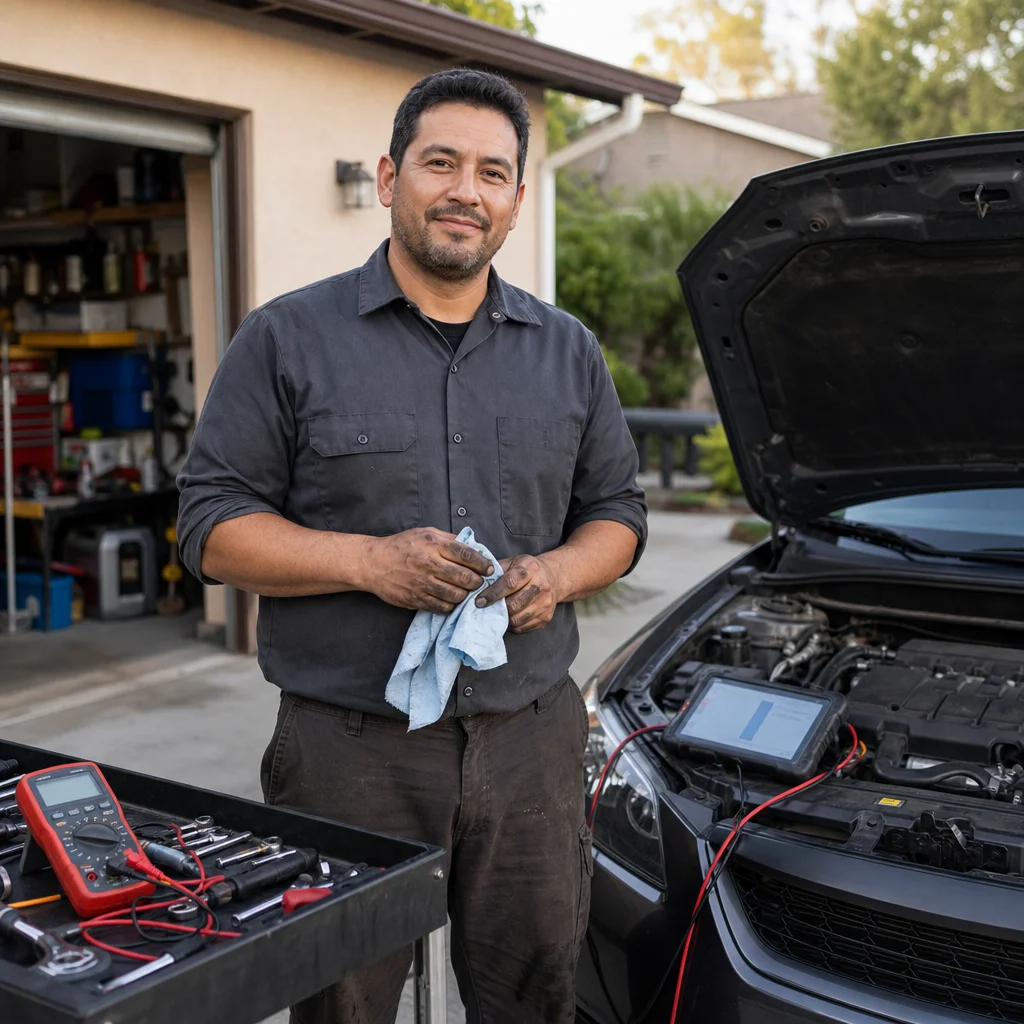
A severe cold snap can expose an electrical weakness that went unnoticed in milder weather. A battery that starts the car normally at 40°F may struggle when temperatures drop far below freezing, while thick engine oil and extra electrical demands make the starter work harder.
The goal isn’t to buy every cold-weather accessory available. It’s to identify the parts most likely to fail, improve the battery’s state of charge, and make a sensible decision about testing, charging, replacing, or preparing backup equipment.
Start with the battery’s condition
Cold weather reduces the amount of power a battery can deliver, while the engine may require more power to turn over. That combination is why a marginal battery often fails during the first genuinely cold morning of the season. A battery can appear healthy because its lights work and its voltage looks acceptable, yet still lack enough starting capacity.
Look for the battery’s age, condition, and cold-cranking amp (CCA) rating. Many conventional automotive batteries last roughly three to five years, but climate, driving habits, heat exposure, and charging problems can shorten or extend that range. Treat the age as a reason to test the battery, not as an automatic replacement deadline.
Inspect the case for swelling, cracks, or leaking fluid. A damaged battery should be replaced rather than charged or put under additional strain. Corrosion around the terminals, loose hold-down hardware, and frayed cables also deserve attention. The battery must remain firmly secured; vibration can damage internal components and connections.
A professional parts store or repair shop may offer a battery test, but the quality and interpretation of tests vary. If possible, have the battery tested under load or with a conductance tester when it is reasonably charged. A simple voltage reading is useful as a clue, not a complete diagnosis.
Check the charging system before blaming the battery
A new battery won’t solve a charging problem. With the engine running, the alternator should normally maintain system voltage within the range specified by the vehicle manufacturer, but the correct value varies by vehicle, temperature, battery type, and charging strategy. Some newer vehicles deliberately change charging voltage, so a single universal number can be misleading.
Warning signs include a battery or charging-system light, headlights that brighten and dim noticeably, repeated dead batteries, slow electrical accessories, or a battery that loses charge after a short period of driving. A shop can test alternator output, voltage regulation, and charging performance under electrical load.
Don’t assume that letting the vehicle idle for a few minutes will restore a deeply discharged battery. Idling may provide limited charging, especially with the heater, lights, blower, heated seats, and defrosters operating. A properly selected battery charger or maintainer is usually a more reliable way to restore and preserve charge.
Parasitic drain is another possibility. An accessory, aftermarket remote starter, interior light, or control module that fails to go to sleep can discharge a battery while the car is parked. If the battery repeatedly goes flat even after testing well, ask for a parasitic-draw diagnosis instead of replacing batteries repeatedly.
Verify your vehicle’s charging requirements: Check the owner’s manual for the specified battery type, charging procedure, jump-start points, and any required battery-monitoring reset or registration. Procedures can differ substantially between conventional, AGM, hybrid, and electric vehicles.
Choose the right way to keep the battery charged
If the car sits for several days, a smart battery maintainer can reduce the chance of a low state of charge. Select a maintainer compatible with the battery’s chemistry and capacity, and connect it exactly as its instructions specify. A maintainer is useful for a parked vehicle, but it doesn’t repair a battery with a failing cell or a vehicle with excessive electrical drain.
A conventional charger is better when the battery needs a controlled recharge before the cold arrives. Charge in a suitable ventilated area, keep sparks and flames away, and inspect the battery before connecting the charger. Never attempt to charge a battery that is frozen, cracked, or visibly damaged. A severely discharged lead-acid battery can freeze more readily than a fully charged one, so warming it safely and having it inspected may be necessary.
A block heater is a different solution. It warms the engine or coolant, depending on the design, and can reduce the mechanical effort required at startup. It doesn’t replace a healthy battery or fix poor cable connections. If you use one, use a cord rated for outdoor winter conditions and connect it to a properly grounded, weather-protected outlet. Follow the vehicle and heater manufacturer’s guidance rather than leaving it connected continuously without a reason.
A battery warmer or insulated battery blanket may help in exceptionally cold conditions, but it must be designed for that specific use. Improvised insulation, household heating devices, and damaged extension cords create fire and shock hazards. These accessories can also be unnecessary if the car is driven regularly and the battery and charging system are in good condition.
Clean and secure the cable connections
Electrical current must travel through the battery terminals, cables, engine ground, and body grounds. A thin layer of corrosion or a loose connection can create enough resistance to cause slow cranking, clicking, flickering lights, or a no-start condition. Cold weather can make that marginal connection show up at exactly the wrong time.
With the vehicle off, inspect the positive and negative terminals and the cable ends. They should be tight and free from heavy corrosion. If you clean them, use eye protection and the procedure recommended for your battery and vehicle. Avoid allowing metal tools to bridge the positive terminal and bodywork. Don't tighten a terminal so aggressively that you damage the battery post.
Follow the negative cable to its ground connection and inspect the engine-to-body ground strap if visible. A clean battery terminal can't compensate for a broken or corroded ground path. Cable insulation that is cracked, swollen, stiff, or damaged should be evaluated for replacement.
After servicing the connections, make sure the battery hold-down is secure and that cables aren’t stretched, rubbing against moving parts, or routed near hot exhaust components. If your vehicle has a battery sensor attached to a terminal, don’t bypass or reposition it casually.
Reduce the starting load on a cold morning
Before switching on the ignition, turn off unnecessary accessories such as the cabin fan, heated seats, rear defroster, high-power audio equipment, and auxiliary lighting. Many modern vehicles manage these loads automatically, so don’t treat this as a substitute for proper battery maintenance. It simply avoids asking a weak system to do more work at the moment of starting.
Use the correct starting procedure for the vehicle. Diesel engines may require a glow-plug cycle, and some vehicles have specific instructions for extreme cold. Don’t hold the starter continuously through repeated failed attempts. Long cranking can overheat the starter and drain the battery quickly.
If the engine doesn’t start, pause between attempts and diagnose the symptom. Rapid clicking often points toward low voltage or a poor connection, while a strong crank with no ignition may indicate a fuel, ignition, sensor, or immobilizer problem instead. Repeatedly trying to start a vehicle with a non-electrical fault can turn a manageable problem into a discharged battery.
Decide whether replacement is worthwhile
Replacing an aging battery before a forecast cold snap can be reasonable when testing shows reduced capacity, the battery is near the end of its expected service life, or the vehicle has already shown slow cranking. Choose the correct physical size, terminal arrangement, battery type, and CCA specification. More CCA isn't automatically better if the battery doesn’t fit, isn’t compatible with the charging system, or lacks the required venting arrangement.
AGM batteries, for example, may be required or preferred in vehicles with high electrical demands, start-stop systems, or a battery location that calls for a particular design. Installing a conventional battery where the vehicle requires AGM can affect durability and system operation. Some vehicles also need the new battery recorded in the body or battery-management system.
Keeping the old battery as a backup is usually a poor trade-off if it has already failed a proper test. A jump pack is often more useful, provided it is fully charged, rated for the vehicle, stored within its temperature limits, and checked periodically. A jump pack can get you moving, but it won’t solve a charging failure or an unsafe cable connection.
Prepare for a jump-start without creating another problem
Keep approved jumper cables or a suitable jump pack in the vehicle, along with gloves, a flashlight, and basic reflective equipment. Read the vehicle’s jump-start instructions before an emergency; some cars have dedicated positive and negative connection points, and some battery locations are difficult to access.
Use the correct polarity and connection sequence, keep the vehicles from touching when using cables, and avoid the moving parts of the engine bay. Never attempt a jump-start if the battery is cracked, leaking, badly swollen, or frozen. If the vehicle has an unusual electrical system, consult its manual or call for assistance.
Hybrid and electric vehicles still commonly have a low-voltage auxiliary battery, but their high-voltage systems require different precautions. A jump procedure for the 12-volt system doesn't mean you should touch orange high-voltage cables or attempt to service the traction battery. Follow the manufacturer’s instructions and use roadside assistance when the procedure is unclear.
A sensible cold-snap checklist
Before temperatures fall, test the battery and charging system, clean and secure the connections, and confirm that the correct battery type is installed. Recharge the battery if needed with an appropriate charger, inspect the block-heater cord if you use one, and check that your emergency cables or jump pack are ready.
If the car has slow cranking, repeated battery failures, warning lights, or a battery that goes flat while parked, arrange a diagnosis rather than relying on a stronger battery alone. The most effective preparation is usually less dramatic: a healthy battery at a good state of charge, low-resistance connections, a functioning charging system, and a clear plan for a no-start situation. Safety concerns, damaged batteries, high-voltage components, and unexplained electrical drains are good reasons to involve a qualified technician.