Why Does the Engine Cooling Fan Run After Shutdown?
A cooling fan that keeps running can be normal heat management or a sign of a fault that may drain the battery. I’ll help you distinguish expected after-run operation from overheating, sensor, relay, wiring, and control-module problems.
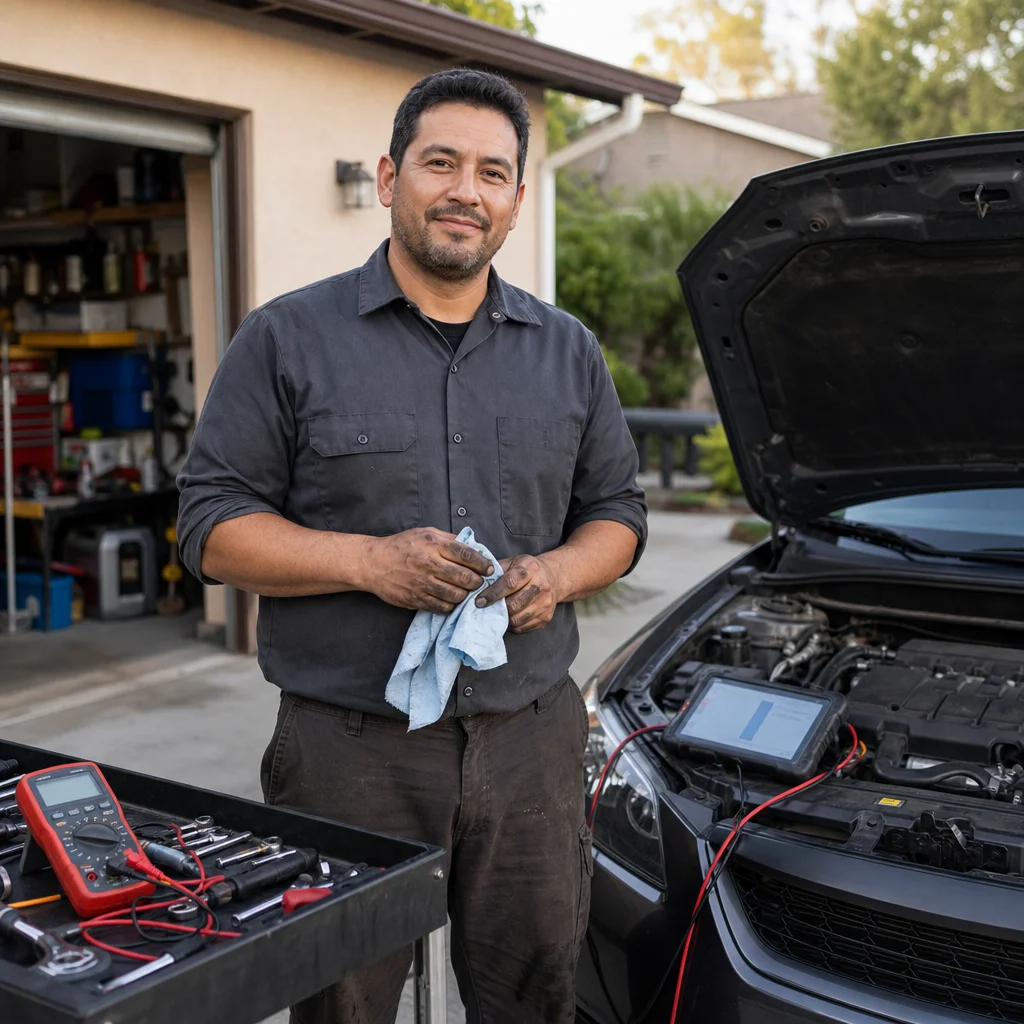
The engine cooling fan may continue running for a short time after you switch off the ignition. That can be normal: the engine and under-hood components are still hot, and airflow helps remove heat while the vehicle is parked. The important question is whether the fan’s behavior fits the vehicle’s normal pattern or points to a problem.
A fan that runs briefly after a hot drive usually needs observation rather than immediate repair. A fan that starts with a cold engine, runs until the battery is weak, or accompanies an overheating warning deserves diagnosis. The same symptom can come from a temperature sensor, stuck relay, damaged wiring, low coolant, or a control-module fault, so replacing the fan itself is often the wrong first step.
When fan operation after shutdown is normal
Modern vehicles can use an after-run cooling strategy. The engine control system monitors coolant temperature and other conditions, then commands the fan to run after the engine stops if additional cooling is useful. This is more likely after slow traffic, a long climb, towing, hot weather, or a drive that leaves the engine compartment heat-soaked.
A normal after-run cycle is generally limited in duration and eventually stops on its own. The exact timing varies widely. Some vehicles use a low fan speed for a few minutes; others may operate the fan more noticeably after demanding driving. Turbocharged engines and vehicles with tightly packaged engine compartments may have additional heat-management behavior.
The fan can also sound louder than expected because the engine is no longer running to mask it. If it runs briefly after a hot trip and the temperature gauge remained normal, there are no warning messages, and the battery remains charged, the behavior may simply be part of the vehicle’s design.
Check your vehicle’s expected after-run pattern: Look in the owner’s manual for cooling-fan or after-run information, and compare the behavior after a normal drive with what the manufacturer describes. The acceptable run time and operating conditions differ by vehicle.
Signs the fan may indicate a fault
Duration and circumstances matter more than sound alone. A fan that runs for a short period after a hot drive is less concerning than one that continues for a long time every time you park, regardless of engine temperature. A fan that repeatedly runs the battery down can leave you unable to start the vehicle, even if the cooling system itself is working correctly.
Investigate the problem more carefully if you notice any of these patterns:
- The fan runs after a very short or cold-weather trip.
- It starts as soon as the ignition is switched on, even before the engine warms up.
- It runs continuously with the engine cold or doesn't shut off after the engine cools.
- The temperature gauge rises unusually high, fluctuates, or behaves differently from normal.
- A coolant-temperature, overheating, check-engine, or electrical warning appears.
- Coolant is low, leaking, boiling, or leaving a sweet smell.
- The battery becomes weak after the vehicle sits overnight.
- The fan runs at maximum speed when there is no obvious heat problem.
A fan running constantly can sometimes be a protective response. If the control system can't trust a temperature signal, it may command the fan on to reduce the risk of overheating. That doesn't prove the engine is actually too hot; it means the system may be operating conservatively because of a detected fault.
Common causes to consider
Engine coolant temperature sensor or circuit
The engine coolant temperature sensor reports engine temperature to the control system. If the sensor reports an implausibly high temperature, loses its reference voltage, or has a damaged connector, the computer may turn the fan on as a precaution. A wiring problem can create the same symptom even when the sensor itself is functional.
A faulty sensor may cause other symptoms, including difficult starting, poor fuel economy, an inaccurate temperature reading, an illuminated check-engine light, or cooling fans that run at unusual speeds. A diagnostic scanner may reveal a temperature reading that is clearly unrealistic, such as a very hot engine before the vehicle has been started.
Stuck fan relay or power-control fault
Some vehicles use a conventional relay to switch fan power. If the relay contacts weld together, the fan can remain powered after the control signal has been removed. Other vehicles use an electronic fan module or integrated speed controller, which can fail in a way that leaves the fan running continuously or at full speed.
A relay or module fault is more likely when the fan runs with a cold engine, continues after the vehicle has been parked for an unusually long time, or operates independently of temperature readings. Exact relay locations and control designs vary, so the vehicle’s wiring diagram is more useful than guessing from a fuse-box label.
Damaged wiring, connectors, or grounds
Road spray, heat, vibration, and previous repairs can damage wiring near the radiator, fan shroud, or front body structure. A loose connector, corroded terminal, short to power, or poor ground may cause intermittent operation or a fan that stays on.
Look for obvious damage only when the vehicle is safely parked and the ignition is off. Don't assume that a connector is harmless to unplug: the fan may start unexpectedly, and some systems can store faults or require a specific test procedure. Electrical diagnosis is usually more reliable with a wiring diagram and a meter than by swapping parts.
Low coolant or a real cooling-system problem
Low coolant, a failing thermostat, a damaged water pump, a blocked radiator, or air trapped in the system can allow engine temperature to rise. In that situation, the fan may be doing exactly what it was commanded to do, while the underlying heat problem remains elsewhere.
The fan can't compensate for every cooling-system failure. If the temperature gauge is high, steam is visible, coolant is escaping, or a warning message appears, stop driving as soon as it is safe. Continuing to run an overheating engine can turn a cooling-system repair into major engine damage.
Air-conditioning demand or control logic
The air-conditioning system can request fan operation while the engine is running, even when the coolant temperature is normal. Pressure sensors and climate-control logic may also affect fan speed. This usually doesn't explain a fan that stays on indefinitely after shutdown, but it can make the behavior seem unusual during testing.
Turn the climate controls off during a simple comparison test, then observe what happens after a normal drive. If the fan behavior changes only with air conditioning, the next diagnostic path may involve refrigerant pressure, a pressure sensor, or climate-control wiring rather than the engine temperature sensor.
A sensible troubleshooting sequence
Start by recording the conditions instead of immediately disconnecting the battery. Note whether the engine was fully warm, how long the fan ran, whether it stopped by itself, whether the gauge was normal, and whether the air conditioning was operating. A short video or written timing can help a repair shop reproduce an intermittent fault.
With the engine completely cold, check the coolant level in the designated reservoir. The level should be judged against the markings and the instructions in the owner’s manual. Don't remove a radiator or pressure-system cap while the engine is hot. If the level is low, look for signs of a leak and use only the coolant type and mixture specified for the vehicle; adding coolant without finding a leak may only postpone the problem.
Next, inspect for warning lights and scan for diagnostic trouble codes if you have a compatible scanner. A code related to coolant temperature, fan control, or circuit performance can narrow the search, but a code isn't automatically a command to replace that component. Compare live temperature data with the actual engine condition and, when possible, with a reliable temperature measurement.
If the fan is draining the battery, avoid repeated trial-and-error starts. You may need to have the vehicle diagnosed promptly or temporarily disconnect power under the manufacturer’s guidance, but don't reach into the fan assembly or rely on the ignition being off to make it safe. Electric fans can start without warning while the vehicle is parked.
When to stop driving or call a professional
A brief after-run cycle with a normal temperature gauge generally calls for monitoring. A fan that runs continuously but doesn't cause overheating still deserves timely electrical diagnosis, especially if the battery is becoming weak. The fault may be relatively simple, but leaving it unattended can create a no-start condition or hide a developing cooling problem.
Stop driving and arrange professional help if the engine overheats, coolant is visibly leaking, steam is present, the temperature warning appears, or the gauge moves into an unsafe range. Let the engine cool before checking anything under the hood, and never open a pressurized cooling system while it is hot.
A repair shop can test the temperature signal, fan command, relay or control module, wiring, charging system, and cooling-system pressure. This approach is usually more efficient than replacing the fan motor based only on the fact that it is running.
The practical decision
If the fan runs for a limited time after a hot drive and then stops, treat it as potentially normal and confirm the expected behavior for your vehicle. If it runs after cold starts, stays on excessively, drains the battery, or appears alongside temperature or coolant symptoms, treat it as a fault until diagnosed.
Your first priorities are to protect the engine, protect yourself from an unexpectedly starting fan, and gather useful observations. Check coolant only when cold, use a scanner if available, and get professional testing when the cause isn't obvious. The fan’s operation is a clue—not by itself a diagnosis.