Why a Car Battery Dies Overnight Even Though It Starts Fine During the Day
I’ll help you sort out why a car that starts normally during the day can have a dead battery by morning, from battery condition and charging problems to overnight electrical loads, poor connections, and cold temperatures.
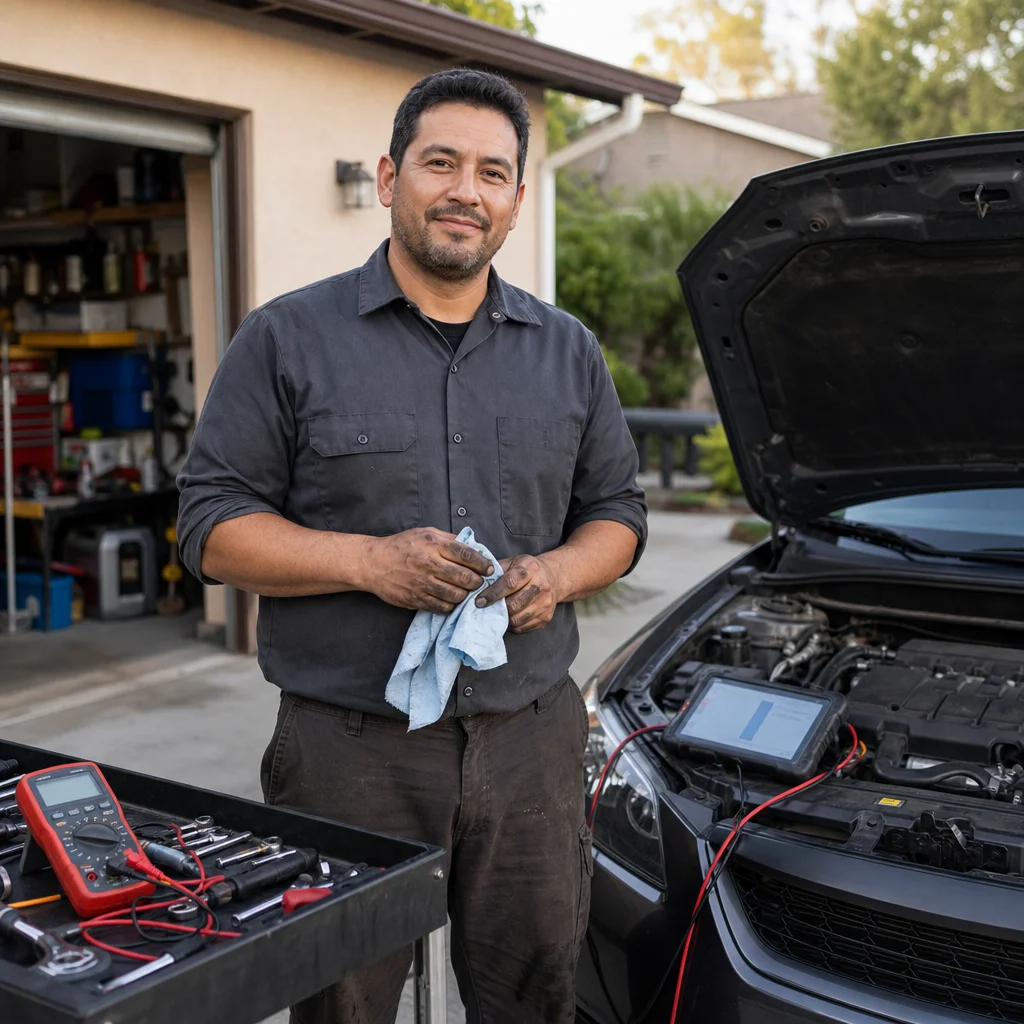
A car that starts normally after sitting for a few hours can still be unable to start the next morning. The pattern usually means the battery has enough reserve for one daytime start—or receives some charge between starts—but loses too much energy during a longer overnight period.
The most economical approach is to check the simple causes in a sensible order. Start with the battery and its connections, then consider charging performance, overnight electrical draw, and temperature. Replacing the battery first may solve the problem, but it can also waste money if a weak alternator or parasitic load is what keeps draining the replacement.
Start with the battery and its connections
A car battery can become unreliable before it fails completely. As a battery ages, its usable capacity falls. It may still crank the engine strongly after the vehicle has been driven recently, but after sitting overnight it may not have enough reserve to provide the same starting power. Short trips can make this worse because the starter uses a substantial amount of energy, while a brief drive may not restore it fully.
Inspect the battery case for swelling, cracks, leaks, or severe corrosion. A swollen case can indicate internal damage or freezing, and it isn’t a problem to solve by simply tightening a terminal. A damaged battery should be assessed for replacement, and leaking battery acid can injure skin or damage nearby components.
The cable connections deserve equal attention. A terminal that looks attached may still have corrosion between the cable end and battery post. Loose or contaminated connections increase resistance, reducing the current available to the starter and interfering with charging. Check the positive and negative terminals, the negative cable where it attaches to the engine or body, and the engine ground strap if your vehicle has one.
With the engine off, the terminals shouldn’t rotate by hand. Clean corrosion with the appropriate battery-terminal brush and follow the battery and vehicle manufacturer’s precautions. Don’t bridge the terminals with a metal tool, and don’t disconnect a battery while the engine is running. Some vehicles can also lose learned settings or require procedures after battery disconnection, so check the owner’s manual first.
Stay safe around the battery: Wear eye protection, keep sparks and open flames away, and follow the vehicle’s jump-start points and procedure. If the battery is swollen, cracked, leaking, or frozen, don’t attempt to jump-start it.
A useful battery check
A fully charged conventional 12-volt battery often measures around 12.6 volts after resting, while a lower reading suggests partial charge or a problem. The exact reading varies with battery type, temperature, and how long the vehicle has been off, so voltage alone doesn’t prove that the battery is healthy. A battery can show an acceptable resting voltage yet lose most of its voltage when the starter is engaged.
If you have access to a battery tester, a load or conductance test is more informative. Many parts stores and repair shops offer battery testing, though the service and availability vary by location. Ask whether the test includes the battery’s ability to deliver starting current, not just a quick voltage measurement.
If the battery is several years old and fails a proper test, replacement is reasonable. Match the required group size, terminal arrangement, and starting rating specified for the vehicle. Some vehicles use an absorbed glass mat battery or require battery registration after replacement; installing the wrong type or skipping a required reset can create charging or battery-management problems.
Check whether the alternator is replacing the energy
The alternator supplies electrical power while the engine runs and replenishes energy used during starting. If it is undercharging, the car may start after a relatively recent drive but fail after sitting overnight because the battery never reached a full state of charge.
Charging problems can come from the alternator itself, a slipping belt, a damaged cable, a fuse, a voltage-control system, or a battery that can no longer accept or retain energy. A charging warning light may appear, but it isn’t guaranteed to stay on when the problem is intermittent.
A basic multimeter check can provide clues. Measure the battery with the engine off, then measure again with the engine running. The running voltage should generally rise above the resting voltage, but modern vehicles vary their charging voltage and may deliberately reduce output under some conditions. Electrical loads such as headlights, the blower motor, rear defroster, and heated seats can also affect the reading.
For that reason, a single voltage number shouldn’t be treated as a final diagnosis. If the running voltage never rises meaningfully, fluctuates unexpectedly, or the battery repeatedly remains undercharged, have the charging system tested under the vehicle manufacturer’s procedure. A professional test can account for smart charging systems that don’t behave like older, fixed-output alternators.
Avoid the old practice of disconnecting the battery cable while the engine is running to “test” the alternator. That can create voltage spikes and damage electronic modules. A proper meter or charging-system tester is cheaper than replacing control units.
Look for an overnight parasitic draw
A parasitic draw is the small amount of electricity a vehicle uses while parked. Some draw is normal: the security system, clock, keyless-entry receiver, and computer memory need power. The issue arises when a light, module, relay, accessory, or aftermarket device continues using much more electricity than intended after the car has been shut off.
Common causes include a glove-box, trunk, or vanity light that stays on; a door or hatch that doesn’t fully register as closed; an aftermarket stereo or alarm; a dash camera wired for parking mode; a remote starter; a tracking device; and a phone charger or inverter left connected. A module can also fail to enter its low-power “sleep” state, sometimes because of a faulty switch or communication problem.
The timing can help narrow the search. If the car is dead only after a weekend, the draw may be modest but continuous. If it goes flat after one night, suspect a larger load, a severely weakened battery, or a battery that was already discharged. If the problem began after an accessory, repair, or battery replacement, revisit that recent change first.
Finding a parasitic draw with a multimeter requires care. The vehicle usually needs time after locking for its modules to shut down, and opening a door or pressing a remote button can wake them again. Some vehicles also have a battery-monitoring sensor or circuits that react to disconnecting power. Incorrectly placing a meter in the current path, using the wrong input terminal, or switching on a high-current load through the meter can blow its fuse or damage the meter.
If you’re comfortable with electrical testing, use the service information for your vehicle and the meter manufacturer’s instructions. Allow the vehicle to enter sleep mode, then measure current without repeatedly disturbing it. Pulling fuses one at a time can help identify a circuit, but it may also wake modules or erase settings, so record what you change and replace each fuse with the correct rating.
A professional diagnosis is often the cost-efficient choice when the draw is intermittent, the vehicle has multiple control modules, or the suspected circuit requires wiring diagrams. Paying for a focused electrical test can be less expensive than replacing several parts based on guesses.
Don’t overlook temperature and driving habits
Cold weather doesn’t usually create an electrical fault by itself, but it exposes weak batteries and marginal charging systems. Battery output falls as temperature drops, while engine oil thickens and the starter needs more effort. A battery that starts the car at a mild afternoon temperature may not have enough reserve on a freezing morning.
Cold also increases the time needed to restore energy after starting. A short trip with the heater, headlights, defroster, and seat heaters operating may use much of the battery’s starting energy without giving the alternator enough time to replace it. Repeated short trips can therefore imitate an overnight drain.
If possible, combine short errands or take a longer drive occasionally, but don’t assume driving alone will repair a failing battery or charging system. An external battery charger can restore a discharged battery more effectively than a brief drive, provided the charger is suitable for the battery type and used according to its instructions.
Parking in a garage or using an approved engine and battery-warming strategy can reduce cold-start strain, but never use an improvised heater or operate a combustion engine in an enclosed garage. If the battery repeatedly needs charging, treat that as evidence to diagnose the underlying cause rather than as a permanent maintenance routine.
A sensible order for diagnosis
First, note what “dies overnight” means. Does the engine crank slowly, click once, or remain completely silent? Do the interior lights and dashboard remain bright? Are there warning messages? These details distinguish a low battery from a starter, ignition, or connection problem.
Next, inspect and secure the battery connections, check for visible damage, and have the battery tested. If it passes, check the charging system rather than assuming the battery is fine forever. If both pass, investigate an overnight draw, beginning with recently installed accessories and lights that may not turn off.
When using a charger or jump pack, follow the vehicle’s specified connection points. A jump-start can get you moving, but it doesn’t tell you whether the battery, alternator, or wiring caused the failure. If the car stalls soon afterward, the charging system may not be supplying power, and continuing to drive can leave you stranded in a less convenient place.
The least wasteful repair is the one supported by a test. Replace a battery that fails its capacity test, repair a charging fault when output is inadequate, and trace a parasitic load when the battery and alternator are healthy. If electrical measurements, battery access, or fuse testing feel uncertain, stop before guessing and use a qualified technician. A careful diagnosis protects both your budget and the vehicle’s increasingly complex electronics.