Why Does a Manual Transmission Pop Out of Gear?
I’ll compare the common reasons a manual transmission pops out of gear, from worn mounts and linkage faults to internal transmission damage. You’ll learn how driving conditions, symptoms, and simple inspections can help narrow the cause before you choose a repair.
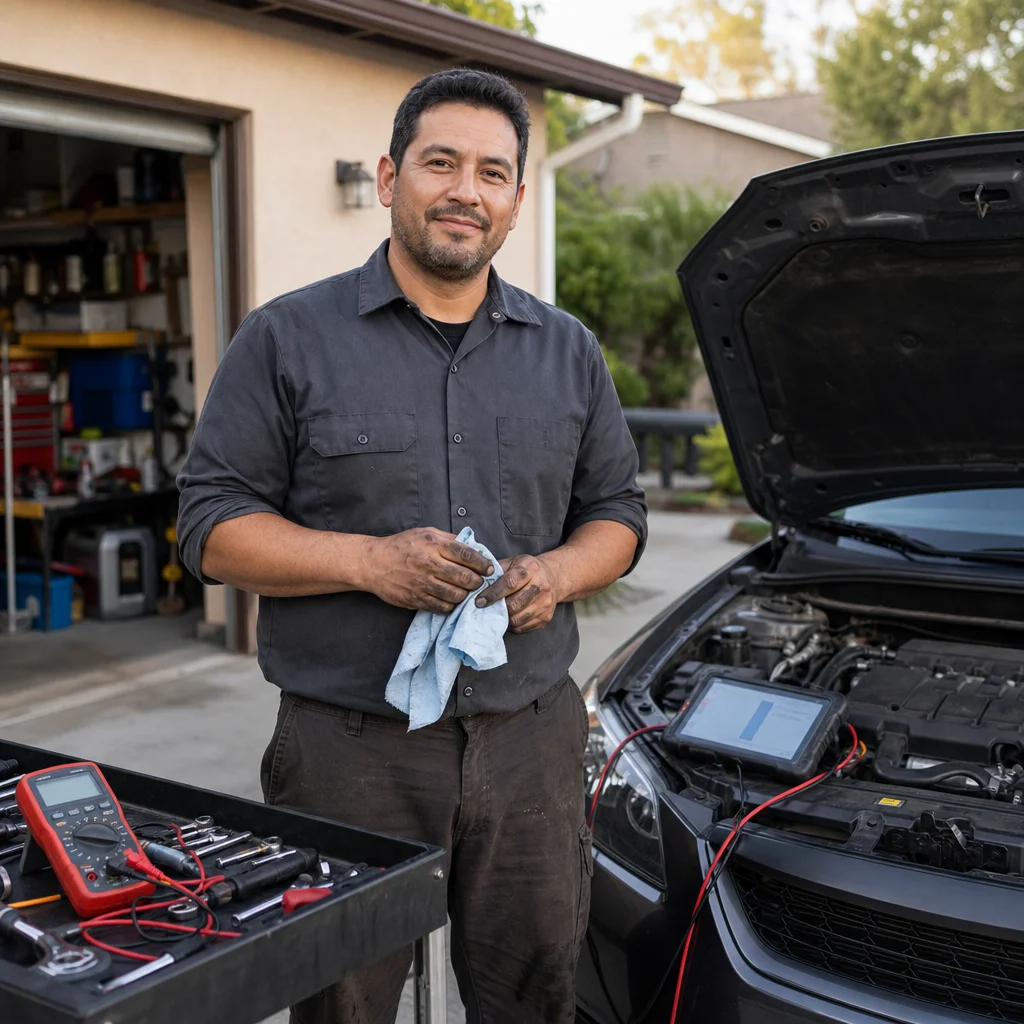
A manual transmission that jumps out of gear is more than an annoyance. It can leave you without engine braking, make the vehicle difficult to control, and turn a manageable maintenance issue into expensive transmission damage if you keep driving without finding the cause.
The problem usually falls into one of two broad categories: the gear isn't being held fully in engagement, or internal parts can no longer keep it there. Worn engine or transmission mounts, misadjusted linkage, clutch-related problems, and low or incorrect lubricant can sometimes be addressed without removing the transmission. Bent shift components, worn synchronizer assemblies, damaged gears, or worn bearings generally require more extensive work.
Understanding how the symptoms differ will help you decide whether to inspect the external parts, arrange a professional diagnosis, or stop driving the vehicle.
How a manual transmission stays in gear
When you move the shifter, the shift mechanism operates a fork inside the transmission. The fork moves a synchronizer hub and sleeve toward the selected gear. Once the sleeve and gear are properly engaged, small engagement teeth hold the connection while the transmission transfers engine torque through that gear.
The shift lever itself doesn't normally carry the driving load. It selects the gear, while the internal engagement parts keep the gear connected. That distinction matters: a problem with the shifter, cable, or linkage may prevent full engagement, but a transmission that is fully engaged and still kicks out of gear may have internal wear or excessive movement elsewhere.
The transmission also depends on the engine and gearbox remaining in their intended position. Mounts control that movement, and the linkage must maintain the correct relationship between the cabin shifter and the transmission selector. If either system allows too much movement, the transmission may be pulled partly out of engagement under acceleration or deceleration.
Common causes, from external to internal
Worn or broken engine and transmission mounts
Mounts support the powertrain and limit how far it twists when torque is applied. Rubber or composite sections can crack, separate, collapse, or soften with age. A failed mount may allow the engine and transmission to rotate noticeably when you accelerate, lift off the throttle, or change direction.
That movement can tug on a shift cable or linkage. In some vehicles, it can also move the transmission far enough for the selected gear to disengage. A mount problem is especially plausible when the transmission pops out under acceleration, when the shifter moves visibly during throttle changes, or when you also notice clunks and excessive engine movement.
Mounts are often less expensive to replace than internal transmission parts, but they still need to be inspected correctly. A mount that looks intact from above may be torn underneath or allowing movement at its attachment points. Never place any part of your body beneath a vehicle supported only by a jack.
Linkage, cable, or shifter problems
The external shift system can develop worn bushings, loose fasteners, bent parts, seized joints, stretched cables, or incorrect adjustment. These faults can leave the transmission selector short of its full detent, even though the cabin shifter appears to be in the correct position.
The result may be a gear that feels vague, a lever that doesn't center normally, or a transmission that pops out when the vehicle encounters a bump. Some vehicles use cables with specific adjustment procedures, while others use rods and bushings that can be inspected more directly. Replacing a worn bushing may restore precise shifting; replacing a cable may be necessary if it is damaged or binding.
Check whether the problem affects one gear or several. A linkage issue can affect multiple gears, but its effect may be most obvious in a gear that places the greatest load on a particular cable or rod direction. If the shifter feels loose in every gear, start with the external mechanism rather than assuming the transmission itself is worn out.
Clutch-release or clutch-adjustment problems
A clutch that doesn't fully release can make gear selection difficult, especially when the vehicle is stopped. You may hear gear clash when selecting reverse or first gear, feel the vehicle creep with the clutch pedal fully depressed, or have trouble shifting into several gears.
A clutch problem doesn't usually cause a transmission to pop out of a gear that was fully engaged. However, incomplete release can make engagement rough or incomplete, and the resulting symptoms may be confused with a transmission fault. Hydraulic problems, a stretched or misadjusted cable, a warped clutch disc, or worn release components can all affect clutch operation depending on the vehicle.
If the clutch pedal feels unusually soft, sinks, engages very close to the floor, or changes behavior after repeated use, include the clutch system in the diagnosis. Repairing the clutch won't correct worn internal engagement teeth, but it may prevent continued forced shifting and additional damage.
Low, contaminated, or incorrect transmission lubricant
Manual transmissions require lubricant that matches the manufacturer’s specification. Low fluid can result from a leak, while contaminated or incorrect fluid can affect bearing, gear, and synchronizer operation. In some cases, difficult shifting or noise appears before the transmission begins to disengage.
Fluid alone won't repair worn engagement components. Still, checking the level and condition can reveal useful evidence. Metal particles, a burnt odor, or fluid that is badly contaminated can point toward internal wear. Some synchronizers and transmissions are sensitive to lubricant chemistry, so substituting a generic fluid simply because it has the same viscosity can create shifting problems.
The fill plug often provides the access point for checking a manual transmission, and the vehicle generally needs to be level for an accurate reading. Follow the vehicle-specific procedure and use the specified lubricant. A leak that has lowered the level also needs to be located and repaired.
Worn synchronizer, engagement teeth, or shift fork
Internal wear becomes more likely when one specific gear repeatedly pops out while the external linkage and mounts are in good condition. The synchronizer sleeve, hub, engagement teeth, shift fork, or related detent components may be worn or damaged.
Synchronizer wear is often first noticed as grinding or resistance during a shift, particularly when selecting a certain gear. However, the parts that synchronize speed and the parts that hold the gear engaged aren't identical, so grinding isn't required for a gear-retention problem. A damaged or worn shift fork may fail to move the sleeve far enough, while rounded engagement teeth may push the sleeve away under load.
Internal transmission repairs usually require removing and disassembling the gearbox. That makes accurate diagnosis worthwhile before authorizing a rebuild or replacement. A shop may inspect linkage operation, mount movement, fluid condition, and transmission behavior before deciding whether internal work is justified.
Bearing, gear, or shaft wear
Worn bearings can allow shafts to move out of their intended alignment. Damaged gears or excessive endplay may then contribute to gear disengagement, whining, rumbling, or vibration. These faults are more serious because continued operation can spread metal through the lubricant and damage additional components.
A transmission that pops out of gear along with a rising whine, grinding, heavy vibration, or visible fluid contamination deserves prompt attention. Noise that changes with vehicle speed, engine speed, or a particular gear can help a technician separate transmission problems from differential, wheel-bearing, or engine noises.
Use the symptoms to narrow the diagnosis
Start by noting exactly when the gear disengages. Popping out during acceleration suggests powertrain movement, incomplete engagement, worn engagement parts, or a problem that appears under load. Popping out when you lift off the throttle can point toward worn internal components, shaft movement, or linkage movement in the opposite direction. Popping out mainly over bumps makes loose or misadjusted linkage and mount movement more suspicious.
Also record whether the problem affects one gear or several. One gear is more consistent with localized internal wear, although a linkage fault can still imitate that pattern. Multiple gears, a loose shifter, or difficulty selecting gears across the range makes the external controls, clutch operation, or lubricant worth checking first.
Pay attention to the shifter while the fault occurs, but don't deliberately provoke the problem in traffic. A lever that visibly moves out of position as the gear disengages supports a linkage or powertrain-movement theory. A lever that stays put while the transmission releases the gear may point more strongly toward internal wear.
Decide whether to keep driving: If the transmission repeatedly jumps out of gear, produces grinding or heavy noise, leaks lubricant, or leaves you without predictable engine braking, avoid normal driving and arrange an inspection or tow. If you must move the vehicle a short distance, choose a safe route and don't rely on the affected gear to remain engaged.
Checks you can make safely
With the vehicle parked on a level surface, engine off, and parking brake applied, inspect the shifter and visible linkage for looseness, damaged bushings, disconnected clips, or interference. Don't reach near moving parts, and don't work underneath a vehicle unless it is properly supported by jack stands or a lift.
Look for signs of transmission-fluid leakage around the case, axle seals, drain and fill plugs, and nearby components. The location of a wet spot can be misleading because fluid travels along housings and underbody panels. Check the lubricant only according to the vehicle’s service procedure and use the required specification.
If another person operates the clutch and shifter while you observe from a safe position, you may be able to identify excessive engine movement. Keep clear of belts, fans, hot exhaust parts, and the vehicle’s path. A large jump or clunk from the powertrain is a reason to stop testing and have the mounts inspected.
Don't force the shifter into gear, hold it in gear with your hand, or continue driving by resting your hand on the lever. Those habits can mask the problem while adding load to the shift mechanism. Forcing a reluctant gear can also turn a linkage or clutch issue into damaged internal components.
Repair choices and long-term reliability
External repairs are the sensible first step when the evidence points to a mount, linkage, cable, bushing, clutch adjustment, or fluid leak. These components should be corrected before condemning the transmission. Afterward, the system needs to be tested under the same conditions that produced the fault, without creating an unsafe road situation.
Internal wear requires a different decision. Depending on the vehicle, you may be choosing among a rebuild, a remanufactured transmission, a used replacement, or a specialist repair. The best option depends on the vehicle’s condition, parts availability, warranty, labor cost, and the extent of damage. A used unit may cost less initially but carry uncertain wear; a rebuild can provide more control over the parts replaced but may take longer and cost more.
Preventive maintenance is mainly about responding early. Repair leaks, investigate new noises or shifting changes, keep the linkage adjusted and lubricated where the manufacturer permits it, and replace damaged mounts before they affect other components. Use the correct transmission lubricant and avoid aggressive shifts that repeatedly shock the drivetrain.
A manual transmission should stay in gear without your hand holding the lever there. If it doesn't, treat the symptom as a mechanical fault rather than a driving technique to work around. Begin with the external parts and operating conditions, then move toward internal diagnosis when the simpler explanations have been checked. That approach protects the transmission, reduces unnecessary parts replacement, and gives you a clearer basis for deciding how much repair makes sense for the vehicle.