How to Diagnose a Windshield Washer Pump That Is Silent
I’ll clarify why a windshield washer pump can stay completely silent and show you how to separate a frozen line, clogged nozzle, fuse problem, wiring fault, or failed pump. You’ll also learn which winter checks protect the system from repeat damage.
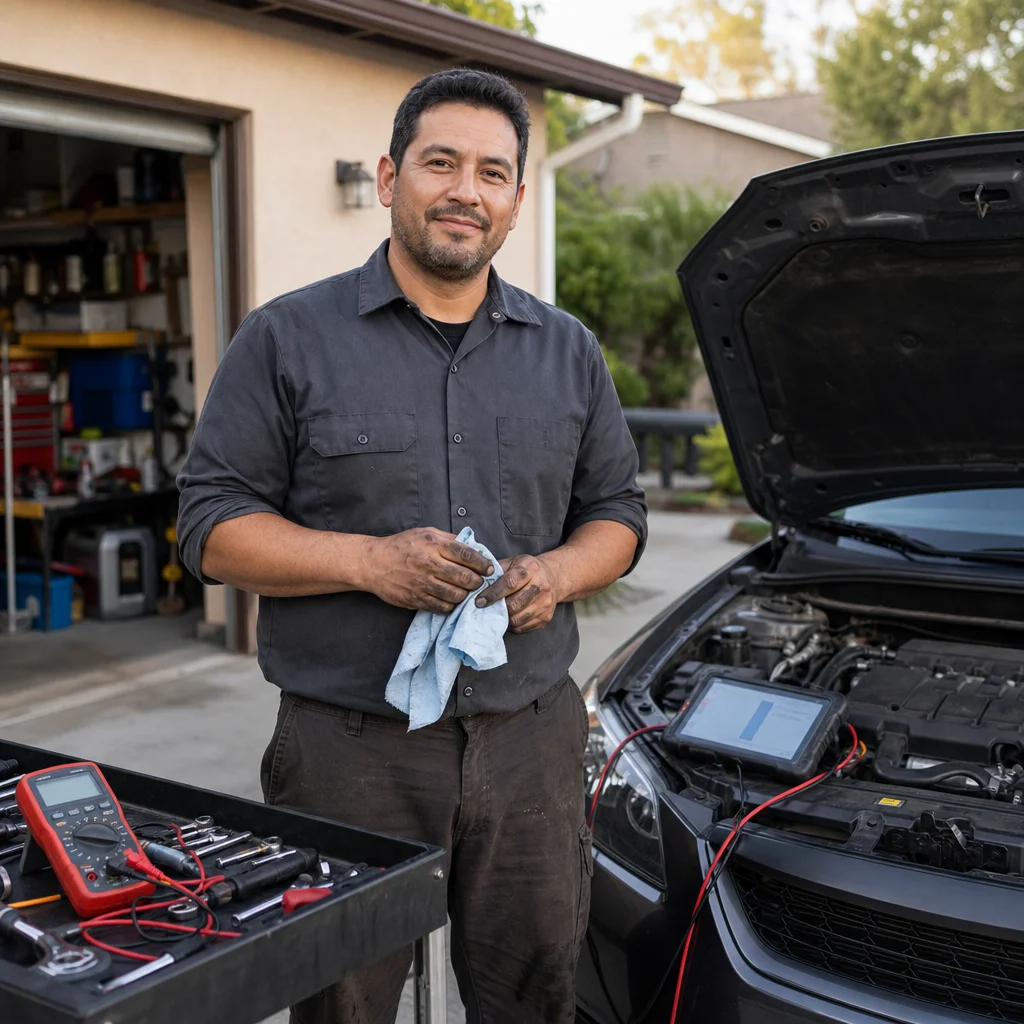
A silent windshield washer pump can make the whole washer system seem faulty, but the pump is only one part of the circuit. Low fluid, frozen fluid, a blocked nozzle, a blown fuse, poor wiring, or a bad ground can all leave you with no spray—and some of these problems are easier to fix than others.
The most useful clue is the sound. When you pull the washer lever or press the washer button, a healthy pump usually makes a quiet whir or buzz. If you hear nothing, start with simple winter and fluid checks before testing voltage at the pump. That approach reduces unnecessary parts replacement and helps you avoid working on a system that is merely frozen.
Start with the easy checks
Confirm the fluid level and condition
Open the washer-fluid reservoir and check the level rather than relying only on the dashboard warning. The reservoir may be hidden behind a fender liner or near a headlamp on some vehicles, but the filler cap is usually marked with a windshield symbol. If the reservoir is empty, add the correct washer fluid and try the system again.
In a cold-winter region, the type of fluid matters. Water or warm-weather fluid can freeze in the reservoir, pump, hoses, or nozzles. A reservoir that looks liquid at the opening can still have an ice blockage farther along the system. Don't assume that adding winter fluid will immediately clear frozen fluid; the existing ice may need time to thaw.
Don't pour boiling water into the reservoir or over the nozzles. A sudden temperature change can damage plastic parts or glass, and water can freeze again when the vehicle returns to cold conditions. Move the vehicle into a heated space when possible, or allow it to warm naturally. Once thawed, remove diluted or unsuitable fluid and refill with a washer fluid rated for the temperatures your vehicle will encounter.
Check the winter rating first: Before testing the system repeatedly, confirm that the washer fluid is rated for your local cold temperatures and that the reservoir, hoses, and nozzles aren't frozen. Vehicle and fluid instructions take priority over general advice.
Look at the nozzles and hose connections
A clogged nozzle usually produces weak spray or no spray, but it doesn't normally make the pump silent. Even so, inspect the nozzle openings for wax, dirt, ice, or dried washer-fluid residue. Check under the hood for a hose that has come loose, split, or been pinched. A disconnected hose can send fluid into the engine compartment while the pump still runs.
If the pump is silent and the nozzles look clear, don't begin by forcing a needle deep into them. That can damage the small passages or change the spray pattern. A soft brush and thawing are safer first steps. If the pump runs but fluid doesn't reach the windshield, the diagnosis shifts toward a blockage, disconnected hose, leaking hose, or frozen line rather than an electrical failure.
Use the sound to divide the diagnosis
Have someone operate the washer control while you listen near the washer-fluid reservoir. Keep the ignition in the position required for the vehicle to operate the washer system, and make sure the vehicle is safely parked. A pump may be mounted low in the reservoir, so the sound can be faint from inside the cabin.
If you hear a clear buzz but get no spray, check for frozen lines, a blocked nozzle, a disconnected hose, or a leaking hose. If you hear nothing at all, concentrate on the fuse, switch signal, wiring, ground, and pump. If the pump runs only when the connector or harness is moved, suspect a loose connector or damaged wiring rather than assuming the motor itself is worn out.
Some vehicles use separate pumps for the windshield and rear window. If the rear washer works but the front washer is silent, that comparison can be useful. It suggests that the vehicle has general power and control-system operation, while the fault may be limited to the front pump, its wiring, or its ground. The exact arrangement varies by vehicle.
Check the fuse before testing the pump
Find the fuse information in the owner’s manual or the fuse-box cover. Look for a label related to the washer, wipers, body control module, or a combined wiper-washer circuit. Don't rely on the fuse’s physical location from another vehicle, even if it is the same model family; equipment and fuse layouts can vary by year and trim.
Remove and inspect the relevant fuse, or test it with a suitable test light or multimeter. Replace a blown fuse only with one of the same type and rating. A larger fuse isn't an upgrade—it can allow wiring to overheat. If the replacement fuse blows immediately or blows again when you activate the washer, stop replacing fuses and investigate the short or have the circuit tested.
A blown fuse is a symptom, not always the complete diagnosis. Freezing can place extra load on a pump, and damaged wiring or a failing pump can also cause excessive current. If the fuse is intact, or a correctly rated replacement fails again, voltage testing will tell you more than repeatedly operating the control.
Test for voltage at the pump
The washer pump is commonly fitted into the lower portion of the fluid reservoir. Access may require removing a wheel, splash shield, undertray, or other trim. Before reaching into that area, switch off the ignition and follow the vehicle’s service instructions. Support the vehicle properly if you must raise it; never rely on a jack alone.
Locate the pump’s electrical connector and identify the terminals without guessing. A wiring diagram or service information is helpful because connector layouts differ. With the connector attached or back-probed as appropriate for the test method, have an assistant operate the washer control while you measure voltage. Use a meter or test light suited to the vehicle’s electrical system.
You’re looking for voltage at the pump during the short period when the washer control is activated. A reading close to the vehicle’s battery voltage generally indicates that the control side is delivering power, although the exact reading can vary with the vehicle and test setup. No voltage points you back toward the fuse, switch or control module, connector, or wiring. Voltage that appears briefly and then disappears may indicate a control strategy, poor connection, or a test made at the wrong terminal, so compare the result with a wiring diagram rather than drawing a conclusion from one reading.
Avoid holding the washer control on for a long time during testing. The pump and circuit are designed for short operation, and prolonged testing can drain the battery or heat a weak component. Keep the connector and exposed terminals dry, and don't pierce insulation unnecessarily; damaged insulation can create a later corrosion problem.
Check the ground, not just the power feed
A pump needs both a usable power supply and a good ground. A voltage reading on the power terminal doesn't prove that current can flow through the pump. Corrosion at the connector, a damaged ground wire, or a poor body-ground connection can leave the pump silent even when power appears to be present.
A voltage-drop test under load is more informative than checking continuity alone. With the washer control activated, measure between the pump ground terminal and a known-good ground point, following the meter manufacturer’s instructions. A significant voltage reading on the ground side suggests unwanted resistance in the ground path. The acceptable limit depends on the vehicle and circuit, so use the service specification when available.
Inspect the connector for green corrosion, moisture, pushed-back terminals, or loose fit. Don't spray an unknown product into the connector and assume the problem is fixed. Clean and repair terminals only with methods suitable for automotive electrical connectors, and replace damaged connectors when necessary.
Decide whether the pump has failed
If the correct voltage reaches the pump while the washer control is activated and the ground path is sound, the pump becomes the leading suspect. A seized motor, worn internal brushes, water damage, or freeze damage can all produce silence. Before replacing it, make sure the pump isn't still frozen and that the connector fits tightly.
On many vehicles, the pump is replaced by draining the reservoir, disconnecting the hose and electrical connector, and pulling the pump from a rubber grommet. Fluid may spill, and access can be awkward. Use a replacement pump that matches the vehicle’s connector, outlet arrangement, and application. A visually similar pump may not fit the grommet or deliver fluid correctly.
If the pump is difficult to reach, the reservoir must be removed, or the circuit is controlled through a body control module, professional help may save time and prevent damage. A shop can test the circuit under load, inspect live control signals where applicable, and confirm the failure before installing a part.
Prevent a repeat failure in winter
Use washer fluid with a freeze protection rating appropriate for your climate, and avoid topping up a winter blend with large amounts of water. Keep the reservoir reasonably full because a small amount of fluid can freeze more quickly and leave the pump exposed to repeated dry operation. If the system freezes, thaw it before repeatedly pulling the washer control.
Clean the outside of the nozzles when washing the vehicle, but don't force debris into their openings. Replace cracked hoses and secure loose hose connections. If the pump works after thawing but repeatedly fails during cold weather, look for diluted fluid, a reservoir or line that holds water, a damaged pump, or a wiring connection exposed to moisture.
A silent washer pump diagnosis is mostly a process of elimination: verify fluid and freezing conditions, listen carefully, check the fuse, then test power and ground at the pump. If power and ground are present but the pump remains silent, replacement is reasonable. If either is missing, continue tracing the circuit instead of installing a pump by guesswork. That sequence is usually the quickest route to a reliable repair and clear windshield in the next cold snap.