How to Diagnose a Car Window That Moves Slowly
I’ll help you separate a weak window motor from dry channels, a binding regulator, low voltage, or a switch and wiring fault—so you can test the likely cause before spending money on parts.
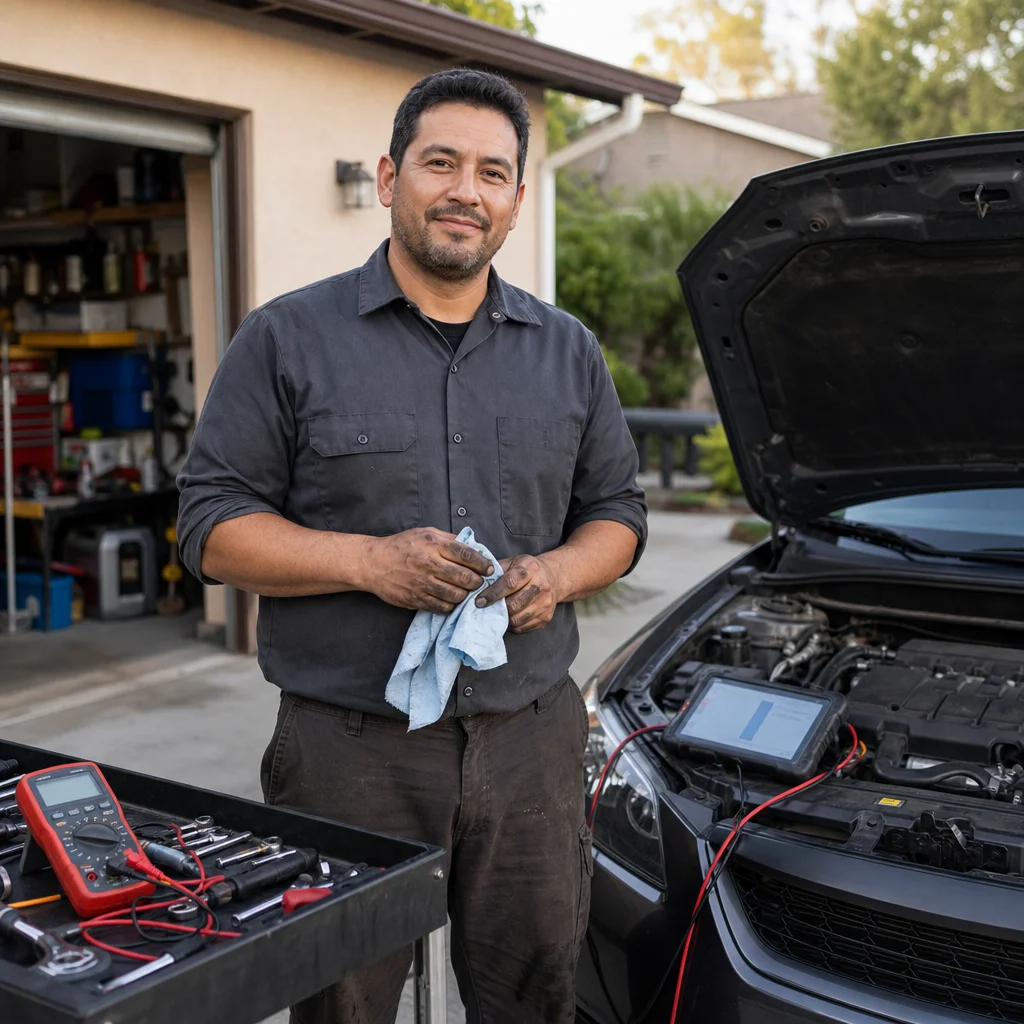
A power window that moves slowly can tempt you to replace the motor immediately. That may solve the problem, but the same symptom can come from dry or damaged glass channels, a regulator that is binding, poor electrical power, or a switch and wiring fault. The useful question isn't simply whether the window is slow; it’s what the window does while it moves.
A few observations and basic tests can narrow the problem before you remove the door panel or order a replacement assembly.
Start with the window’s behavior
Operate the window several times with the engine off, then repeat the test with the engine running. Notice whether it is slow in both directions, slower going up than down, or affected by where the glass is in its travel. Also listen for changes in sound.
A motor that sounds strained but turns steadily often points to mechanical resistance. The glass may be dragging in its channels, or the regulator cables, gears, tracks, or lift arms may be dry, bent, or damaged. A motor that produces a harsh clicking, grinding, or popping sound can indicate a failing regulator or gear mechanism. If the window stops, jerks, or tilts, treat the regulator as a stronger suspect than the switch.
If the window moves at a normal speed in one direction but slowly in the other, mechanical binding is still possible, but the electrical side deserves attention too. Some vehicles use different switch contacts or control paths for upward and downward movement. A weak connection can affect one direction more than the other.
The timing of the symptom matters. A window that became slow gradually is more likely to have increasing friction, worn parts, or a motor losing strength. A window that became slow immediately after electrical work, a battery problem, water intrusion, or a door-panel repair may have a connection or power-supply issue.
Protect the glass and your hands: Keep fingers, tools, and loose clothing away from the window opening. If you remove the door panel, support the glass before loosening regulator fasteners, and follow the vehicle’s service information if the door contains a side-impact airbag.
Compare the easy clues before disassembling anything
Compare the slow window with another window on the vehicle under similar conditions. This isn't a perfect test because each window has a different mechanism and circuit, but it helps establish whether cold weather, a weak battery, or a charging problem is affecting more than one window.
If several windows are slow, test the vehicle battery and charging system before blaming one door. Low system voltage can reduce motor speed, especially with the engine off. A battery that cranks the engine normally can still be weak, and a charging fault can leave the electrical system below its expected running voltage. Use the vehicle manufacturer’s specifications rather than assuming one voltage number applies to every situation.
If only one window is slow, focus on that door. Check whether the glass sits squarely in the opening and whether its upper edge moves evenly into the weather seal. Glass that leans, twists, or rises at an angle is likely meeting resistance. A window that is visibly out of alignment shouldn't be forced, because the glass or regulator can break.
Look at the weather seal and the vertical glass channels. Dirt, hardened rubber, foreign objects, or a channel that has shifted can increase drag. Don't assume that spraying a general-purpose lubricant into the door will fix it. Some products can damage rubber or attract dirt. Use only a lubricant that is suitable for automotive window channels and compatible with the materials, following its label and the vehicle manufacturer’s guidance.
Separate drag from a weak motor
A simple comparison can help, but use it carefully. With the window moving upward, observe whether lightly helping the glass by hand changes its speed. Don't pull hard, twist the glass, or put your hand where it could be pinched. If a small amount of assistance noticeably improves the movement, excessive friction or a tired motor may be involved. The observation doesn't identify the exact part by itself.
If the motor sounds strong but the glass barely moves, slips, or moves unevenly, the regulator may be failing. The motor supplies rotation, while the regulator transfers that motion to the glass. Depending on the design, the regulator may use cables, gears, tracks, or lifting arms. A damaged cable or gear can create resistance even when the motor itself is still capable of turning.
If the motor sounds weak, slow, or labored even when the glass is disconnected from the mechanism, suspect the motor or its electrical supply. This test requires removing the door panel and separating the glass from the regulator, so it isn't the first step for every beginner. A loose glass can fall, and the door may contain wiring or an airbag module. Use the vehicle-specific repair procedure rather than improvising.
A motor that works normally without load but slows badly when connected to the regulator usually faces mechanical resistance. A motor that remains slow without load is more likely worn internally or receiving inadequate voltage or ground.
Check voltage under load, not just at rest
Electrical testing is most useful while the window switch is being operated. A voltage reading at the battery or with the switch untouched may look normal while a damaged wire, corroded connector, poor ground, or failing switch causes a drop under load.
At the window motor connector, a functioning circuit should provide the voltage and polarity required by that vehicle while the switch is pressed. Many power-window systems reverse polarity at the motor to change direction, so the positive and negative sides may swap when you move the window up or down. Other vehicles use a control module or a different arrangement. Consult a wiring diagram or service information for the specific vehicle before interpreting the terminals.
A helpful pattern is a normal voltage at the motor with the switch pressed, combined with a motor that remains slow. That points toward the motor or mechanical assembly. Low voltage at the motor while the switch is pressed points toward the switch, wiring, connector, ground, fuse or circuit protection, or a control module—depending on the vehicle’s design.
You can also compare the voltage at the motor with the voltage at the battery during the same test. A substantial difference suggests voltage loss in the circuit. To locate it, test the power side and ground side separately according to the wiring diagram. A digital multimeter is useful, but connecting it to the wrong terminal can cause a short or damage a control module. If you aren't comfortable identifying the circuit, a professional electrical diagnosis is safer than guessing.
Don't condemn a fuse because the window is slow. A blown fuse usually causes a complete loss of operation, while a poor connection or voltage drop can cause weak operation. A fuse that repeatedly fails indicates a fault that should be found rather than replaced with a higher-rated fuse.
Use the switch and wiring clues
The switch becomes more suspicious when pressing it produces no sound, causes intermittent operation, or works only when you press or hold it in an unusual position. A switch can also develop burned or worn contacts that pass enough current for inconsistent operation but not enough for reliable motor performance.
If the window works from one switch but not another, the motor and regulator are less likely to be the primary problem. For example, a rear window that works from its door switch but not from the driver’s master switch may have a master-switch, wiring, or lockout-control issue. The exact arrangement varies, and a child-safety window lock can intentionally disable some controls.
Wires in the hinge area between the door and the body flex every time the door opens. A broken conductor or damaged insulation there can cause intermittent operation, especially if the window changes behavior when the door is moved. Inspect visible wiring for damage, but don't pull on a harness or pierce insulation casually. Repair methods should maintain the circuit’s protection and flexibility.
Water or corrosion at a connector can create resistance. Look for moisture, green or white corrosion, loose terminals, or evidence that a connector hasn't latched fully. Disconnect the battery or follow the vehicle’s required electrical precautions before disconnecting components, particularly when the door contains an airbag or other safety system.
Decide what is most likely to need repair
You can usually make a sensible first decision from the evidence:
- Slow in both directions, with a strained motor sound: Look for glass-channel friction, regulator binding, or a motor weakening under load.
- Glass tilts, jerks, slips, or makes grinding and popping noises: Suspect the regulator or its mounting before replacing the switch.
- Motor receives proper voltage but turns slowly: The motor or the loaded mechanical assembly is the leading suspect.
- Low voltage at the motor during operation: Investigate the switch, connectors, wiring, ground, fuse connection, or control module.
- Intermittent operation or operation that changes when the door moves: Inspect the door-jamb wiring and connectors.
- Several windows slow at once: Check battery and charging-system condition and shared power or ground points.
Parts aren't always sold separately. Some vehicles use a window motor and regulator that can be replaced independently, while others commonly use a complete assembly. Confirm the part configuration by vehicle identification number and compare the replacement with the original before removing the old unit. A complete assembly may reduce installation work, but it can cost more than the individual failed component.
Know when to stop testing
A professional diagnosis is the better choice when the glass is cracked, the regulator has released the glass, the door contains an airbag you can't safely work around, or electrical testing points toward a control module. Stop if the window binds severely, the motor overheats, wiring becomes hot, or a fuse blows during testing.
For a straightforward case, begin with the behavior check, compare the window with the others, inspect the channels and alignment, and then test voltage at the motor under load if you have the correct wiring information. That sequence keeps you from buying a motor when the real problem is friction—or replacing a regulator when the motor never received adequate power. Once the evidence points to one area, repair that area and retest the window through its full travel before reinstalling the door panel.