Choosing Between a Cordless and Pneumatic Impact Wrench
I’ll help you compare cordless and pneumatic impact wrenches without overlooking the equipment you already own. You’ll see where each option saves money, where it creates extra work, and how to avoid buying a tool that doesn’t fit your garage.
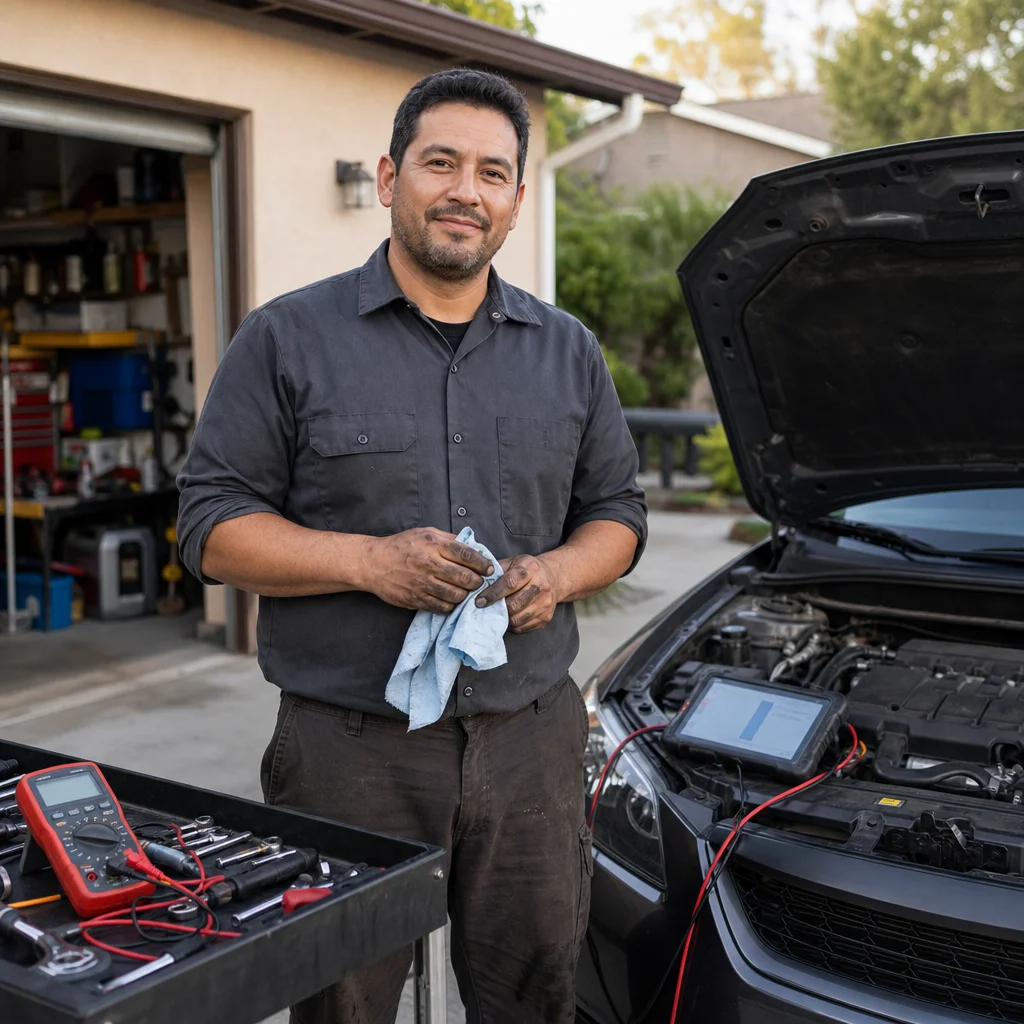
The wrong impact wrench can leave you with an expensive tool that is inconvenient to use. A cordless model may seem costly because of its battery system, while a pneumatic model may look inexpensive until you add a compressor, hose, fittings, and the electrical capacity to run it. The better choice depends less on the tool’s advertised power than on how your garage is equipped and how often you’ll use it.
For most home garage owners, the decision comes down to resource efficiency: which setup gives you useful capability without paying for equipment, storage, noise, or maintenance you won’t need? Both types can remove and install stubborn fasteners, but they fit different working habits.
The basic difference
A cordless impact wrench uses a rechargeable battery to power an electric motor. You pick it up, install a charged battery, select the direction and speed, and work without a hose trailing behind you. The tool’s performance depends on its motor, battery voltage and capacity, electronic controls, and the condition of the battery pack.
A pneumatic impact wrench uses compressed air from a separate compressor. The wrench itself can be relatively compact and mechanically simple, but the complete system includes the compressor, air hose, couplers, fittings, and sometimes an air filter or lubricator. You trade the cordless tool’s self-contained convenience for a tool that can operate continuously as long as the compressor supplies enough air.
Neither design is automatically more powerful in every situation. A large pneumatic wrench paired with an undersized compressor may perform poorly, while a well-designed cordless wrench may handle typical passenger-vehicle work comfortably. Compare complete systems rather than comparing the wrench bodies alone.
When cordless makes better financial sense
Cordless is often the more economical choice when you’re starting with no compressor. The purchase is concentrated in the wrench, battery, and charger. If you already own compatible batteries for other tools, the incremental cost may be much lower, although you should still check whether those batteries provide the capacity and performance the wrench requires.
The absence of a compressor also saves space and setup time. You won’t need to find room for a tank, route an air hose, drain condensation from the tank, or maintain additional fittings. For occasional brake work, tire rotation, suspension repairs, or general fastener removal, those saved resources can matter more than the theoretical advantages of a pneumatic system.
Cordless tools also avoid the hidden cost of making a compressor useful. A compressor that can run a small nailer or inflate tires may not supply enough air for sustained impact-wrench use. If you need to upgrade the compressor, install a dedicated circuit, or buy a longer hose, the original low tool price can become misleading.
The main cordless cost is the battery ecosystem. Batteries wear out, and replacement packs can be expensive. If you use the wrench only a few times a year, a second battery may not be necessary. If you work on several vehicles in one session, however, buying another pack—or waiting for the first one to recharge—affects the tool’s practical value.
When pneumatic earns its keep
Pneumatic becomes more attractive when you already have a compressor that meets the wrench’s air requirements. In that situation, the wrench itself may cost less than a comparable cordless model, and you can use the compressor for blowguns, tire service, air tools, and other garage tasks. The investment is easier to justify when several tools share the same air supply.
A pneumatic wrench can also suit repeated work. There is no battery to recharge between jobs, and the tool can keep operating while the compressor cycles. This doesn't mean every compressor can support unlimited use. The compressor must recover air quickly enough for the work you’re doing, and the hose and fittings must allow adequate airflow.
Pneumatic tools are often lighter than cordless tools because they don’t carry a motor battery pack. That reduced weight can help during long sessions or when you’re working in awkward positions. The hose, however, adds its own inconvenience. It can snag on the vehicle, drag across the floor, or limit how far you can move from the compressor.
If you’re buying a compressor solely to run an impact wrench, calculate the complete cost first. Include the compressor, hose, couplers, fittings, electrical requirements, storage, and routine maintenance. A pneumatic wrench may still be the right answer, but its advantage is weaker when the supporting equipment has to be purchased from scratch.
Check the complete system: Before buying, compare the wrench’s stated air consumption with your compressor’s delivered airflow at the relevant pressure—not just the compressor’s tank size. For cordless tools, confirm that the included battery and charger are compatible with the work you expect to do.
Power, control, and the risk of overdoing it
Impact wrenches are useful for loosening tight fasteners, but their power can also create problems. A tool that removes a stubborn lug nut easily can damage a fastener, stretch a stud, break a bolt, or make later removal more difficult if you use it carelessly during installation.
Cordless models commonly offer multiple speed or power settings, a variable trigger, and electronic modes for fastening. These controls can make it easier to approach a fastener gently, particularly when the tool includes a low-power setting. Pneumatic tools can also be controlled with the trigger, regulator, or tool adjustment, but the exact feel varies by model and air supply.
Don't treat an impact wrench’s maximum torque rating as a tightening specification. Ratings are affected by test conditions, battery state, air supply, fastener condition, and the time spent impacting. Use the wrench to run a fastener down carefully when appropriate, then finish with a calibrated torque wrench wherever the vehicle manufacturer specifies a torque value.
For lug nuts and other safety-related fasteners, this distinction is especially important. An impact wrench can be convenient for removal and for initial snugging, but final tightening should follow the vehicle’s service information and the fastener manufacturer’s requirements. If you’re unsure whether a fastener is intended for impact-tool use, stop and check the relevant repair information.
Noise, maintenance, and garage comfort
A pneumatic setup usually produces more noise overall because you hear both the impact wrench and the compressor cycling. The compressor can also create vibration and transmit sound through the floor or walls. That may matter if your garage is attached to your home or close to neighbors.
Cordless operation is generally quieter and cleaner in the sense that there is no air hose and no need to add pneumatic-tool oil. It still produces impact noise, so hearing protection remains sensible, especially during repeated use. Keeping the tool clean and storing batteries according to the manufacturer’s instructions are the main routine concerns.
Pneumatic equipment needs more attention. Depending on the tool and manufacturer’s instructions, you may need to lubricate the wrench, inspect the hose and couplers, drain moisture from the compressor tank, and check for air leaks. These tasks aren’t difficult, but they consume time and can reduce performance when neglected.
A leaking coupler or undersized hose can make a pneumatic wrench feel weak even when the wrench itself is capable. Replacing poor fittings may improve the system, but that is another cost to include when comparing options.
Portability and everyday convenience
A cordless impact wrench is the easier tool to take outside, move between vehicles, or use in a driveway. There’s no need to transport a compressor or connect a hose. That portability can make the tool more likely to be used for small jobs, which improves its value over time.
Pneumatic tools are less convenient away from the compressor, though a portable compressor can change that calculation. Portable compressors introduce their own limits in weight, noise, recovery time, and available airflow. They may be suitable for short tasks but frustrating for repeated impact work.
Cordless convenience has one predictable failure point: the battery. A battery that is discharged, cold, damaged, or near the end of its service life can leave you without the expected performance. Keep track of charge levels before beginning a job, and don’t rely on an impact wrench as the only way to remove a fastener that could become difficult.
Match the tool to your garage
Choose cordless first when you want a compact, mobile setup, don’t already own a capable compressor, and expect occasional or moderate automotive work. It is usually the simpler purchase because the tool contains its power source and requires fewer accessories. The cost is easiest to control when you already own batteries in the same product family.
Choose pneumatic when you already have a compressor with adequate delivered airflow, expect extended sessions, value a lighter tool, or plan to build a broader air-tool setup. Its lower wrench price can be meaningful when the rest of the system is already in place. If the compressor is small or shared with several tools, make sure it can keep up rather than assuming a large tank alone solves the problem.
If your work is limited to occasional wheel removal and basic repairs, you may not need the most powerful model in either category. A midrange tool with useful control settings, readily available replacement parts or batteries, and a comfortable grip can be a better long-term purchase than a high-output tool that spends most of its life in storage.
The most economical choice is the one that avoids duplicate equipment and gets used regularly. Look at your existing batteries, compressor, electrical supply, storage space, noise tolerance, and typical repair schedule. Then compare the total working setup—not just the price printed on the wrench box. For many home garages, that points to cordless. For a garage already organized around compressed air, pneumatic may deliver more value with less additional spending.