How to Check a Car’s Oil Level on a Sloped Driveway
I’ll explain how a sloped driveway, engine temperature, and small dipstick mistakes can distort an oil reading. You’ll learn when to move the car, how to check it more reliably, and what to do when level ground isn’t available.
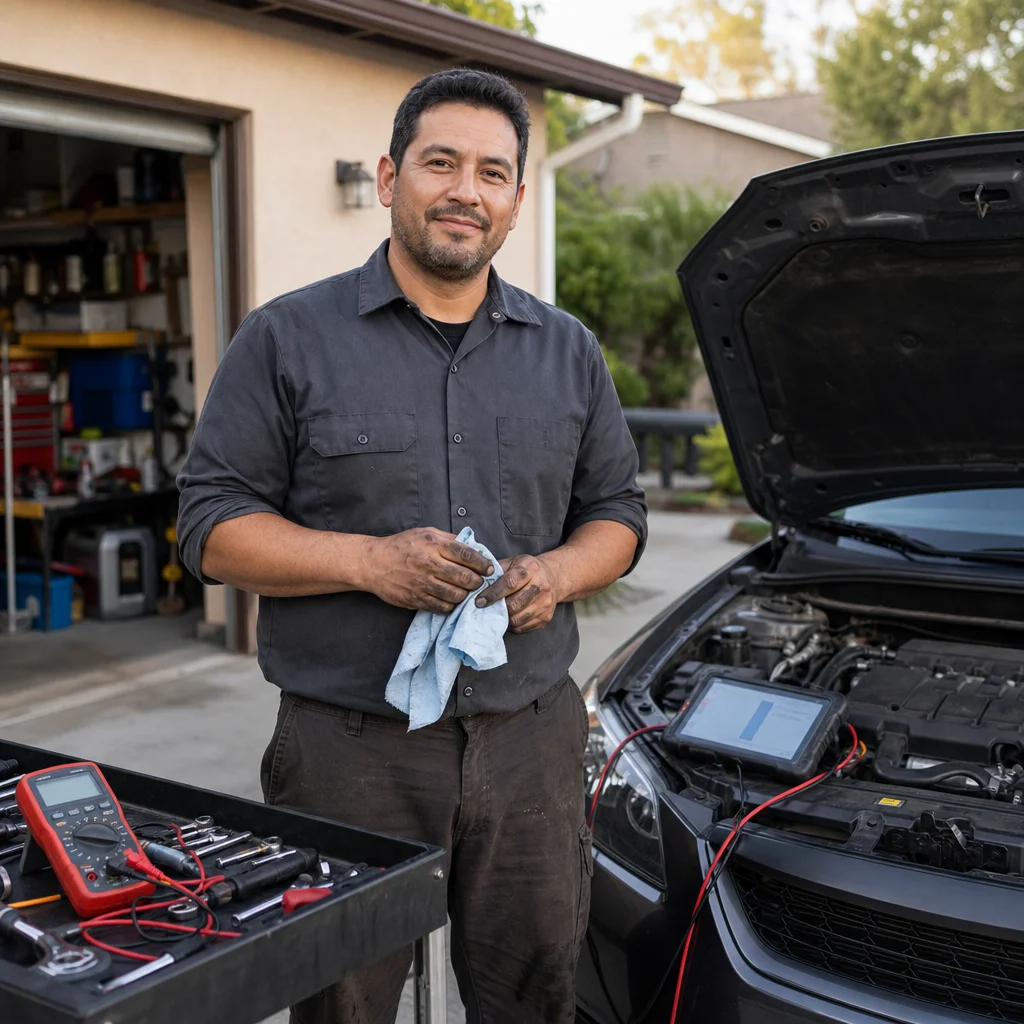
A dipstick reading is only useful if the oil has had time to settle in the oil pan and the vehicle is sitting in a reasonably level position. On a sloped driveway, those conditions can work against you, making the oil appear higher or lower than it really is. Adding oil based on that reading can leave the engine underfilled—or create an overfill problem.
The safest approach is to use level ground whenever possible. If that isn’t practical, you can still make a cautious assessment, but you should treat a reading on a slope as approximate rather than exact.
Why a sloped driveway changes the reading
Engine oil collects in a reservoir called the oil pan. The dipstick reaches into that pan, and its markings are calibrated for the vehicle sitting in the position specified by the manufacturer—normally on level ground. When the car is angled, the oil moves toward one end of the pan instead of forming an even surface around the dipstick.
The direction of the slope matters, but there isn’t one universal rule that tells you whether the reading will always be too high or too low. The location of the dipstick, shape of the oil pan, and direction the vehicle is facing all affect the result. On one car, parking nose-up may make the dipstick show less oil; on another, the difference may be smaller or reversed.
Even a modest incline can matter when the oil level is close to the minimum or maximum mark. A sloped reading may be good enough to suggest that the engine is seriously low, but it isn’t a sound basis for adding a precise amount of oil.
Check your vehicle’s measuring instructions: The owner’s manual may specify whether to check the oil cold or after the engine has been shut off for a particular number of minutes. Follow that procedure over general advice, especially if your vehicle has an unusual dipstick, a dry-sump system, or an electronic oil-level display.
The most reliable way to check the oil
If you can, drive or roll the vehicle to a level location before checking it. A flat section of pavement, a level garage floor, or another safe, legal parking area is preferable to trying to compensate for the driveway angle. Avoid parking on a roadway or other location where you could be struck by traffic while working around the vehicle.
Once the vehicle is in position, apply the parking brake and switch off the engine. If the engine has just been running, wait for the period specified in the manual. This gives oil in the upper parts of the engine time to drain back into the pan. Some vehicles are checked after a short wait with the engine warm, while others are best checked cold. The manual’s procedure is the deciding factor.
Then follow this sequence:
- Open the hood and locate the engine-oil dipstick. It often has a brightly colored handle, but don’t rely on color alone if you’re unfamiliar with the engine bay.
- Pull the dipstick out and wipe it completely clean with a lint-free rag or paper towel.
- Push the dipstick all the way back into its tube. If it has a locking or twisting handle, seat it as designed.
- Remove it again and hold the tip level. Look at both sides of the marked area, since oil can smear as the dipstick passes through the tube.
- Identify where the oil reaches between the low and full marks. If the level is within the marked range, don’t add oil simply because the dipstick looks damp higher up the shaft.
The space between the low and full marks often represents a meaningful quantity of oil, but the exact amount varies by engine. Don’t assume that one mark equals a specific volume unless your manual says so. If the level is low, add a small amount of the correct oil, wait briefly for it to drain, and check again. Adding several large pours at once makes it easier to overshoot the full mark.
What to do if level ground isn’t available
Start by deciding whether you need an exact level or only a warning about a potentially serious problem. If the dipstick is completely dry, or the oil is far below the low mark even on the slope, the engine may be dangerously low. Don’t continue driving normally while ignoring that result. Confirm the vehicle’s required oil type and add oil cautiously, or arrange professional help if you’re unsure why the level is so low.
If the oil appears just below the low mark on a steep driveway, don’t immediately pour in enough oil to reach the full mark. The slope may be creating the apparent shortage. Move the car to level ground and repeat the check when you can. If moving it isn’t possible, consult the manual for any manufacturer-specific method and use the sloped reading only as a rough indication.
You may be able to use a nearby level surface, such as a flat part of a garage or a safe private parking area. Keep the engine off while you check, and make sure the vehicle is stable. Don’t place yourself underneath the car to judge the angle, and don’t drive onto makeshift ramps, boards, or unstable surfaces just to create a flatter position. Those workarounds add a risk that isn’t justified by a routine oil check.
If the driveway is steep enough that you’re concerned about the vehicle rolling, skip the check there. A reading isn't worth working around an unstable car. Have another person help you identify a safer location or ask a repair shop to check the level.
Engine temperature and timing
Temperature affects the reading in two ways. First, oil expands as it warms, so a warm reading can differ from a cold reading. Second, oil that has circulated through the engine needs time to drain back into the pan. Checking immediately after shutting the engine off can therefore make the level look lower than it is.
That doesn’t mean you should always check the oil cold. Some manufacturers specify a warm engine followed by a waiting period because that produces the intended measurement for that engine. Others provide a cold-check procedure. Use one method consistently rather than comparing a warm reading with a cold reading and treating the difference as an oil loss.
Hot engine components can also burn you. Keep your hands, clothing, and the dipstick away from belts, fans, and other moving or hot parts. If you’re checking after driving, give the engine enough time to cool for safe handling while still following the vehicle’s measurement instructions.
Common dipstick mistakes
A dipstick can give a confusing result even when the vehicle is level. Pulling it out quickly can smear oil up the shaft. Leaving it out while the engine runs, failing to reinsert it fully, or reading oil that has collected on only one side can all lead to a poor judgment. Wipe it, seat it fully, remove it steadily, and compare both sides of the marked tip.
It’s also easy to mistake residue for the actual level. The oil should form a clear wet line within the crosshatched or marked area. If the oil is very clean and difficult to see, use bright natural light or angle the dipstick carefully rather than adding oil based on a guess.
Don’t confuse the engine-oil dipstick with another fluid-level component. Automatic transmissions, when equipped with a serviceable transmission dipstick, use a different procedure and fluid. If you can’t positively identify the engine-oil dipstick, check the manual before removing anything.
Finally, never treat an overfull reading as harmless. Too much oil can cause the crankshaft to whip the oil into foam or increase pressure and leakage in some engines. If you accidentally add too much, have the excess removed rather than relying on the vehicle to consume it.
When a low reading needs more attention
A low level after a correct check may simply mean the engine needs a small top-up, but repeated loss points to a problem. Look for fresh oil beneath the vehicle, oily areas around the engine, a burning-oil smell, blue exhaust smoke, or warning messages. A red oil-pressure warning is more urgent than an ordinary low-level reminder: shut the engine off as soon as it is safe and seek assistance.
If the dipstick level changes dramatically between checks, oil appears milky or heavily contaminated, or you’re not sure which fluid or oil specification the engine requires, stop guessing. A mechanic can identify leaks and internal problems that a driveway check can't.
The practical rule is simple: check on level ground whenever possible, follow the vehicle’s temperature and waiting instructions, and add oil in small amounts only after you have a trustworthy reading. A sloped driveway can tell you that the level may deserve attention, but it shouldn't be used to fine-tune the oil level up to the full mark.