How to Check for a Loose Tie Rod End
A loose tie rod end can look like a minor wheel issue, but it affects steering safety. I’ll explain the first checks you can make, what the results mean, and when driveway testing isn't enough.
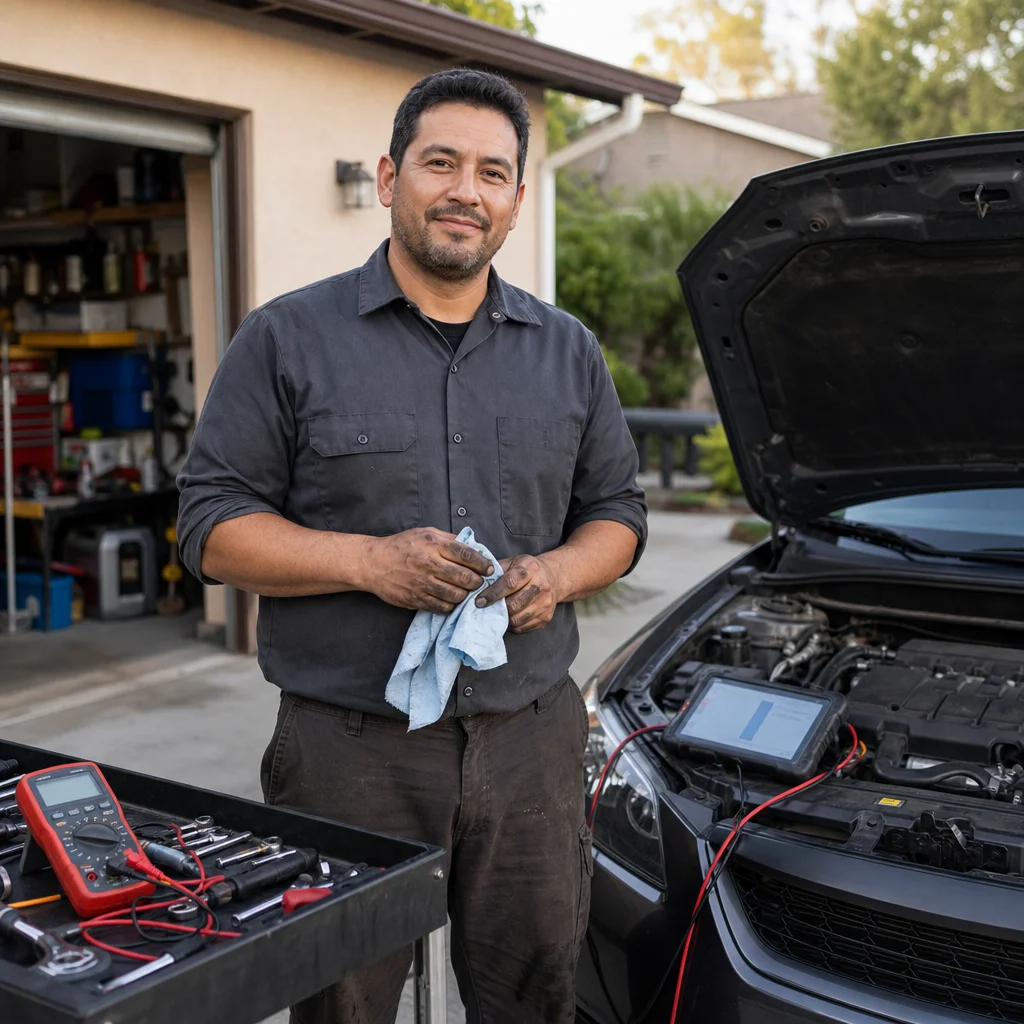
Tie rod ends connect the steering linkage to the steering knuckle, allowing the front wheels to turn when you move the steering wheel. When one develops excessive play, you may notice vague steering, uneven tire wear, clunking, or a vehicle that wanders. In serious cases, a damaged steering joint can separate and leave that wheel difficult or impossible to control.
You can perform a few useful checks at home, but they are screening tests rather than a final diagnosis. A tie rod end can feel loose for more than one reason, and some problems require a mechanic to inspect the joint while watching the steering components move.
Start with symptoms, not the wheel test
Pay attention to changes that happen while driving. Steering that feels less precise than usual, a need to make constant small corrections, or a front end that seems to follow road grooves can point to looseness somewhere in the steering or suspension. These symptoms can also come from worn tires, incorrect tire pressure, alignment problems, ball joints, wheel bearings, or other steering parts.
A clunk when turning the wheel at low speed is another reason to investigate, especially if it is accompanied by visible movement at a steering joint. Look at the front tires as well. Feathered tread, wear concentrated on one edge, or a steering wheel that no longer sits straight may indicate an alignment or steering issue, though none of these proves that a tie rod end is loose.
Don't rely on the absence of noise. A worn joint may have noticeable play without making a clear sound, and road noise can hide a clunk. Treat a sudden change in steering feel more seriously than a long-standing, mild symptom.
Make the vehicle safe before checking
Park on a firm, level surface away from traffic. Set the parking brake, place the transmission in Park or in first gear for a manual transmission, and turn the ignition off. Chock the wheels that will remain on the ground.
For an initial check, you may be able to inspect the steering parts with the vehicle resting on the ground. If you need to raise the front, use the lifting points specified for your vehicle and support it with properly rated jack stands. Never work beneath a vehicle supported only by a jack, and keep your hands clear of areas where a wheel or suspension component could move unexpectedly.
Confirm your vehicle’s lifting points: Before raising the front end, check the owner’s manual or a reliable service source for the correct jack and stand locations. Vehicle construction varies, and a convenient-looking point may damage the car or fail to support it safely.
Turn the front wheels so you can see the outer tie rod ends. Use a flashlight to inspect the rubber dust boot, the threaded adjustment section, the castle nut or other retaining hardware, and the area where the joint attaches to the steering knuckle. Cracked or split rubber matters because it allows water and grit into the joint, but a damaged boot alone doesn't tell you how much wear has developed inside.
Look for a missing nut, a loose-looking fastener, a cotter pin that is absent or improperly installed, or fresh grease and dirt around a torn boot. Don't assume that tightening a visible nut will repair the joint. Some nuts secure the stud to the knuckle, while the threaded sleeve and jam nut establish the adjustment; changing that adjustment can affect toe alignment.
Check for play with the wheel off the ground
A common screening test is the 3-and-9 o’clock wheel check. With the front wheel lifted safely and supported, grasp the tire at the left and right sides, roughly where the 3 and 9 o’clock positions would be. Gently rock the wheel in and out while feeling and listening for looseness.
A small amount of movement can come from several sources, including an outer tie rod end, an inner tie rod joint, a steering rack mount, or a wheel bearing. The test can also produce misleading results if the steering is unlocked and another component moves at the same time. The important question isn't simply whether the tire moves; it is where that movement originates.
Have a helper rock the wheel while you watch the outer tie rod end. Place a finger lightly on a safe, stationary part of the joint or nearby steering linkage—not between moving parts—and observe the stud, housing, and steering knuckle. A worn outer tie rod end may show the stud moving in the joint housing or a delay between the wheel’s movement and the knuckle’s response. A torn boot, clunk, or clearly visible joint movement is a strong reason to stop testing and arrange an inspection.
Don't put your hand around the joint while someone turns the steering wheel or rocks the tire forcefully. The linkage can pinch fingers, and a suspended wheel can move abruptly. If you can't see the source of the play, don't try to diagnose it by increasing the force.
Separate tie rod play from other faults
The same 3-and-9 o’clock movement can indicate an inner tie rod problem rather than an outer tie rod end. The inner joint is closer to the steering rack and may be hidden by a bellows boot. If the outer joint appears tight but the steering linkage moves farther inboard, the problem may require a lift, additional access, or professional diagnosis.
A 12-and-6 o’clock check can help identify possible ball-joint or wheel-bearing movement, although it isn't a definitive test. If the wheel moves in several directions, or if there is a rough grinding sensation as you rotate it, more than one problem may be present. Compare the two front sides, but don't assume the side with the greater movement is the only issue.
You can also ask a helper to move the steering wheel a small amount from side to side while you observe the linkage with the vehicle on the ground. This may reveal slack in the steering system, but it isn't a substitute for the wheel test or a hands-on inspection. Keep clear of the tires and all pivot points, and use only small steering movements.
A professional inspection is especially important when the symptoms are severe, the source of play is unclear, or the vehicle has recently struck a curb, pothole, or other object. Steering and suspension components work together, so replacing a tie rod end without checking the rest of the system can leave the actual problem unresolved.
Know when not to drive
Don't continue normal driving if you see a tie rod end separating from its seat, a missing or loose retaining fastener, substantial wheel movement, a steering wheel that suddenly becomes very loose, or a wheel that doesn't respond normally to steering input. A vehicle with a suspected serious steering fault should be parked and evaluated rather than test-driven on public roads.
Even when the vehicle still feels controllable, avoid high speeds, heavy traffic, and unnecessary trips until the problem is assessed. If a joint is visibly damaged or the steering response is abnormal, arrange mobile assistance or a tow. The cost and inconvenience of moving the vehicle safely are small compared with the consequences of a steering failure.
Decide whether the car should move: If you’ve found clear play, damaged retaining hardware, a torn joint with abnormal movement, or suddenly changed steering behavior, have a qualified technician assess it before driving farther. Your vehicle manual and local inspection rules may also set requirements for steering repairs and post-repair checks.
What happens after a worn tie rod end is confirmed
An outer tie rod end is often replaceable as an individual part, but the replacement changes the effective length of the steering linkage. A mechanic will normally check alignment afterward, and an alignment is commonly needed even if the new part is installed using measurements from the old one. Measurements can help preserve the previous setting during assembly, but they don't replace a proper alignment check.
The technician should inspect the matching tie rod end, inner joints, boots, steering rack mounts, ball joints, wheel bearings, tires, and any parts affected by an impact. If the joint is damaged, replacing only the visibly worn piece may be appropriate; if several components are worn, a broader repair plan may prevent repeated labor and another alignment.
If you decide to perform the repair yourself, use a part that matches the vehicle and follow the service information for torque values, retaining hardware, and any required procedure. Don't reuse a one-time-use nut or omit a cotter pin when the design calls for one. Afterward, the steering wheel shouldn't be treated as “close enough” simply because the car drives straight around the block.
Checking for a loose tie rod end is useful because it can identify a potentially serious steering problem early. The safest approach is to inspect for obvious damage, perform only controlled movement checks, and focus on locating—not forcing—the source of any play. If the result is uncertain or the steering has changed significantly, stop there and have the vehicle inspected before putting more miles on it.