When Is a Cheap Code Reader Good Enough for Your Car?
A cheap code reader can reveal a useful starting point—or leave important systems invisible. I’ll help you match a basic reader, enhanced scanner, or professional diagnostic tool to the job, your vehicle, and the risk of guessing wrong.
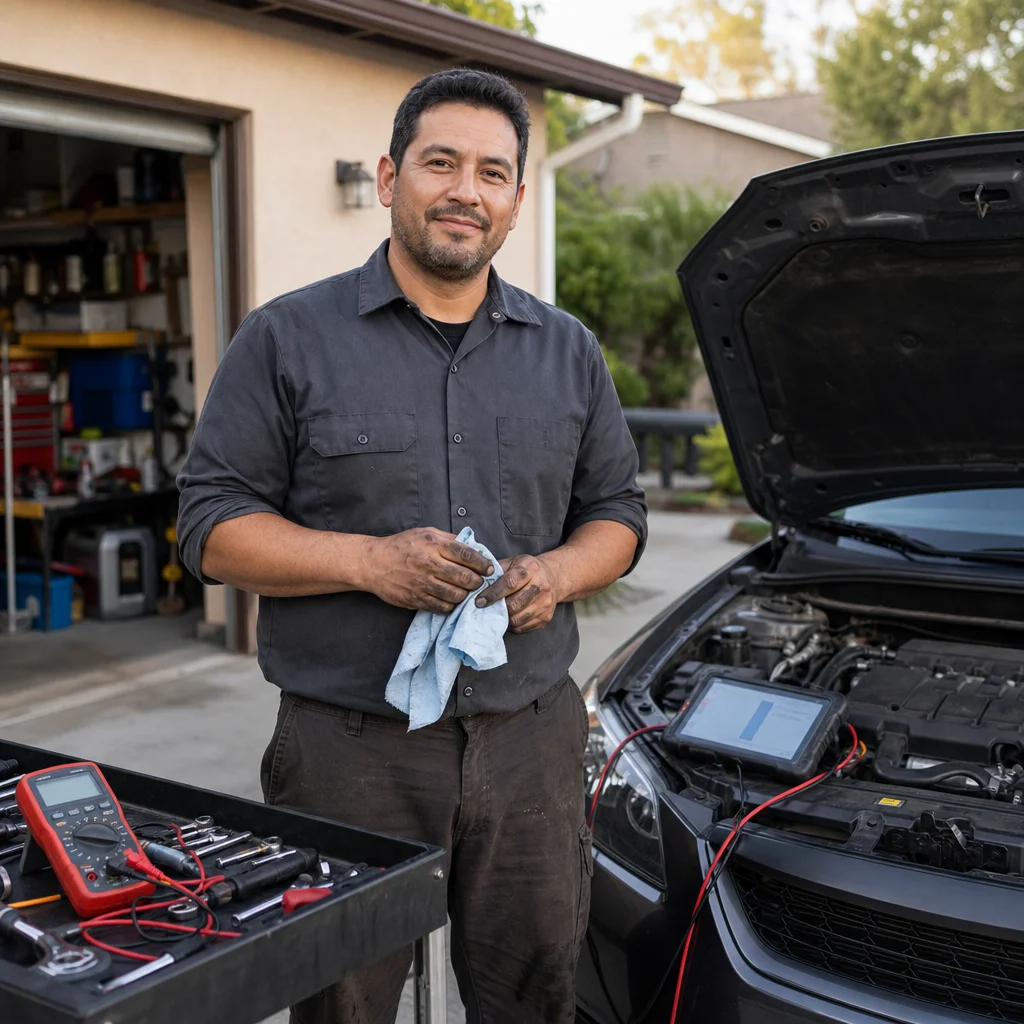
A cheap code reader can be good enough when you need to retrieve a basic engine fault code and decide what to investigate next. It isn’t automatically enough to diagnose the problem, communicate with every control module, or prove that a repair has worked. The sensible choice depends less on the scanner’s feature count than on the task in front of you.
What a cheap code reader can do well
Most inexpensive readers plug into the vehicle’s OBD-II diagnostic connector and communicate with the powertrain control system. On a compatible vehicle, they can usually display generic diagnostic trouble codes, show a plain-language description, and clear the check-engine light. Some also display live data, such as engine speed, coolant temperature, throttle position, or oxygen-sensor readings.
That makes a basic reader useful for an initial check. If the check-engine light is on, you can retrieve the code before buying parts or visiting a repair shop. You can also use the information to decide whether the vehicle seems suitable for a short trip or whether it needs immediate attention. A code such as an evaporative-emissions leak code may point you toward a loose fuel cap or a more involved leak test, while a misfire code may justify stopping sooner if the engine is running badly.
The code is a clue, not a verdict. A code for an oxygen-sensor circuit doesn’t necessarily mean the sensor itself has failed. The cause could be damaged wiring, a blown fuse, an exhaust leak, an intake problem, or a fuel-control issue. A cheap reader can help you start the investigation, but it generally can’t replace testing with a multimeter, pressure gauge, smoke machine, or service information.
A basic reader is often the right purchase when you want to:
- Read and record check-engine codes before seeking a repair estimate.
- Check a used car for stored or pending powertrain codes.
- View a small selection of standard live data.
- Confirm that a code has returned after a repair.
- Keep a simple emergency tool in the vehicle.
If that is all you need, spending several hundred dollars may not improve your decision. A straightforward reader with a clear screen and reliable compatibility can be more useful than a complicated device you don’t understand.
When an enhanced scanner earns its cost
Enhanced scanners sit between a basic code reader and professional equipment. Depending on the vehicle and tool, they may access manufacturer-specific codes or additional modules such as the transmission, airbag, anti-lock brake, body, or all-wheel-drive systems. Some support service functions, graph live data, record data during a drive, or provide better code definitions and repair information.
This middle category is useful when the fault clearly goes beyond the engine and emissions system. An illuminated ABS warning, for example, may not produce any useful information on a very cheap reader. An enhanced scanner may identify a wheel-speed sensor circuit, hydraulic-control fault, or communication problem. That still doesn’t complete the diagnosis, but it can prevent you from treating a brake-system warning as though it were an ordinary check-engine issue.
Enhanced tools are also more useful for intermittent faults. A device that graphs sensor readings or records data can help you spot a signal that drops out while driving. Freeze-frame information—the operating conditions recorded when a fault set—can provide context that a simple code display may omit. These features matter when the problem appears only during cold starts, acceleration, hot weather, or a particular road speed.
You might choose an enhanced scanner if you regularly maintain more than one vehicle, work on newer vehicles with many networked modules, or want to perform routine service resets that your car supports. However, functions such as electronic parking-brake service mode, battery registration, steering-angle calibration, or diesel aftertreatment procedures vary widely. A scanner listing a function doesn't guarantee that it will work on your exact year, model, engine, and module.
What professional diagnostic equipment adds
Professional equipment is valuable because it combines broader vehicle access with deeper testing and better support. A shop-level scan tool may communicate with nearly every module, display manufacturer-specific data, run active or bidirectional tests, and carry out certain relearn or programming procedures. Bidirectional control allows the technician to command a component—such as a cooling fan, fuel pump, solenoid, or actuator—to operate while testing the system.
That ability can shorten diagnosis. If a technician can command a fan on and confirm that the control side works, the next test may focus on the motor, power supply, or wiring. A basic reader can report that a fault exists; professional equipment and related test instruments can help isolate why it exists.
Professional tools still don’t make diagnosis automatic. The technician needs wiring diagrams, specifications, test equipment, technical service information, and experience interpreting results. Some repairs also require secure manufacturer access, software subscriptions, or online programming. For a one-time home repair, renting or paying for diagnosis may be more economical than buying access to capabilities you rarely use.
Match the tool to the problem
Start by identifying what you’re trying to decide. If the question is, “Why is my check-engine light on, and can I bring useful information to a mechanic?” a cheap reader is usually sufficient. Record the exact code, whether it is stored or pending, and any freeze-frame data before clearing anything.
If the question is, “Why are my ABS and traction-control lights on?” look for a scanner that explicitly supports those systems on your vehicle. Don’t assume that a large color screen or a high price means the tool can access them. Compatibility lists are more important than general marketing claims.
If the task involves an airbag warning, an intermittent network fault, a no-start condition, advanced driver-assistance calibration, module programming, or a repair requiring an active test, professional help becomes more attractive. These systems can affect safety or immobilize the vehicle if handled incorrectly. The cheapest scanner may provide no information at all, and an incomplete result can create false confidence.
Check compatibility before ordering: Confirm the scanner’s coverage for your vehicle’s year, make, model, engine, and affected system. Also check whether the advertised functions require a subscription, a separate cable, a phone connection, or an additional purchase.
Mistakes that make any scanner less useful
The most common mistake is replacing the part named in the code without testing the surrounding system. Treat the code as a description of the fault detected by a control module, not as a shopping list. Inspect connectors, wiring, fuses, hoses, grounds, and related components before spending money on a sensor or actuator.
Another mistake is clearing codes too early. Clearing them can erase freeze-frame information and reset emissions readiness monitors. Afterward, the vehicle may need a mixture of city and highway driving before the monitors run again, and some inspection programs won’t accept a vehicle with too many monitors incomplete. The exact requirements vary by jurisdiction and can change, so check your local inspection rules before clearing codes when an emissions test is approaching.
A reader can also miss a problem when no warning light is present. Some faults are stored in modules a basic tool can't access, while others are mechanical, intermittent, or not monitored continuously. A vehicle can have a worn suspension component, weak battery, low fluid level, or failing fuel pump without producing a code that a scanner can retrieve.
Finally, don’t perform a road test while staring at a handheld scanner. Set up the equipment securely, use a passenger when possible, or record data for later review. Keep clear of moving parts and hot components when connecting equipment under the hood, and stop troubleshooting if the vehicle has unsafe braking, steering, severe overheating, smoke, or a flashing check-engine light.
A sensible buying strategy
For occasional checks, buy the least expensive reputable reader that supports the standard powertrain information your vehicle uses. Favor clear code displays, dependable connection, update support, and a return policy over a long list of obscure functions. A phone-based reader can be convenient, but it adds another possible failure point: app compatibility, Bluetooth pairing, operating-system support, or a subscription.
If you maintain several vehicles or expect to work on ABS, airbag, transmission, or body-system faults, an enhanced scanner may offer better value. Confirm coverage before purchase rather than assuming that the same capabilities apply across all vehicles. A tool that works well on one car may have limited access to another.
For a difficult or safety-related fault, use the scanner you already have to gather information, then consider professional diagnosis. Bring the codes, symptoms, when the problem occurs, recent repairs, and any test results. That preparation can reduce duplicated work without asking a cheap tool to do a professional tool’s job.
The practical answer is simple: a cheap code reader is good enough for basic powertrain code retrieval and an informed first step. It becomes the wrong tool when you need access to another module, reliable data under changing conditions, active component tests, programming, or a safety-critical diagnosis. Choose according to the decision you need to make, and spend more only when the task requires more.