What to Maintain on a Car That Is Driven Only on Weekends
A weekend-only car can look neglected even when its mileage stays low, because time parked creates its own maintenance problems. I’ll explain how to protect the battery, tires, fluids, brakes, and body without maintaining the vehicle as if it were driven every day.
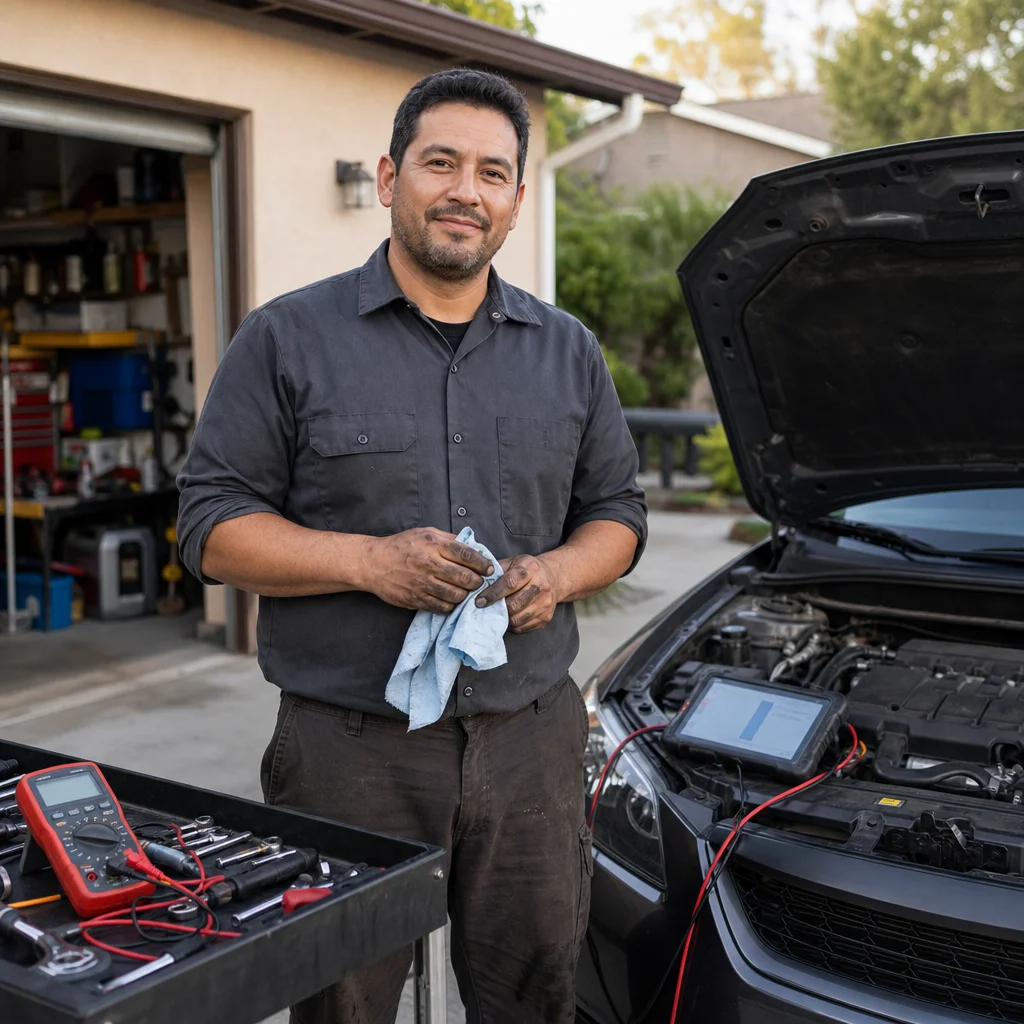
A car that only comes out on weekends may seem easy to maintain: change the oil occasionally, fill the tank, and drive it when the weather is good. The problem is that low mileage doesn't prevent every kind of wear. A vehicle can develop a weak battery, flat-spotted tires, rusty brakes, stale fuel, or moisture-related corrosion while it sits.
The right approach isn't to service everything more often. It’s to separate time-based maintenance from mileage-based maintenance, then give extra attention to the components affected by long periods of parking.
Start with the maintenance schedule, not the odometer
Your owner’s manual usually gives service intervals in both miles and time. Follow whichever limit comes first. This matters for items such as engine oil, brake fluid, coolant, transmission fluid, belts, filters, and some timing-belt systems. Fluids and rubber components can age even when the car travels very little.
Low mileage may let you postpone certain wear-related replacements, such as tires based solely on tread depth or brake pads based solely on use. It doesn't automatically justify postponing a time-based service. A car driven 1,000 miles a year can still need an oil change, inspection, or fluid replacement when the calendar says it does.
Keep a simple record of the date, mileage, and work completed. For a weekend vehicle, dates are often more useful than mileage for remembering what is due. Check the manual for the exact interval, since specifications vary by vehicle, engine, climate, and service history.
Check your car’s time limits: Before stretching an interval because the mileage is low, compare the date-based and mileage-based requirements in the owner’s manual. Confirm any special requirements for an older, high-performance, diesel, hybrid, or stored vehicle.
Battery care is usually the first priority
A parked car still consumes a small amount of electricity for its alarm, computer modules, keyless-entry system, and other features. Over several weeks, that draw can discharge the battery. Repeated deep discharges shorten battery life and can leave you with a car that won’t start on the one day you need it.
If the car is parked at home and you have a suitable electrical outlet, a smart battery maintainer can be useful. It monitors the battery and supplies a controlled charge rather than continuously forcing power into it. Use a charger designed for your battery type, follow its instructions, and keep the connections secure and away from moving or hot parts.
A maintainer isn’t a substitute for a failing battery. If the battery repeatedly loses charge, becomes swollen, leaks, or struggles to start the engine, have the battery and charging system tested. Alternators are designed to maintain a healthy battery while driving; a short weekend trip may not replace the energy used during a long period of parking.
Disconnecting the battery can prevent some drain, but it may erase learned settings, disable alarms, or require electronic systems to be reset. On some vehicles, disconnecting power can also create problems with power windows, radios, steering systems, or other modules. Check the manual before choosing that approach.
Tires need attention even when they barely wear
Inspect the tires for correct inflation, cracking, bulges, cuts, and objects in the tread. Tires lose pressure gradually while parked, and underinflation increases heat and sidewall flex when you finally drive. Use a reliable gauge and check pressure when the tires are cold. The recommended pressure is normally on the driver’s doorjamb label or in the owner’s manual, not on the maximum-pressure marking molded into the tire sidewall.
Long-term parking can also create temporary flat spots. These may cause vibration for the first several miles after the car moves, particularly in cold weather or with older tires. If the vibration persists after the tires warm up, have the tires, wheels, and suspension checked rather than assuming it’s harmless.
Look at tire age as well as tread depth. Rubber deteriorates with time, sunlight, heat, and storage conditions. Cracks between tread blocks or on the sidewalls are reasons to seek a professional inspection. The replacement age recommendation can vary by tire maker and vehicle use, so check the tire manufacturer’s guidance and inspect older tires carefully.
If the car will remain parked for months, increasing pressure slightly within the vehicle or tire maker’s limits may reduce temporary flat spotting, but don’t exceed the permitted pressure. Moving the car periodically can help, provided you drive it long enough to warm the engine, exhaust, brakes, and other systems properly.
Drive far enough to warm the whole car
Starting the engine for a few minutes in the driveway is usually not meaningful maintenance. The engine may warm up, but the oil, exhaust system, transmission, wheel bearings, brakes, and tires may not reach normal operating conditions. Short starts can also allow condensation to remain in the crankcase and exhaust.
When conditions are safe, a proper drive is more useful. Give the vehicle enough time to reach normal operating temperature, then continue long enough for moisture to evaporate from the exhaust and for the brakes to be used normally. Include ordinary city and road-speed driving when appropriate, but don’t treat a brief trip around the block as a complete exercise cycle.
Avoid idling an unattended vehicle in a garage or enclosed area. Exhaust contains carbon monoxide, an odorless gas that can build to dangerous levels. If the car has a mechanical problem, such as low oil pressure, overheating, an abnormal warning light, or unusual smoke, stop using it until the cause is identified.
Check fluids by condition and by calendar
Check the engine oil level before a longer drive and look for leaks under the car. Oil can become contaminated with moisture and fuel during repeated short trips, while a slow leak may go unnoticed when the vehicle is rarely moved. Use the grade and specification listed in the manual, and keep the level between the marked limits.
Coolant, brake fluid, power-steering fluid where applicable, transmission fluid, and windshield washer fluid should also be checked according to the vehicle’s instructions. Don’t open a hot cooling system. Brake fluid absorbs moisture over time, which is one reason many vehicles have a time-based replacement interval even when they accumulate few miles.
A fluid that is low, discolored in a way the manual says is abnormal, contaminated, or leaking needs more than a simple top-off. Adding fluid can temporarily hide a leak or a worn component. Identify where the fluid is going and repair the cause.
Fuel is another consideration for occasional drivers. Keep enough fuel for normal use and avoid allowing the tank to remain nearly empty for long periods, particularly in humid conditions. If the vehicle will be stored for an extended period, follow the manufacturer’s instructions about fuel stabilizer and storage. Stabilizer only works as intended when used in the correct amount and mixed with fresh fuel.
Prevent brake and body corrosion
Brake discs can develop a thin rust film after sitting, especially in damp weather. Light surface rust often disappears after several normal stops, but severe pitting, grinding, pulling, vibration, or a parking brake that sticks requires inspection. Don’t repeatedly apply the parking brake and drive aggressively to clear rust; use normal, controlled braking and allow the system to be assessed if symptoms remain.
Moisture is also a concern beneath the car. Inspect drain holes, wheel wells, door edges, the trunk, and the area beneath floor mats for water. Leaves and dirt can block drains, while wet carpets can create persistent odors and accelerate corrosion. Wash road salt and grime from the underside when practical, particularly after winter driving or coastal exposure.
For a vehicle parked outside, a breathable, properly fitted cover may reduce contamination, but a cover can also trap moisture or scratch paint if it shifts over dirt. Parking under cover is helpful only when the location is dry, ventilated, and not exposing the car to falling debris. Washing and drying the vehicle regularly is often more useful than covering it poorly.
Apply corrosion protection only where it is intended. Keep oil, grease, and sprays away from brake friction surfaces, tires, belts, exhaust components, and electrical connectors unless the product and vehicle manufacturer specifically permit their use.
Make each weekend inspection short and consistent
Before driving, walk around the car and look for low tires, fluid spots, damaged lights, cracked glass, and signs of animal activity. Rodents can nest in engine compartments and chew wiring, hoses, or insulation. Check under the hood without touching hot or moving parts, and pay attention to warning lights once the engine starts.
During the drive, notice changes in starting speed, steering, braking, vibration, smells, and temperature. A car that is used infrequently gives you fewer opportunities to notice a developing problem, so a consistent routine matters more than a complicated checklist.
When you return, don’t immediately cover or tightly enclose a car that is wet, hot, or covered in road grime. Let moisture and heat disperse, and correct obvious problems while they’re still easy to locate. If the car will sit for several weeks, use the battery-care method appropriate for the vehicle and storage location.
A weekend-only car needs regular attention, but not needless servicing. Keep time-based maintenance on schedule, protect the battery, maintain tire pressure, drive long enough to warm the systems, and inspect for moisture, corrosion, and leaks. If a warning light appears or a safety-related symptom develops, arrange a proper diagnosis rather than trying to compensate for infrequent use with a longer drive.