Brake Cleaner, Degreaser, and Contact Cleaner: Which One Belongs Where?
I’ll help you distinguish brake cleaner, degreaser, and contact cleaner so you don’t strip a coating, swell a seal, or leave residue on an electrical connection. You’ll learn which product fits each job and when the label matters more than the name.
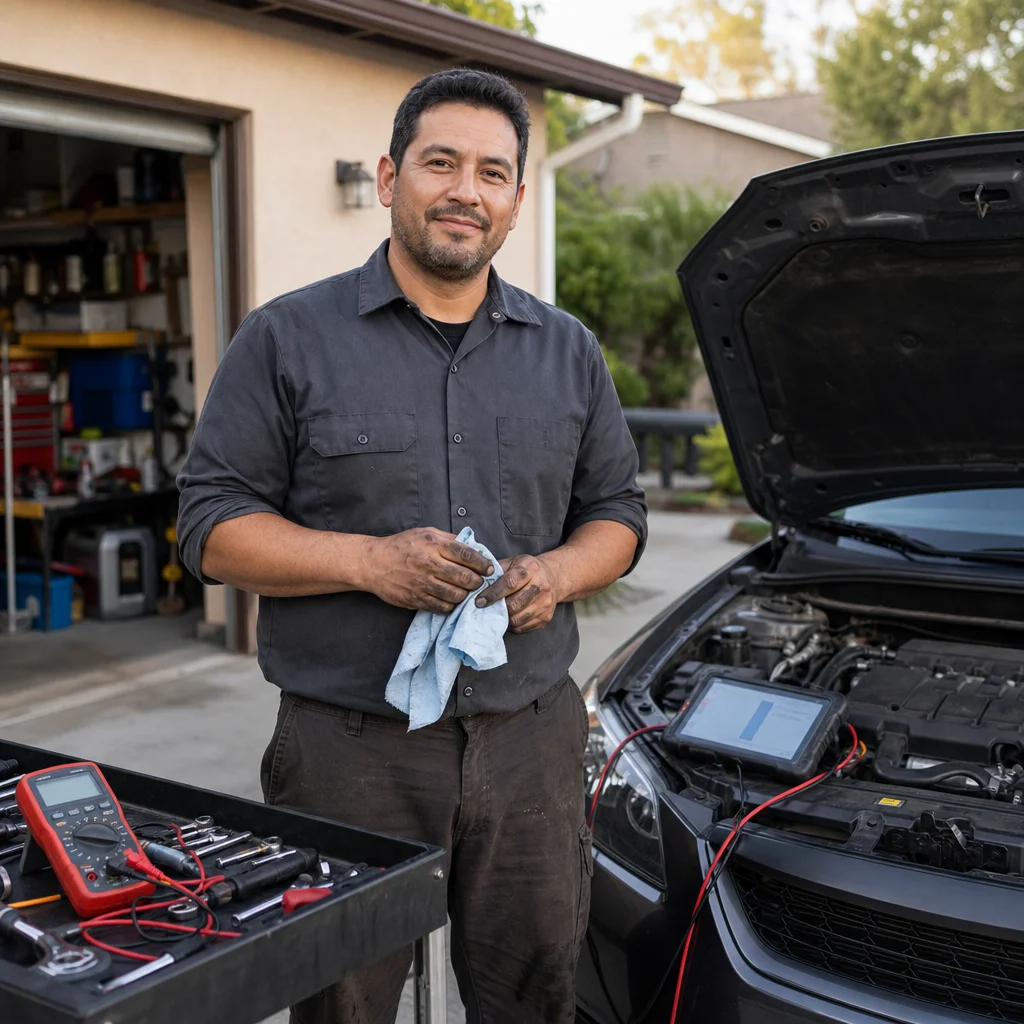
The wrong cleaner can turn a simple repair into a damaged connector, softened rubber seal, stained paint finish, or contaminated brake pad. Although brake cleaner, degreaser, and contact cleaner are all sold as fast-acting automotive solvents, they’re formulated for different kinds of dirt and different levels of material compatibility.
The safest choice starts with the surface you’re cleaning—not with whichever can is closest. Brake components may need a residue-free solvent, a greasy engine part may need a cleaner that can be rinsed away, and an electrical connection may need a product specifically designed to evaporate without harming plastics. Those descriptions overlap, but they aren’t interchangeable.
The short answer
| Cleaner | Best suited to | Main concern |
|---|---|---|
| Brake cleaner | Bare metal brake and drivetrain parts | Harsh solvents, flammability, and damage to paint, plastics, and rubber |
| Degreaser | Oil, grease, road film, and general grime on compatible surfaces | Water, residue, dilution, and possible corrosion or material damage |
| Contact cleaner | Electrical connectors, switches, and contacts | Compatibility varies; the circuit must be de-energized before cleaning |
These are broad categories, not guarantees. A “plastic-safe” contact cleaner may be suitable for a connector housing while another contact cleaner attacks certain plastics. A brake cleaner may be labeled non-chlorinated and fast-drying, while another formula has different solvent and flammability characteristics. Read the product label and, for unusual materials or expensive components, the safety data sheet (SDS).
Brake cleaner: powerful and narrow in purpose
Brake cleaner is intended to remove brake dust, oil, grease, and other contamination from hard components such as rotors, drums, backing plates, and some unpainted metal hardware. Its useful feature is usually rapid evaporation with little or no intentional residue. That makes it convenient before brake assembly or when a friction surface must be clean.
“Usually” matters here. Some products can leave a light film, and formulations differ considerably. Brake cleaner is commonly sold in chlorinated and non-chlorinated versions. Non-chlorinated products are often highly flammable, while chlorinated products have their own serious handling concerns and should never be exposed to welding, torch heat, or other high-temperature work. Don’t assume that one type is automatically safe simply because it evaporates quickly.
Brake cleaner is a poor general-purpose cleaner for painted bodywork, rubber hoses, bushings, weather seals, and unknown plastics. Strong solvents can soften, discolor, swell, or embrittle those materials. Overspray can also remove protective coatings or damage finishes that look chemically resistant but aren’t.
Use it carefully around brakes as well. Keep it off brake pads and shoes unless the product instructions specifically support that use, and replace friction material that has absorbed oil or solvent contamination rather than trying to rescue it with repeated spraying. Avoid directing compressed air at accumulated brake dust; use an appropriate cleaning method and protective equipment instead.
Degreaser: better for dirt that needs to be carried away
Degreasers are designed to break up oily grime and suspend it so you can wipe or rinse it away. They include water-based cleaners, alkaline formulas, citrus-based products, and solvent-based products. That range is why the word “degreaser” tells you less about compatibility than many people expect.
A diluted, water-based degreaser can work well on an engine-bay surface, suspension component, tool, or removable metal part when you can control runoff and dry the area afterward. It may be a better choice than brake cleaner for heavy, dirty buildup because it gives you time to agitate the contamination instead of simply flashing off.
The trade-off is that water and cleaner residue have to go somewhere. Don’t flood alternators, starters, fuse boxes, sensors, open connectors, or other electrical components. Don’t allow dirty solution to run into brake assemblies or onto friction surfaces. On bare steel, trapped moisture can promote rust, especially in seams, threads, and recessed areas.
Solvent-based degreasers may be closer to brake cleaner in strength, but they still shouldn’t be treated as interchangeable. Check whether the product is safe for aluminum, painted surfaces, plastic, rubber, and powder coating. A cleaner that removes thick chain grease from a metal part may dull a finish or damage a seal.
Contact cleaner: for electrical contacts, not every electronic part
Contact cleaner is made for electrical contacts, switches, plugs, terminals, and similar components. Many formulas are intended to dissolve light oil and oxidation and then evaporate with minimal residue. Some are labeled plastic-safe, which is particularly important because connector housings and wire insulation commonly contain plastics that strong solvents can damage.
Before using it, disconnect the battery when appropriate and make sure the circuit isn't energized. Aerosol cleaner can be flammable, and spraying into a powered connector can create a short, an arc, or an unexpected electrical fault. Let the component dry completely before reconnecting it or applying power.
Contact cleaner isn't a cure for every sensor problem. A mass-airflow sensor, throttle body, oxygen sensor, camera, radar unit, or other specialized component may require a cleaner specified for that part—or no solvent cleaning at all. A sensor’s sensing element can be delicate even when its connector is perfectly suitable for contact cleaner. Don’t spray through a connector into an enclosed module unless the manufacturer’s instructions allow it.
Also, “residue-free” doesn’t mean “lubricating.” Some switches, relays, and sliding contacts need a compatible lubricant after cleaning, while others must remain dry. If the original component uses a specified contact lubricant, replacing it with a fast-evaporating cleaner alone can cause premature wear.
Check the can before you spray: Confirm whether the exact product is chlorinated or non-chlorinated, flammable, plastic-safe, residue-free, and suitable for the surface in front of you. Follow the label and SDS, use strong ventilation, protect your eyes and skin, and keep all solvent sprays away from ignition sources.
Common mistakes that cause damage
Treating “fast-drying” as “safe everywhere”
Fast evaporation only describes what happens to the solvent after application. It doesn’t prove that the product is safe for paint, rubber, plastic, insulation, or coatings. A fast-drying solvent can still attack a material before it disappears.
If the surface is unfamiliar, test a small hidden area with a small amount of the product on a cloth or swab. Testing is helpful, but it isn’t a complete guarantee: a brief spot test may not reveal swelling or long-term brittleness. For an important seal, trim piece, or painted surface, use a cleaner specifically approved for that material instead.
Spraying the whole assembly instead of the dirty part
A broad spray may send solvent into bearings, bushings, seals, electrical cavities, or painted areas that were never meant to be cleaned. Apply cleaner to a cloth, brush, or controlled area when possible. Shield nearby parts with cardboard or a clean rag, and give runoff a planned path.
This is especially important in an engine bay. Cleaning grime from the outside of a component is different from forcing solvent and water into it. If you can remove the part first, you’ll usually have better control and a clearer view of whether the cleaner actually solved the problem.
Assuming a clean appearance means a repaired part
Cleaner removes contamination; it doesn’t restore worn contacts, cracked insulation, leaking seals, pitted terminals, or damaged friction material. If a connector is green and loose, spraying it may improve its appearance without fixing the underlying connection. If grease returns quickly after cleaning, look for the leak or failing seal rather than repeating the cleaning step.
Mixing products or using them in an enclosed space
Don’t mix cleaners in a container or on a component. You can create unpredictable vapors, residues, or reactions, and you lose track of which material compatibility instructions apply. Use one product at a time, allow the part to dry, and dispose of solvent-soaked materials according to local requirements.
Ventilation isn't optional just because the job is small. Work outdoors when practical, avoid breathing aerosol mist, and remember that some vapors can travel to an ignition source. Keep the vehicle secure, prevent unintended movement, and allow hot components to cool before applying flammable products.
A simple selection process
First identify the contamination. Light oxidation or residue on an electrical terminal points toward contact cleaner. Thick oil and road grime on a removable, washable component points toward an appropriate degreaser. Oil or dirt on a bare brake rotor or metal brake hardware may call for brake cleaner, provided the product label and part materials are compatible.
Next identify what mustn't be damaged. If the area includes rubber, painted surfaces, plastics, adhesives, insulation, or a coating, choose based on the product’s compatibility claims rather than its cleaning strength. When you can’t identify the material, use a milder method first: a clean cloth, warm water with a suitable detergent, or a manufacturer-approved cleaner.
Finally, control the application. Protect adjacent parts, use only enough cleaner to remove the contamination, collect runoff, and allow the part to dry. On electrical parts, restore power only after the cleaner has fully evaporated and the connection is correctly reassembled. On brakes, make sure no oily or solvent-soaked material remains on the friction surfaces.
What belongs where?
For a bare metal brake rotor or drum, brake cleaner is commonly the most direct option, but verify the formulation and keep it off pads, shoes, and nearby rubber. For a greasy suspension or engine component, a compatible degreaser is often more efficient, especially when the part can be removed, brushed, rinsed, and dried. For an electrical plug or switch contact, use contact cleaner labeled for that application and for the connector’s materials.
When the job involves a sensor, sealed control module, high-voltage hybrid or electric-vehicle component, airbag wiring, or a component with a special coating, stop and look for the service instructions. These parts can have risks that a generic cleaner label doesn’t address. Cleaning is a useful maintenance step, but it’s not worth turning a contamination problem into an electrical, chemical, or safety problem.
The best cleaner is the least aggressive product that will remove the specific contamination without harming the surrounding materials. Use brake cleaner for the narrow situations it handles well, degreaser when grime needs to be lifted and removed, and contact cleaner when an electrical contact needs a compatible, low-residue solvent. If the label doesn’t clearly support the surface and the job, choose a different product or get guidance before spraying.