How to Avoid Buying the Wrong Brake Pads Online
Brake pad fitment depends on more than your vehicle’s year, make, and model. I’ll explain how package variations, dimensions, hardware, sensors, and return policies work together so you can order with fewer costly surprises.
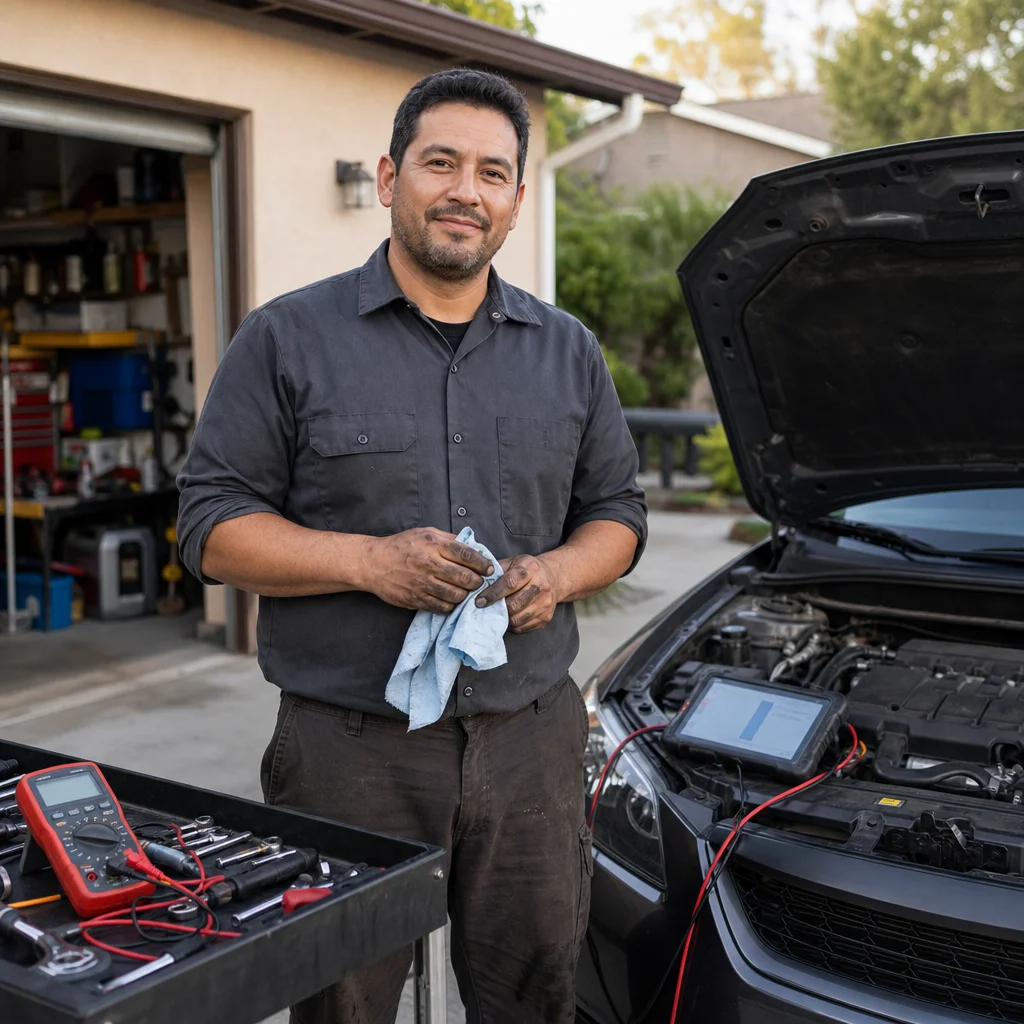
Ordering brake pads online can look simple until several listings appear to fit the same vehicle. The problem is that year, make, and model often identify only a starting point. The same vehicle may use different brakes depending on its engine, trim level, production date, axle, or factory brake package.
The safest approach is to treat fitment as a set of details that must agree, not as a single search result. Verify the vehicle configuration, compare the pad’s physical specifications, confirm the included hardware, and understand the seller’s return rules before you place the order. That process takes a little longer than choosing the first familiar brand, but it can prevent delays and an unsafe parts mismatch.
Start with the complete vehicle configuration
Use the vehicle identification number (VIN) when the seller or manufacturer provides a reliable VIN lookup. A VIN-based search can distinguish production variations that a general catalog search may miss. It’s still worth checking the result against your vehicle because catalog data can contain errors, and some sellers use broad compatibility labels for marketing convenience.
At minimum, gather the vehicle’s year, make, model, trim, engine, and whether you’re ordering for the front or rear axle. The build date can matter when a manufacturer changed brake components during a model year. Four-wheel-drive, all-wheel-drive, heavy-duty, police, towing, performance, and larger-wheel packages can also be associated with different calipers, rotors, or pads.
Don’t assume that two vehicles with the same model name share the same brake pads. A base trim and a sport package may have different brake systems. Even the same trim can use more than one supplier or brake package, particularly across different plants, markets, or production periods.
Confirm the listing before checkout: Compare the seller’s fitment result with your VIN, exact trim, axle, production date, and brake package. If the listing says “fits” but leaves one of those details unresolved, contact the seller or manufacturer rather than guessing.
Identify the brake package, not just the vehicle
Brake package information may appear in the owner’s manual, original parts documentation, a dealer parts counter, or a manufacturer’s catalog. Some online catalogs identify a package by caliper type, rotor diameter, or an option code. That information is more useful than a vague label such as “standard brakes” if your vehicle was available with multiple systems.
You can also compare the existing pads and caliper with the product listing, but visual comparison alone has limits. A pad can look similar while having a different backing-plate shape, locating tab, thickness, or friction surface. If you remove a wheel for inspection, use the opportunity to read any markings on the old pad or its box, but don’t treat an old part number as automatically correct. A previous owner or shop may have installed the wrong component.
The front and rear brakes usually use different pad shapes, and the left and right positions commonly use the same pad within one axle set. However, an online listing may describe a kit by axle, wheel position, or quantity in ways that aren’t immediately obvious. Read the quantity carefully before ordering.
Compare dimensions and design details
Once you have a candidate part number, compare its specifications with the catalog information for your vehicle. Important measurements can include overall length, height, thickness, backing-plate shape, and the location of chamfers or tabs. Some catalogs list these dimensions in millimeters and may show a technical drawing rather than a photograph.
Dimensions should confirm fitment, not replace it. A small difference may be intentional for a particular caliper, while a visually similar dimension can hide a mismatch in the backing plate. Use the manufacturer’s part number and application data as the primary evidence, then use measurements as a second check.
Pay attention to the pad’s friction material and intended use as well. Ceramic, semi-metallic, and other formulations can differ in noise, dust, cold-weather behavior, rotor wear, and operating temperature. A different formulation isn’t necessarily wrong, but it should be suitable for your vehicle and driving conditions. A low-cost pad with the correct shape may still be a poor choice if its application information is incomplete or its specifications don’t match your needs.
Some listings show a stock photograph that represents a family of parts rather than the exact item. Product images can help you notice a general shape, but they shouldn’t be used to confirm a tab, sensor, or backing-plate detail. Give more weight to the manufacturer’s technical data and the exact part number shown in the order description.
Check wear sensors and other included features
A wear indicator can be a small metal tab attached to one pad, an electronic sensor, or no indicator at all. Your vehicle may require a pad with a sensor, or it may use a separate sensor that transfers to the replacement pad. A listing that says “with sensor” may not explain whether the sensor is included for one position, one side, or the full axle set.
Check whether your current pads have a sensor wire or connector and whether the replacement listing describes the same arrangement. If the sensor is a separate replaceable component, confirm whether it’s included in the kit. Don’t assume an electronic warning system will work correctly just because the friction material and backing plate appear to fit.
Also look for shims, clips, abutment hardware, springs, and other fitting components. Some pads include pre-attached shims; others require you to reuse a separate part or purchase a hardware kit. Hardware may be specific to the caliper and pad shape, so a generic-looking kit isn’t always an appropriate substitute.
If the listing says “hardware not included,” find out whether your existing hardware is intended to be reused. Corroded, damaged, or missing hardware can create fitment and noise problems, and brake work isn't a good place to improvise with unrelated clips or modified parts.
Understand what the package contains
A brake pad order may cover one axle, one wheel, or a single replacement pad. Most listings intended for routine axle service contain enough pads for both sides of that axle, but you should verify the quantity instead of relying on the product photo. The title may use terms such as “front set,” “rear kit,” or “axle kit,” while the fine print gives the actual count.
Check whether the price includes only pads or also includes hardware, sensors, lubricant, or related components. Some sellers combine several options under one listing, and the selected variation may change the part number and contents. Save a copy or screenshot of the selected part number, quantity, and specifications until the order arrives.
If you’re replacing pads because of uneven wear, noise, pulling, vibration, or a warning light, don’t assume the pads alone will solve the problem. Those symptoms can involve a sticking caliper, damaged hardware, a worn rotor, a hydraulic issue, or another fault. Ordering the correct pads is important, but it doesn’t replace diagnosing the brake system.
Read the return policy before ordering
Brake parts are often subject to special return conditions. A seller may require the package to be unopened, prohibit returns after installation, deduct shipping, or apply a restocking fee. Electrical sensors and bundled hardware may have separate rules. Read the policy for the exact seller and listing, not just the marketplace’s general policy.
A return policy is especially important when fitment is uncertain. Look for the time limit, who pays return shipping, whether exchanges are available, and what documentation is required. Confirm that the part can be returned if the manufacturer’s catalog and the seller’s listing disagree, and keep the packaging and labels until you’ve confirmed the parts.
When the vehicle has multiple brake options, buying from a seller that offers VIN confirmation or a clear fitment guarantee may be worth more than choosing the lowest listed price. A small difference in purchase price can disappear quickly if you have to pay return shipping, wait for a replacement, or arrange another trip to obtain the correct parts.
Inspect the parts before installation
When the package arrives, compare the part number and application details with your order before opening or installing anything. Check the number of pads, the backing-plate shape, friction-material surface, sensor arrangement, and included hardware. Compare the new pads with the removed parts only as a secondary check; the catalog and vehicle application should still control the decision.
Don’t install a pad that requires force, has an obviously different shape, lacks a required sensor, or doesn’t match the confirmed application. Avoid modifying a backing plate, removing a locating tab, drilling a hole, or substituting hardware to make a questionable part fit. If the parts don’t agree with the vehicle, stop and resolve the discrepancy while the packaging and return options are still available.
Follow the vehicle manufacturer’s service information for lifting, wheel removal, caliper support, installation, and any required bedding procedure. Brake work involves safety-critical components. If you don’t have a stable way to support the vehicle, the correct tools, or enough information to identify the brake package, having the job checked or completed by a qualified technician is the sensible choice.
A reliable ordering routine
The most dependable online order starts with the VIN or exact vehicle configuration and ends with a part-number check. Confirm the axle and brake package, compare dimensions and design features, verify sensors and hardware, inspect the quantity and package contents, and read the return policy before paying. Keep the old parts and packaging available until the new components are confirmed.
If a listing leaves an important detail ambiguous, don’t fill in the gap based on a photograph, a low price, or a statement that the part fits a broad range of vehicles. Ask for clarification from the manufacturer, a reputable parts seller, or a qualified mechanic. Taking a few extra minutes to resolve fitment can keep a routine brake job from becoming an expensive and potentially unsafe interruption.